
A Vet-Approved Guide to Cat Food for Kidney Disease

When you hear the words "kidney disease," it's easy to feel a little overwhelmed. But I want you to hold onto this one key takeaway: the right cat food for kidney disease is the single most powerful tool you have. A therapeutic renal diet is specially formulated with lower phosphorus and high-quality protein to take the pressure off their kidneys, helping them feel better and live a happier, more comfortable life. 😻
Your Guide to Feline Kidney Disease
Getting a chronic kidney disease (CKD) diagnosis for your cat can feel like a lot to process. Suddenly, there's a whole new cat-cabulary and a list of decisions to make. Just know you're not in this alone—our playful mascot, Floofie, is here to help you navigate every step! 🐾
Think of your cat's kidneys as an incredibly sophisticated filtration system for their body. Their main job is to pull waste products out of the blood, maintain a healthy balance of electrolytes, and regulate hydration. With kidney disease, that high-tech filter just isn't as efficient as it used to be.
Understanding the Diagnosis
When the kidneys can't keep up, waste that should be flushed out starts to build up in the bloodstream. This is what can make your kitty feel lethargic, nauseous, and just plain bleh. You might notice them drinking a ton of water, visiting the litter box more often, or turning their nose up at their favorite food. This is where a specialized diet becomes an absolute game-changer.
The core principle behind a renal diet is beautifully simple: we want to reduce the kidneys' workload. By carefully managing certain nutrients, we can minimize the amount of waste they have to filter, which helps protect the kidney function they still have.
This isn't just a small change—it's a foundational part of managing their health and boosting their quality of life. The right food works hand-in-paw with any other treatments your vet recommends.
Why Diet Is Your Strongest Ally
Managing CKD is a team effort between you, your vet, and your cat, with diet playing the starring role. You might be surprised to learn that kidney disease is one of the most common health problems in cats, especially as they get older. In fact, veterinary studies show that by the time they reach age 15, nearly 30% of cats will develop some form of CKD. You can discover more insights about the global cat food market to see just how common these issues are.
That number really drives home how important proactive care is. Switching to a therapeutic diet is the first and most impactful step you can take. You're not just feeding them; you're giving them targeted, science-backed nutrition that helps them thrive. Making this change empowers you to be an active partner in their wellness journey. If you're looking for more general info, our cat care tips for beginners can provide a great foundation. Let’s start this new chapter with confidence and a whole lot of love! ❤️🐾
The Golden Rules of a Feline Renal Diet
Alright, let's get down to what actually makes a special renal diet work. When your veterinarian breaks the news about chronic kidney disease (CKD), your cat's food bowl becomes one of the most powerful tools you have to manage their health.
Think of it less as a restrictive diet and more like a secret weapon. It all boils down to a few key rules, and Floofie promises understanding them will make you a pro at reading food labels in no time. 😉
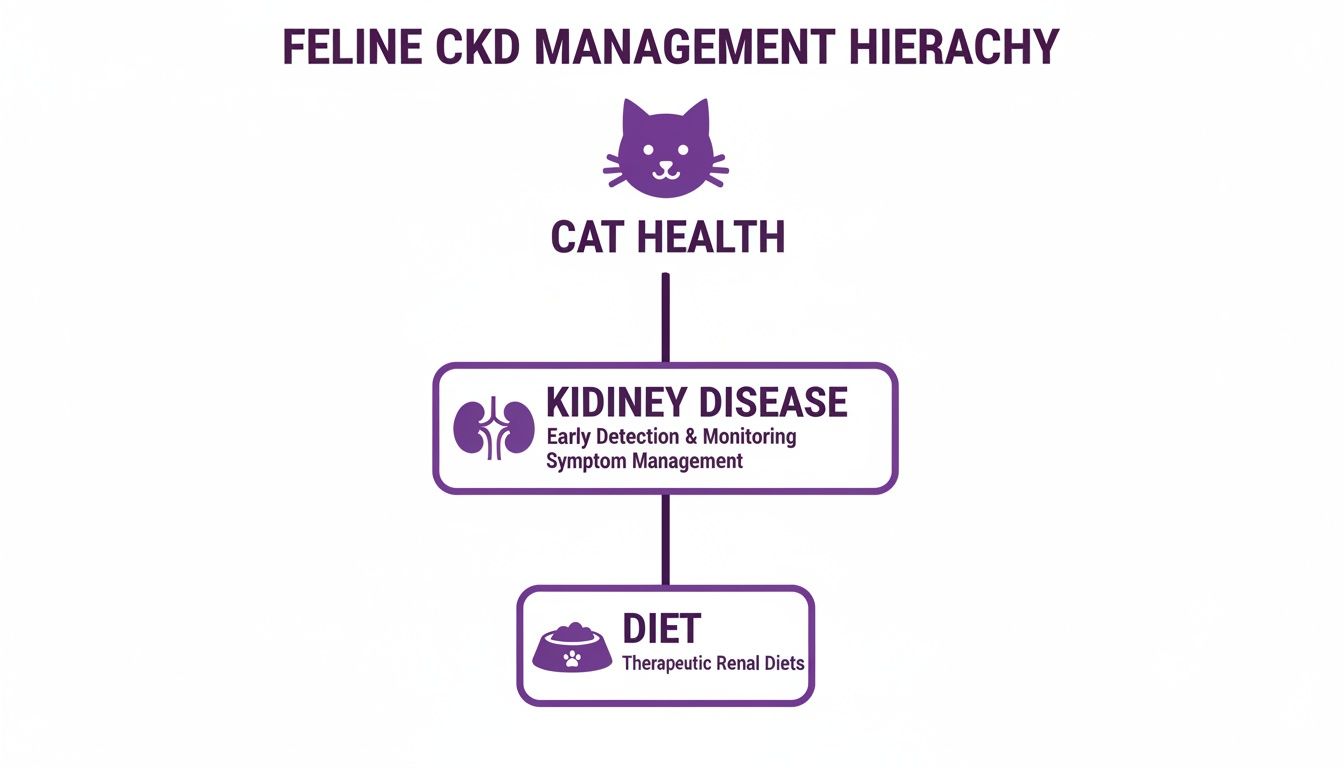
This hierarchy shows how the right diet is the foundation for supporting your cat's kidneys, which directly impacts their overall quality of life.
Rule 1: Low Phosphorus Is Priority One
If there’s one single nutrient to laser-focus on, it’s phosphorus. Healthy kidneys are experts at filtering excess phosphorus from the blood. But when they aren't working at full capacity, phosphorus builds up, making your cat feel sick and causing even more damage to the kidneys.
Imagine your cat's kidneys are like a tiny, hard-working cleaning crew. A high-phosphorus diet is like giving them a massive, heavy trash bag to haul away. Switching to a low-phosphorus food lightens that load significantly. This is the most critical dietary change you can make, and it’s scientifically proven to slow the progression of CKD and help your cat live longer.
Rule 2: Controlled, High-Quality Protein
Let's bust a huge myth. You've probably heard that cats with kidney disease need a low-protein diet. That's not entirely accurate, and it's a dangerous oversimplification. Cats are obligate carnivores; they need protein to maintain muscle mass, energy, and overall strength.
The real key isn't about eliminating protein—it's about being incredibly selective.
Think of it like fuel for a high-performance engine. High-quality, highly digestible protein is like clean-burning, premium gasoline. It gives your cat all the energy they need with very little waste. Lower-quality protein, on the other hand, is like sludgy, cheap fuel that clogs the engine. It creates more waste byproducts (like urea) that the already-struggling kidneys have to filter out.
A therapeutic renal diet provides just the right amount of exceptionally high-quality protein to nourish your cat’s body without overtaxing their kidneys. This helps them feel more energetic and less nauseous.
Rule 3: Managed Sodium and Added Goodies
The final piece of the puzzle involves a few very important supporting actors, starting with sodium. Just like with people, too much sodium can lead to high blood pressure, a common complication for cats with CKD. High blood pressure puts even more strain on the kidneys, so keeping sodium levels in check is a must.
Beyond that, a good renal diet is packed with beneficial extras. These often include:
- Omega-3 Fatty Acids: Sourced from fish oil, these healthy fats have natural anti-inflammatory properties that can help soothe inflammation inside the kidneys.
- Added B-Vitamins: Cats with CKD tend to urinate more, flushing out water-soluble vitamins like B vitamins. Renal diets replenish these to prevent deficiencies.
- Increased Potassium: Kidney disease can sometimes cause potassium levels to drop too low, so therapeutic foods are often supplemented to maintain a healthy balance.
And don’t forget hydration! Keeping your cat well-hydrated is crucial for helping their kidneys flush out toxins. This is a big reason why most vets strongly recommend wet food. You can learn more about why moisture is so important in our guide to good wet cat food.
When you're scanning labels, it can feel like a lot to remember. Here's a quick-reference scorecard to help you out.
Renal Diet Scorecard: What to Look for on the Label
| Nutrient | Goal for Kidney Health | Why It Matters | Floofie's Tip 😼 |
|---|---|---|---|
| Phosphorus | LOW | Eases the workload on the kidneys and is proven to slow disease progression. This is the #1 priority. | Look for language like "controlled phosphorus" or "low phosphorus" on the packaging. |
| Protein | CONTROLLED & HIGH-QUALITY | Provides essential amino acids to maintain muscle mass without creating excess waste for the kidneys to filter. | Focus on "highly digestible" protein sources. It's about quality, not just quantity. |
| Sodium | LOW | Helps manage blood pressure, reducing further strain and potential damage to the kidneys. | Avoid foods with high salt content. Therapeutic diets will have this managed for you. |
| Moisture | HIGH | Boosts hydration to help the kidneys flush out toxins more effectively. | Wet food is your best friend here! It's a game-changer for kidney support. |
| Added Nutrients | BOOSTED | Replenishes lost B-vitamins, adds anti-inflammatory Omega-3s, and balances potassium levels. | Look for ingredients like fish oil, potassium citrate, and a B-vitamin complex. |
By sticking to these golden rules—low phosphorus, controlled high-quality protein, and managed sodium and extras—you’re giving your cat the best nutritional support possible. You've totally got this! 💪💖
Prescription Diets Versus Over-the-Counter Options
Walking down the pet food aisle can feel totally overwhelming, especially when your cat needs special care. You'll see bags and cans labeled "kidney support" right next to the regular stuff, but your vet is talking about a "prescription diet." What's the actual difference? Let's clear up the confusion, with a little help from Floofie! 🧐
Think of a prescription renal diet like targeted medicine in a bowl. These formulas are developed by veterinary nutritionists with a single, crucial goal: to therapeutically manage chronic kidney disease. They aren’t just "healthy"; they are precisely formulated with the science-backed, low levels of phosphorus and high-quality protein we've been talking about.
Over-the-counter (OTC) "kidney support" foods are more like a generic daily supplement. While they might be a step up from standard cat food, they legally can't be formulated to the same therapeutic levels as a true prescription diet. They just don't pack the same kidney-supporting punch.
Why Your Vet Recommends a Prescription Diet
When your veterinarian recommends a specific cat food for kidney disease, they're suggesting the gold standard of care. There’s a really good reason for this. Veterinary therapeutic diets go through rigorous scientific testing and clinical trials to prove they can help manage a medical condition. Studies have shown that cats with CKD who eat a prescription renal diet live longer, healthier lives with fewer issues.
These diets are carefully crafted to handle the complex needs of a cat with struggling kidneys. It's not just about lowering phosphorus; they also manage protein, control sodium, add anti-inflammatory omega-3s, and even replenish B-vitamins that are often lost through increased urination. It's a complete nutritional strategy in every single bite.
The International Renal Interest Society (IRIS), the leading global authority on kidney disease in pets, recommends starting a therapeutic kidney diet as soon as a cat reaches Stage 2 CKD. That's because early dietary changes are one of the most powerful tools we have to slow the disease down.
Making the switch is a proactive step that can make a massive difference in your cat's comfort and longevity. It's you and your vet teaming up to give your best fur-iend the best care possible.
The Limits of Over-the-Counter Foods
So, why can't you just grab an OTC "kidney-friendly" bag from the store? Even though the marketing sounds promising, these foods are simply not a substitute for a veterinary diet. They aren't designed to meet the strict nutritional profiles required to treat a serious medical condition like CKD.
An OTC food might be a little lower in phosphorus than your average cat food, but it's often not low enough to have a real therapeutic impact. The same goes for its protein and sodium levels. It's a bit like taking a daily vitamin C tablet when you really need a prescribed antibiotic—one offers general support, while the other is targeted medicine.
For a bit of fun feline flair while you're at the vet's office discussing diets, why not check out some of Floofie's favorite cat-themed apparel from FloofChonk? A cool cat shirt can make any appointment a little brighter! ✨
Making the Right Choice with Your Vet
At the end of the day, the best cat food for kidney disease is the one your vet recommends for your cat's unique situation. They'll look at your cat's IRIS stage, bloodwork, and overall health to pick the purr-fect formula. Trust their expertise—they are your number one ally on this journey.
Don't be afraid to ask questions! Chat about different brands, textures (does your cat prefer pâté or chunks in gravy?), and flavors. Your vet can often provide samples to help you find a prescription diet your picky kitty will actually eat. Making this choice together ensures your beloved companion gets the exact nutritional support they need to feel their absolute best. 💖
The Great Hydration Debate: Wet vs. Dry Cat Food
When your kitty has kidney disease, water is suddenly the most important nutrient in their bowl. 💧 Proper hydration is everything—it helps their overworked kidneys flush out toxins, which can make a world of difference in how they feel.
This brings us to the big question almost every cat parent faces: wet food or dry kibble?
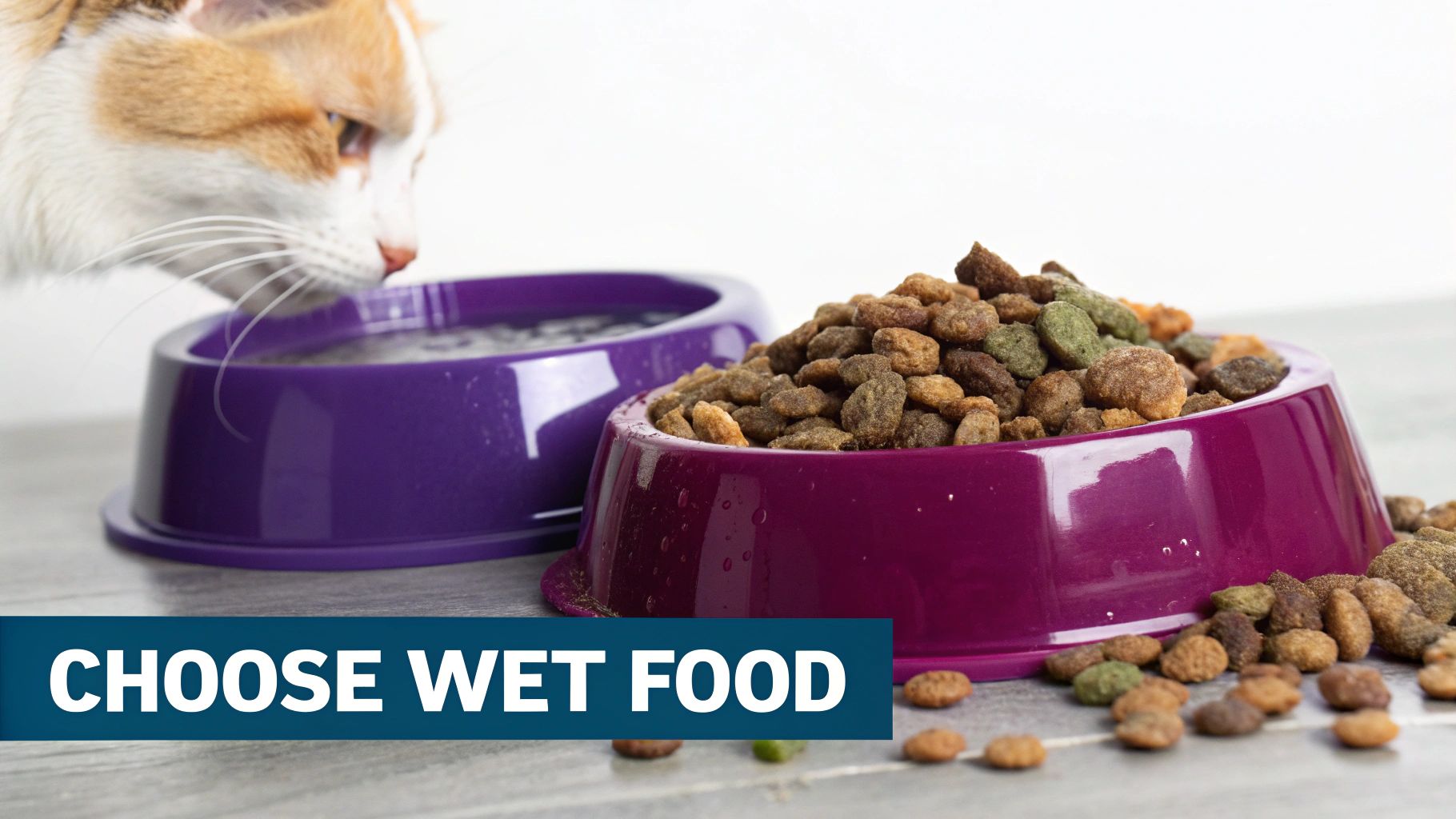
Let's get into it. Our mascot, Floofie, is a huge fan of wet food, and for a very good reason—especially when it comes to supporting kidney health.
Why Wet Food Is the Undisputed Champion
Cats are fascinating creatures with deep desert roots. Their ancestors got nearly all their hydration from the prey they caught, so they never really developed a strong thirst drive. Your cozy house cat inherited this trait, which means they often don't drink enough on their own, even with a full water bowl nearby.
This is where wet food swoops in to save the day! The difference in moisture content is pretty staggering:
- Wet Cat Food: Typically contains 70-80% water.
- Dry Cat Food (Kibble): Usually contains only about 10% water.
By feeding wet cat food for kidney disease, you're delivering critical hydration with every single bite. All that extra moisture helps dilute their urine and makes it so much easier for their kidneys to do their job, reducing the strain on them and helping your cat feel better overall.
It's clear that pet parents are catching on. With 70% of premium cat food spending now going toward soft, natural options, it’s not just a passing trend. It's a lifeline for the 15-20% of senior cats in places like the US and UK who are dealing with CKD. You can read more about these cat food market trends to see just how central diet has become to pet wellness.
What If My Cat Is a Kibble Addict?
We get it. Some cats are just hopelessly devoted to that crunch. If your feline friend turns their nose up at pâté, don't panic! Floofie has a whole playbook of tricks to boost their water intake without staging a full-scale food revolt.
You can absolutely still use a dry renal diet, but you'll have to get a little clever about sneaking more water into their system. It's time to get creative and make drinking feel more like an exciting activity and less like a chore.
Remember, the goal is to increase their total daily water intake, one way or another. Every extra drop helps support those precious kidneys and keeps your kitty feeling their best.
Don't get discouraged if the first attempt doesn't work! Patience and a bit of feline-focused strategy are your best friends here.
Floofie's Favorite Hydration Hacks
Ready to turn your kibble-lover into a hydration superstar? Try these simple but super effective tricks to encourage your cat to drink more throughout the day.
-
Create a Kibble "Gravy": This is the easiest trick in the book! Just add a splash of warm water to their dry renal food and let it soak for a few minutes. This softens the kibble, releases all those yummy aromas, and sneaks in extra moisture. Start with a tiny amount and gradually increase it as they get used to the new "soupy" texture.
-
Invest in a Water Fountain: The sound and sight of flowing water can trigger a cat's instinct to drink from a fresh source, like a little stream. A cat water fountain makes drinking fun and can seriously boost their water consumption. Check out our guide on the best cat water fountains for some purr-fect options!
-
Offer "Tuna Water": Grab a can of tuna packed in spring water (never oil, and make sure there's no added salt!). Drain the water into a separate bowl for an irresistible, flavorful treat. This fishy broth is a hit with even the pickiest drinkers.
-
Use Multiple, Wide Bowls: Cats often hate it when their sensitive whiskers touch the sides of a deep bowl. Place several shallow, wide water bowls around your home in different spots. By offering multiple appealing options, you make it easy for them to grab a drink whenever the mood strikes.
By combining these strategies, you can make sure even a kibble-obsessed cat gets the hydration they desperately need to support their kidneys. You've got this! 😼💧
How to Transition a Picky Eater to a New Food
Let's be real: cats are creatures of habit. They have their favorite nap spot, their preferred human, and most definitely, their favorite food. A sudden menu change can feel like a personal insult, and if you’ve ever tried it, you know that look—the offended sniff followed by a swift, tail-up departure. When you're introducing a therapeutic cat food for kidney disease, this stubbornness can feel incredibly stressful.
But don't panic! Our mascot, Floofie, is a pro at winning over even the fussiest felines. With a bit of patience and a few clever tricks, you can make this switch a positive experience. The golden rule is to go slowly. A gradual transition is much easier on their digestive system and gives them time to warm up to the new flavors and textures.
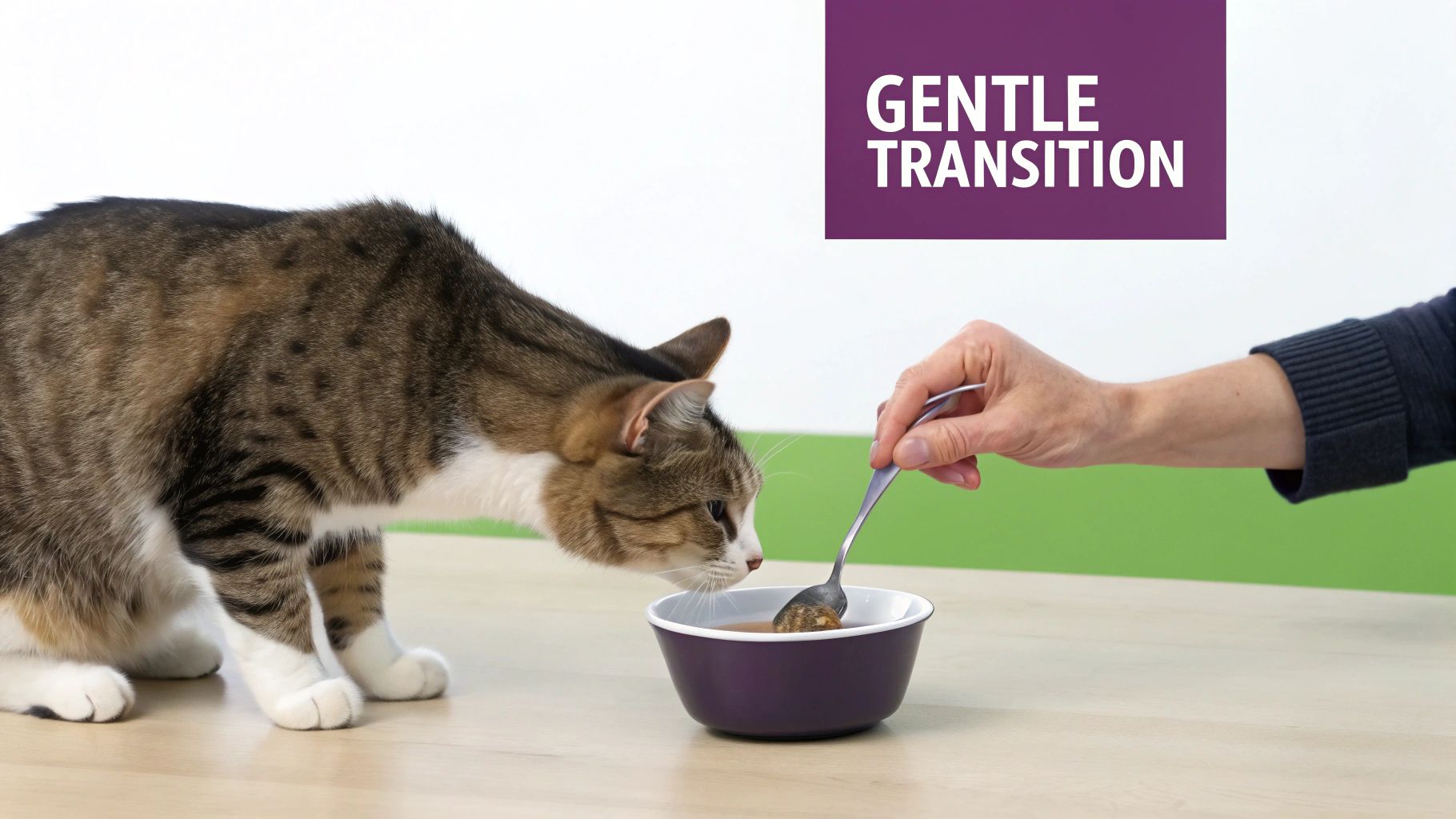
Floofie’s No-Fuss 7-Day Transition Plan
Patience is your best friend here. A slow, steady approach prevents tummy troubles and helps your cat see the new food as a treat, not a threat. This one-week plan is a great starting point, but always watch your cat and adjust the timing if they need a little longer.
- Days 1-2: Start by mixing just a tiny bit of the new renal food into their old favorite. Aim for about 25% new food and 75% old food. It's just a subtle introduction, nothing drastic.
- Days 3-4: If the first two days went well, it's time to increase the ratio to a 50/50 mix. Keep a close eye on their appetite and enthusiasm.
- Days 5-6: Now you can tip the balance in favor of the new diet. Serve a mix of 75% new food and only 25% of the old stuff. You're in the home stretch!
- Day 7: Graduation day! 🎓 If your cat is happily munching away, you can now serve 100% of their new therapeutic food.
Make sure to offer plenty of praise throughout this process! A gentle head scratch or a soft "good kitty" when they dig in can make a huge difference.
Making the New Food Irresistible
Sometimes, even the most carefully planned transition hits a snag. If your cat is still turning up their nose, it’s time to pull out some of Floofie’s favorite tricks to make the new food seem like a gourmet meal.
Remember this golden rule: A cat eating something is always better than a cat eating nothing. If the transition isn't working and your cat goes on a hunger strike for more than 24 hours, contact your veterinarian immediately.
Try these simple but effective flavor-boosting strategies:
- Warm It Up: A few seconds in the microwave (on a microwave-safe dish, of course!) can work wonders for wet food. The warmth releases the aroma, making it much more enticing for your cat.
- Add a Topper: Talk to your vet about adding a vet-approved flavor enhancer. Sometimes, even a tiny bit of the water from a can of tuna (packed in spring water, no salt added!) can be enough to pique their interest.
- Positive Reinforcement: Create a calm, happy atmosphere around mealtime. Serve the food in a special dish in a quiet corner of the house. For a little extra flair, you could even sip your morning coffee from one of Floofie’s adorable cat-themed mugs to make the whole spot feel special! ✨
If your kitty is still putting up a fight, don’t lose hope. Your vet is your best resource here. They can recommend different brands or textures of prescription food. With so many options out there, you're bound to find one that gets your finicky feline’s purr of approval.
Essential Supplements and Health Monitoring
Switching to the right cat food for kidney disease is a massive first step, but managing your cat's health is definitely a team sport! 🏆 Think of their special diet as the star player, with supplements and regular vet visits as the amazing support crew.
To build a truly effective care plan, we have to look beyond just the food bowl. Your veterinarian is your partner on this journey, and they might recommend a few extras to help your cat feel their absolute best. Let's break down what that support system looks like with a little help from Floofie.
Common Supplements for Kidney Cats
Supplements can provide targeted help right where your cat needs it most. While a therapeutic diet does the heavy lifting, these additions can fine-tune their care. Of course, you should never add supplements without your vet's approval, but it helps to know what they might suggest and why.
Two of the most common sidekicks in a kidney care plan are:
- Phosphorus Binders: These are little superheroes! 🦸♀️ Even on a low-phosphorus diet, some cats need extra help. Binders work like tiny magnets in the gut, grabbing onto excess phosphorus from food so it passes right through instead of being absorbed into the bloodstream.
- Omega-3 Fatty Acids: Usually sourced from fish oil, these healthy fats are fantastic for their natural anti-inflammatory properties. They can help soothe inflammation within the kidneys, offering a bit of extra comfort and support where it counts.
Your vet will know if these are a good fit for your cat based on their specific bloodwork results.
The Importance of Regular Vet Visits
For a cat with kidney disease, regular monitoring is completely non-negotiable. These check-ups are how your vet tracks the progression of the disease and makes sure the current treatment plan is still working as it should. It’s your best chance to be a proactive partner in their care!
Think of these vet visits as routine tune-ups for a classic car. Regular maintenance keeps everything running as smoothly as possible for as long as possible, preventing bigger problems down the road.
During these appointments, your vet will likely run a few key checks:
- Bloodwork: This is how they monitor crucial kidney values (like BUN and creatinine), phosphorus levels, and electrolytes.
- Blood Pressure: High blood pressure often goes hand-in-hand with kidney disease, so keeping it in check is vital to protect the kidneys from more damage.
- Weight Checks: Unexplained weight loss can be an early red flag that something is off, so tracking their weight helps catch any issues quickly.
For a little extra fun and feline flair at your next appointment, you could rock one of Floofie’s favorite cat-themed shirts! Looking good while doing good for your cat—now that’s a win-win. 😸
Being a vigilant cat parent at home is just as important. By keeping a close eye on your cat’s daily habits, you can spot subtle changes and alert your vet, ensuring your furry friend gets the best care every single step of the way. ❤️
Your Questions About Renal Diets, Answered
Getting a chronic kidney disease (CKD) diagnosis for your cat brings up a ton of questions. That’s completely normal! Don't worry—our mascot, Floofie, has heard them all and is here with the answers you need to feel confident and in control. Let's dig into some of the most common worries cat parents have about cat food for kidney disease.
A big one we hear all the time is: "But what if my cat hates the new food?" We absolutely get it. Cats are notoriously picky eaters. The secret is a super slow transition and making the food as tempting as possible. Try warming it up slightly or adding a vet-approved flavor topper. Patience is your best friend here!
Another common question is about the bigger picture. The whole point of a renal diet is to slow down the progression of kidney disease and, most importantly, improve your cat's quality of life. By giving their kidneys less work to do, you're helping them feel better for a much longer time. 💖
Are There Tasty Options for Fussy Eaters?
Absolutely! 😻 The folks who make veterinary diets know that cats have very, very strong opinions about their meals. That’s exactly why they offer a huge variety of prescription renal foods.
You can find everything from smooth, savory pâtés to chunky stews in gravy, and even different protein sources like chicken, tuna, or salmon. Don't get discouraged if the first one you try isn't a winner! Just work with your vet to snag some samples and find the perfect match for your kitty's discerning palate. Remember, a happy cat at mealtime is a huge win.
At FloofChonk, we believe in celebrating that special bond you share with your cat. While you're focusing on their health, let us help you express your love with our fun, feline-focused apparel and accessories. Find your next favorite cat-themed treasure at https://www.floofchonk.com and wear your cat parent pride