
How Often Should I Feed My Cat For A Healthy Routine 🐾

Need a fast, playful answer? Floofie to the mew-csa! 😸 Most healthy cats thrive on multiple small meals rather than one big bowl. Kittens often eat 4–6 times a day, adults bob along on 3–4 meals, and seniors savor 2–3 smaller portions.
Optimal Feeding Frequency For Cats
Think of grazing as a cat’s personal buffet—tiny bites spread across the day. This approach mirrors their crepuscular hunting rhythm, keeping zoomies ready and moods mellow. Instead of a single feast, your floof enjoys a series of mini-meals that:
- Reflect wild foraging habits for balanced nutrition
- Support steady energy and metabolism
- Help prevent obesity by limiting overeating
For extra fun, hide kibble in puzzle feeders or scatter morsels across the floor. Busy day? Set up a timed feeder and let Floofie handle snack time! 🐾
Frequent small meals can transform your cat’s day and night. Purr-fect! 😻
Feeding Frequency At A Glance
Below is a quick reference to match your cat’s life stage or goal with an ideal meal rhythm. Adjust portions based on activity level and health needs—mewthodically!
| Feeding Frequency | Cat Age Or Goal | Meals Per Day |
|---|---|---|
| Grazing | Kittens (≤6 mo) | 4–6 |
| Moderate | Adult Cats (1–7 yr) | 3–4 |
| Small Portions | Seniors (7+ yr) | 2–3 |
Keep this chart handy as you fine-tune your cat’s routine. Flexibility is key—some days may call for an extra snack or a slightly later dinner. Stay pawsitive! 🐾
Floofie’s Top Mealtime Tips
- Mix wet and dry food to keep textures interesting.
- Puzzle feeders slow down speedy eaters and boost mental exercise—try our favorite from puzzle feeders for cats.
- For more foundational advice, check out our cat care basics for beginners guide.
Benefits Of Frequent Feeding
Small, regular portions help:
- Curb blood sugar spikes for more balanced energy
- Align meals with instinctual hunting patterns, leading to livelier play sessions
- Reduce stress around meal times by preventing grumbling tummies
An automatic feeder on a timer can add consistency and peace of mind, especially on busy days. Purr-fect for work-away humans! 😺
Floofie’s Creative Meal Ideas
- Hide kibbles in a snuffle mat so your kitty “hunts” every bite.
- Scatter morsels around the room to spark a mini expedition.
- Offer wet food in slow-drip dispensers from FloofChonk that mimic the thrill of the catch. 🎣
When To Adjust Frequency
Keep an eye on your cat’s weight and behavior:
- If your kitty drops weight unexpectedly, try adding one more snack session.
- For chunky cats, reduce meal size or skip a scheduled snack—gradually.
- Always consult your veterinarian if appetite or weight changes persist.
Ready to feed like Floofie? Pounce on this plan and watch your kitty glow! Stay pawsitive and meowtastic! 😽
Understanding Key Feeding Concepts
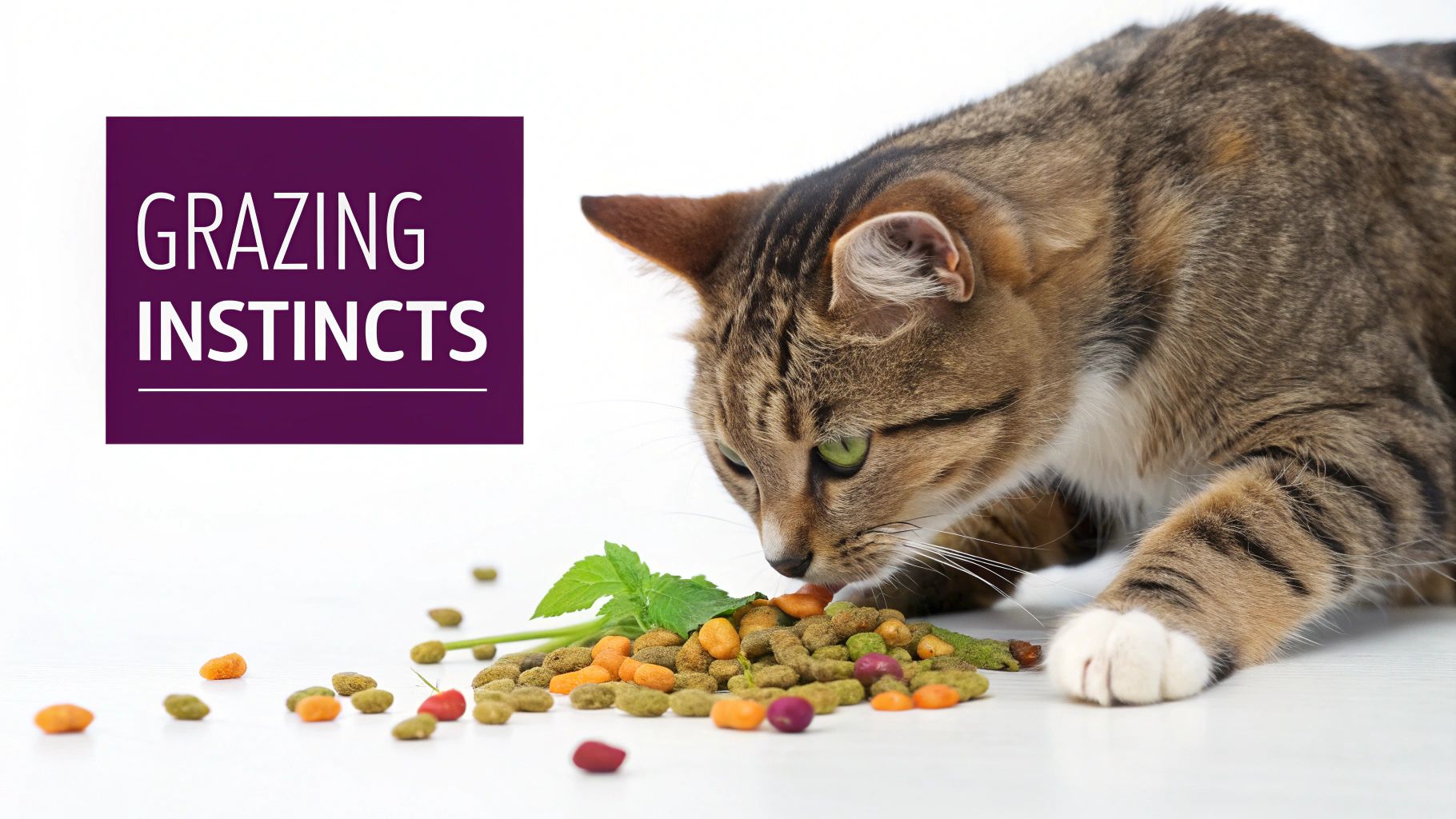
Cats are born grazers. You’ll often catch yours treating the food bowl like an all-day snack bar rather than a sit-down meal—meow! Their wild ancestors prowled at dawn and dusk, hunting tiny meals over and over.
Way back, solitary hunters like our domestic floofs would eat about 8–12 small meals daily. Today, most owners either free-feed or offer breakfast and dinner only—no surprise that 30–50% of house cats end up packing on extra pounds. For a deep dive, check out Frontiers in Veterinary Science.
- Metabolic Rate measures how quickly your cat converts food into zoom-ready fuel.
- Feeding Drive ebbs and flows, much like your own snack cravings.
- Hormone Signals (ghrelin and leptin) act as the brain’s traffic lights, guiding hunger and fullness.
Trail Mix Analogy 🥜
Think of your cat’s grazing habit as snacking on trail mix during a long hike. Those handfuls of nuts and dried fruit hold energy steady without the highs and lows of a big meal. Your cat’s grazing could look like this:
| Cat Meal Portion | Trail Mix Equivalent |
|---|---|
| 1 Tbsp of kibble | A small handful of nuts |
| 1 tsp of wet food | A few dried raisins |
| Puzzle feeder nibs | Mixed seeds and dried fruit |
Key Insight Frequent bites mirror natural patterns and keep boredom at bay. Mew yeah! 😸
Hormones And Feeding Drive
Hormones play their part behind the scenes. Ghrelin spikes before mealtime, nudging your cat toward the bowl. After eating, leptin steps in to signal “all done.”
- Offer 3–4 small meals for adult cats to align with ghrelin’s natural peaks.
- Use a timed feeder from FloofChonk to portion meals and respect those fullness signals.
- Rotate protein sources now and then to keep taste buds interested and signals consistent.
Applying Core Concepts
Here’s how to put these ideas into practice:
- Schedule 3–4 mini meals daily, using either a programmable feeder or manual portions.
- Introduce puzzle feeders or timed dispensers from FloofChonk to slow down eating and add play.
- Weigh your cat regularly and tweak portions if you notice any unwanted weight gain or loss.
Follow these steps to avoid free-feeding boredom and the rollercoaster of body‐condition swings. Next up, we’ll look at adjusting feeding frequency for your cat’s life stage and special needs. 🐱
Adjusting Feeding Frequency For Life Stages And Goals
Every cat’s feeding schedule should feel as unique as their personality. Age and activity level shape the beat of mealtime, whether you’re nourishing a tiny kitten or pampering a senior with slower-paced days.
Young kittens have engines that run hot—like miniature furnaces—so they thrive on quick, frequent bites.
Kitten Feeding Needs
- Kittens (≤6 mo): 4–6 mini meals daily to support rapid growth
- Adults (1–7 yr): 3–4 balanced meals to keep energy steady and weight in check
- Seniors (7+ yr): 2–3 gentle portions for a metabolism that’s taking its time
For instance, a bustling 3-month-old might snack at 6 AM, 10 AM, 2 PM, 6 PM, then a small nibble before bedtime.
“Kitten meals are bursts of play fuel for endless zoomies,” says Floofie. 🐾
Feeding For Special Goals
If your adult cat needs to shed a few ounces, smaller, more frequent servings can help. On the flip side, a lean kitty aiming to bulk up might enjoy fewer meals but slightly larger portions.
- Assess your cat’s current body condition and set a realistic goal weight.
- Tweak each meal by 5–10%, adding or trimming portions until you see progress.
- Weigh in weekly to fine-tune the plan—small tweaks lead to big purrs. 😻
Cats on a single daily meal often show higher post-meal satiety-hormone spikes and more fat oxidation, whereas multi-meal routines boost daytime activity and overall movement. Learn more in this research study.
Need to blend wet and dry? FloofChonk’s timed feeders and puzzle feeders turn every meal into an adventure.
- Wet + Dry Tips: Offer wet food first for hydration, then measured kibble in a puzzle bowl
- Timed Feeding: Use an automatic feeder from FloofChonk for reliable portions
- Free-Feeding Caution: Only if you know your cat’s metabolism can handle round-the-clock access
Each cat’s perfect rhythm might resemble this:
| Life Stage | Meals/Day | Portion Style |
|---|---|---|
| Kitten | 4–6 | Mini wet drips + kibble bites |
| Adult | 3–4 | Balanced wet/dry mix |
| Senior | 2–3 | Smaller wet portions |
In the end, there’s no universal answer to “How often should I feed my cat?” Watch your cat’s weight, energy levels, and appetite. Small adjustments in meal count and portion size can make a world of difference. 😸
Floofie’s top picks to upgrade mealtime:
- Snuffle Mat for slow eating and play
- Smart UFO Toy Dispenser for boredom-busting mini meals
- Ceramic Bowls with Raised Rims for comfy noshes
Ready to fine-tune your cat’s feeding schedule? Explore FloofChonk’s full lineup of feeders and make mealtime the best part of your cat’s day. Purrs guaranteed! 🐾
Creating Sample Feeding Schedules
From the feeding frequency guide above, here’s how “how often should I feed my cat?” plays out in real life. These timetables have Floofie’s official seal of approval—and they take the guesswork out of meal planning.
We split the day into four mew-tastic blocks—Morning, Afternoon, Evening, and Night—so your cat’s energy never hits a slump.
- Morning: A gentle nibble at dawn kick-starts their playtime.
- Afternoon: A light snack bridges the gap between snoozes.
- Evening: The main event, synced with their crepuscular hunting instincts.
- Night: A tiny treat soothes evening zoomies before lights-out.
These windows match your cat’s natural peaks. Swap in wet food, dry kibbles, or brain-teasing puzzle bowls from FloofChonk for a little extra fun. 🎉
Daily Meal Templates
Below is a quick-reference guide showing example feeding times and portion splits for kittens, adults, and seniors.
| Cat Type | Morning | Afternoon | Evening | Night |
|---|---|---|---|---|
| Kitten | 6 AM Bottle Feeding | 10 AM Wet Treat | 2 PM Kibble Puzzle | 8 PM Mini Nibble |
| Adult | 7 AM Wet + Dry Mix | 1 PM Kibble Snack | 6 PM Wet Meal | 10 PM Optional Kibble |
| Senior | 8 AM Mini Wet Dish | 2 PM Puzzle Kibble | 5 PM Wet Meal | 9 PM Tiny Nibble |
Keep this chart handy. Feel free to tweak times and portion sizes based on your cat’s appetite, age, and activity level. If you’re out all day, a FloofChonk timer feeder can drop meals right on cue. 🐾
Below is an infographic illustrating feeding stages for kittens, adults, and seniors across a daily timeline.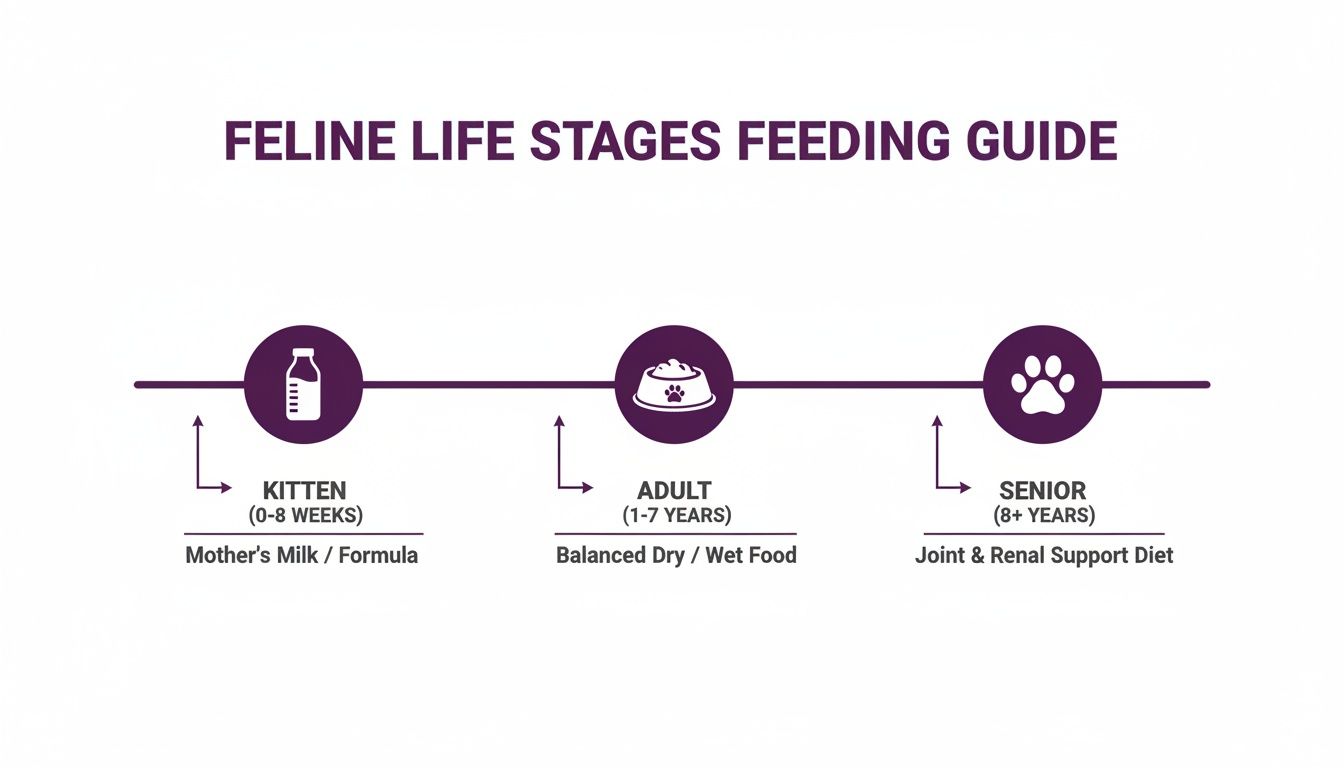
“Floofie’s timeline highlights balanced meal spacing for each life stage.”
Tips To Tweak Your Routine
No two floofs are identical, so adjust these ideas to fit your schedule and your kitty’s style.
- Increase kitten snacks to 6 per day during growth spurts.
- Slot in a midday puzzle-play session for high-energy adults.
- Give seniors extra wet food in slightly smaller portions for easy digestion.
Measure portions carefully and track weight over time. Jot down meal times and moods in a journal or app—patterns will pop up quickly, helping you fine-tune feeding windows and portion sizes. 📝
When To Review And Adjust
Every 4–6 weeks, take a moment to evaluate. Look for shifts in appetite, weight, or energy.
If something feels off, move one meal by 30 minutes or shave off a tablespoon—and observe for two weeks. Unexplained changes? It’s vet time! 🩺
Stay pawsitive—dialing in your cat’s feeding schedule is a rewarding journey. Happy mews! 😽
Calculating Portion Sizes And Methods
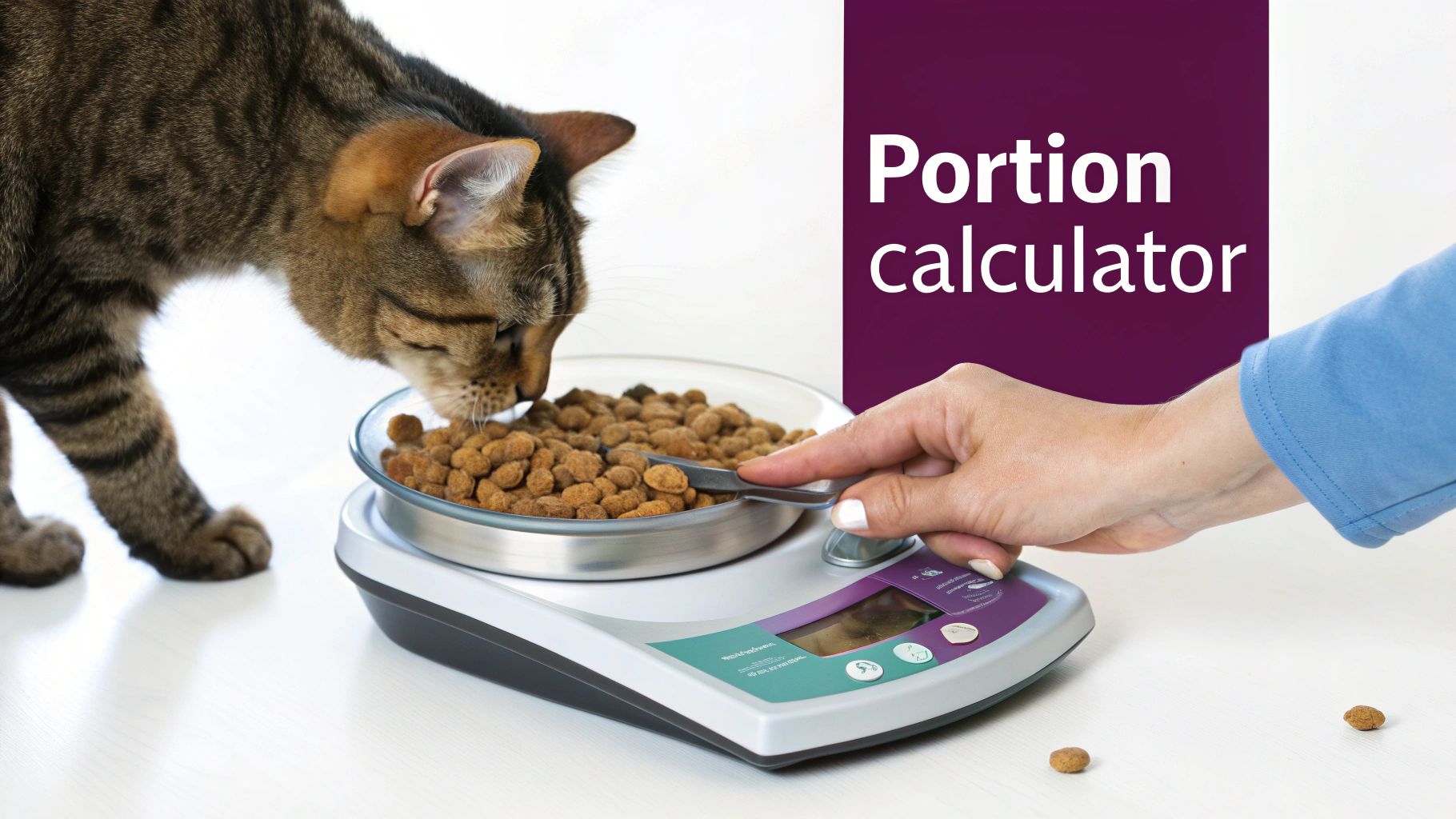
Floofie jumps right into why how much you feed your cat matters just as much as how often. Getting portions right keeps your feline friend spry, playful, and purrfectly lean.
Calculating Daily Calorie Needs
Think of your cat as a little engine that needs fuel for zoomies. Most adult cats run best on 20 kcal per pound of body weight.
Kittens are like sports cars—they burn fuel faster—so increase calories by 50–100%. Seniors slow down a bit; trim their needs by 10–20%.
Use this simple formula:
- Multiply your cat’s weight (lbs) by 20
- Apply the life-stage factor (kitten: +50%, senior: –10%)
- Divide by the number of meals you plan to serve
For example, a 10-lb cat aiming for 200 kcal a day could enjoy four 50 kcal meals. Consistent portions help prevent weight swings and energy spikes. 🌟
Comparing Feeding Tools
Choosing the right feeder can turn mealtime into game time—or a grazing session.
- Free-Feeding: Food is always available but can lead to overeating.
- Measured Meals: You control portions, but you need to stick to a schedule.
- Puzzle Feeders: Encourage hunting instincts and slow down gulpers—see our puzzle feeders for cats.
- Timed Dispensers: Release meals at set intervals—perfect for busy folks and mew-time managers!
“Automated feeders mimic natural hunting by providing small, regular meals,” says Floofie.
In one study, cats on six mini-meals hit their ideal body condition 83.2% of the time. By contrast, two automated meals worked for 40.0%, and free-feeding didn’t hit the mark at all (0%). Learn more about these findings on Sage Journals
Decoding Pet Food Labels
Labels pack a lot of info into tiny print. Start by checking kcal per can or cup.
Next, scan the ingredient list. Lean proteins like chicken or fish will usually top the list, with fewer fillers hiding further down. Adjust your serving size based on the calorie count and your cat’s target weight.
Playful Portion Hacks
Turning meal prep into a mini adventure helps slow down speedy eaters and engages curious cats.
- Scatter kibbles in a snuffle mat so your cat “hunts” each bite.
- Drop wet food into muffin tins, creating bite-sized surprises.
- Try timed dispensers for predictable and playful meal times.
You might also explore different textures—check out our guide on good wet cat food for tasty options that pair well with measured meals.
Fine-Tuning Your Portions
Weigh your cat every two weeks on a home scale to spot trends early. Adjust each meal by 5–10% depending on activity level and body condition.
Look for these good-vibes signals:
- Glossy, healthy coat
- Steady, appropriate weight
- Bright, playful behavior
- Regular hydration
If your cat gains or loses too quickly, tweak the calories or meal count. After a month of adjustments without improvement, reach out to your veterinarian.
Introduce new tools and routines slowly—cats thrive on consistency. With a bit of patience and play, portion math becomes a fun puzzle rather than a chore. 🧩🐾
Happy feeding and purrs! 😽
Avoiding Common Pitfalls And Troubleshooting
Even a spot-on feeding schedule sometimes needs a little extra TLC. Cats have their own quirks—picky nibblers, bowl scratchers and turbo-eaters all come with unique challenges.
Here’s what to watch for:
- Leftover kibble or wet food signaling possible pickiness or health hiccups
- Flipped or scratched bowls hinting frustration or boredom
- Inhaling meals like a racehorse, which can lead to digestive upset
For instance, one curious cat named Mr. Mittens once hurled his bowl across the room when mealtime grew dull. A snuffle mat turned his routine into a scavenger hunt—and transformed dinner into playtime. 🎉
Identifying Feeding Red Flags
Sudden weight changes are the first big warning sign. A 5–10% gain or loss in just a few weeks deserves investigation. And don’t forget to scout for stealth snacking around the house.
“Catching issues early means fewer surprise vet visits later,” recommends Floofie.
If free-feeding goes sideways, either the bowl disappears too fast or it glares at you full-to-the-brim. In those cases, measured meals often restore balance.
Common Pitfalls
- Overfeeding via round-the-clock access leading to chubby kitties
- Underfeeding disguised as picky refusal but causing sluggishness
- Abrupt schedule changes sparking protest meows
Transition your cat to a new routine in small steps—dramatic shifts often backfire.
Solutions For Specific Challenges
Rotate between flavors to outsmart fussy eaters. Try our puzzle feeders for cats to slow down those who gulp kibble like there’s no tomorrow.
- Use timed dispensers for steady portions and predictable meal times
- Shift feeding slots by 15-minute increments each day until you land on the ideal schedule
- If weight trends don’t stabilize, consult your veterinarian to rule out medical issues and adjust calorie targets
By spotting trouble early and using clever tools, you’ll master your cat’s feeding groove without the drama.
Floofie’s Checklist: Keep It Simple And Fun!
- Weigh your kitty weekly to spot sudden changes
- Track mealtime quirks and tweak portions accordingly
- Limit treats to 10% of daily calories
- Rotate toys and feeders to keep dinner entertaining
With these tips in your pocket, mealtime becomes less mystery and more joy—for you and your floofy friend. 😸
Frequently Asked Questions
Your cat nudges its bowl and stares you down. You wonder, “How often should I feed my cat?” Here’s some hands-on advice to keep those purrs rolling.
What If My Cat Skips Meals
Some cats nibble at dawn and then disappear until dinner—like they’re on a feline version of intermittent fasting.
Try offering a small snack 2–4 hours after a missed meal. You may find those whiskers twitching with renewed interest.
“A little patience and tasty morsels can coax even the shyest eater back to the bowl,” says Floofie.
Can I Free-Feed Older Cats
Letting seniors graze can work—provided they keep a healthy weight.
Weigh your cat weekly and watch for unexpected padding. If your floof starts looking rounder, switch to measured meals.
- Use a timed feeder for consistent mini-portions
- Rotate dry kibble and wet food to spark new interest
How Do I Switch Schedules Safely
Abrupt changes mean protest meows. Instead, ease into new times.
Move meal slots by just 15 minutes per day. Once your cat cleans the bowl at the new time, shift it again. Purrfect transition! 🐱
Do I Need To Feed The Same Food Every Time
Variety can be the spice of feline life. Think of rotating flavors like swapping out socks—fresh, fun, and surprising.
Build a Flavor Rotation Plan:
- Introduce one new protein or texture each week
- Note any tummy upsets or extra excitement
Floofie’s Tip: Variety keeps those whiskers on high alert for every single bite. 😸
Want to dig deeper on “How often should I feed my cat,” portion tricks, or picky-eater fixes? Pounce over to Floofie’s blog for extra purr-powered pointers.
Ready to Treat Your Kitty? Discover interactive feeders, playful toys, and gourmet treats at FloofChonk. Meow-worthy shopping awaits!