
How to Deter Cats from Eating Plants

Deterring your cat from snacking on your houseplants is a two-pronged attack: make the plants less appealing and provide much better, safer alternatives. The most effective strategies usually involve things like using citrus sprays, putting plants on high shelves your cat can't reach, covering the soil with textures they hate, and giving them their own dedicated cat grass to munch on.
But first, we have to figure out why your cat is doing it in the first place. Getting that right is the key to a peaceful, plant-filled home.
Why Your Cat Thinks Your Plants Are a Salad Bar
Welcome, fellow plant people and cat parents! 😻 It's a tale as old as time: you love your indoor jungle, you adore your furry overlord, but the two just can't seem to coexist peacefully. Our official mascot, Floofie, gets it. One minute you have a perfect, glossy Monstera leaf, and the next, it’s covered in tiny, suspicious teeth marks. What gives?
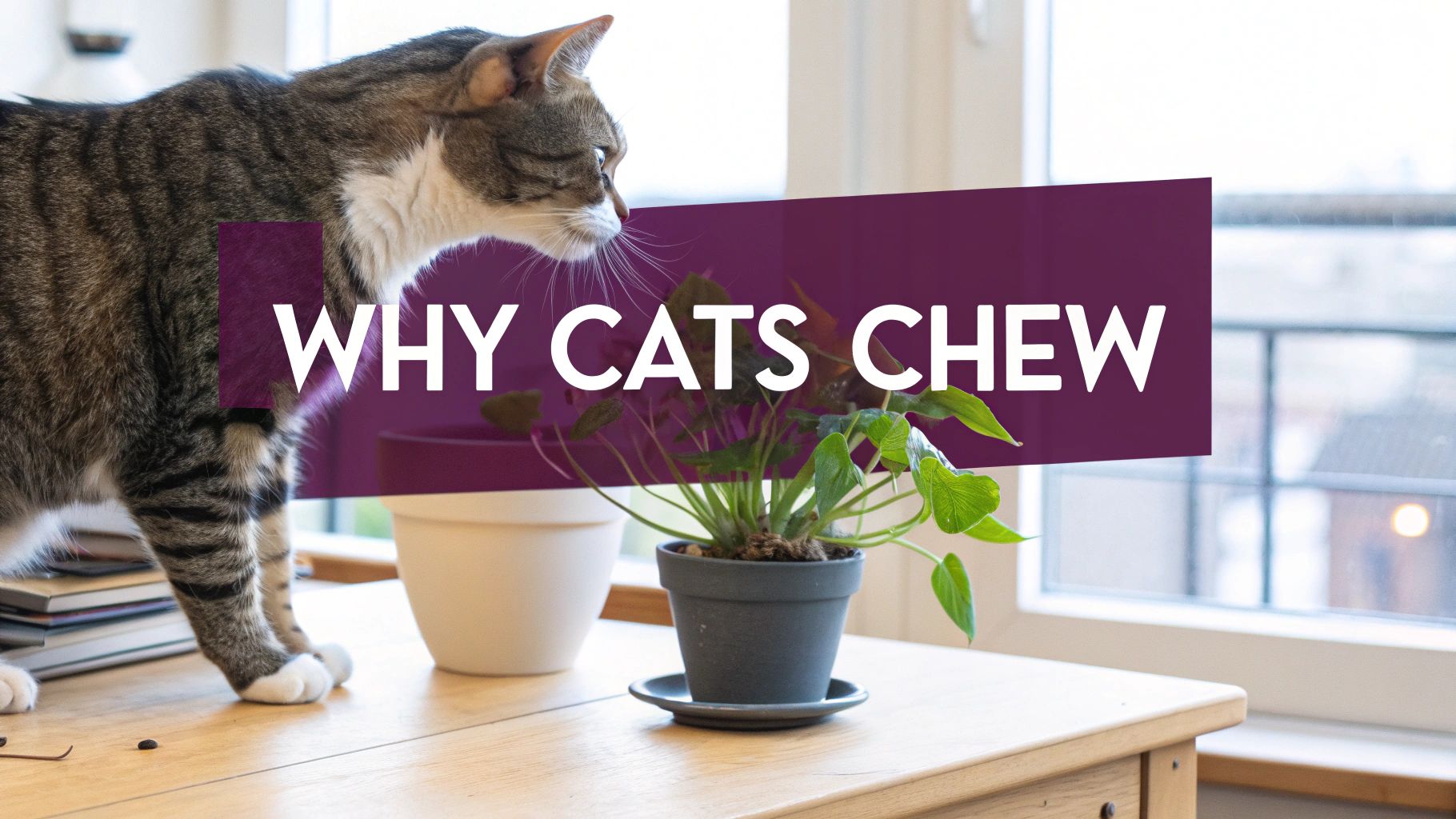
Before you declare war on your little sprout-muncher, let's try to get inside that curious kitty brain. Understanding the 'why' is always the first step. This isn't just random mischief; there's usually a perfectly logical cat-reason behind it.
The Feline Mindset Uncovered
Cats are natural explorers, and a huge part of their exploration involves using their mouths to investigate new and interesting things. That dangling fern leaf or a crinkly palm frond? To your cat, it’s an irresistible invitation to play and nibble. It’s not that different from the way they might gently bite you out of affection or pure curiosity.
If you want to dive deeper into this quirky little habit, we have a whole guide to explore what it means when cats nibble you.
But when it comes to plants, the motivation is often a bit more instinctual. Here’s a quick rundown of the most common reasons your plant has suddenly become a snack.
Top Reasons Your Cat Is Eating Your Plants
Sometimes it's hard to pinpoint the exact reason your cat has decided your ficus is their new favorite chew toy. This little cheat sheet breaks down the most common motivations we see.
| Reason for Plant Nibbling | What Floofie Says It Means | Primary Solution to Try First |
|---|---|---|
| Boredom | "I need a job! Give me something to do besides redecorating your pothos." | Provide more interactive toys and schedule daily playtime. |
| Dietary Cravings | "This salad helps my tummy feel better and moves things along, you know?" | Offer cat grass kits as a safe and fibrous alternative. |
| Texture & Taste | "This leaf is so crinkly and fun to bite! It's like kitty bubble wrap." | Make the plant taste or feel bad with a bitter-tasting spray. |
| Curiosity | "Ooh, what's this new green thing? I must investigate it... with my teeth." | Move new plants out of reach until the novelty wears off. |
Most of the time, it's a combination of these things. A bored cat who also likes the texture of a leaf is a recipe for a chomped-on plant!
More Than Just a Mess
While a few bite marks might just seem annoying, this habit can be seriously dangerous. A shocking number of common houseplants are toxic to our feline friends.
A study in Italy revealed that cats accounted for 26% of all animal poisoning calls related to plants. Tragically, 10.6% of those cases were fatal.
Floofie’s Fun Fact: A cat's sense of taste is pretty different from ours. They can't detect sweetness, but they are highly sensitive to bitter flavors. This is a huge advantage for us—we can use it to make plants taste totally gross to them!
These sobering statistics show just how critical it is for us to learn how to deter cats from eating plants effectively. Keeping your curious kitty safe is, and always will be, the number one purr-iority.
Create a Cat-Safe Indoor Jungle
Ready to build a green space that's 100% Floofie-approved? 🌿 It's totally possible to create a gorgeous, plant-filled home where your cat can also thrive without you having a panic attack every time they get curious. The secret is simply knowing which plants are safe for a nibbler and which ones are a major no-no.
Choosing the right greenery is your first and most important line of defense. It completely removes the biggest danger from the equation. Let's get you shopping for plants with confidence!
Floofie's Favorite Greens: Safe Plants for Cats
Good news! You don’t have to switch to plastic plants just because you have a cat. There's a whole world of beautiful, non-toxic houseplants that can bring your space to life without posing any threat to your furry overlord.
Here are a few of Floofie's top picks that are completely safe for your curious companion:
- Spider Plant (Chlorophytum comosum): These are practically the official plant of cat-friendly homes! Their long, dangly "spiderettes" are super tempting for cats to bat at, and luckily, they're non-toxic.
- Ponytail Palm (Beaucarnea recurvata): Don't let the name fool you—it's not a true palm. This quirky succulent has a fun, bulbous trunk and long, ribbon-like leaves that kitties find irresistible for swatting. Plus, it's tough, low-maintenance, and perfectly safe.
- Rattlesnake Plant (Calathea lancifolia): Looking for a pop of pattern? The Rattlesnake Plant has stunning, wavy leaves that look like a work of art, and it’s completely non-toxic to felines.
- Boston Fern (Nephrolepis exaltata): A true classic for a reason. These lush, feathery ferns look amazing in hanging baskets (which helps keep them out of reach!) and are totally safe if your cat does manage a little taste.
While you're designing your cat-safe jungle, don't forget about overall household safety. This includes using pet-safe pest control methods to make sure the entire environment is free from hidden hazards.
The Big No-No List: Toxic Plants to Avoid
Okay, now for the serious part. Many of the most popular houseplants are, unfortunately, some of the most dangerous for cats. Keeping these out of your home isn't just a suggestion; it's a necessity.
Floofie's Critical Warning: Some plants are so toxic that even drinking the water from their vase can be lethal. If you're ever in doubt, always assume a plant is dangerous until you can prove otherwise.
Here's a shortlist of common culprits you must keep out of your home:
- Lilies (All Lilium and Hemerocallis species): This is public enemy number one. Every single part of the lily plant—pollen, leaves, water—is extremely toxic to cats and can cause swift, irreversible kidney failure.
- Sago Palm (Cycas revoluta): Despite its name, this isn't a true palm at all, and it is incredibly poisonous. Every part of the plant, especially the seeds, can cause severe liver failure and is often fatal.
- Tulips & Daffodils (Tulipa and Narcissus species): These beautiful spring flowers are a problem, especially their bulbs. The bulbs contain concentrated toxins that can cause serious gastrointestinal upset, convulsions, and cardiac issues.
- Pothos & Philodendron: These trailing beauties are everywhere, but they contain insoluble calcium oxalates. If chewed, these sharp crystals cause intense pain, oral irritation, drooling, and swelling of the mouth and throat.
The danger of lilies, in particular, just can't be overstated. Lily toxicity is one of the most common and deadly plant poisonings for cats worldwide. Research has shown that the mortality rate for cats that ingest any part of a lily can approach 100% without immediate, aggressive veterinary treatment.
You can learn more about the critical findings on lily toxicity in cats to understand just how serious this is. It's a risk that is never, ever worth taking! 🐾
Making Your Plants Taste and Smell Awful (to Your Cat)
Alright, if your cat treats your houseplants like an all-you-can-eat salad bar, it's time to change the menu. The goal here is to make your plants completely unappealing without harming them or your curious kitty. Think of it as a little bit of sensory warfare. 😼
Cats have incredibly sensitive noses and taste buds, a fact we can use to our advantage. By making your plants smell or taste gross to them, we can send a clear "no snacking" message.
Using Scents and Tastes as a Deterrent
This is all about making your plants wear an invisible "No Cats Allowed" sign. The best part? You probably already have the ingredients you need right in your kitchen.
Cats are famously turned off by certain smells, especially citrus. That lemon you use for your tea? It's a majorly offensive scent to your cat. 🍋
You can easily whip up a DIY repellent spray by mixing water with a little lemon, lime, or orange juice. A light spritz on the leaves can work wonders. Some people even place orange or lemon peels directly on the soil to create a citrus force field around their plants. Gardeners might find that a fruit tree companion planting chart offers similar ideas, showing how certain plants can naturally keep pests away.
If your homemade solution isn't quite doing the trick, there are some fantastic commercial options out there. A good bitter-tasting spray is often the next best step.
These sprays are specifically made to taste terrible to pets but are completely safe. Usually, one little taste of a bitter-sprayed leaf is all it takes for a cat to decide that snacks are better found elsewhere.
Commercial Sprays vs. DIY Solutions
So, should you go with a homemade spray or a store-bought one? It really depends on how determined your cat is. For a cat who just casually chews now and then, a simple citrus spray might be enough to curb the habit.
But for the truly persistent plant connoisseur, you might need to bring out the big guns. A commercial bitter-tasting spray often has more staying power and a much more potent taste. It's all about finding what your specific fur-baby dislikes the most.
- DIY Citrus Spray: Best for mild cases and for pet parents who prefer an all-natural approach.
- Commercial Bitter Spray: A more powerful option for determined plant chewers. Many cat owners have great success with products like a bitter-tasting spray.
Research actually backs this up. Studies have shown that when plants are treated with these types of deterrents, chewing incidents can drop by over 70%. It's a simple, effective strategy that works with your cat's natural instincts.
Of course, deterrents are only one part of the puzzle. Knowing which plants are safe to have in the first place is just as critical. This chart breaks down some common friends and foes in the plant world.
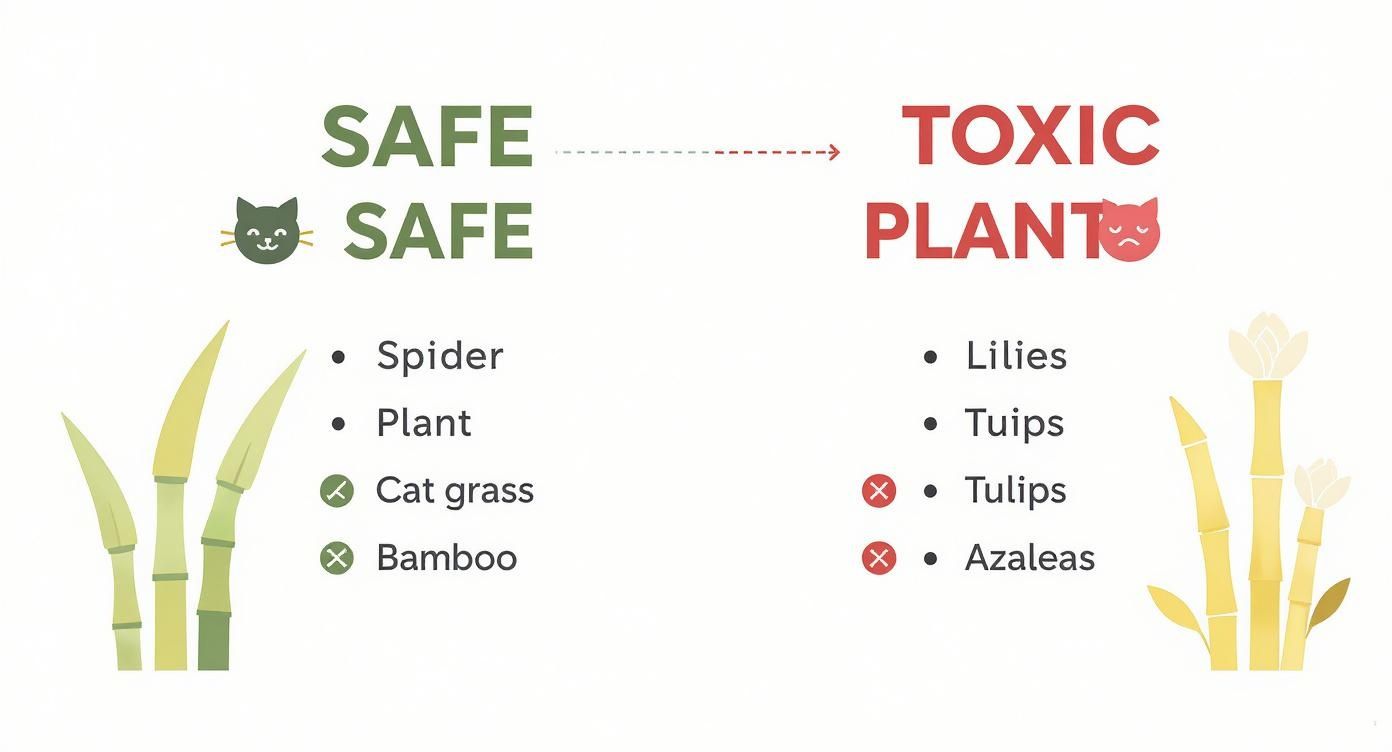
As you can see, while plenty of gorgeous plants are perfectly fine for a cat-filled home, common ones like lilies and tulips pose a serious danger. When in doubt, it's always better to be safe than sorry! 🐾
Designing a Cat Proof Plant Setup
Sometimes, the best offense is a good defense—or in this case, a good vertical defense! 🧗♀️ If sprays and deterrents just aren't doing the trick, it's time to get strategic with your plant placement. A little clever rearranging can make your greenery physically inaccessible to your furry little mountain climber, solving your plant-nibbling problems for good.
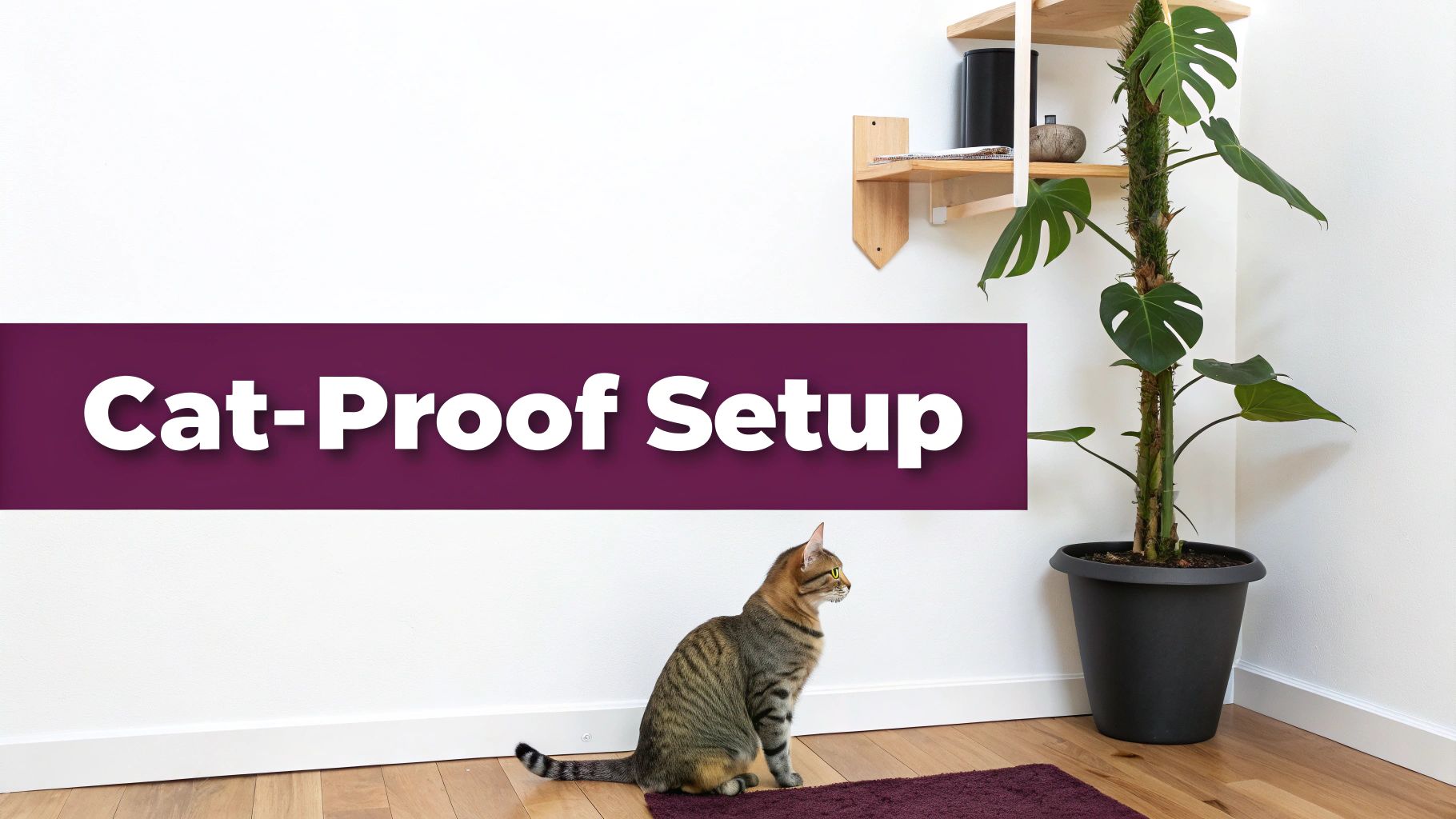
This is all about putting on your cat-goggles and thinking like they do. Where can they jump from? What bookshelf can they use as a launchpad to get to that tempting fern? By outsmarting your little acrobat, you can create a beautiful indoor jungle that’s also completely chew-proof.
Go Up, Up, and Away
Often, the simplest solution is the most effective: just get your plants off the floor. Moving your green babies to a higher elevation is a total game-changer for keeping them safe from curious paws and teeth.
Here are a few stylish ways to elevate your plant game:
- Hanging Planters: These are a fantastic option, especially for trailing plants like Pothos (which are toxic!) or Boston Ferns (which are safe!). They add a cool, dimensional look to your room while keeping leaves well out of a cat's reach.
- Wall-Mounted Shelves: Install a few floating shelves high up on a wall, making sure they aren't near any launch-friendly furniture like couches or cat trees. This creates a dedicated, cat-free zone for your most precious plants.
- Tall Plant Stands: A sturdy, well-balanced plant stand can lift a potted plant just enough to make it uninteresting or too much of a hassle for your cat to bother with.
This approach is just one piece of the puzzle. For a complete look at keeping your home safe, check out our full guide on how to cat-proof your home, which covers everything from wires to windows.
Building a Stylish Plant Fortress
If going vertical isn't an option for every plant, you can still create physical barriers that are both effective and easy on the eyes. You don't have to turn your living room into a high-security prison for your ficus!
Floofie's Design Tip: Think of physical barriers as accessories for your plants. A beautiful glass cloche or a decorative wire cage can add a touch of vintage charm while secretly doing the important job of cat-proofing.
Don't forget about the soil, which many cats find irresistible for digging in or, worse, using as a litter box. You can cover the topsoil with large, smooth river stones or even a layer of decorative pinecones to make the surface unpleasant for their paws.
For the truly determined feline, a product like double-sided tape applied around the pot's rim creates a tacky sensation they'll quickly learn to avoid. Me-OWCH! 🐾
Redirecting Your Cat's Chewing Instincts
So, you've turned your plants into a fortress and made the leaves taste terrible, but your cat is still giving them the side-eye. What now? A bored cat is a mischievous cat, and sometimes that plant-chewing habit is just a symptom of untapped kitty energy. It's time to redirect that nibbling instinct toward something positive! 😼
Instead of only saying "no" to your houseplants, we're going to give your little hunter a big, enthusiastic "YES!" The goal here is to make the approved activities way more fun and rewarding than chomping on your precious calathea. This isn't just about distraction; it's about fulfilling their natural instincts in a safe and satisfying way.
Give Them a Garden of Their Own
Honestly, one of the easiest ways to stop your cat from eating your plants is to give them their very own. A small, dedicated "kitty garden" is a fantastic strategy to satisfy their craving for greens. It provides a safe, approved outlet for munching, which can be a huge help for cats who just really want a bit of fiber.
Here are a couple of Floofie's favorite options for a kitty-safe snack bar:
- Cat Grass: This isn't a single type of plant; it's usually a mix of grasses grown from seeds like wheat, barley, or oat. It's ridiculously easy to grow in a small pot on a windowsill and provides fiber that can aid their digestion. You can find simple cat grass kits that have everything you need.
- Catnip or Silver Vine: While not all cats react to catnip, many go absolutely bonkers for it! Offering a fresh catnip plant can be a delightful treat. For kitties who don't respond to catnip, silver vine is a great alternative that often produces a similar euphoric effect.
Floofie’s Pro Tip: Place their "yes" plants somewhere they can easily reach, far away from your "no" plants. This helps draw a clear line between what's theirs and what's yours. Praise them like they just won an award whenever you see them enjoying their own little garden! 🎉
Level Up Their Playtime and Enrichment
A cat who is mentally and physically stimulated is far too busy to plot against your ponytail palm. Feline enrichment is all about engaging their powerful hunting instincts through play and problem-solving, and it’s a crucial tool in your quest to keep those plants safe.
This means putting away that boring old fuzzy mouse and introducing toys that make them think, chase, and pounce. Interactive feeder toys are brilliant because they make your cat work for their treats, mimicking the challenge of a real hunt. Instead of just setting down a bowl of food, hide kibble inside a puzzle feeder and watch their brain go to work.
Scheduled play sessions are also non-negotiable. Tiring out your tiny predator with a good "hunting" session using a feather wand or laser pointer twice a day can make a world of difference. For more inspiration, explore our guide on how to entertain indoor cats for a treasure trove of ideas.
Common Questions About Cats and Plants
Welcome to the troubleshooting zone! Even with the best game plan, our feline friends can leave us scratching our heads. Let's tackle some of the most common questions cat parents have when trying to broker a peace treaty between their fur babies and their houseplants.
Is Spraying My Cat with Water a Good Idea?
I get this question all the time. While it might seem like an easy fix, spraying your cat with a water bottle is a big no-no. Sure, it stops them in the moment, but it also creates fear and anxiety.
Even worse, your cat will connect you with the punishment, not the act of munching on the plant. This can seriously damage the bond you share, and that's the last thing any of us want.
A much better (and kinder) approach is to make the plant itself the "bad guy." A quick spritz of a bitter-tasting spray on the leaves teaches your cat that the plant tastes gross all on its own. Pair that with giving them a delicious "yes" plant, like one of our cat grass kits, and they'll learn to make better choices without ever having to fear you.
What Should I Do If My Cat Ate a Toxic Plant?
First, take a deep breath and stay calm. Gently check your cat's mouth and remove any bits of the plant you can see. It's really important that you do not try to make your cat vomit unless a vet specifically tells you to.
Next, act fast. Immediately call your veterinarian or an animal poison control hotline.
A must-have number for every pet parent's phone is the ASPCA Animal Poison Control Center at (888) 426-4435.
If you know the name of the plant, have it ready. If not, snap a quick photo or be prepared to describe it. Quick action is the key here, as many plant toxicities are very treatable when caught early.
My Cat Is Relentless. What Are My Next Steps?
So, you've tried the citrus sprays and moved your snake plant to a higher shelf, but your furry menace is still finding a way. I see you. When the simple deterrents fail, it’s time to level up your game. A persistent cat is often a bored cat.
Take a hard look at their daily routine. Are they getting enough focused playtime and mental stimulation?
- Introduce puzzle feeders. These make them work for their food, satisfying that deep-seated need to hunt and forage. We have a great puzzle feeder in our shop!
- Schedule two dedicated "hunt" sessions each day with a super engaging toy, like a feather wand. Get them running, jumping, and panting.
- Rotate their toys. Don't leave the same old things lying around. Keep their environment fresh and exciting.
If more enrichment doesn't solve it, you may need to make the plants completely inaccessible. This could mean investing in a beautiful glass terrarium for your prized plants or even designating one room as a plant-only, cat-free zone. For the most stubborn chewers, re-homing any toxic plants is always the safest choice for their well-being.
Will My Cat Ever Grow Out of This?
Honestly? Probably not. While some kittens are notorious for chewing on everything and might calm down a bit with age, plant-eating isn't really a behavior cats "grow out of." It's often driven by deep instincts—curiosity, a need for fiber, or boredom—that stick with them for life.
It's much safer to assume the behavior is here to stay and focus on consistent, long-term management strategies. Relying on them to simply stop one day is a risky gamble, especially when their health is on the line. Just keep offering those safe alternatives, making your plants unappealing, and ensuring dangerous ones are always out of paw's reach. 🌿
At FloofChonk, we know that creating a harmonious home for both your plants and your pets is the ultimate goal. For more fun toys, stylish apparel, and Floofie-approved gear to keep your kitty happy and distracted, check out our collection at https://www.floofchonk.com