
How to Make Cats and Dogs Get Along: A Pawsitive Guide From Floofie 🐾

So, you're dreaming of a world where your cat and dog are the best of friends, cuddling on the couch together? That's the goal! 😻 And just like any great relationship, it all starts with a solid foundation.
The real secret to making cats and dogs get along is all about patience, careful preparation, and gradual introductions. This isn't a race, fur-iend. Floofie knows that success hinges on creating separate, secure spaces before they ever meet, allowing you to manage their first interactions and build positive vibes from the get-go.
Creating a Safe Foundation for Harmony
The journey to a harmonious household begins long before your furry friends ever lay eyes on each other. It’s all about setting up the purr-fect environment where everyone feels safe.
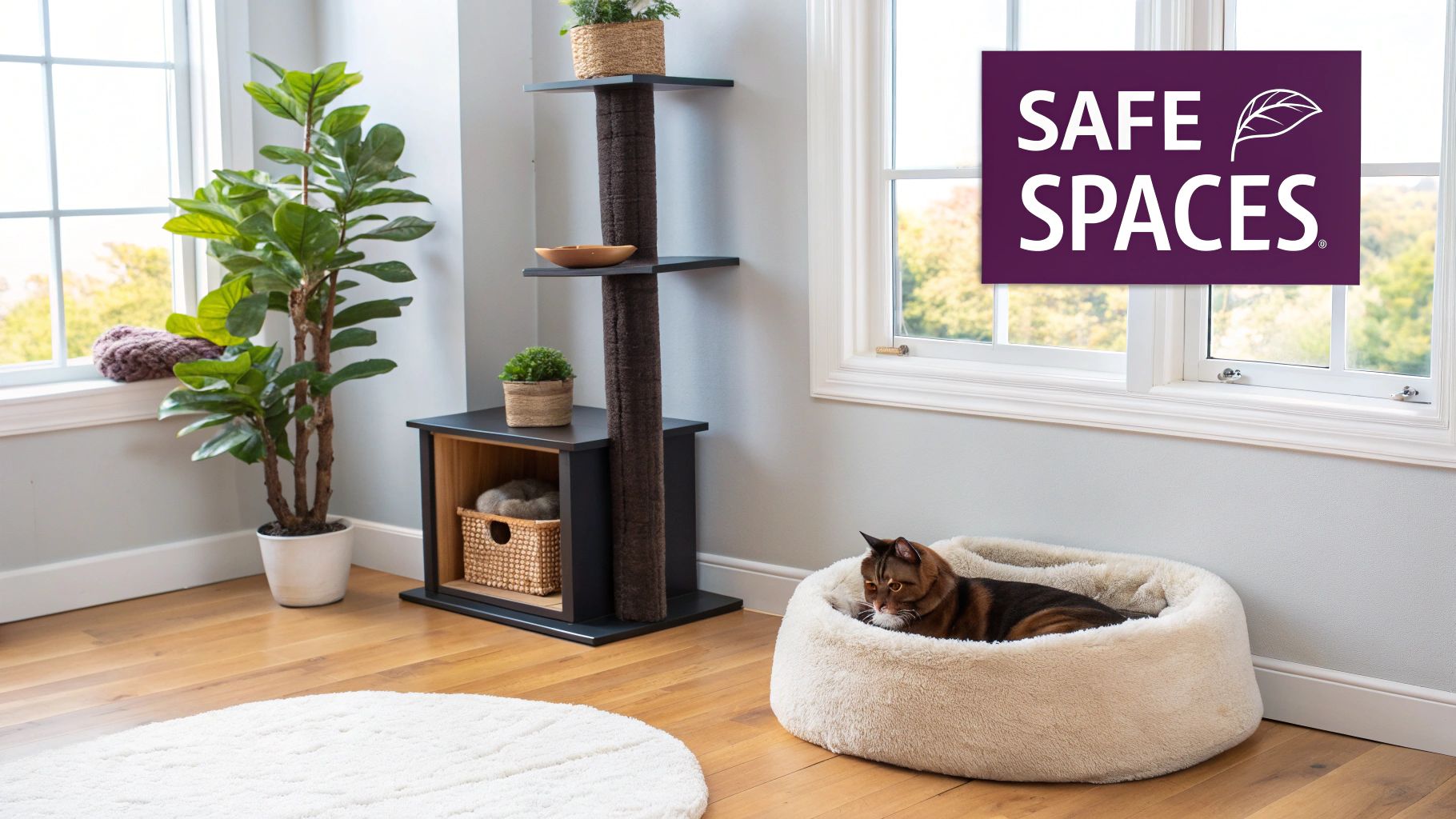
This first phase is about creating two distinct territories: a safe and cozy 'canine den' for your dog and a secure 'feline fortress' for your cat. Each pet absolutely needs a private sanctuary where they can eat, sleep, and just chill out without feeling threatened by the other's presence.
Design A Feline Fortress
When it comes to your cat, think vertically, hooman! 😼 Cats feel safest when they can look down on their kingdom from up high. This natural instinct is your biggest advantage in making them feel secure.
- Elevate Everything: A tall, sturdy cat tree isn't just a nice-to-have; it's a non-negotiable. It gives your cat a dog-free zone to escape, nap, and just observe the world from a safe vantage point.
- Create Safe Zones: Use baby gates to block off at least one room that will be exclusively for your cat. Our Floofie-Approved Paw-proof Pet Gate is purr-fect for this! This gives them a guaranteed retreat they can count on.
- Essential Resources: Make sure their litter box, food, water, and favorite beds are all inside their dedicated space. This ensures they have everything they need without having to brave shared territory if they're feeling anxious.
Remember, a cat with access to vertical space is a more confident and less stressed-out cat. This confidence is absolutely essential for a successful introduction to a canine companion.
Curate A Canine Den
Your dog also needs a personal space where they can decompress. This isn't just about comfort; it helps manage their excitement and teaches them that calm behavior is rewarded. A comfy crate or a designated corner with their bed and favorite toys works wonders. Floofie thinks a cozy Floofie-Approved Calming Cuddle Blanket makes a den extra special!
Your Pre-Introduction Peace Checklist
Here are the must-have items and actions to complete before your pets meet. Getting this right is the first step toward a harmonious home.
| Checklist Item | Why It's Paw-sitively Essential | Floofie's Top Product Pick |
|---|---|---|
| Sturdy Cat Tree | Provides a safe, elevated escape route and viewing perch for your cat. | Our Epic Cat Furniture Collection 🏰 |
| Dog Crate/Bed | Gives your dog a designated "calm down" spot to relax and feel secure. | The Floofie-Approved Calming Cuddle Blanket |
| Baby Gates | Creates physical separation and dog-free zones for your cat. | Floofie-Approved Paw-proof Pet Gate 🚧 |
| Separate Food/Water Bowls | Prevents resource guarding and territorial stress between pets. | Our Stylish Bowl Collection |
| Pheromone Diffusers | Releases calming pheromones to reduce anxiety for both cats and dogs. | Floofie-Approved ZenZone Diffuser 😌 |
| High-Value Treats | Crucial for creating positive associations during scent swapping and training. | Delicious Treats for All Paws |
Nailing this setup is more than just prep work—it's about building an environment where both pets can feel secure from day one. For even more fantastic ideas, check out this guide on creating a pet-friendly home. It’s packed with expert advice to get your space ready for peaceful coexistence. 🐾
The Power of a Scent-sational Introduction
Alright, let's talk about some behind-the-scenes pet diplomacy. 🕵️ Floofie says the most crucial part of getting a cat and dog to become friends happens before they even lay eyes on each other. I'm talking about the 'scent swap,' and it is an absolute game-changer for engineering a peaceful first impression.
Think of it this way: a pet's nose is basically their 24-hour news channel. Scent tells them everything—who was here, what they’re about, and if they're a potential friend or foe. By letting them get a whiff of each other first, you’re essentially giving them a sneak peek. It turns a total stranger into a familiar acquaintance, which is huge for lowering their anxiety before the big meeting.
Let the Scent Swapping Begin
This whole process is about making the unfamiliar, familiar. You’re simply going to take something with your cat's scent on it and give it to your dog, and do the same in reverse. This lets them investigate the new roommate's smell in a totally safe space, without the pressure of a face-to-face meeting.
The goal here is to start building a positive association with that new smell. It’s like sending a friendly, nicely scented letter before a first date! 💌
Here’s how you do it:
- Grab a Scent Carrier: You'll want something that holds scent really well, like a soft blanket, a favorite plush toy, or even an old t-shirt of yours. Our Floofie-Approved Calming Cuddle Blanket is purr-fect for this because it holds onto smells like a champ.
- Rub and Collect: Gently rub the blanket on your cat, paying extra attention to their cheeks and the base of their tail where their scent glands are concentrated. For your dog, a good rub on their chest and back will do the trick.
- Place and Observe: Now, put the cat-scented item in your dog's favorite nap spot and the dog-scented one in your cat's safe zone. Then, just step back and let them explore it on their own time.
Floofie’s Pro Tip: Whatever you do, don't force them to interact with the scented item. Just leave it in their space and let curiosity work its magic. We're aiming for positive, voluntary experiences only. ✨
Decoding Their Reactions
Your pets' body language will tell you everything you need to know. A little sniffing is a great sign! Your dog might give a curious tail wag, while your cat might approach cautiously, take a sniff, and then walk away like it's no big deal. All of this is perfectly normal.
What if your dog gets a little too into it and starts treating the cat blanket like a new chew toy? No problem. Just redirect their attention with a high-value treat and try again later with something less "fun," like a towel. And if your cat hisses at the dog's scent and steers clear? That’s okay, too! It just means they need a bit more time to process. For more tips on this, check out our guide on how to build trust with a cat who's feeling a little unsure.
It's important to remember that a dog's natural temperament plays a huge role here. A Psychology Today analysis found that dogs with low predatory drives have an 85% higher success rate when introductions are handled slowly. This scent-swapping stage is a massive part of that slow, steady, and successful process.
Creating Positive Smell Memories
The final piece of the puzzle is to link that new smell with something they absolutely love. Every time your dog calmly sniffs the cat's blanket, shower them with praise and a tasty treat. When your cat gets near the dog's scented item without freaking out, toss a delicious snack their way.
You are literally rewiring their brain to think: "That new smell means good things happen to me!"
This simple step builds a foundation of positivity that will make every future interaction worlds easier. It’s a small effort for a huge payoff. 💖
Managing the First Visual Meeting
After all the scent-swapping diplomacy, it's finally time for the main event: the first visual meeting! 🙀 Don't worry, this isn't a chaotic free-for-all. We're aiming for "sight without fright"—a calm, controlled, and super positive first glimpse that leaves everyone feeling relaxed and curious, not terrified.
The secret to a successful first look is creating a safe physical barrier. Think of it as a VIP lounge situation—they can see each other, but they can't physically interact just yet. This simple step keeps stress levels low and gives you complete control.
Setting the Stage for Success
Your goal is to make this first peek as boring (in a good way!) as possible. You want them to see each other and think, "Oh, you again. No big deal." A sturdy baby gate or a screen door is your best friend here. A baby gate tall enough that your dog can't just hop over is ideal, like our Floofie-Approved Paw-proof Pet Gate.
This visual barrier is non-negotiable. It allows your cat to feel secure and gives them an easy escape route if they feel overwhelmed, while your dog can be kept on a leash for extra control. Your cat must always have the option to retreat to their 'feline fortress.'
Floofie's Golden Rule: Never, ever hold your cat or force them to get closer to the dog. This can make them feel trapped and may lead to scratching or biting out of fear. Let them approach and retreat on their own terms.
This simple infographic outlines the positive association process you started with scent swapping, which you'll now continue into the visual stage.
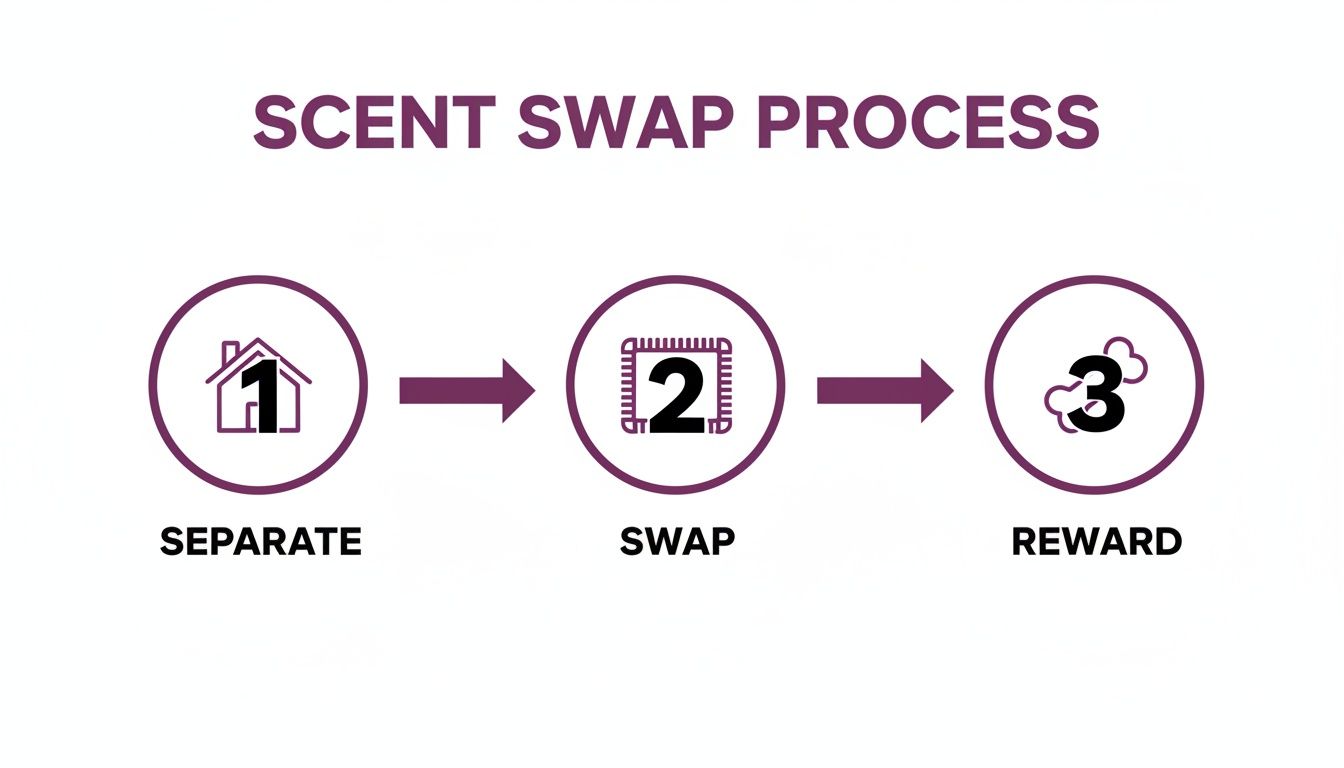
This flow shows how separating the pets, swapping their scents, and rewarding calm behavior creates a foundation of positive feelings to build upon.
The Power of Parallel Activities
Now for the fun part! This is where you become a master of positive association. The idea is to have your pets do something they love, but on opposite sides of the gate. This teaches them that amazing things happen when that other furry creature is around.
- Mealtime Magic: Feed your cat and dog their meals on opposite sides of the barrier. Start with their bowls far apart and gradually move them closer over several sessions as they become more comfortable.
- Playtime Peace: Engage both pets in a calm play session. Your cat could be batting at a wand toy while your dog quietly works on a puzzle feeder. They're sharing the space peacefully without direct interaction.
- Treat Time Triumph: Simply sit with your pets on either side of the gate and hand out high-value treats for calm behavior. If they look at each other and then look back at you calmly, that’s jackpot behavior! 🎉
These parallel activities are incredibly powerful. They help rewire your pets’ brains to associate the sight of the other animal with their favorite things in the world: food, play, and treats!
Reading the Room: Body Language Basics
Becoming fluent in pet body language is your superpower during this stage. You need to know when things are going well and, more importantly, when it's time to call it a day.
Positive Signs to Reward:
- Dog: A relaxed body, soft eyes, a gentle and loose tail wag (not a stiff, frantic one!), and ignoring the cat are all great signs. A little curious sniff in the air is fine, but intense staring is not.
- Cat: A slow blink is the ultimate sign of trust! Look for a relaxed tail (held high with a little curve or resting calmly), ears pointed forward, and a general sense of curiosity rather than fear.
Signs It's Time for a Break:
- Dog: Stiff body, intense staring (fixating), whining, barking, or lunging at the gate. Any sign of a high prey drive needs to be immediately and calmly interrupted.
- Cat: Hissing, growling, swatting, flattened ears, a puffed-up tail, or hiding. If your cat immediately flees and hides, the session was too much, too soon.
Keep these initial visual meetings incredibly short—start with just five minutes. The goal is always to end on a positive note before anyone gets stressed out. It's far better to have ten successful 2-minute sessions than one disastrous 20-minute one. Patience is the name of the game, and Floofie is cheering you on every step of the way! 🐾
Building Friendship Through Training and Play
Okay, so they've had their first supervised look at each other and no one freaked out. Success! 🎉 Now the real work—and the real fun—begins. This is where you graduate from polite introductions to actually building a friendship. The secret sauce? A mix of smart training and genuinely happy, shared moments.
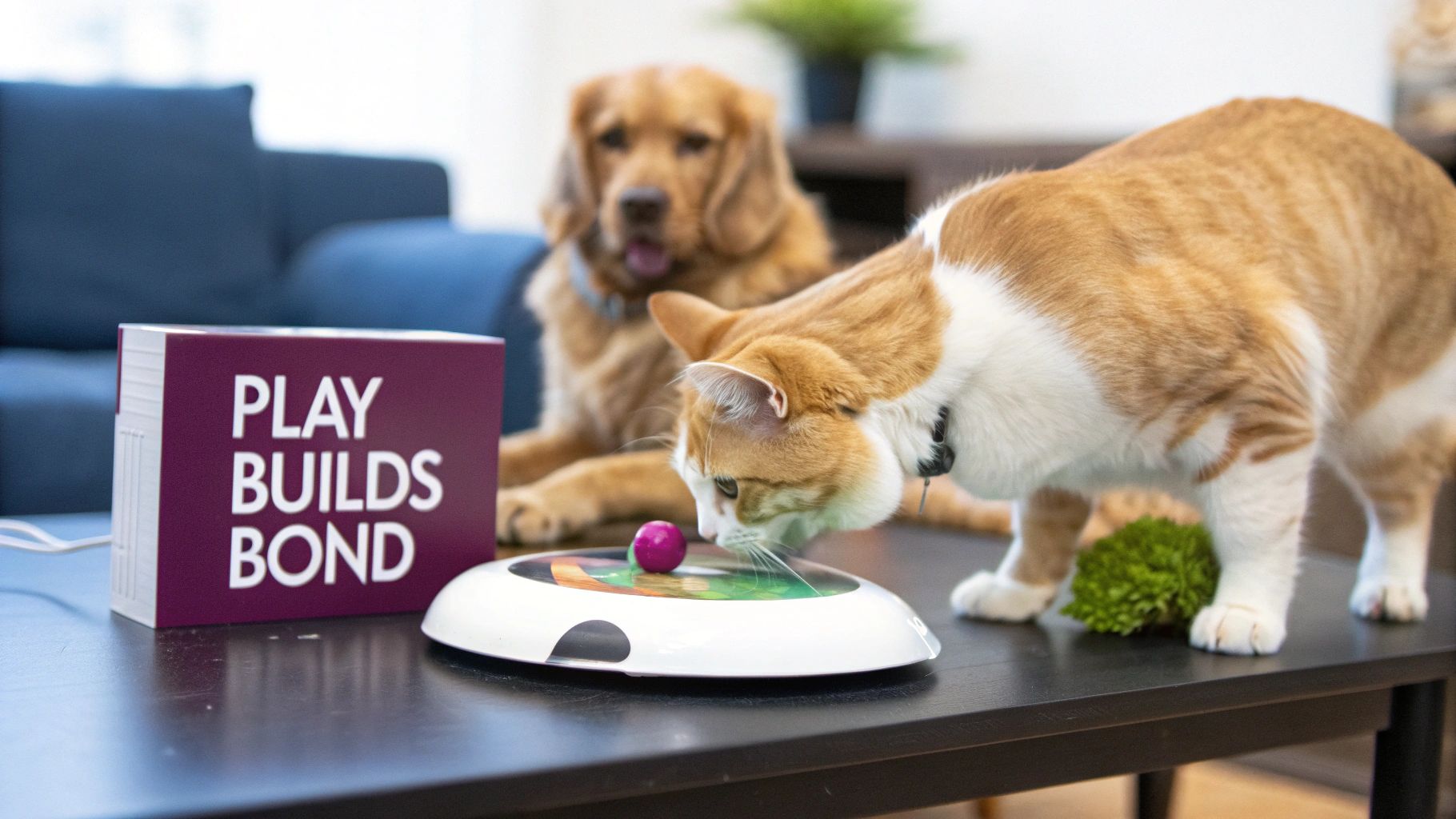
The goal from here on out is simple: teach both pets that amazing things happen when they're together and calm. For your dog, this means learning some impulse control. For your cat, it's about getting rewarded for being brave enough to chill in the dog's presence.
Essential Training for Your Dog
A trained dog is a predictable dog, and predictability is exactly what your cat needs to feel safe. Before you even think about off-leash hangouts, your pup needs to master a few key commands. These are your peace-keeping superpowers.
- A Rock-Solid 'Leave It': This is your non-negotiable "please don't chase the kitty" command. It's all about teaching impulse control when that fluffy cat tail starts twitching.
- A Calm 'Stay' or 'Place': Being able to send your dog to their bed and have them actually stay there is a total game-changer. It lets you control the energy in the room and gives your cat the space to explore without a dog nose in their business.
- A Reliable 'Come': A solid recall means you can get your dog's attention and call them away from a situation before it even thinks about getting tense.
Work on these every day in short, fun sessions (away from the cat at first!). Use high-value treats and make it the best game ever.
Rewarding Your Cool Cat
Your cat has a job to do, too, and it’s a big one: stay relaxed. Every single time your cat is in the same room as the dog (who is on a leash, of course) and isn't hissing or hiding, it's party time. 🎉
Break out the good stuff—the tuna, the chicken, the treats they'd do anything for. This forges a powerful connection in their brain: Dog's presence = delicious snacks raining from the sky. It's simple psychology, and it works.
Floofie’s Top Tip: Keep these initial shared sessions short and sweet. Always, always end on a high note while everyone is still calm. This makes them actually look forward to the next time.
The Magic of Parallel Play
One of the absolute best ways to build a bond is through shared positive experiences. "Parallel play" is a technique where both pets are doing their own fun thing, just in the same room. It teaches them to associate each other’s presence with peace and enjoyment.
Picture it: your cat is totally absorbed in batting at our Smart UFO Cat Toy, lost in their own little world. A few feet away, your dog is laser-focused on a puzzle toy stuffed with treats.
This is pure gold. 🏆 Both pets are stimulated, happy, and being rewarded for calm behavior while near each other. They're learning that being together is enriching, not stressful.
Factors That Influence Success
Of course, every cat-dog duo is different. But some things can definitely stack the odds in your favor. Research shows that making sure your pets are neutered boosts the chances of success by 68% for cats and 58% overall.
Dogs with a low prey drive tend to coexist happily 75% of the time. For more playful pups, consistent leashed meetings for four to six weeks can cut chasing incidents by a huge 80%. And here's a great tip from Europe, where 65% of mixed-pet households use our Floofie-Approved ZenZone Diffuser to create a calmer home.
Don't forget vertical space! Giving your cat tall trees and shelves where they can get up high can slash their stress levels by 70%. You can discover more insights about these pet trends and how they apply to your home.
Remember, you're not trying to force a friendship overnight. You're patiently building a foundation of positive, rewarding moments that create trust. With the right training and plenty of fun, you're paving the way for a beautiful friendship. Floofie is cheering you on! 🐾
Troubleshooting Common Introduction Setbacks
So, you hit a speed bump on the road to a peaceful, multi-species household? Don't panic! 🙀 Introducing a cat and dog isn't always a straight line to cozy naps and happy purrs. Hitting a snag is completely normal, and honestly, Floofie has seen it all. Patience is your best friend here, and we've got the troubleshooting guide you need.
Setbacks like hissing, growling, or a little too much chasing are just signals from your pets. They aren't trying to be "bad"—they're communicating stress and discomfort. Your job is to play detective, listen to what they're telling you, take a small step back, and tweak the game plan.
Decoding the Drama: What Hissing and Growling Really Mean
Is your cat hissing every time the dog even thinks about walking past? Is your pup letting out a low, rumbly growl? As alarming as these sounds are, they're critical communication tools. It’s your pet’s way of shouting, "Hey, I am not comfortable with this situation! Give me some space, please."
It is absolutely crucial that you don't punish these warnings. Scolding a dog for growling can teach them to skip the warning and go straight to a bite. Instead, think of it as valuable feedback. The second you hear a hiss or growl, calmly increase the distance between them. This could mean leading your leashed dog into another room or tossing a high-value treat away from the conflict to encourage your cat to move.
Floofie’s Reality Check: Progress is never a straight line. You might have three amazing days in a row, followed by one where things feel tense again. This is all part of the process! The goal is simply to have more good days than bad and to learn from every little setback.
When the Chase Is On: Managing Prey Drive
One of the most common—and frankly, most dangerous—issues is a dog’s instinct to chase a cat. This is rarely true aggression. More often, it's a deeply wired prey drive, and from the cat's perspective, it's absolutely terrifying. If you see your dog get fixated, lock eyes on the cat, and look like they’re about to bolt, it’s time for some serious management and counter-conditioning.
Your primary goal here is to teach your dog that looking calmly at the cat is way more rewarding than giving chase. This takes time, consistency, and a pocketful of irresistible treats.
- Keep That Leash On: During any session where they share space, your dog must stay on a leash. This isn't just for safety; it's your number-one management tool.
- Redirect and Reward: The moment your dog looks at the cat and then looks back at you without reacting, mark that behavior with an enthusiastic "Yes!" and give them an amazing treat. You're rewarding the choice to disengage.
- Practice 'Look at That': This is a great game for teaching your dog to look at something "exciting" (like the cat) and then immediately look back to you for their reward. It helps change their emotional response from high-arousal excitement to calm anticipation.
If that chasing instinct seems particularly intense or you're struggling to manage it, that's a clear sign you need a professional. For a deeper dive into this specific problem, check out our expert guide on how to stop a dog from chasing a cat.
The Case of the Vanishing Cat
What if your cat's reaction is to simply disappear under the bed for days at a time? This is a huge red flag for extreme fear. Your cat's world has been turned upside down, and their sense of security is gone. The only fix is to rebuild that confidence from scratch.
First, take a giant step back in the introduction process. Go all the way back to complete separation and re-start with gentle scent swapping. Make sure their "feline fortress" is 100% dog-free and decked out with all their favorite things—cozy beds like our Floofie-Approved Calming Cuddle Blanket, toys, and maybe a calming pheromone diffuser like our Floofie-Approved ZenZone Diffuser. Spend time playing with them in their safe space to remind them they're still the king or queen of their castle.
Believe it or not, a slow, structured introduction is backed by real data. One key metric shows that 83% of owners who use vet-approved separation methods see their pets learn to tolerate each other within just three weeks, avoiding common aggression issues. This controlled approach is vital. In countries like Germany, where pet ownership is nearly split 50-50 between cats and dogs, 70% of peaceful pairs are the result of owners who started with scent swapping first. It just goes to show how critical those early, indirect steps are. (Read more about these global pet ownership trends).
Knowing When to Call a Professional
Sometimes, no matter how hard you try, the challenges are just too big to handle alone. If you're seeing consistent, unprovoked aggression, if either pet seems constantly on edge, or if you simply feel unsafe or out of your depth, it is time to call in the experts.
A certified animal behaviorist or a veterinary behaviorist can create a plan tailored specifically to your pets and your home. They are trained to spot subtle triggers you might be missing and can give you the tools to manage the situation safely. Investing in professional help isn't a sign of failure—it's an act of love for both of your pets, and it's the best way to ensure everyone's long-term safety and happiness. 💖
Frequently Asked Questions About Pet Harmony
Got a few more questions rattling around? Don't worry, that's completely normal! Floofie has pulled together some of the most common things pet parents ask when they're navigating this journey. Here are some quick, honest answers to help you out.
How Long Does It Usually Take for a Cat and Dog to Get Along?
Oh, if only there was a magic formula! The honest truth is it can take anywhere from a few weeks to several months for a real, comfortable relationship to form. There’s no universal timeline, and every pair of animals is different.
Factors like your pets' ages, their personalities, and any past experiences they've had with other animals play a huge role. The absolute best thing you can do is move at their pace. Patience is your biggest asset here, so never try to rush it.
Is It Better to Get a Puppy or an Adult Dog When I Already Have a Cat?
This is a classic question, and there are good arguments for both sides. It really comes down to your cat's personality and what you're prepared for.
- Puppies: On one hand, you can socialize them with your cat from a young age. On the other, their chaotic, boundless energy can be seriously stressful for a resident cat who just wants to nap in peace.
- Adult Dogs: An adult dog who has a known, positive history with cats can be a fantastic, calmer choice. You have a much better idea of their established temperament right from the start.
The most important thing isn't the dog's age—it's their individual temperament and prey drive. A calm adult dog is often a much better match for a cat household than a high-energy puppy.
What Are Some Clear Signs My Cat and Dog Are Becoming Friends?
You'll know things are heading in the right direction when you start seeing relaxed, positive body language from both of them. It’s those small, quiet moments that signal a major breakthrough.
Look for things like sleeping near each other (but not necessarily touching), gentle grooming, rubbing against one another, or even initiating calm, gentle play. Honestly, just seeing them share a patch of sunlight without any hissing or growling is a huge win worth celebrating! 🎉
Once your pets are living in harmony, you might even start thinking about bigger adventures. When you're ready, you can find great pet-friendly vacation rentals in Florida and plan a trip for the whole furry family.
Can Some Cats and Dogs Just Never Get Along?
It’s tough to admit, but yes, sometimes it just isn't going to work. In some rare cases, peaceful coexistence is just not possible. This is usually due to an extremely high, unmanageable prey drive in the dog or a deep, debilitating fear in the cat.
Your number one goal should always be a safe and low-stress home for both of your pets. If you're seeing persistent, serious aggression and you feel like you've tried everything, it's time to call in a certified animal behaviorist. They can give you an expert assessment and help you decide the kindest and safest path forward for everyone involved.
At FloofChonk, we believe every pet deserves to feel safe and happy at home. Whether you're in the middle of introductions or celebrating a newly-formed friendship, we've got the gear to support you. Explore our collection of toys, apparel, and more at https://www.floofchonk.com and let us help you build a peaceful home.