
Is My Cat Mad At Me? A Quick Guide - is my cat mad at me

Getting the cold shoulder from your favorite feline? 😿 You’re not alone. We’ve all been there, asking ourselves, “Is my cat mad at me?”
The short answer is that cats don't get 'mad' or hold grudges in the human way. What you’re seeing as a personal snub is actually your cat's way of communicating that something important is going on, either with their health or their feelings. And our purr-fect mascot Floofie is here to help you decode it! 🐾
So Is Your Cat Actually Mad at You?
Let's get one thing straight, cat paw-rent to cat paw-rent: your bond isn't broken!
When your kitty gives you the silent treatment, hides under the bed, or even hisses, it’s not because they’re plotting revenge for that late dinner. It's their primary way of telling you something is off in their world. This behavior is often a signal of stress, fear, or even a hidden medical issue—not purr-sonal resentment.
Thinking your cat is angry is a completely normal but common misun-fur-standing. Research has even explored the different kinds of relationships cats form with us. A study from the University of Lincoln identified five distinct bond types, showing that what we interpret as anger might just be a reflection of the cat's purr-sonality and how we interact with them.
Many cats who seem 'mad' might be in what researchers call a 'Remote Association' phase, which can be improved with positive attention. It's fascinating stuff!
Decoding Your Cat's "Mad" Signals
To become a true cat detective, you need to reframe the question. Instead of asking, "Is my cat mad at me?" try asking, "What is my cat trying to tell me?"
This simple shift in purr-spective is the first step toward solving the mystery and helping your furry friend feel safe and happy again. Every action, from a flicking tail to avoiding their food bowl, is a clue.
To get you started, here's a quick guide from Floofie to help you translate those confusing behaviors into plain Feline.
Floofie's 'Mad Cat' Decoder Ring
Think of this as your secret decoder ring for understanding what’s really going on behind those whiskers. 🕵️♀️
| The 'Mad' Behavior You See 😠 | What Your Cat Is Really Saying 😻 |
|---|---|
| Giving you the cold shoulder or hiding | "I'm feeling overwhelmed or scared right meow. I just need a safe, quiet space to chill out for a bit." |
| Hissing or swatting when you approach | "Whoa, back up! You're in my purr-sonal bubble, and I'm not comfortable. It could also mean I'm in pain, so please be gentle." |
| Inappropriate urination (e.g., on your clothes) | "My world feels unstable, and I'm marking my territory to feel secure. Also, please take me to the vet to rule out a UTI!" |
| Suddenly avoiding cuddles or pets | "Something doesn't feel right. It might be a new smell, a loud noise that spooked me, or I might not be feeling well physically." |
| Being destructive (scratching furniture, knocking things over) | "I'm SO BORED! I have all this pent-up energy and need some playtime. Grab a fun teaser toy and let's play!" 💖 |
See the difference? When you start speaking their language, you can stop taking their behavior purr-sonally and start being the supportive friend they need.
Learning to Speak Your Cat's Language
Ready to become fluent in Feline? It's easier than you think! Our head pro-fur-ssor, Floofie, is here to help you decode what your cat is really saying when you think they're mad at you. Cats are masters of subtle communication, and once you learn their language, you'll see that a cold shoulder is rarely about holding a grudge.
Instead of getting angry in the human sense, cats use a complex system of body language, sounds, and even scents to express how they're feeling. Think of it like this: your cat isn't sending you angry texts. They're leaving you voicemails filled with clues about their emotional state, and it’s our job to learn how to listen.
This concept map helps visualize that what we see as 'mad' is often a sign of something else entirely—like fear, stress, or pain.
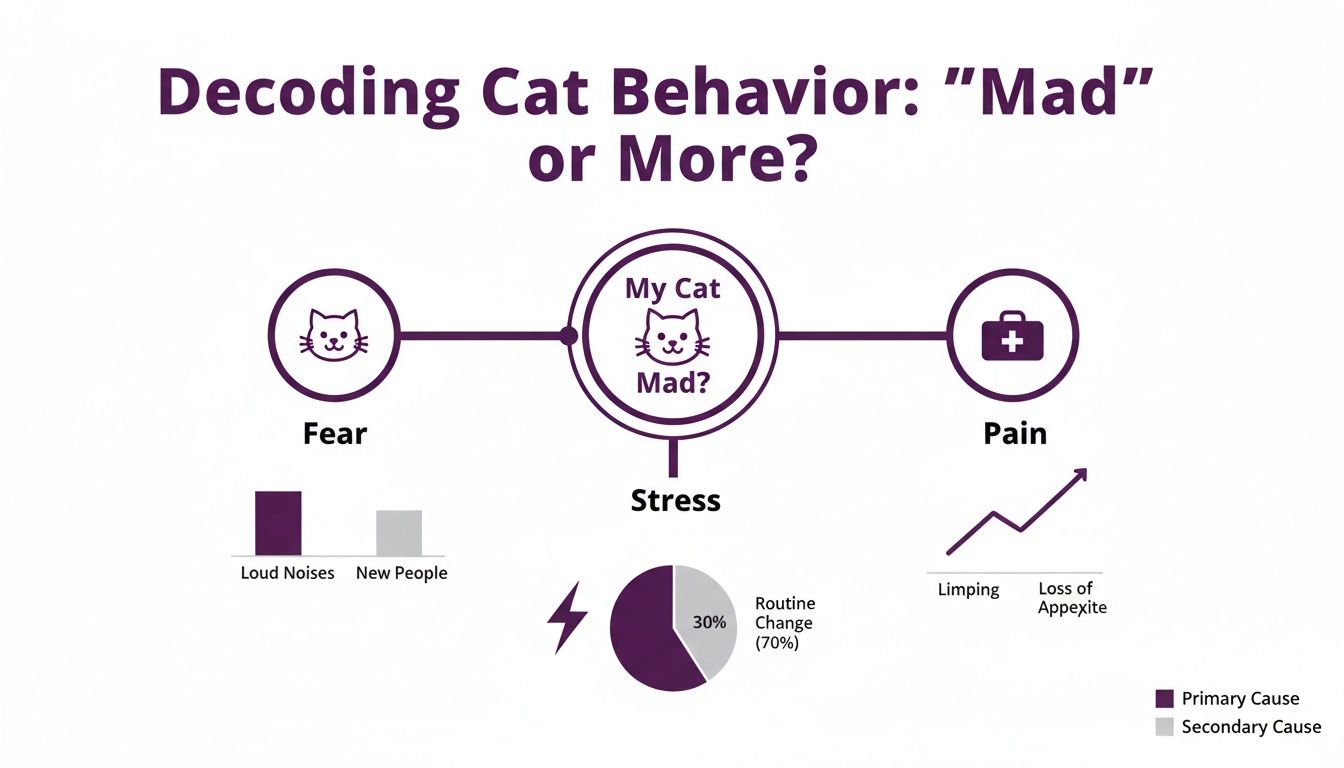
As you can see, these underlying issues are the true culprits behind most "grumpy" cat behaviors.
The Body Language Broadcast
A cat's body is like a walking, purring billboard that advertises their mood. The key is knowing how to read the signs!
- The Telltale Tail: A cat's tail is one of its most expressive features. A gentle swish might just mean they're relaxed, but a tail that’s twitching sharply or thumping on the floor is a major indicator of irritation or overstimulation. It’s a clear signal to give them some space. For a deeper dive, you can explore what different cat tail positions mean in our detailed guide.
- Eyes Are the Windows to the Soul: Direct, unblinking stares can be a sign of a challenge or unease. But the magical slow blink? That's a kitty kiss! 🥰 It means, "I trust you and feel comfortable." Try slow-blinking back to say "I love you" in their language.
- Ear Signals: A cat’s ears are like little satellite dishes tuning into the world around them. When they're flattened back against their head—often called "airplane ears"—it’s a major sign of fear or annoyance.
Vocalizations and What They Mean
Beyond the classic meow, cats have a whole dictionary of sounds. Learning the difference can turn confusion into clear communication.
A short, happy "brrrp" or trill is often a friendly greeting, like your cat saying, "Hey, you're here!" On the other hand, a low, drawn-out "mrrrrow" or a guttural growl is an unmistakable warning sign that says, "I am not happy with this situation."
A cat’s hiss is not an act of aggression but a defensive reaction. They are essentially saying, "I am scared, and if you come closer, I will defend myself!" It's a cry for space, not a declaration of war.
The Power of Scent
Finally, never underestimate the importance of scent in a cat’s world. When your cat rubs their cheeks on you or headbutts your leg, they're not just being cute. They are marking you with their scent glands, claiming you as part of their safe and happy family. It’s the ultimate compliment!
So, the next time you're wondering, "is my cat mad at me?"—stop and observe. What are their ears, tail, and eyes telling you? Engaging them gently with a fun toy like the Floofie Feather Wand can turn a confusing moment into a positive interaction. You’ll be a cat-language expert in no time.
Uncovering Why Your Cat Seems Annoyed
So, we've figured out your cat isn't secretly plotting your demise. But if it isn't pure anger, what’s really going on behind that grumpy little face? Let's get our paws dirty and investigate the usual suspects that have you wondering, "is my cat mad at me?" Most of the time, the answer is hiding in plain sight—in their environment, their daily routine, or their health.
Think of your cat as a tiny, furry CEO who runs a very tight ship. Predictability is everything. Even a small change, like moving their favorite sunbathing chair, can feel like a hostile corporate takeover. Our mascot, Floofie, gets super weird if we just move his napping spot! ☀️
This is often where a little bit of owner guilt creeps in. A significant study found that 32% of cat owners globally feel guilty about leaving their cats alone, which happens to be a major source of feline stress. While we adore our cats for the entertainment (48%) and stress relief (44%) they bring us, their 'cold shoulder' is often just a reaction to a messed-up schedule or a bout of loneliness. With a recent 23% spike in cat ownership, more felines than ever are adjusting to new homes and routines. So, that grumpy look? It's probably just their way of saying, "Hey, my schedule is off!" You can dive deeper by checking out the full research on feline-human bonds.
Common Triggers for Cat Stress
Your cat's world is a delicate ecosystem. A new roommate, a rearranged living room, or even switching to a different brand of litter can throw everything off balance.
- Environmental Changes: Did you get a new sofa? Is there loud construction happening next door? These shifts can make a cat feel insecure, causing them to hide or get defensive. They aren't mad at your new furniture; they're just trying to figure out if it's a friend or a fluffy monster.
- Boredom and Under-stimulation: A bored cat is a mischievous cat. Without enough puzzles to solve or toys to chase, they might start shredding the curtains or just become withdrawn. This isn't spite—it's a desperate cry for something, anything, to do.
- New People or Pets: Bringing a new family member (human or furry) into the house is a huge deal. Your cat needs time to adjust to new smells, sounds, and the sudden competition for your attention. Their hissing isn't personal; it's them declaring, "Who is this intruder in my kingdom?" 👑
The Boredom Busters Solution
If your cat is acting out, they might just be bored out of their skull. Before you jump to conclusions about them being mad, ask yourself if they're getting enough quality playtime. A mentally stimulated cat is a happy, well-behaved cat!
Floofie’s Top Tip: A super easy way to beat boredom is with interactive toys. A puzzle feeder is a fantastic option because it makes your cat work for their treats. It taps into their natural hunting instincts and gives their brain a solid workout. Problem-solving is way more fun than sulking!
Health Issues Masquerading as Bad Moods
Now for the most critical point: a sudden change in behavior can be the first sign of an underlying health problem. Cats are absolute masters at hiding pain. What looks like grumpiness could actually be discomfort from arthritis, a painful tooth, or a urinary tract infection.
If your normally cuddly kitty suddenly swats at you or starts hiding all the time, don't just write it off as a bad mood. Pay close attention to their litter box habits, their appetite, and their overall energy levels. If their "mad" behavior comes with a lot of extra meowing, that could also be a red flag. You can learn more about why your cat might be yelling at you in our detailed guide. For general stress, a Floofie Calming Diffuser can also work wonders to bring peace and quiet back to your home. 💖
How to Win Back Your Cat's Trust and Affection
Feeling like you're in the kitty doghouse? Don't worry, it happens to the best of us. If you've figured out your cat isn't actually "mad" but is showing signs of stress or fear, the next step is all about mending that bond. Rebuilding trust isn't about grand apologies; it's about small, consistent acts of kindness and respect.
The golden rule of cat diplomacy is pretty simple: give them space. Never, ever force an interaction. That means no chasing them for a cuddle or picking them up when they’re clearly not interested. Think about it—if a friend was upset with you, cornering them would only make things worse. Let your cat be the one to decide when it's time to connect. This puts them back in control and shows you respect their boundaries.
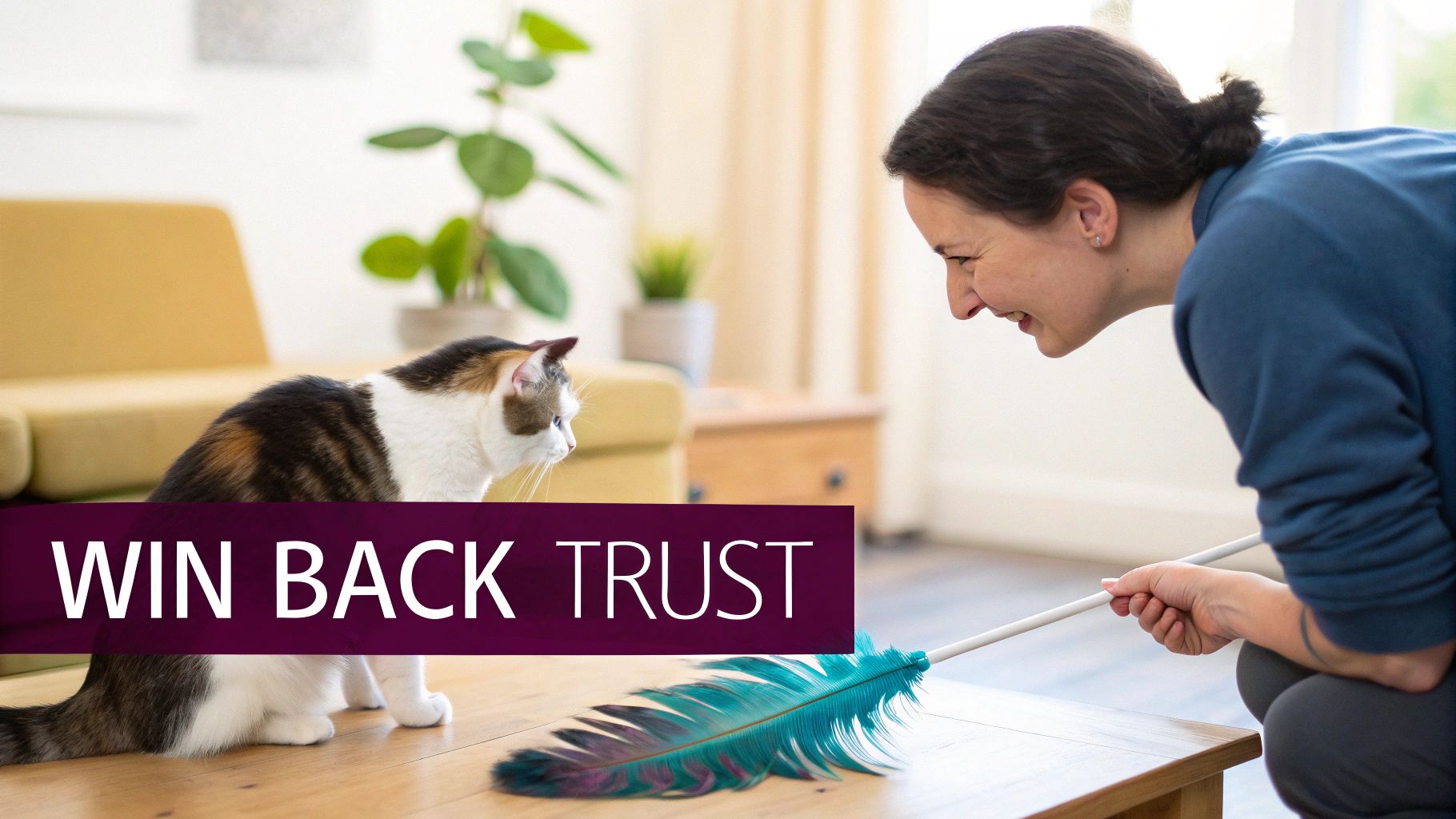
When you let them come to you, you're creating a safe zone where they feel in charge. That feeling of control is the absolute foundation of trust.
Create Positive Associations
Your main goal here is to become the source of all things wonderful in their world again. The best way to pull this off is through positive reinforcement. It's all about rewarding the behavior you want to see, not punishing what you don't.
- Treats are Your Secret Weapon: When your cat takes a brave step and enters the room or approaches you, offer them a super tasty, high-value treat. Something they can't resist, like Floofie's Favorite Fish Flakes, can work wonders. This quickly teaches them that being near you leads to amazing things. 🐟
- Gentle Play Sessions: Interactive play is a fantastic way to build trust from a distance. Grab a wand toy like our Wiggly Worm Wand Toy and get them engaged without getting in their personal space. This simple switch turns you from a potential source of stress into the bringer of fun.
Floofie’s Pro Tip: Keep your play sessions short and sweet—just 5-10 minutes a couple of times a day is perfect. Always let them "catch" their prey at the end to feel successful, then follow it up with a delicious reward.
Master the Language of Love and Safety
Once your cat starts to chill out a bit, you can start speaking their language to show you're not a threat. Consistency is your best friend here.
- Re-establish a Routine: Cats are creatures of habit; they thrive on predictability. Stick to a solid schedule for feeding, playtime, and even scooping the litter box. A stable routine is like a warm blanket for a cat—it tells them their world is safe and everything is okay.
- Master the Slow Blink: This is the ultimate "I love you" in the feline world. If you catch your cat’s eye from across the room, slowly close and then open your eyes. If they do it back, congratulations! You just had a meaningful conversation without saying a single word. 🥰
- Offer a Non-Threatening Hand: Instead of reaching down from above your cat’s head (which can feel super intimidating), try extending your hand with your index finger pointed out, down at their level. This is how cats often greet each other, and it invites them to come forward and sniff you on their own terms.
By patiently following these steps, you're sending a clear message: you're a safe, predictable, and rewarding part of their life. Before you know it, those cold shoulders will be replaced by happy purrs and loving headbutts.
Creating a Peaceful and Engaging Home for Your Cat
The best way to deal with a grumpy cat is to prevent them from getting stressed out in the first place. Instead of finding yourself wondering, "is my cat mad at me?", you can get ahead of the game by building a feline paradise right at home—a space where they feel secure, confident, and genuinely happy. Our mascot, Floofie, has a great name for this: "catification." Think of it as preventative purr-enting! 💖
So, what does that actually mean? It’s all about enriching your home to satisfy your cat's most basic, hard-wired instincts. Put on your kitty thinking cap for a second. Cats have a deep-seated need to climb, scratch, hide, and "hunt." When these fundamental needs aren't met, stress can slowly build up, eventually spilling out as behaviors we often mistake for anger or spite.
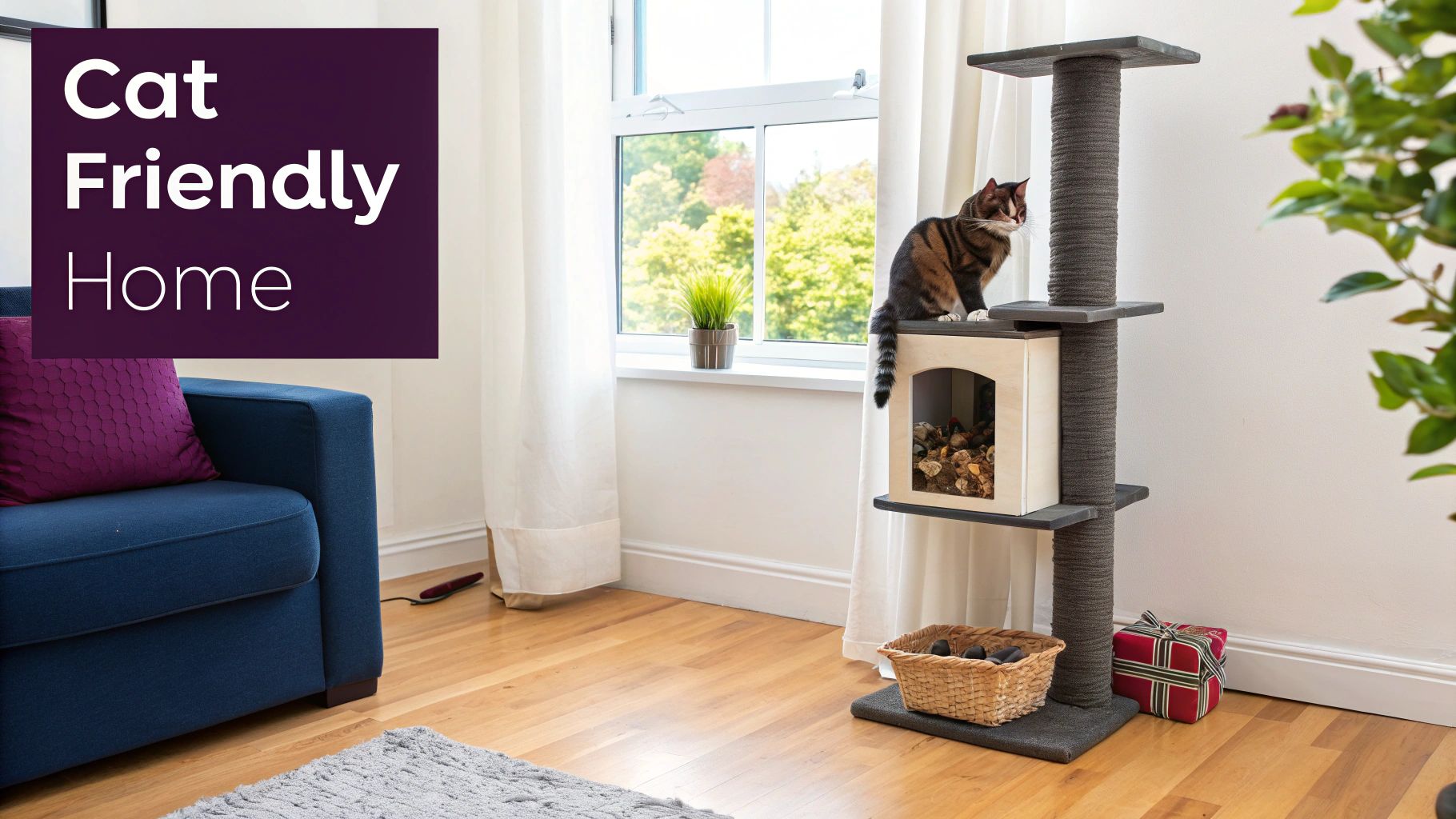
This proactive approach is about so much more than just buying a few toys; it’s about actively strengthening your bond. An international survey actually found that 89% of pet owners report having a close bond with their pet, and it turns out those with the tightest connections are way more likely to invest in preventative care. Creating an enriching home is one of the absolute best ways to nurture that relationship and sidestep stress-related issues down the road.
Setting Up a Cat-Friendly Kingdom
Ready to transform your home into a five-star feline resort? It's way easier than you might think. The main goal here is to give your cat a sense of ownership and control over their environment, which is a huge confidence booster for them.
Here are a few key areas to focus on:
- Go Vertical! Cats feel safest when they can survey their territory from up high. Cat towers or simple wall shelves give them this bird's-eye view, offering a secure escape from all the household chaos (like the dreaded vacuum cleaner monster 👹).
- Provide Scratching Outlets: Scratching isn't a bad habit; it's a natural, healthy behavior for marking territory, stretching muscles, and shedding claw sheaths. To save your sofa, give them a dedicated scratching surface, and place it in a spot where your cat already loves to hang out.
- Create Cozy Hideaways: Every cat needs a safe spot to retreat to when they feel overwhelmed or just want some alone time. This can be as simple as a cardboard box with a fluffy blanket inside or a covered cat bed tucked into a quiet corner of a room.
The Power of a Predictable Routine
Beyond the physical stuff, a consistent daily schedule is the absolute bedrock of a confident cat. Cats are creatures of habit through and through, and they find immense comfort in knowing what to expect and when to expect it.
A predictable routine for feeding and playtime acts as an emotional anchor for your cat. It tells them that their world is stable and secure, which is a powerful way to reduce stress and anxiety before it even starts.
If you’re looking for more ways to dial up the serenity, check out our guide on how to reduce cat anxiety. And to foster a truly positive and engaging environment, why not try some creative activities that celebrate your cat? For instance, you could even learn how to paint your pet by number for a unique and fun bonding experience.
By "catifying" your home, you're not just preventing bad moods; you're building a happier, healthier life together.
When to Get Professional Help for Your Cat
Sometimes, asking "is my cat mad at me?" points to something more than just a passing mood. While we've talked about a lot of ways to get back in your kitty's good graces, certain behaviors are big, flashing red flags 🚩 that something more serious is brewing. This is when you need to step up.
Sudden and dramatic shifts in your cat's behavior are almost always a reason to call your veterinarian. Your vet is your first and most important partner in ruling out any underlying medical problems that could be causing pain or discomfort—which, for cats, often looks a lot like being cranky or aggressive.
When to Call the Vet
If you see any of the following, don't wait. It's time to schedule a check-up.
- Litter Box Blues: A cat who suddenly starts avoiding their litter box isn't being spiteful. This is a classic sign of a urinary tract infection, kidney issues, or painful bladder stones.
- Appetite Changes: A sudden disinterest in food or a complete refusal to eat is a massive red flag. Something is almost certainly physically wrong.
- Hiding or Lethargy: Is your normally social butterfly now a professional hider? A cat who is constantly hiding or seems exhausted for no reason could be in pain.
Your vet can run tests and figure out if a health issue is the culprit. If your cat gets a clean bill of health, then it's time to consider a certified cat behaviorist. They can help you get to the bottom of deeper behavioral issues, and your vet can often give you a great recommendation.
Answering Your Top Questions About Cat Moods
Still have some questions swirling around about your mysterious kitty? Don't worry, you're not the only one scratching your head! 😼 Our mascot, Floofie, is here to clear up some of the most common things cat parents wonder about when they ask, "is my cat mad at me?"
Let's get into the furry details and find some quick, clear answers. That way, you can spend less time guessing and more time getting those precious headbutts.
How Long Do Cats Hold a Grudge?
Here's some good news: cats don't really hold grudges! If your fur baby is giving you the cold shoulder after a stressful event like a vet visit, it's a response based on fear, not lingering anger. For a little while, they just associate you with that not-so-fun experience.
The key is to gently rebuild those positive connections. Think gentle play sessions, tasty treats, and a whole lot of patience. Cats are very much "in the moment" creatures, so consistent, fun, and rewarding interactions will win them back over in no time! It's hard to stay "mad" when a Wiggly Worm Wand Toy suddenly appears. ✨
Does My Cat Get Mad When I Leave the House?
What might look like "madness" when you walk out the door is almost always separation anxiety or stress. They aren't trying to punish you for leaving; they're just showing you how uncomfortable they are with the sudden change in their routine. From their perspective, their world just got a lot less exciting!
To help ease their worries, try creating predictable little rituals before you leave, like giving them a special treat right before you go. Leaving out an engaging puzzle feeder also gives their brain a fun project to focus on while you're away.
Your cat’s behavior is communication, not condemnation. They are telling you they miss their favorite human, which is actually a huge compliment!
How Can I Discipline My Cat Without Making Them Mad?
Here’s the secret: you can't. Old-school punishments like yelling or using a spray bottle just don't work. They'll only make your cat afraid of you, which can seriously damage the bond you share. Cats simply don't understand that kind of discipline.
The best approach is always redirection. If your kitty is scratching the sofa, calmly pick them up and place them in front of their scratching post. The moment they use it, shower them with praise and maybe a treat! It’s all about rewarding the good behavior, not punishing the "bad."
At FloofChonk, we believe a happy cat makes a happy home. From enriching toys that bust boredom to cozy apparel that celebrates your feline obsession, we have everything you need to strengthen your bond. Explore our collections today at https://www.floofchonk.com