
Vintage Cat Toys: Find, Identify, & Use Safely

I once found a faded little mouse toy in a cedar chest at an estate sale, tucked beside costume jewelry and old postcards. Floofie would've called it a jackpot find 😺, but one gentle squeeze told me the same thing every antiques lover with a cat must learn. Charming doesn't always mean safe.
The Charm of a Bygone Plaything 🐾
Vintage cat toys have a special kind of magic. They're small, often humble objects, but they carry a whole story about how people lived with cats, pampered cats, and laughed at cats being gloriously weird long before “pet lifestyle” became a modern phrase.
A worn felt mouse with stitched whiskers can feel more personal than a brand-new toy from a shelf. You can see the handwork. You can spot the age in the fabric. You can almost picture some earlier household cat batting it under a piano and refusing to give it back.
Why these old toys feel so lovable
Part of the appeal is nostalgia, of course. But it's also design. Older cat toys often look like miniature folk art. Even simple pieces have a lot of personality, whether that means funny painted faces, old-school bells, or fabrics that don't turn up often in modern pet aisles.
Floofie, our resident connoisseur of all things fluffy and fabulous, would tell you there are really two joys here:
- The collector's joy of finding a rare or unusual object
- The cat lover's joy of seeing how people have tried to delight their feline companions across generations
- The decorator's joy of using cat-themed history as part of a cozy home
Vintage cat toys are tiny time capsules. They tell you as much about people as they do about pets.
That's why they attract more than one kind of admirer. Some people want them for shelves and shadow boxes. Some want them because they remember similar toys from childhood. Others are drawn to cat objects with wit, age, and character.
Floofie's first rule
Before you fall head over paws for any old toy, pause.
The prettiest vintage piece may belong in a display cabinet, not in your cat's mouth. That split, collectible for display versus safe for play, is the heart of this whole topic. Once you understand that, you can enjoy vintage cat toys without taking risks you didn't mean to take.
A Pawsitively Historic Timeline of Cat Toys
Floofie would like the record to show that cats have always been fully capable of making their own fun. A cork on the floor, a feather from the yard, a paper scrap skittering across the rug. To a cat, each one is a tiny moving mystery.
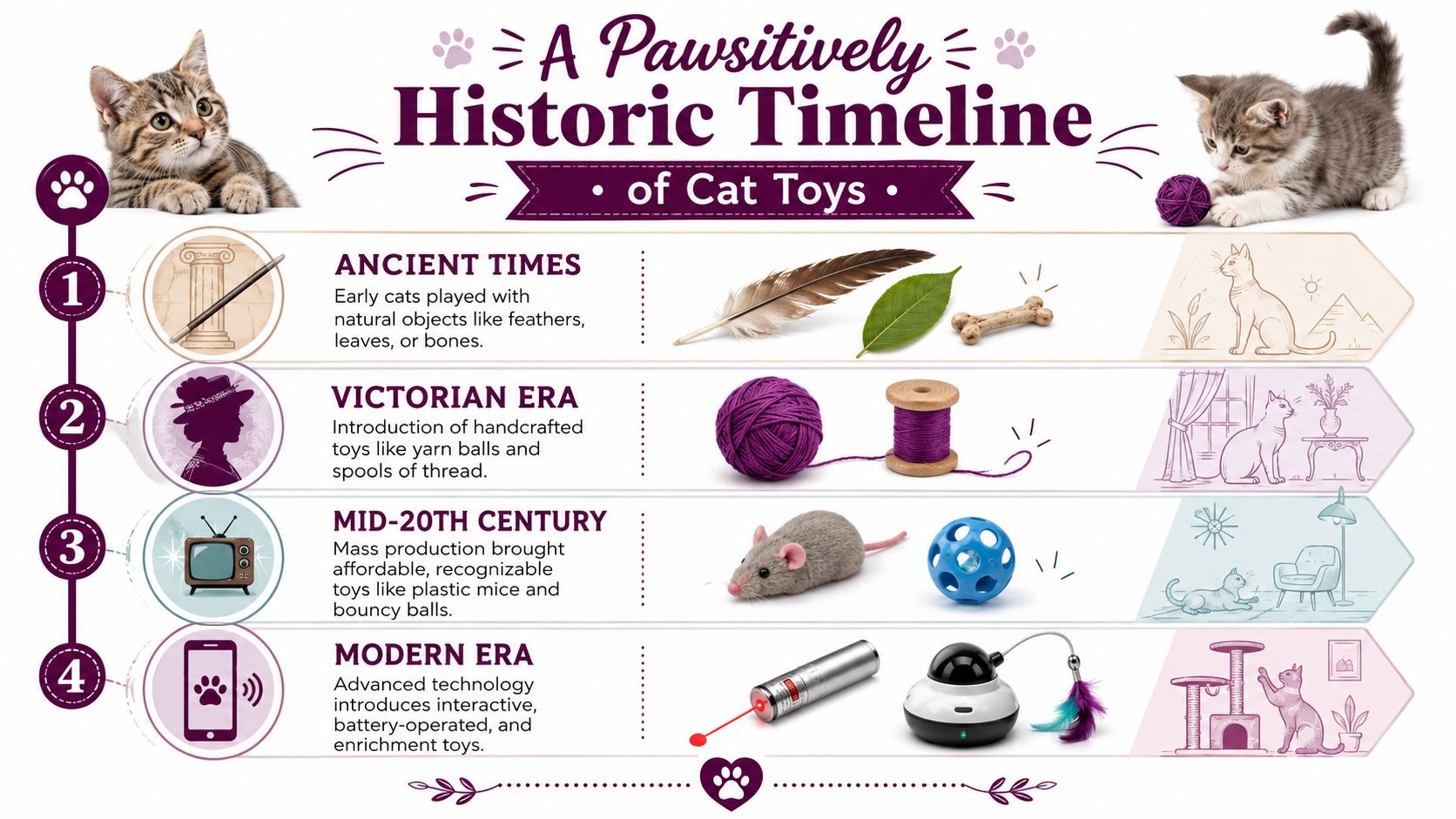
From improvised amusements to made-for-cats toys
For a long time, “cat toy” described whatever a household already had on hand. Wooden spools rolled beautifully. Knotted fabric scraps bounced unpredictably. Even a dried leaf could become a grand parlor performance.
Then people began making objects specifically for feline play. That shift matters. It marks the difference between a cat enjoying an accident of daily life and a maker designing something to catch paws, teeth, and attention on purpose.
Collectors often spot this change in the toy's construction. Earlier pieces can look homemade or loosely adapted from human objects. Later examples usually show clearer intention. Stuffed mice, stitched balls, bells, painted details, and repeating shapes that suggest small-scale manufacturing.
The 20th century brings familiar toy forms
By the early and middle decades of the 20th century, many cat toys start to look surprisingly recognizable. You can see the ancestors of today's plush mice, batting balls, and teaser styles, just made with older materials and older methods.
That does not mean they should go straight back into active service.
A vintage toy works like an antique chair. You may admire the craftsmanship, study the joints, and appreciate the age. You would still check carefully before sitting on it. Cat toys deserve the same common sense, especially if they contain painted surfaces, brittle plastic, exposed metal bits, old glue, or stuffing of unknown origin. Cute does not always mean cat-safe. Floofie insists on this point with one serious whisker twitch. 😺
A short video makes the evolution easier to picture:
Materials changed, and that changed both style and risk
As manufacturing expanded, makers used a wider mix of materials. Wood and fabric remained common, but older plastics, felt, wire details, bells, painted faces, and stitched novelty shapes appear more often in surviving examples.
For a collector, those materials help date and identify a piece. For a cat owner, they raise a different question. Is this an object to study and display, or an object a living cat can safely chew, kick, and bunny-thump?
That split is the whole ball of yarn here. A toy can be historically interesting and still be a poor choice for modern play.
Why this timeline still matters
Modern cat toys now fill a large commercial market. Analysts at Future Market Insights' cat toys market report project continued growth over the next decade. That helps explain why vintage toys feel so charming today. They are early chapters in a very long story of humans trying to entertain demanding little house tigers.
| Era | What cats often played with | What collectors notice now |
|---|---|---|
| Early household era | improvised natural or household objects | simplicity, handmade charm |
| Commercial vintage era | purpose-made mice, balls, stitched novelties | materials, maker details, rarity |
| Modern era | interactive and synthetic designs | sharp contrast between collectible appeal and safe everyday play |
Some vintage cat toys are best treated like small museum pieces. They show how people once delighted cats, even if today's cats should admire them from a shelf instead of chewing on them.
Is It Vintage or Just Retro? A Spotter's Guide
A flea market seller says a toy is “vintage.” The packaging says “retro.” An online listing says “mid-century style.” Those phrases don't mean the same thing, and collectors get tripped up here all the time.
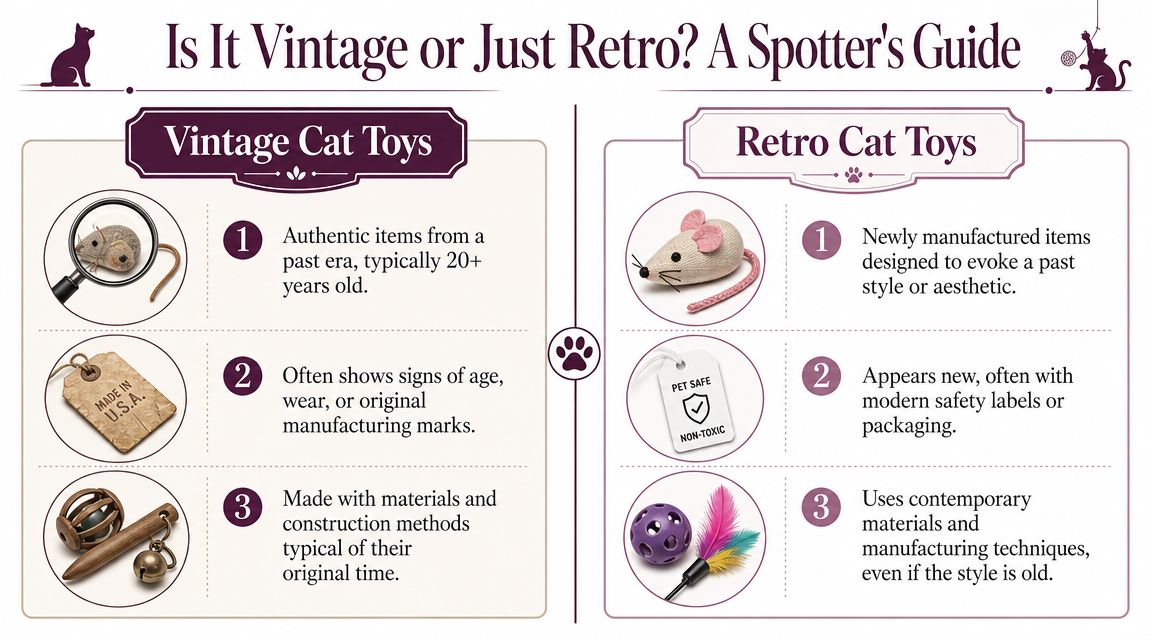
The quick difference
Vintage means the item comes from an earlier period.
Retro means the item is newer but designed to look older.
That distinction matters because modern brands often lean hard into nostalgia. As noted by Strange Cat Toys on retro-themed cat products, many current brands capitalize on retro design trends, while authentic vintage pieces tend to come through resale and collectibles channels and have different materials and collectible value.
What to examine with your collector eyes
Start with the object itself, not the seller's description. Floofie recommends a slow sniff-and-squint inspection. You don't need laboratory tools. You need patience.
Look at materials first
Older materials usually age in recognizable ways.
- Plastic may become brittle, slightly yellowed, or oddly dry to the touch.
- Fabric may show softened nap, fading, or stitching styles you don't often see in modern mass production.
- Painted surfaces can develop wear in natural contact points rather than evenly across the whole object.
- Metal details may show tarnish or rust, which can help identify age but also raises safety questions.
A retro reproduction often looks too crisp. The wear, if any, may look staged rather than earned.
Check construction details
Flip the toy over. Peek inside seams if you can do so without damage. Look for clues like these:
- Hand stitching or older seam methods can suggest age
- Modern safety labels or fresh barcode-era tags usually point to retro, not vintage
- Glue-heavy assembly can appear in both older and newer pieces, so treat it as a clue, not proof
- Machine-perfect finishes may suggest recent production
Wear should make sense
Natural aging usually appears where a toy would have been handled, batted, dragged, or stored. If a toy looks “distressed” in a decorative way but doesn't show believable use patterns, your whiskers should twitch.
Here's a simple comparison:
| Sign | More likely vintage | More likely retro |
|---|---|---|
| Tag | faded, partial, older maker mark | modern branding, current safety label |
| Surface wear | uneven and use-based | decorative or artificially even |
| Material feel | aged, softened, or brittle | clean, uniform, contemporary feel |
Collector clue: When age, material, and construction all tell the same story, you're probably on the right track. When they argue with each other, keep asking questions.
Ask one practical question
If this toy had no seller description at all, what would the object itself tell you?
That mindset keeps you from buying the story instead of the item. Retro pieces can be delightful. Some are adorable. Some are safer for actual play because they use newer materials. But if you're paying for age, rarity, or history, you want an authentic mousie, not a costume.
Play Safe Before You Play: A Safety Checklist ✅
This is the serious bit, and Floofie is wearing his imaginary inspector hat. A vintage toy can be cute enough to make you squeak, but if it has loose trim, fraying fabric, brittle plastic, or old paint, it may belong far away from active paws and teeth.
The most useful rule is simple. Treat every vintage cat toy as display-only until it passes inspection.
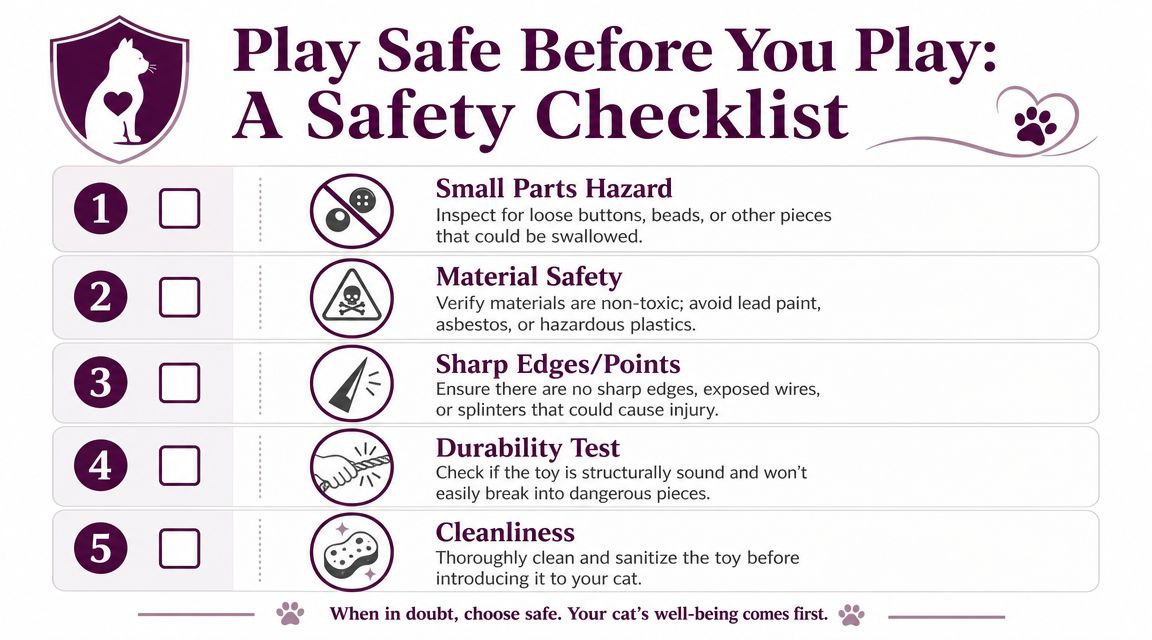
Start with the Oregon Humane Society guidance
The clearest practical baseline comes from the Oregon Humane Society's cat toy safety handout. It advises removing or avoiding ribbons, feathers, strings, eyes, and other small parts that can be chewed or swallowed. It also notes that soft toys should be machine washable and that cardboard tubes can be safely adapted into play objects.
Applied to vintage cat toys, that guidance changes how you look at almost every charming old piece. Those glued-on eyes? Hazard. Dangly trim? Hazard. Antique ribbon tail? Very likely a hazard.
Floofie's display-only checklist
If you answer “yes” to any of these, the toy should stay decorative unless it's properly restored by someone who understands pet-safe materials.
-
Loose parts
Tug very gently on eyes, bells, bows, tails, and decorative trim. If anything shifts, wobbles, or looks partly detached, don't offer it for play. -
Fraying or exposed stuffing
Older fabric toys can split along seams. Once stuffing is exposed, ingestion risk goes up fast. -
Brittle plastic or cracking paint
Age can make hard materials break into sharp or chewable pieces. Painted surfaces raise an extra concern if the finish is unstable. -
Rust or corrosion
Metal elements may stain surrounding fabric or break down into rough edges. -
Damp smell, staining, or mold concern
Stuffed toys stored in basements, attics, or sheds can hide unpleasant surprises.
If a toy looks delicate in your hand, it will look even more delicate to a determined cat.
What “safe enough” usually looks like
Most old toys won't qualify for rough play. That's not a tragedy. It's just the honest answer. The safest candidates for supervised use are usually the simplest ones, with minimal trim and sturdy structure.
A safer vintage-style play option might be:
- A plain cloth shape with no beads, bells, or glued details
- A thoroughly cleaned soft toy with secure seams and no exposed stuffing
- A simple cardboard-based play object, adapted in the spirit of older homemade toys
The Oregon Humane Society's note about machine-washable soft toys is especially useful here. If you can't clean a soft toy well, that's a problem. Dirt isn't charming. Mystery attic residue is not part of the vintage aesthetic 😹
Restoration needs caution
People often ask whether they can “fix up” an old toy for their cat. Sometimes, but don't let enthusiasm outrun good judgment.
A practical approach:
- Remove dangerous trim rather than trying to preserve every original flourish
- Reinforce seams only if the fabric itself is still sound
- Retire painted or brittle items from play rather than trying to patch around the risk
- Skip sentimental chances if the toy's condition is poor
A simple decision rule
Use this little test:
| If the toy is... | Best use |
|---|---|
| Rare, fragile, or decorated with small parts | display only |
| Structurally solid but easy to clean and free of hazards | limited supervised play |
| Questionable in any way | don't risk it |
Safety bottom line: Your cat doesn't care whether a toy is collectible. Your cat cares whether it can be bitten, kicked, swallowed, shredded, or chased.
That's why many collectors keep one lane for antiques and another lane for everyday cat fun. It's the wisest split in the whole hobby.
The Thrill of the Hunt: Collecting and Decorating
Floofie's favorite part of any antique outing is the moment everyone else walks past a dusty basket, and one sharp-eyed cat person pauses. Tucked between buttons, postcards, and old sewing notions, there it is. A wool mouse with hand-stitched ears. Too delicate for pounce practice, perhaps, but full of history and charm.
That is the true thrill of collecting vintage cat toys. Once you separate display treasures from play-safe finds, the whole hunt gets clearer. You stop judging every piece by whether a modern cat can wrestle it. You start seeing age, design, rarity, and the sweet oddness of how people once tried to entertain their whiskered housemates.
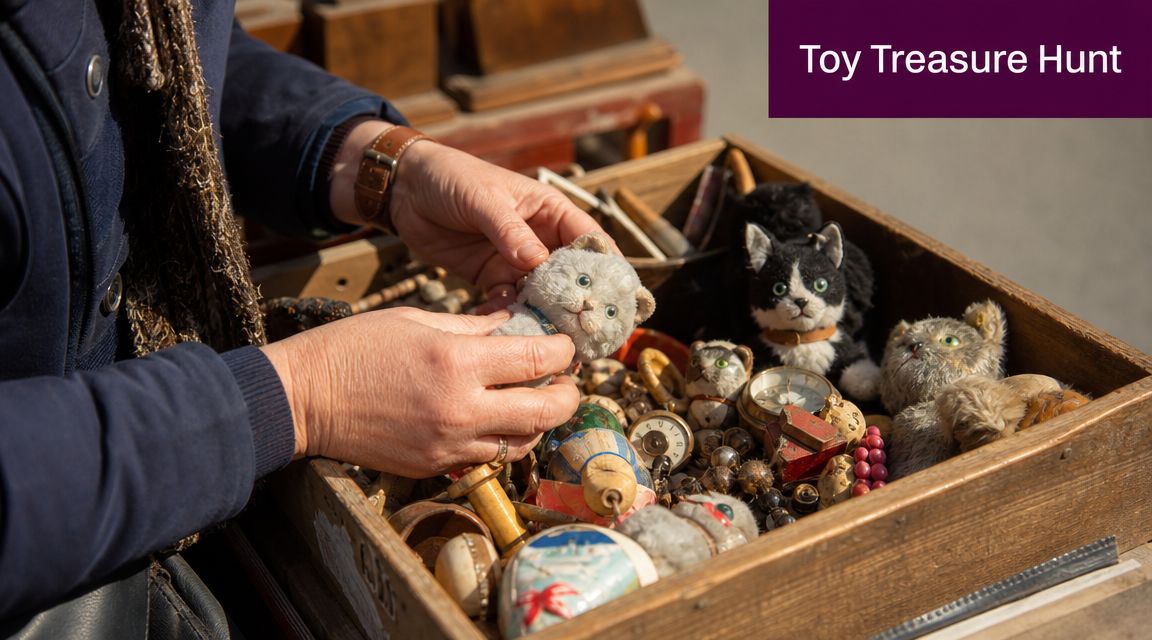
Where collectors look
The best finds turn up in two very different habitats.
One is the rummage-and-rescue world. Antique malls, estate sales, flea markets, thrift shops, and mixed-lot boxes often hide overlooked pet items because the seller is focused on the larger household collection. Prices can be gentler there, but identification takes more patience.
The other is the curated market, where sellers already know a piece has collectible appeal. As noted earlier, vintage cat toys can range from modest decorative buys to high-end collectibles with serious price tags. That wide spread means one old toy might suit a bookshelf vignette, while another belongs in the same mental category as a small folk-art object.
A useful rule: buy with your eyes open, not just your heart. Floofie would approve, even if Floofie would also sit directly on the receipt 😸
Why one toy is a bargain and another is a showpiece
Collectors weigh several traits at once, a bit like judging an old teacup. Age matters, yes, but so do maker, condition, and the little details that give a piece its personality.
Rarity and maker
Known makers tend to draw more attention than anonymous ones, especially if the style is unusual or the material is less common. A standard felt mouse may be charming. A toy tied to a recognizable manufacturer or a short-lived design trend often attracts stronger interest.
Condition and originality
Condition is not just about looking neat. Honest wear can feel appropriate on an old plaything, much like softened leather on a well-loved chair. Cracks, unstable paint, missing parts, heavy repairs, or replacement trim usually matter more than a few signs of age.
Originality counts too. Collectors often prefer a toy with its period fabric, stitching, or finish intact, even if it shows some wear. A cleaned-up example with modern substitutions may look prettier at first glance but hold less historical interest.
Character
Some toys win on sheer feline charisma. A crooked embroidered grin, a particularly plump mouse shape, or a wonderfully old-fashioned color palette can make one piece far more memorable than a technically similar example.
Collectors are often buying a story they can display, not an object they can toss across the floor.
Decorating with vintage cat toys
Old cat toys often work best as small accent pieces. They bring warmth and humor without needing much space, and they reward close looking. A good display lets people notice the handwork, materials, and period style while keeping the object protected from dust, sunlight, and modern paws.
A few pleasing ways to show them off:
-
Shadow box display
Ideal for fragile cloth mice, early balls, or novelty miniatures. The frame creates distance between the object and curious fingers. -
Bookshelf vignette
Set one distinctive toy beside cat books, pottery, or a framed photo. One small object can do a lot of decorative work. -
Glass-front cabinet
Helpful for toys with delicate trim, faded surfaces, or pieces you do not want your living cat batting off a shelf at 3 a.m. -
Rotating seasonal nook
If you collect several examples, change them out from time to time. That reduces light exposure and handling on any single piece.
If a toy is rare, brittle, or decorated with tiny attachments, treat it like a miniature antique. Admire it. Display it. Let it keep its dignity.
Buy for the right reason
Before paying, decide which lane you are in. This small pause saves a surprising amount of money and disappointment.
| Goal | What to prioritize |
|---|---|
| Collector purchase | age, rarity, originality, condition |
| Decor purchase | visual charm, color, display potential |
| Possible supervised play | safety first, simple construction, cleanable structure |
A cabinet-worthy treasure can be a wonderful purchase. It is a poor match for a cat who bites first and asks questions never. That split between collectible for display and safe for play is the heart of smart collecting, and it keeps both your antiques and your cat out of trouble.
A Treasure for Today and Tomorrow
Vintage cat toys bring together three pleasures at once. They're charming objects, they're little scraps of social history, and they're proof that humans have long been delighted by the same feline antics that rule our homes today 😻
The smartest way to love them is with both warmth and restraint. Admire their craftsmanship. Learn to spot true age. Enjoy the hunt. Then make the safety call without getting sentimental about it.
That balance is what turns casual interest into good stewardship. You're not just collecting old cat things. You're preserving a tiny, playful corner of history while protecting the very modern cat snoozing on your sofa.
Floofie gives that approach two fluffy paws up. Keep the rare ones safe. Let the sturdy ones earn their keep only if they pass inspection. And never forget that the best cat toy, vintage or not, is the one your cat can enjoy without risk.
If Floofie has inspired your cat-loving heart, take a peek at FloofChonk for playful cat-themed apparel, décor, and pet goodies that celebrate feline charm without the guesswork of antique safety. It's a cozy place to find paw-approved gifts and everyday cat-person treasures.