
Why Cats Are So Weird A Guide to Quirky Feline Behavior

Welcome, fellow cat purr-ent! 🐾 If you’ve ever stared at your cat mid-shenanigans and thought, “Why on earth are you like this?”—you've found your people. The simple truth behind why cats are so weird is that their strangest habits are actually just powerful echoes of their wild ancestors.
From the 3 a.m. parkour sessions to those gentle head boops, it all comes down to their instincts for hunting, staying safe, and showing purr-fect love.
Your Guide to the Wonderfully Weird World of Cats
Let's get ready to decode your kitty's secret language! Our chief feline officer, Floofie 😼, is here to translate all those bizarre habits into plain human-speak. It turns out every quirky action, from making biscuits on your favorite FloofChonk hoodie to chattering at birds through the window, is a little glimpse into their fascinating inner world.
Getting to know these behaviors isn’t just a fun fact-finding mission; it’s the secret to a stronger bond. When you finally get why your cat does what they do, you can truly appreciate the beautiful weirdness that makes them such incredible little companions. Let's dive in! 😻
The Instinctive Trio: Hunting, Safety, and Affection
Deep down, almost every "weird" thing your cat does is driven by three core instincts handed down from their wild ancestors. Think of these as their operating system. Our mascot Floofie says it's their "Meow-OS"!
This handy infographic breaks down the main motivators behind your cat’s most common quirks.
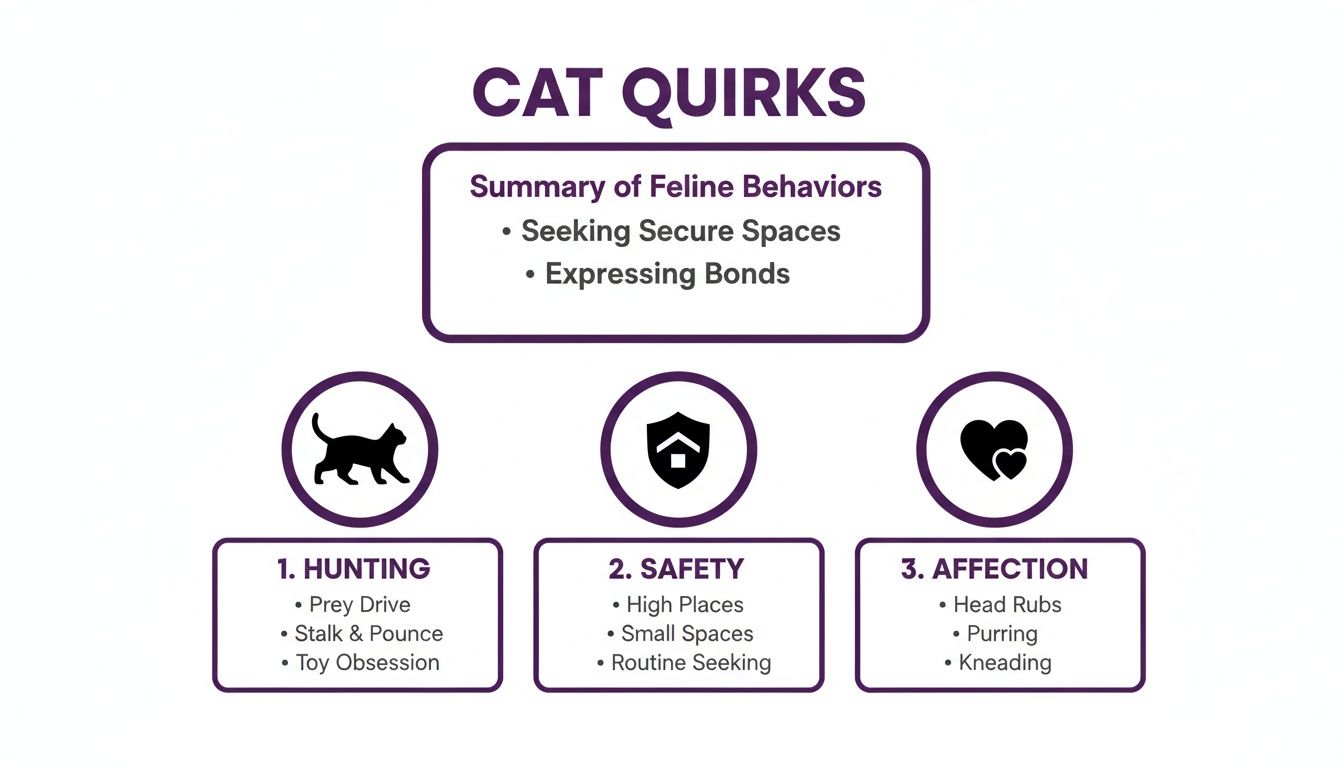
As you can see, what looks like total chaos to us is actually a pretty sophisticated mix of predator skills, self-preservation tactics, and surprisingly deep social rituals.
These three drivers explain so much of what we see every day:
- Hunting Instincts: Even the fluffiest, laziest couch potato is a finely tuned predator at heart. Things like pouncing on your unsuspecting feet, stalking a dust bunny, and the infamous "zoomies" are all just your cat keeping its hunting skills sharp.
- Safety & Security: Cats are hardwired to find and control safe spaces. Their obsession with cardboard boxes, the highest point on the cat tree, and squeezing into tiny hiding spots? That’s all about their primal need to feel secure from any and all threats.
- Affection & Bonding: Actions like kneading (making biscuits), head-bunting, and those heart-melting slow blinks are actually complex social cues. It's how your cat says, "You're my family," and shows trust in their own unique, feline way.
Floofie's Pro Tip 💡: The next time your cat does something wonderfully weird, try to guess which of these three instincts is kicking in. It's a fun little game that helps you understand your furry overlord just a little bit better!
Floofie's Quick Guide to Common Cat Quirks
Still feeling a little lost in translation? No worries, Floofie is on the case! We've put together this quick-reference table to help you decode some of the most common "weird" behaviors at a glance. Think of it as your personal cat-to-human dictionary.
| Quirky Behavior 🤪 | What You See | What Floofie Says It Means 🤔 |
|---|---|---|
| Zoomies | Your cat suddenly sprinting around the house like their tail is on fire, usually at 3 a.m. | "I have SO much pent-up hunting energy! Gotta practice my pounce-and-run skills for the big hunt (the kibble bowl)." |
| Kneading ("Making Biscuits") | Rhythmic pushing of paws against a soft surface, like your lap or a blanket. Often accompanied by purring. | "This feels safe and reminds me of nursing as a kitten. I'm marking you as my comfort zone and showing I love you." |
| Head-Bunting | Gently but firmly rubbing their head and cheeks against you, furniture, or other pets. | "You're part of my crew! I'm leaving my scent on you to mark you as family. We're all in this together." |
| Staring Intently | Fixing their gaze on you (or a wall) without blinking, sometimes for an uncomfortably long time. | "I'm either trying to communicate something (is it dinner time?), showing you trust with a slow blink, or I've spotted a greeble." |
| Chattering at Birds | A strange, chirping, clicking sound made while watching prey they can't reach, like birds outside a window. | "Frustration! My predator brain is firing on all cylinders, and I'm mimicking the 'kill bite' because I can't actually get to that bird!" |
Hopefully, this little guide helps you see that behind every weird quirk is a very logical, very cat reason. They're not trying to be strange—they're just being themselves!
Decoding the 3 AM Zoomies and Midnight Crazies
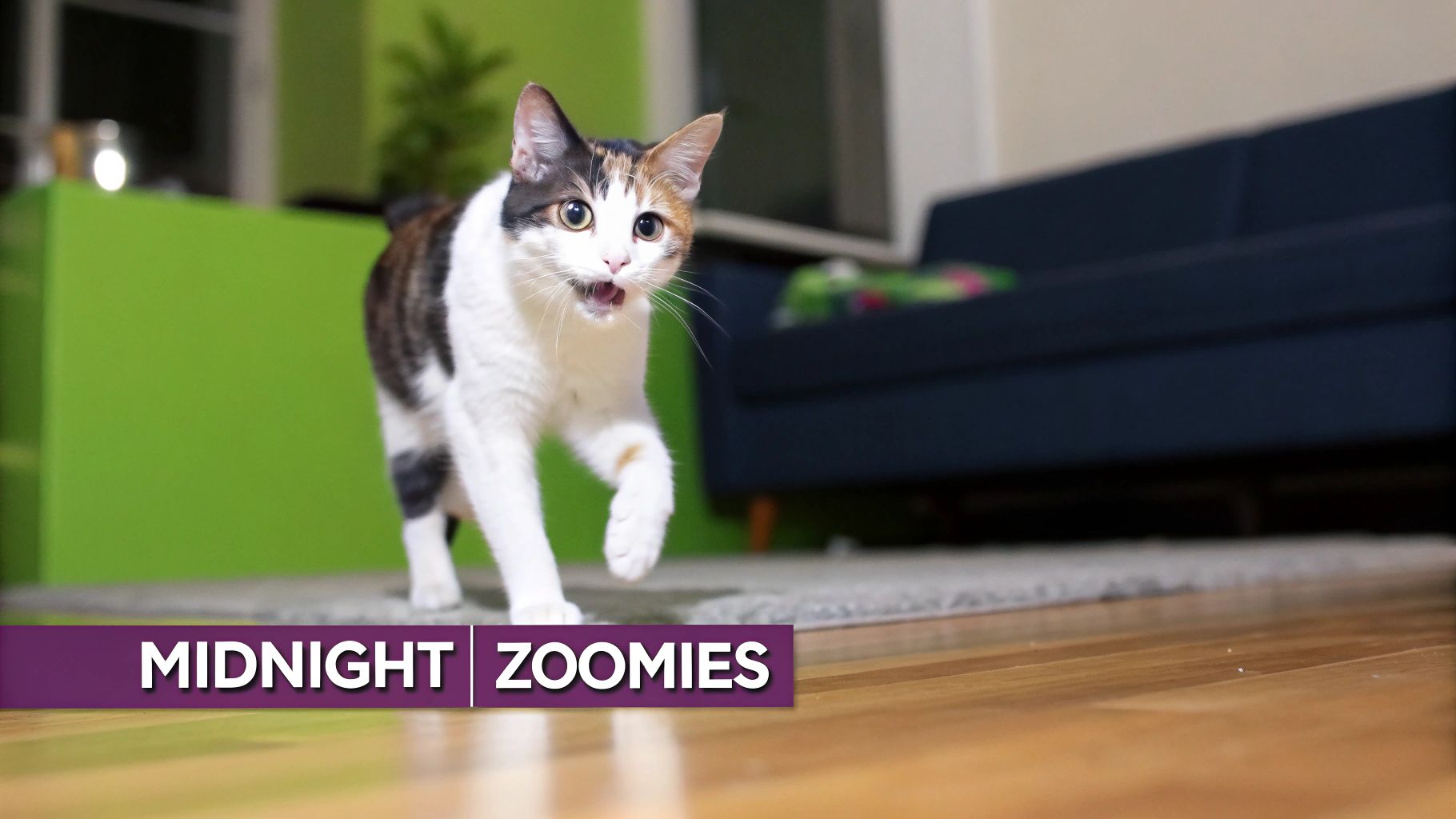
It’s 3 a.m. You’re sound asleep, drifting through a pleasant dream, when suddenly it sounds like a tiny, furry herd of elephants is stampeding through your house. 🐘💨 Welcome to the feline phenomenon we all know and love (sort of): the "zoomies!"
Our mascot Floofie calls this the "Midnight Crazies," but vets have a more technical term for it: Frenetic Random Activity Periods (FRAPs).
These sudden, explosive bursts of energy are completely normal. In fact, they’re usually a sign of a healthy, spirited cat. But what’s behind this chaotic behavior that makes us wonder if our cats are secretly powered by rocket fuel? It all comes down to their inner tiger.
The Hunter Awakens
Cats are crepuscular hunters by nature. This just means their internal alarm clock is set for peak activity during the twilight hours of dawn and dusk. Why? Because that’s when their natural prey—like mice and birds—are most active.
Your indoor kitty might not have actual rodents to chase, but that powerful, predatory programming doesn't just switch off.
Throughout the day, especially while you're at work or just busy, your cat is a master of conserving energy, just like a wildcat waiting for the perfect moment to hunt. All that pent-up energy has to go somewhere. When it finally builds up, it bursts out in a wild sprint down the hallway, a frantic leap up the curtains, or a surprise attack on an unsuspecting bath mat.
This isn't your cat trying to drive you nuts (even if it feels that way!). It's a healthy release of instinctual energy that's been stored up all day. A cat with the zoomies is often a happy, healthy cat.
Taming the Midnight Mayhem
While zoomies are a good thing, they don't have to completely wreck your sleep schedule. The real trick is to help your cat burn off that energy before you go to bed. Floofie has a few paw-some tips for redirecting that wild streak into productive, fun activities. 😼
Here are a few things you can try to manage the chaos:
- Schedule Pre-Bedtime Play: Set aside 15-20 minutes for some intense, interactive playtime right before you turn in for the night. Wand toys with feathers or ribbons, like our FloofChonk Feather Wand, are perfect for mimicking the hunt for birds or mice.
- Mimic the Hunt: Don't just wave the toy around. Structure your play sessions to follow their natural prey sequence: hunt, catch, "kill." Let them stalk, chase, and finally pounce on the toy to "win."
- Provide a Post-Hunt "Meal": After your play session, give them a small meal or a few treats. This completes the natural cycle of hunting and eating, which signals to their brain that it’s time to wind down, groom, and sleep.
- Automate the Fun: For those times you can't play, an automatic toy is a total game-changer. The FloofChonk Smart UFO Cat Toy is purrfect for this. Its unpredictable movements tap right into their hunter instincts, giving them the mental and physical stimulation that helps tire them out for a peaceful night.
By creating a routine that honors their natural instincts, you can help manage the midnight crazies and make sure everyone in the house gets a good night's sleep. And if your cat's energy seems to come from a different kind of "crazy," you might want to check out why cats go crazy for catnip in our other guide. 🌿
The Secret Language of Kneading and Head Bunting
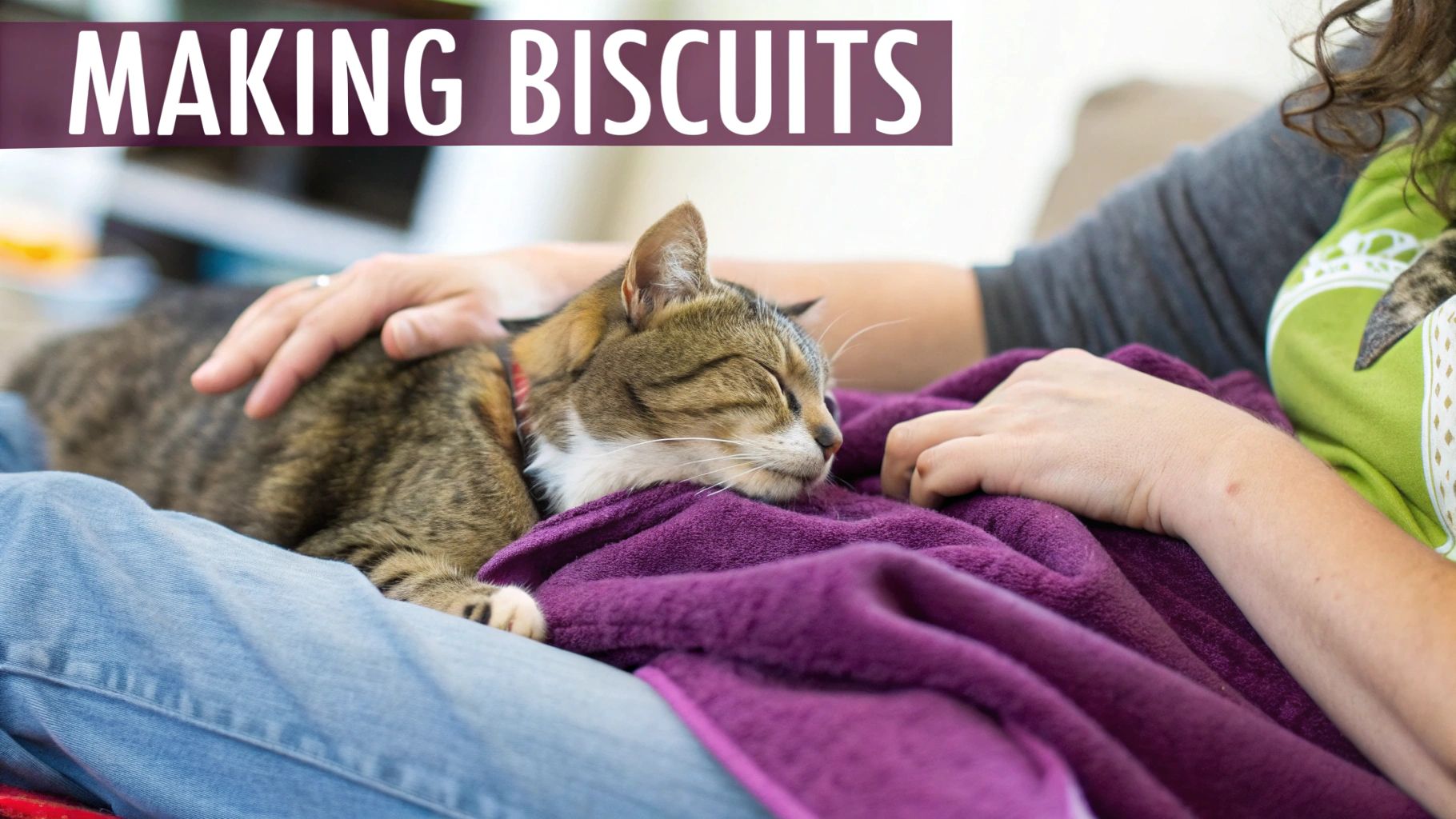
Does your cat ever transform into a tiny, furry baker, rhythmically pushing their paws into your lap? 🧑🍳 This ridiculously cute move, known everywhere as “making biscuits,” is one of the most heartwarming things cats do. But it's not just a random quirk; it’s a behavior wired deep into their brains, straight from their kitten days.
Way back when they were tiny fluffballs, kittens would knead their mom’s belly to get the milk flowing. That simple action becomes forever linked in their minds with warmth, safety, and a full tummy. So, when your grown-up cat starts making biscuits on you, it’s a throwback to that feeling. They’re telling you that you make them feel as safe and loved as their mother did. It’s a massive compliment in the cat world!
And what about when you get a gentle but firm head-butt from your cat? They’re not trying to start a fight. It’s a super affectionate gesture called head bunting, and it’s another one of those moments that makes you wonder why cats are so weird in the most wonderful ways.
The Ultimate Sign of Trust
Head bunting is all about social bonding and sharing scents. Cats have special scent glands on their cheeks, forehead, and chin that release their own unique pheromones. When your cat bunts you, they're literally marking you with their personal fragrance, claiming you as a trusted member of their inner circle.
Floofie confirms it: "When I boop my human with my head, I'm not just saying 'I love you.' I'm saying, 'You're mine now!' It’s the highest honor a cat can bestow. You're officially part of the family." ❤️
This scent-marking is your cat’s way of creating a shared "family scent." By mingling their pheromones with yours, they create a familiar and comforting aroma all over their territory—and that includes you! It’s a powerful signal that they feel completely secure and at home. If you want to dive deeper into these trust signals, you can learn more about how to build trust with a cat in our detailed guide.
How to Encourage These Loving Moments
So, how can you create an environment that invites more biscuit-making and head boops? It all comes down to making your space a total haven of comfort and security. A soft, inviting surface can be an open invitation for a serious kneading session.
Consider these Floofie-approved tips:
- Create a Cozy Kneading Station: Drape a super-soft blanket over your lap or their favorite napping spot. The plush texture of the blankets in our FloofChonk home décor collection is basically a magnet for biscuit-makers!
- Get on Their Level: When your cat comes over looking for a head bunt, lower yourself to their level. It makes you way more approachable and shows you’re ready for some love.
- Respond with Gentle Pets: When they start kneading or bunting, reward them with gentle strokes and a soft voice. This positive reinforcement tells them their affectionate gestures are appreciated and, more importantly, reciprocated.
Leaning into these weird little rituals is one of the best parts of being a cat parent. They're the secret, unspoken ways your cat communicates their deepest feelings of love, trust, and pure contentment.
Decoding the Intense Stare (and the Slow Blink)
You know the look. That intense, unblinking, laser-beam gaze from across the room. It can feel a little unnerving, like your cat is trying to download your thoughts. 🔮 It’s one of those classic cat behaviors that makes us wonder what’s going on in their fuzzy little heads, but it’s almost never a sign of aggression. Most of the time, it’s just your cat’s way of gathering information.
Think of a cat’s stare as their version of a deep and meaningful conversation, just without the words. They might be curious about what you’re up to, trying to figure out if that crinkling sound is the treat bag, or simply giving you their full, undivided attention. In the cat world, direct eye contact is a pretty big deal, so that fixed gaze is a sign that they're totally engaged with you.
The Slow Blink: Basically a Kitty Kiss
Now, if you're really lucky, that intense stare will soften into something truly magical: the slow blink. Our own mascot, Floofie, calls this the “kitty kiss,” and it’s one of the highest compliments a cat can give. This gentle, deliberate closing and reopening of their eyes is their way of telling you, “I feel completely safe and relaxed with you.”
Out in the wild, closing your eyes in front of another animal is a moment of pure vulnerability. So when your cat slow-blinks at you, they’re showing you that they don’t see you as a threat at all. They see you as family—a source of comfort and security.
Think of it this way: A slow blink is the feline equivalent of a warm, genuine smile. It’s a non-verbal cue that instantly says, "Everything is calm, and I am happy you're here." 😊
And the best part? You can do it back! The next time your cat gives you that soft, slow blink, try returning the gesture. Look their way, gently and slowly close your own eyes for a second or two, and then slowly open them again. You’re literally speaking their language, and it’s a beautiful way to strengthen your bond.
When a Stare Means Something Else
Of course, context is everything. While most stares are totally harmless, it's important to read their full body language. If that stare comes with flattened ears, a fast-twitching tail, or a low growl, it could be a sign of fear, irritation, or a warning. Or, they could just be gearing up to pounce on their favorite toy. If you see that predatory gleam, we recommend grabbing a FloofChonk feather wand to redirect that energy into some fun playtime!
Usually, though, that stare is just your wonderfully weird cat trying to connect. Learning to read their gaze and respond with a loving slow blink is one of the most rewarding parts of being a cat parent. It’s a silent conversation that says it all.
Why Your Cuddly Cat Suddenly Bites During Petting
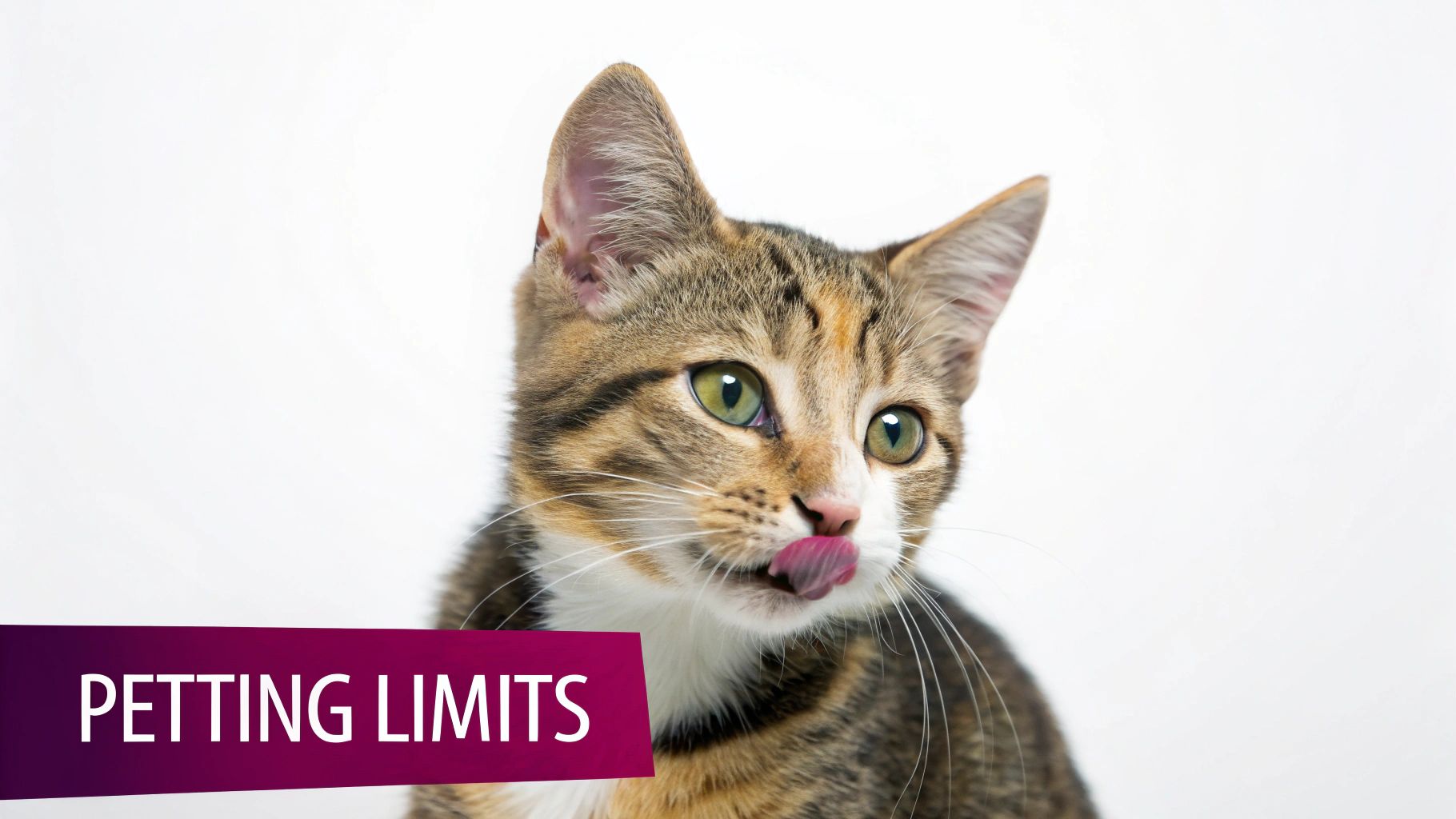
We’ve all been there. You’re in the middle of a perfect cuddle session, your cat is a rumbling purr machine, and all is right with the world. Then, out of nowhere—WHAM! 💥 A sharp nip on your hand shatters the peace. Your sweet angel has turned into a tiny, furry landmine. 😇➡️👿
This baffling behavior is a textbook case of petting-induced aggression. And before you take it personally, know this: it's not you, it's them. This is just your cat’s abrupt, and slightly rude, way of saying, “Okay, that’s enough of that.” It's a classic "weird" cat move that’s completely wired into their biology.
A cat’s skin and nervous system are way more sensitive than ours. What starts as blissful, gentle stroking can quickly become grating and overwhelming. Imagine a tiny sensory bucket that fills up with every single pet. Once it overflows, their brain flips a switch from "pleasure" to "get it off me," and that sudden bite is their emergency brake.
Reading the Warning Signs
The good news? Cats almost never go from zero to a hundred without throwing up a few warning flags first. Learning to speak their language is the real secret to dodging those surprise love taps. Long before a tooth makes contact, your cat is trying to tell you they’re nearing their limit.
Keep an eye out for these subtle red flags:
- A Twitching or Thumping Tail: A slow, lazy swish is a happy tail. But a tail that starts twitching at the end or thumping firmly against the floor is shouting, "I'm getting annoyed!"
- Flattened "Airplane" Ears: Their ears might start to pivot back or flatten against their head like airplane wings. This is a classic defensive posture. ✈️
- Rippling Skin: Look closely and you might see the skin on their back start to twitch or ripple. This is an involuntary sign that they're overstimulated.
- A Tense Body: That relaxed, floppy loaf of a cat will suddenly go rigid. Their muscles are tensing up, getting ready to act.
Floofie says the foundation of a great relationship with your cat is respecting their boundaries. Spotting these signs and stopping before they have to bite teaches them that you listen and can be trusted.
When you learn to catch these cues, you can end the cuddle session on a high note, preserving the good vibes for next time. It’s all about quality, not quantity!
For a deeper dive, check out our guide on understanding the different kinds of cat bites. And when they’re ready for some hands-off fun, a new wand or kicker toy from our FloofChonk toy collection is the perfect way to play and bond without pushing their buttons.
When Your Cat Plays Fetch Like a Dog
You toss a crinkle ball across the room, and a moment later, your little hunter trots back with the prize in their mouth, dropping it right at your feet. Hang on… isn’t that a dog’s job? 🐶 This charmingly weird behavior is more common than you’d think, and it says a whole lot about your cat’s smarts and your special bond.
This isn't your cat having an identity crisis; it’s their inner predator bursting out to play! Fetch taps directly into the natural feline hunting sequence: stalk, chase, and “capture” the prey. When they bring that toy back to you, they're not just playing a game—they're presenting you with the spoils of their successful hunt. Floofie calls this a "prey-sent," and it’s a massive sign of trust and affection. 💖
The Spontaneous Retriever
Here’s the really interesting part: this is one of those behaviors owners rarely have to teach. One comprehensive scientific survey revealed that 94.4% of cats who play fetch started doing it completely on their own, no training required. It’s just a purr-fectly natural expression of their instincts. You can dive into more fascinating details from the study on spontaneous cat fetching behavior here.
So, what kind of “prey” usually triggers this fetching instinct? It turns out, certain toys are just irresistible to a cat’s inner tiger.
Some cats fetch as a way of initiating playtime and controlling the interaction. When they bring the toy to you, they're essentially saying, “Again! Again! I am the mighty hunter, and you are my official toy-thrower!”
To embrace this unique game, try experimenting with different types of toys to see what your little retriever loves most.
- Lightweight and Crinkly: Toys that make a crinkly sound, like the foil balls in our FloofChonk cat toy collection, mimic the sound of small prey rustling around in the grass.
- Soft and Easy to Carry: Small, plush mice are another huge favorite because they're easy for a cat to pick up and carry in their mouth, just like the real thing.
Encouraging this game is a fantastic way to bond with your multi-talented feline. It provides amazing mental and physical exercise, strengthening your connection with every single toss and triumphant return. Go on, play fetch with your wonderfully weird kitty! 🐾
Answering Your Weirdest Cat Questions
Got questions about your wonderfully weird cat? Trust us, you're not alone. We asked our official mascot, Floofie, to round up the most common head-scratchers from cat parents who are just trying to figure it all out. Let's dive into the weirdest of the weird. 🧐
Why Does My Cat Chatter at Birds?
You know the look. Your cat is glued to the window, tail twitching, eyes locked on a bird. Then, a strange, rapid-fire chattering or chirping noise starts. It’s one of the most bizarre sounds a cat can make, but it's totally normal!
This is a deep-seated instinct often called "vacuum activity." In simple terms, their inner hunter is so fired up that they’re practicing the quick, precise “kill bite” they’d use on prey. Since they can’t actually reach the bird through the glass, all that pent-up predatory energy has to go somewhere, and it comes out as a chatter. It’s a sign you have a sharp, alert kitty whose instincts are working perfectly!
To help them satisfy that chattering instinct and give them a "catch" they can actually enjoy, try an engaging toy like the FloofChonk Feather Wand. It’s the perfect way to turn window-watching frustration into a fun, successful hunt.
Is It Weird That My Cat Is Obsessed with Boxes?
Not in the slightest! A cat's pure, unadulterated love for cardboard boxes is one of their most logical (and hilarious) quirks. For an animal that is both a stealthy predator and a potential prey item, a simple box is the ultimate multi-purpose gadget.
Floofie’s Logic 😼: "A box is a fortress of solitude! I can hide from scary things, ambush my enemies (like my human's feet), and take a cozy nap. It's the best invention ever."
Boxes give cats a secure, enclosed space where they can feel safe and hidden, which dramatically lowers their stress levels. Plus, cardboard is a fantastic insulator, making it the perfect spot to curl up and stay warm. So the next time your FloofChonk package arrives, just remember the box is a bonus gift!
Why Does My Cat Sleep in Such Strange Positions?
One minute your cat is a perfect, compact loaf. The next, they’re twisted into a pretzel that would make a yoga master wince. These wild sleeping poses aren't just for show—they're often a sign of absolute comfort and trust.
When a cat sleeps with their belly exposed, they’re showing you their most vulnerable area. It’s their way of sending a crystal-clear message: "I feel completely safe and happy here with you." These weird positions also help them regulate their body temperature or simply stretch out into the comfiest possible spot for a deep snooze. It's just another part of their wonderfully weird charm!
At FloofChonk, we celebrate every single weird, wonderful, and wild thing about our feline friends. From cozy apparel that shows off your cat pride to toys that honor their inner hunter, we've got everything you need to embrace the quirk. Check out our full collection and find the purrfect gear for you and your wonderfully weird cat today!