
Finding the Best Cat Harness for Walking Your Adventure Cat 🐾

Ready to turn your house cat into a confident trailblazer? Finding the best cat harness for walking is your first step, and the absolute best ones are secure, comfortable, and escape-proof. Your cat's safety and happiness are everything, so a great-fitting vest or H-style harness made from breathable material is the purrfect launchpad for your future adventure kitty. 😻
Choosing the Purrfect Harness for Outdoor Adventures
So, you're dreaming of strolling through the park with your feline bestie, but you know a simple collar just isn't going to cut it. You've come to the right place! In this guide, our chief adventurer, Floofie 🐾, will walk you through everything you need to know to find the absolute best cat harness for your walking adventures.
We're here to demystify the options and help you pick a safe, comfy harness that turns your kitty into a fearless explorer. Think of this as your treasure map to unlocking a whole new world of shared experiences. ✨
A great harness is so much more than gear; it's a promise of safety. A study of cat owners found that a staggering 48% have lost their cat at least once. A secure harness drastically cuts down the risk of your cat wiggling free and becoming another heartbreaking statistic. It keeps them right by your side, turning what could be a scary situation into pure, shared joy.
Pawsitive First Steps to Harness Success
The secret to getting started is all about creating good vibes. The harness should scream "fun times ahead!" not "what is this contraption you've strapped me into?" 🙀
Success really begins with the trust you've built with your cat. Before you even think about introducing the harness, making that bond rock-solid is key. If you need some pointers, learning how to build trust with a cat is a fantastic place to start.
This handy decision tree from Floofie can help you quickly match your cat's unique personality to the right harness style.
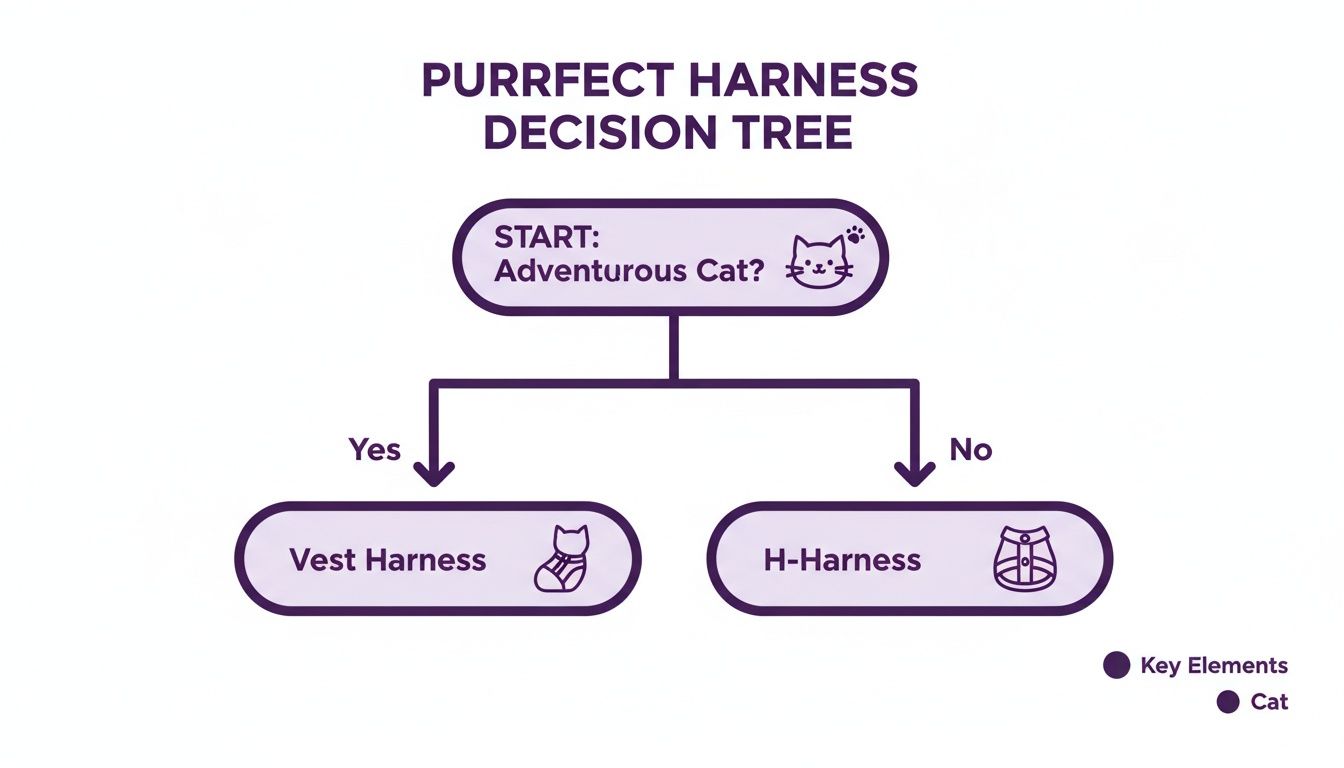
As you can see, a bold, curious cat might love the snug security of a vest harness. On the other hand, a more timid or cautious kitty might feel much more comfortable in a lightweight H-harness.
The Adventure Kitty Starter Pack
To get ready for your big outdoor escapades, you’ll need a bit more than just the perfect harness. Think about getting a sturdy leash, a travel water bowl, and definitely some high-value treats to make the training process a total breeze. While we're focusing on harnesses here, don't forget to check out a diverse selection of pet supplies for everything else your adventure cat might need.
Here’s what every new explorer should have in their kit:
- A Secure Harness: This is absolutely non-negotiable! Look for one like our FloofChonk Adventure Harness with several adjustment points to get that snug, custom-like fit.
- A Lightweight Leash: Pick a leash that isn't too heavy. You don't want it pulling on your cat or getting in the way of their natural, graceful movements.
- Patience and Treats: Positive reinforcement is your superpower. Every single interaction with the harness should be showered with praise and delicious snacks. 🐟
Quick Guide to Choosing Your Cat's Harness
Feeling a little overwhelmed? No worries! Here’s Floofie's fast-track table to match your cat's personality with the purrfect harness type for your adventures together.
| Harness Type | Best For... | Key Feature |
|---|---|---|
| Vest Harness | Bold explorers, Houdini cats, and cooler climates. | Full coverage for extra security and comfort. |
| H-Style Harness | Timid cats, warm weather, and quick trips outside. | Minimal contact and very lightweight feel. |
| Figure-8 Harness | Cats who are already comfortable with harnesses. | Simple design, but requires a perfect fit. |
| Escape-Proof | Master escape artists and cats in busy environments. | Extra straps and security for ultimate peace of mind. |
Ultimately, the goal is to find a harness that your cat feels good in, giving both of you the confidence to explore.
With the right gear and a sprinkle of patience, you'll be hitting the trails in no time. Now, let's take a closer look at the different harness styles out there! 🗺️
Decoding the Different Cat Harness Styles
Alright, future trailblazers, let's talk adventure outfits! Not all harnesses are created equal, especially when your cat’s comfort and safety are on the line. Picking the right style is like choosing the perfect gear for a hike—it needs to fit well, feel good, and keep your kitty secure on the trail.
We'll pounce into the most popular options to find the best cat harness for walking your unique feline. Think of some harnesses as cozy sweaters for a casual stroll, while others are rugged jackets for serious exploration. Let's decode the styles so you can make a pawsitively perfect choice!
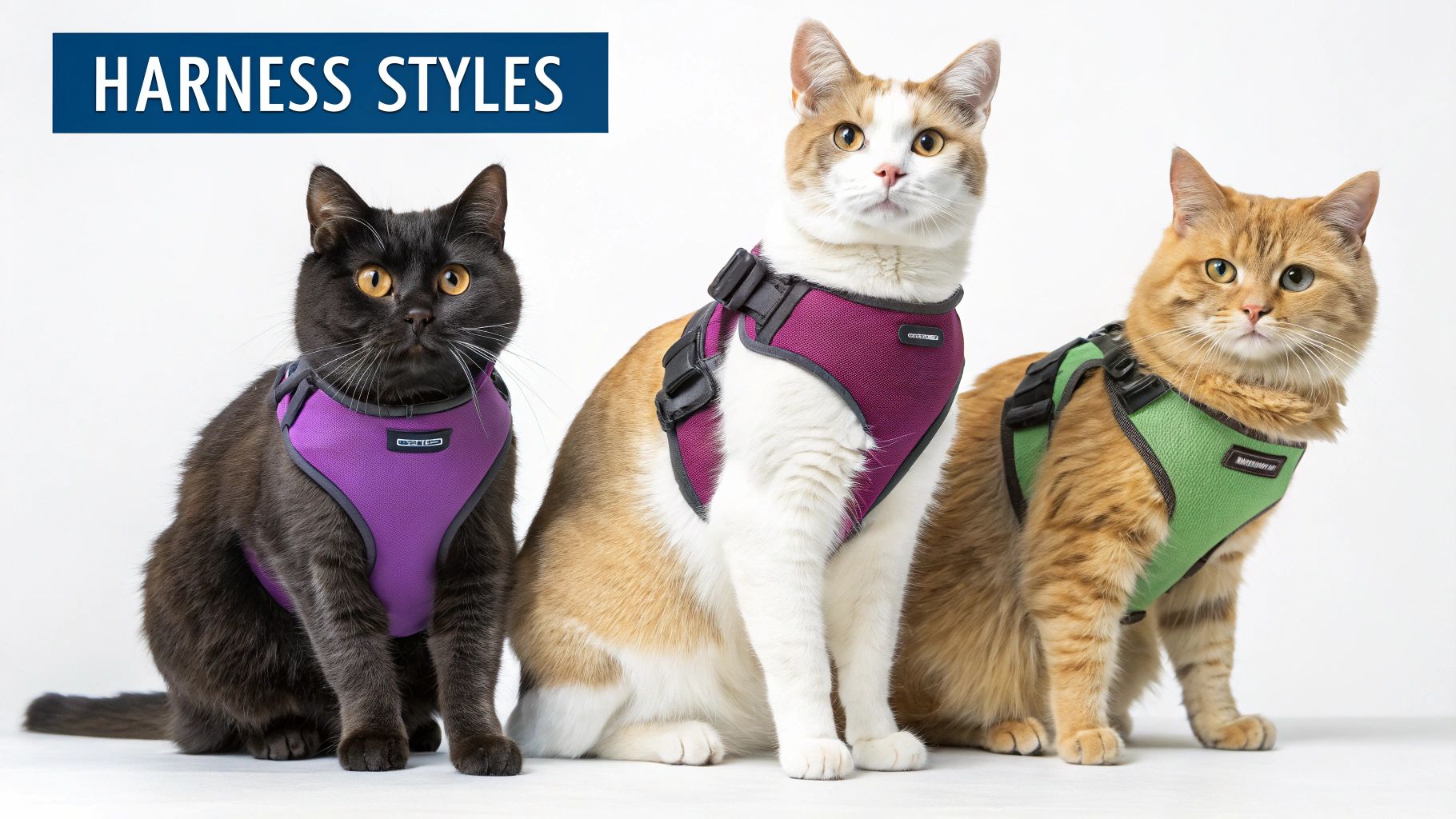
The Vest Harness: A Comforting Hug
First up is the vest-style harness, often called a walking jacket. This design offers the most coverage, wrapping around your cat's torso like a snug, reassuring hug. For a nervous or first-time explorer, this gentle pressure can be incredibly calming, almost like a security blanket. 🤗
This style is Floofie's top pick for any kitty who has earned a black belt in the art of escape. Because it distributes pressure evenly across the chest and shoulders, it’s much harder for a determined cat to back out of it. Plus, they look so dapper! Our Escape-Proof Adventure Harness is the perfect example of a vest that combines maximum security with ultimate comfort.
The H-Style Harness: Simple and Breezy
Next, we have the classic H-style harness. Imagine two simple loops—one for the neck and one for the chest—connected by straps that form a distinct 'H' shape along your cat's back. It’s a minimalist's dream! 😺
This design is fantastic for a few reasons:
- It’s lightweight: Purrfect for cats who despise the feeling of wearing "clothes."
- It’s cool: The minimal material makes it an excellent choice for walks in warmer weather, preventing your kitty from overheating.
- It’s easy to put on: With just a couple of buckles, you can get your cat geared up for an adventure in seconds.
The H-style is a great starting point for laid-back cats who are new to harnesses but aren't prone to dramatic escape attempts. It offers good control without feeling restrictive.
The Figure-8 Harness: Sleek and Secure
Finally, let's look at the Figure-8 harness, which is a close cousin to the H-style. As the name suggests, it forms a figure-eight loop, with one part going around the neck and the other around the torso, crossing over at the shoulders. It’s a sleek and simple design that’s very secure when fitted properly.
However, the key phrase here is when fitted properly. A Figure-8 harness requires a very precise fit. If it's even a little too loose, a clever cat can twist their way out. This style is best for seasoned adventurers who are already comfortable wearing harnesses and don't put up a fuss.
It’s less bulky than a vest but can be more secure than a basic H-style if you get the sizing just right. Choosing this style is about knowing your cat's personality—if they’re a professional wiggler, you might want the extra security of a vest instead.
Essential Features to Look For in a Cat Harness
So, you’ve settled on a style you think your kitty will love. Awesome! 🥳 But now we get to the really important part—the specific features that make the difference between a flimsy harness and a truly secure, adventure-ready one. It's time to put on your detective hat and look for the clues that signal top-tier safety and comfort.
Let's break down the non-negotiables that make a harness genuinely escape-proof and purrfect for walking. Once you know what to look for, you'll be able to spot a high-quality harness from a mile away.
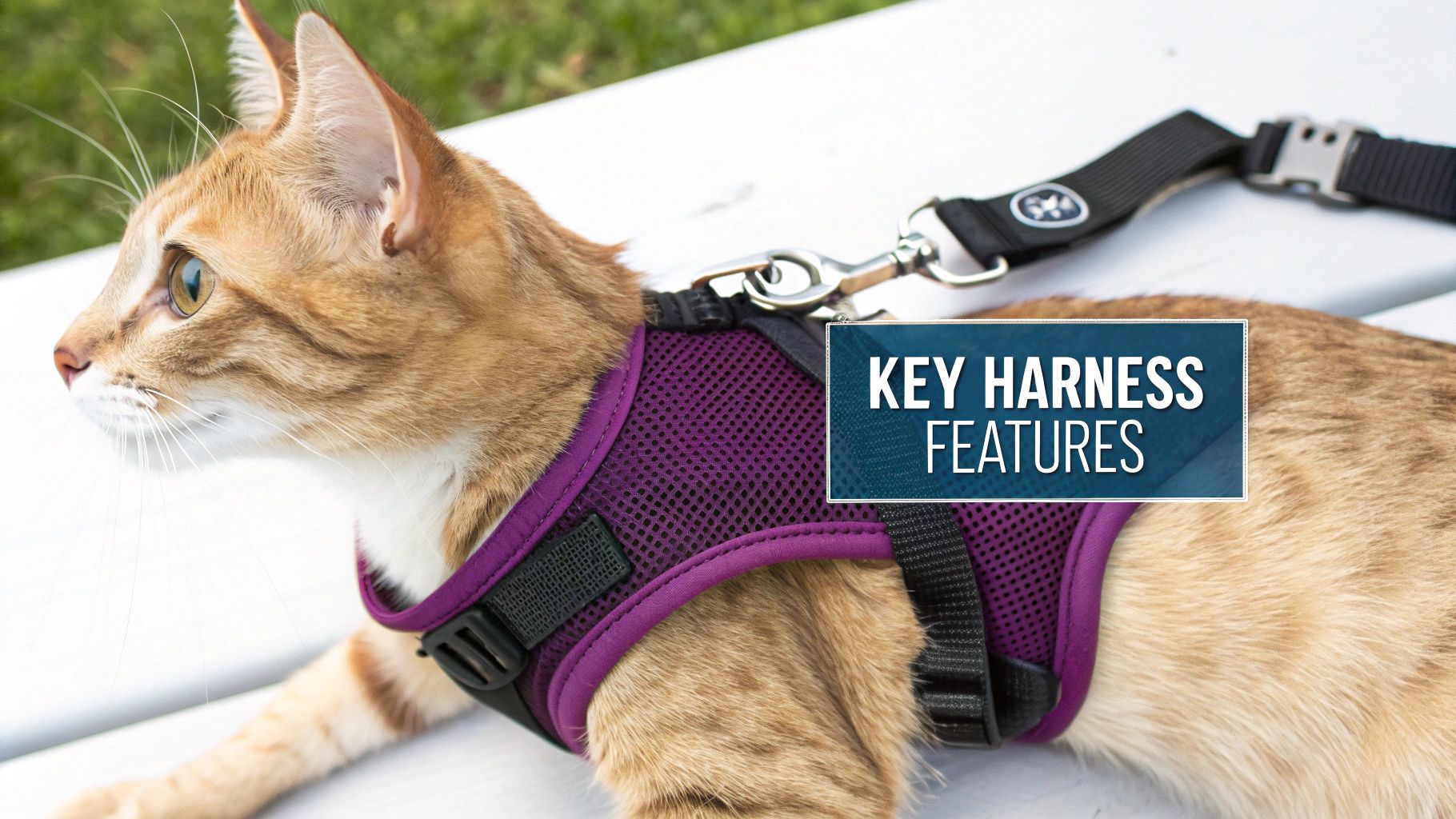
Materials Matter Meow-re Than You Think
The fabric of a harness isn't just about style; it’s about making sure your cat is comfortable, cool, and safe. You'll mostly see two main players here: breathable mesh and heavy-duty nylon.
-
Breathable Mesh: Think of this as activewear for your cat. It's super lightweight and soft, allowing for plenty of airflow. This is a huge plus for keeping your little explorer from overheating on sunny days and helps prevent uncomfortable chafing against their skin and fur.
-
Sturdy Nylon: This is your rugged, all-terrain option. Nylon is incredibly tough and a breeze to clean, which is perfect for adventurous cats who enjoy a good roll in the dirt or a detour through some bushes. It's not as airy as mesh, but its durability is second to none.
Our FloofChonk Adventure Harnesses often use a clever hybrid design, pairing a soft mesh interior with tough nylon straps. It's the best of both worlds!
A Custom Fit with Multiple Adjustment Points
A "one-size-fits-all" harness is a recipe for disaster with cats. They are basically liquid, after all! 😼 That’s why multiple adjustment points are an absolute must-have for any harness claiming to be escape-proof.
You'll want a harness with at least two, and ideally four, adjustment points—typically around the neck and the chest. This lets you tailor the fit perfectly to your cat's unique shape, preventing them from pulling off that infamous "reverse and slip" escape move that keeps us cat parents up at night.
Floofie's Tip: A snug fit is your number one defense against a cat Houdini. It should be tight enough that they can't wiggle out, but you can still comfortably slide one or two fingers underneath the straps.
This kind of precise adjustability is what separates a basic harness from the best, ensuring your explorer feels secure but never restricted. It’s the difference between a straitjacket and a perfectly tailored suit.
Secure Buckles and Leash Attachments
Let's get down to the hardware. The buckles and D-rings might look like small details, but they're the most critical safety components on the entire harness.
First up, the buckles. You want something sturdy and quick-release, but not so flimsy that it could pop open by accident. You should hear a solid 'click' to know it's locked in. Cheap plastic buckles are a huge red flag, as they can snap under pressure.
Next are the leash attachment points, which usually come in two flavors:
- Back-Clip (Dorsal Attachment): This is the most common setup, with a D-ring on the back of the harness between your cat's shoulder blades. It's fantastic for casual, relaxed walks because the leash stays clear of their legs.
- Front-Clip (Chest Attachment): A D-ring on the chest panel can be a total game-changer for cats who tend to pull. When they tug, the leash gently guides them back toward you—like a subtle "hey, this way!" tap on the shoulder.
We're even seeing technology integrated into harnesses now, like built-in GPS trackers. This trend is part of a booming pet tech market that's expected to hit an incredible USD 52.9 billion by 2035. It just goes to show how much we value that extra peace of mind for our furry family members. You can learn more about the growth of pet technology and how it’s shaping the future of products like these.
How to Measure and Fit Your Cat's New Harness
Picking the perfect harness style is a huge first step, but a bad fit can turn your adventure into a disappearing act. Too tight, and your cat will be miserable. Too loose, and that same cat becomes a furry Houdini, ready to vanish the second you turn your back! 🪄
Think of this section as your hands-on guide to getting that perfect Goldilocks fit—not too snug, not too baggy, but just right. Floofie will walk you through measuring your cat correctly and making those final adjustments for a secure and comfy outing, every single time.
Getting Your Cat's Measurements
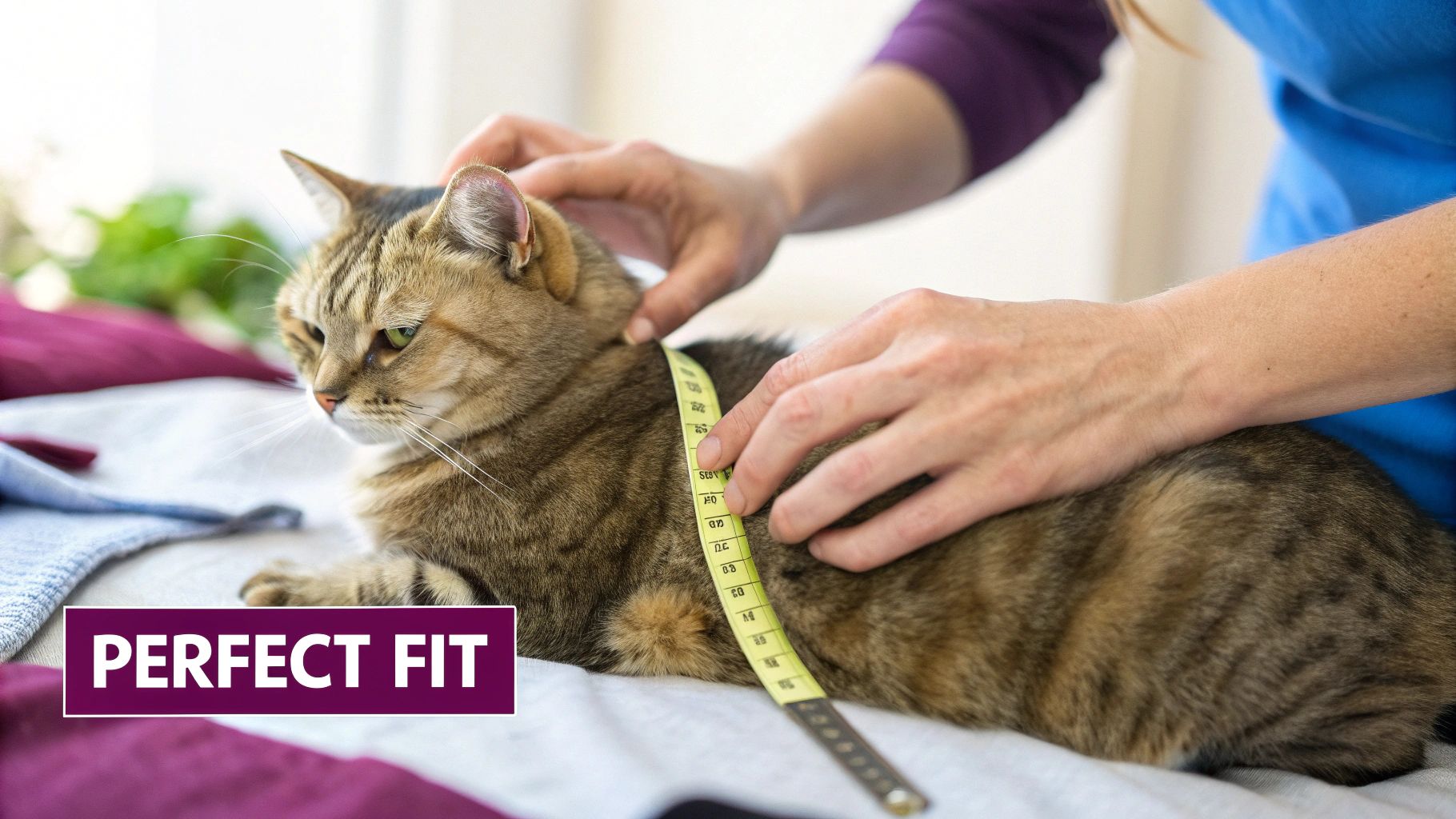
Before you can snag the best cat harness for walking, you’ll need two crucial numbers: their neck girth and chest girth. Grab a soft, flexible measuring tape (the kind used for sewing works great) and a handful of irresistible treats to make this a good time for everyone involved.
If you’ve got a professional wiggler on your hands, try measuring them when they’re sleepy or happily distracted by a snack. A calm cat is a cooperative cat.
- Measure the Neck Girth: Gently wrap the tape around the base of your cat's neck, right where a collar would naturally rest. Keep it snug, but not tight. You’re not trying to choke them! Jot down the measurement.
- Measure the Chest Girth: This is the big one. Wrap the tape measure around the widest part of your cat's torso, just behind their front legs. Again, keep it comfortable and write down that number.
With these two measurements, you can confidently check the sizing chart on any harness, like the ones for our Adventure Harness. If your cat falls between two sizes, it's almost always better to size up. You can always tighten straps, but you can't add more fabric.
The Famous Two-Finger Rule
So, you've got the harness and adjusted it based on the numbers. But how do you really know it fits? It’s time to deploy the "two-finger rule," a classic trick every cat parent should have up their sleeve.
The rule is simple: You should be able to comfortably slide two fingers flat between the harness and your cat's body. Check this at both the neck and chest straps. This is the sweet spot—secure enough to prevent an escape, but loose enough for comfort and movement.
If you can't fit two fingers, it’s too tight and will chafe. If you can fit more, your clever kitty has found their escape route. This little check provides invaluable peace of mind before you even step outside.
Final Fit Check Before You Go
Okay, almost there. Before heading out, let your cat strut around the house for a few minutes while you play inspector.
- Check for Chafing: Look for any rubbing or red marks, especially around the armpits and neck. The harness shouldn't dig in or restrict their natural range of motion.
- Observe Their Walk: Are they moving normally? If your cat is walking like a little tin soldier, the straps probably need readjusting.
- The Escape Test: Give a gentle tug on the harness to see if you can pull it over their head. If it stays firmly in place, you've nailed it! 🏆
Getting the fit right is just as important as choosing the right gear for any adventure. For more tips on keeping your cat secure on the go, check out our guide on how to choose the right cat travel carrier. Now, you're ready to start training!
Training Your Cat to Love Their Harness
Let’s be real for a second. The first time you try to put a harness on a cat, things can get… interesting. 😼 You might get the limp noodle flop, the dramatic freeze, or my personal favorite, the "I am now a statue" routine. Don't sweat it. Our own mascot, Floofie, promises that with a little patience and a truckload of treats, you can teach your kitty to see their harness as a signal for adventure.
The whole point here is to avoid force. We're aiming to build a genuinely positive connection, making your cat think this whole harness thing was their idea from the start. Think of it as a marathon, not a sprint, because every cat moves at their own pace. Floofie started out as a major harness skeptic and now he basically lives for his daily walks!
This plan breaks everything down into tiny, winnable steps. We’re going to make this feel less like training and more like a game that’s rigged in their favor.
Step 1: The Grand Introduction
Before you even dream of buckling anything, that harness needs to become the most boring, normal object in your house. Seriously, think of it as a new piece of furniture they can ignore.
Start by just placing the Adventure Harness near your cat’s favorite nap spot or right by their food bowl. Then, just leave it there for a few days. Let them give it a sniff, bat it around, or even use it as a pillow. The goal is to make it totally neutral—it’s just a thing that smells like home.
Anytime you catch your cat checking it out, casually toss them a really good treat. This starts forging that all-important mental link: Harness = Delicious Snacks! Don't rush this. Let them get completely comfortable with its presence before you even think about moving on.
Step 2: Making First Contact
Okay, so your cat is officially bored with the harness just lying around. Purrfect. Now it’s time for the next micro-step. Simply pick it up and gently drape it over their back for a second or two. No buckling, no adjusting, just a brief touch.
The second it’s on their back, shower them with praise and their absolute favorite treat. Do this for just a few seconds at a time, a couple of times a day. You're teaching them, "Oh, when that thing touches me, I get the good stuff!"
Floofie's Tip: Remember, the key is to keep these interactions incredibly short and sweet. Always end on a high note so they're left wanting more. If your cat tenses up or seems stressed, you're going a bit too fast. No big deal—just dial it back to the previous step for another day.
Step 3: Buckle Up, Buttercup!
Now that your cat is cool with the harness resting on them, it's time to actually secure it. This can be the make-or-break moment, so go slow and turn it into a full-blown treat party. 🥳
- Fasten the Buckles: While distracting your cat with a steady stream of treats or their favorite toy, gently fasten the buckles. Keep the fit super loose the first few times.
- Immediate Reward: The instant those buckles click, give them a jackpot reward. We're talking about the fancy tuna or the freeze-dried chicken they go nuts for. Let them wear it for just a minute or two while you play.
- Take it Off: Before they have a chance to get weird about it, unbuckle the harness. Just like that, the treat party is over. This shows them that wearing the harness is what makes all the fun things happen.
Gradually, over several days, increase the amount of time they wear the harness around the house. If your cat does the classic "flop and freeze," don't panic! It’s a totally normal reaction. Just grab a laser pointer or feather wand and try to distract them. Often, a really engaging toy is all it takes to make them forget they're even wearing their new adventure gear.
Step 4: Introducing the Leash
With your cat now strutting around the house in their harness like it's no big deal, it's time to bring in the leash. This is a huge part of finding the best cat harness for walking, since their comfort with the leash is just as important as the harness itself.
Clip the leash on, but don't hold it yet. Just let your cat drag it around the house for a few minutes while you supervise. This lets them get used to the weight and sound of it without any pressure from you pulling on it.
Once they seem unfazed, pick up the end of the leash and just follow them around the room. Don't try to lead or guide them at all. The goal is just to get them used to you holding the other end. After a few successful indoor strolls, you're officially ready to take those first brave steps into the great outdoors! 🌍✨
Your Checklist for Safe and Happy Cat Walks
You’ve picked the perfect style, mastered the fit, and your cat is finally harness trained. Hooray! 🥳 You and your kitty are on the verge of your very first grand adventure together.
But before you step out the door, let's quickly run through Floofie's final safety checklist. This is what will ensure every single outing is a positive one for both of you. Think of it as your secret weapon against unexpected mishaps.
Pre-Launch Gear Inspection
Just like a pilot inspects their plane before takeoff, you need to give your cat's gear a quick once-over before every single walk. It only takes a minute, but it makes a world of difference.
- Check the Harness: Look for any signs of wear and tear. Pay close attention to the stitching and straps to make sure nothing is fraying or coming loose.
- Test the Buckles: Give them a few clicks to make sure they snap securely into place. Look for any tiny cracks or damage that could cause them to fail.
- Inspect the Leash: Check for any frays along its length and, most importantly, make sure the clasp that connects to the D-ring is strong and functions smoothly.
This simple routine can prevent a potential escape before it even has a chance to happen. A lost cat is a heartbreaking scenario, and a secure harness like our FloofChonk Adventure Harness is truly your best friend out there.
Situational A-purr-ness
Once you're outside, your job shifts to being your cat's personal bodyguard and advocate. Staying alert means you can spot potential trouble long before it finds you. The biggest rule of all? Never leave your cat unattended while they're tethered. Not even for a second—it’s just too risky.
Floofie says: Always be on the lookout for off-leash dogs, sudden loud noises, or anything else that might spook your kitty. Being able to anticipate and avoid stressful situations is the hallmark of a true adventure cat pro.
Understanding your cat's body language is also crucial. A twitching tail, flattened ears, or a low crouch are all signs that your cat is feeling overwhelmed and it's time to head home. Beyond the gear, planning where you go is essential. Discovering various pet-friendly activities and destinations can help you choose safe, stimulating environments.
For those even bigger journeys, having the right plan makes all the difference. Check out our ultimate cat travel checklist for more tips on keeping your kitty safe on the road. With this checklist in your back pocket, you’re ready for anything! 💖
Common Questions About Cat Harnesses
Got a few questions still bouncing around in that curious head of yours? Don’t worry, you’re not alone! Our head adventurer, Floofie, has been listening with his pointy ears. 😸
We’ve rounded up the most common head-scratchers from feline explorers-in-training to clear up any confusion before you head out. Let's get to it!
Can I Use a Small Dog Harness for My Cat?
It’s tempting, we know, but it's really not a great idea. Here’s the thing: cats and dogs are built completely differently. Cats are basically furry little contortionists with narrow shoulders and ridiculously flexible bodies.
A dog harness just isn't shaped for a feline's unique anatomy. It almost always leaves gaps around the neck and shoulders, creating the perfect escape route for a magical disappearing act. The best cat harness for walking is one made just for them, ensuring a snug, secure fit you can trust. Our FloofChonk Adventure Harness is built specifically with a cat’s slinky frame in mind!
How Do I Know If the Harness Is Too Tight or Loose?
This is where the golden "two-finger" rule saves the day! Once the harness is on, you should be able to comfortably slip two fingers between the harness and your cat's body—check this at both the neck and chest straps.
- Can't fit two fingers? It's too snug. This could cause chafing, restrict movement, or just be plain uncomfortable for your kitty.
- Can fit more than two? It's too loose, and you've officially entered the escape-risk zone!
Make this a quick pre-adventure check every single time. It takes two seconds and makes a massive difference in keeping your cat safe and sound.
My Cat Flops Over When I Put the Harness On. What Should I Do?
Ah, yes, the classic "harness paralysis"! This dramatic flop is an incredibly common reaction. It's usually a sign of confusion ("What is this thing on me?!") or mild protest, not actual pain or distress.
The secret to beating the flop is a big dose of patience and a whole lot of positive reinforcement. Keep the first few harness sessions super short—we’re talking just a minute or two indoors. The second it's on, whip out their absolute favorite toy or a high-value treat they rarely get.
You’re essentially rewriting their internal script. The goal is to change the harness from a "weird, restrictive contraption" into a "magical cape that makes tasty things appear." Never force it, just keep the vibes happy and positive, and they’ll be strutting their stuff before you know it. 💖
Ready to start your journey? Find the purrfect adventure gear for your feline friend at FloofChonk! Check out our collection of escape-proof harnesses and more at https://www.floofchonk.com.