
Can Cats Eat Banana? Safe Portions and Risks Explained

Yes, a healthy adult cat can have one tiny, peeled, plain banana piece, about one ¼-inch slice, per week as an occasional treat, never the peel; any cat with a health condition needs a vet's approval first.
But if a food isn't poisonous, does that automatically make it a good snack? That's the gap behind “can cats eat banana,” because non-toxic and nutritious aren't the same thing. Floofie, our curious mascot, may investigate your breakfast with professional-level enthusiasm, but a nose twitch isn't nutritional advice. 🐾
Safe Banana Portions for Every Cat
Portion size is where banana turns from harmless to unhelpful. A healthy adult cat can have a taste, while fruit stays extra in a diet built around complete cat food.
PetMD's human-food guidance recommends one ¼-inch slice per week for a healthy cat without digestive upset, and caps all treats at 10% of daily calories with the remaining 90% coming from nutritionally complete cat food. Treat that slice as both the default taste and the ceiling. The 10% covers every extra together: fruit, dental treats, lickable snacks, and table scraps.
A cat begging harder does not earn a bigger piece. Floofie can sell urgency with Olympic-level whisker work, but portion decisions still follow the cat's health row.
Find your cat's situation first
Banana portions by cat situation
| Cat situation | Banana okay? | Notes |
|---|---|---|
| Healthy adult cat | Yes, occasional | Offer no more than the small weekly serving above, then stop if stool softens or vomiting follows. |
| Kitten | Ask a vet first | Do not copy an adult portion. Growing cats need meals planned for development. |
| Overweight cat | Ask a vet first | Skip a trial piece unless your vet allows it, since sugar and calories can slow weight control. |
| Diabetic cat | Only with vet approval | No unsupervised taste. The carbohydrate and sugar load may not fit the plan. |
| Cat with intestinal disease | Only with vet approval | Do not test fruit at home. It can aggravate digestive symptoms. |
| Cat on a prescription or weight-management diet | Ask a vet first | Keep treats to what the vet permits so the feeding plan stays intact. |
A cat who fits several rows follows the strictest answer. An overweight adult with a sensitive gut does not qualify for the healthy-adult allowance just because the rest of the day looks normal.
If your cat turns away, leave it there. Do not smear banana on dinner or hide a piece in the bowl to force interest; a refused snack is a clean result, and Floofie awards full marks for respecting feline boundaries.
If chilled produce is the bigger draw, read our guide to whether cats can eat watermelon before offering a cube.
Portion rule: Find your cat's row, follow the limit, and when in doubt, skip the banana and ask your vet.
Why Non-Toxic Does Not Mean Nutritious
The ASPCA lists banana as non-toxic to cats. A small amount of the fruit isn't generally expected to poison a healthy cat. That safety answer still leaves the feeding question open.
Toxicity answers a safety question. Nutrition answers a feeding question. A food can pass the first test without contributing much to the second.
Cats are obligate carnivores. They need a diet formulated around animal-based protein and feline-specific nutrients, including taurine, rather than a miniature version of a human fruit bowl.
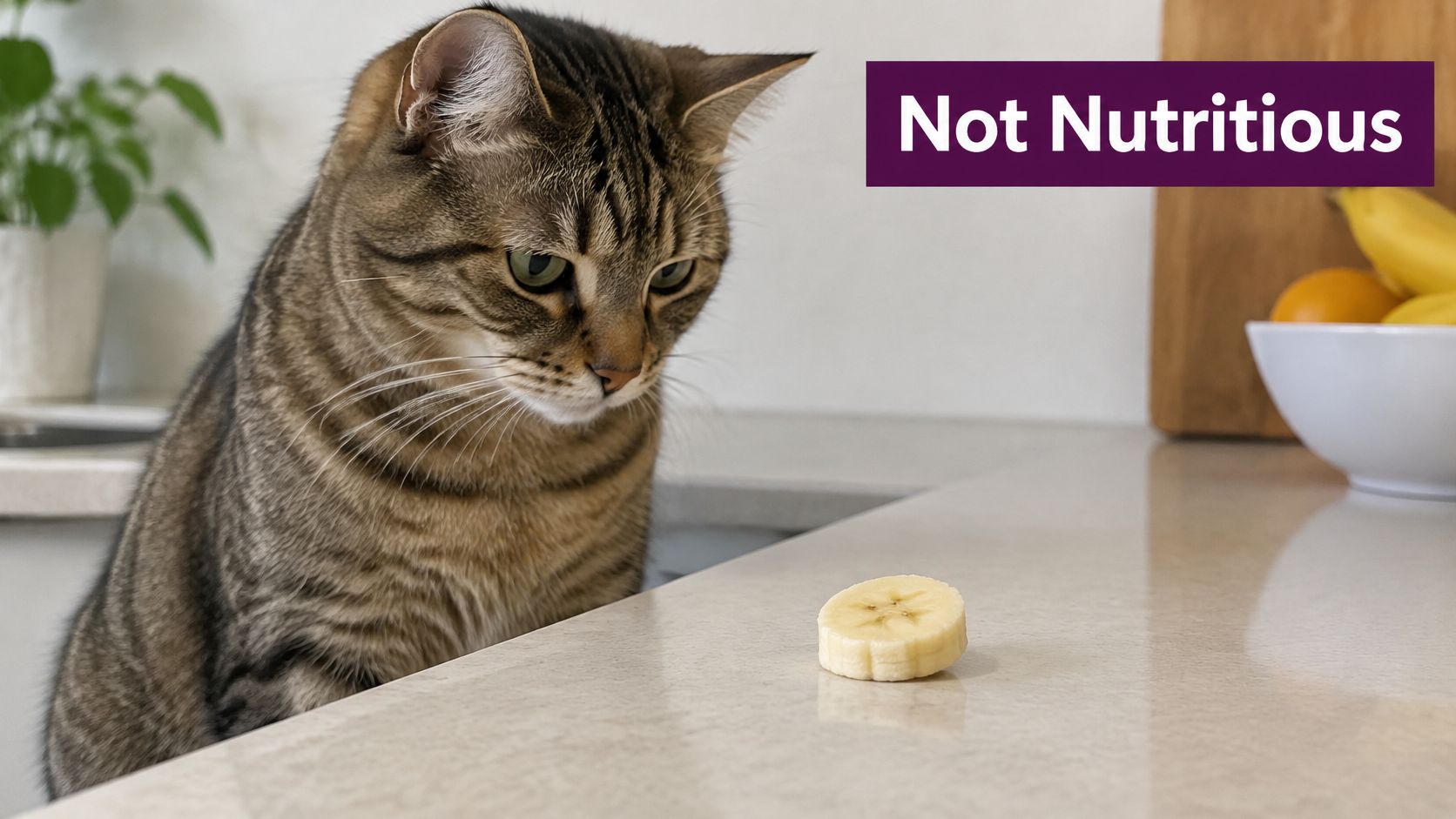
A human-sized snack in a cat-sized diet
A cat's metabolism runs on animal protein and feline-specific nutrients. Banana supplies mostly carbohydrate and sugar, so it can be tolerated without being useful fuel. Energy alone doesn't make a food appropriate.
A whole banana is plainly out of proportion to the tiny taste under discussion. Repeated extras can crowd out balanced food or add calories without improving the overall diet.
Your vet can set an appropriate daily calorie target using your cat's size, activity, body condition, and medical history. Don't borrow another cat's feeding allowance, even if both cats look similar beneath their fluff.
Non-toxic is not the same as nutritious.
What the nutrient panel actually tells you
The following per-100-gram values come from FoodDataHub's banana composition listing. They describe the fruit's composition, not a recommended feline serving.
Banana nutrients per 100 grams and what they mean for cats
| Nutrient | Per 100 g banana | What it means for a cat |
|---|---|---|
| Calories | 89 kcal | Concentrated enough that treat calories add up quickly in a small body. |
| Carbohydrate | 22.84 g | Not a feline dietary requirement; a key reason for caution with this snack. |
| Sugar | 12.23 g | Particularly relevant for diabetic or overweight cats. |
| Fiber | 2.6 g | May affect stool in helpful or unhelpful ways; keep portions small. |
| Protein | 1.09 g | Too little to make banana a useful protein food; cats need animal-based nutrition. |
| Potassium | 358 mg | Normally already supplied by complete cat food. |
| Vitamin C | 8.7 mg | Cats make their own vitamin C, so fruit isn't needed to supply it. |
| Vitamin B6 | 0.37 mg | Covered by an appropriate complete cat food. |
Carbohydrate and sugar deserve the most attention. The presence of vitamins doesn't cancel them out, particularly when a cat already has a condition requiring careful dietary management. The word “natural” doesn't make a sugary food automatically suitable either.
Fiber needs a more careful interpretation. It can influence stool consistency, but banana isn't a reliable treatment for either constipation or diarrhea, and experimenting during an existing digestive problem can make the situation harder to assess.
The protein row puts the fruit's role into perspective. Banana isn't a meaningful substitute for the protein-rich food your cat needs, no matter how enthusiastically Floofie performs the snack-time paw dance.
Don't supplement a balanced diet by guesswork
Potassium and vitamin B6 are useful nutrients, but a healthy cat eating an appropriate complete food doesn't need banana as a delivery system. More ingredients don't automatically produce a better diet.
The same applies to vitamin C. Cats make their own, so the human habit of choosing fruit for a vitamin boost doesn't translate neatly to feline feeding.
If your concern is digestive health, focus on the whole diet rather than adding a random fiber source. Our guide to high-fiber cat food explains the distinction between purposeful dietary fiber and an improvised snack.
The verdict is simple: banana can be an occasional curiosity for a suitable cat. Complete cat food should do the nutritional work, without fruit replacing meals or becoming a homemade supplement.
How to Serve a Banana Safely, Step by Step
Careful preparation reduces avoidable risks, but it can't guarantee that your cat's stomach will welcome a new food. Purina's banana-feeding guidance recommends removing the peel, offering a very small piece, and watching for digestive or appetite changes.
Set up the taste when you'll be home to observe your cat. Don't introduce several unfamiliar foods together, because you'll struggle to identify what caused a reaction.
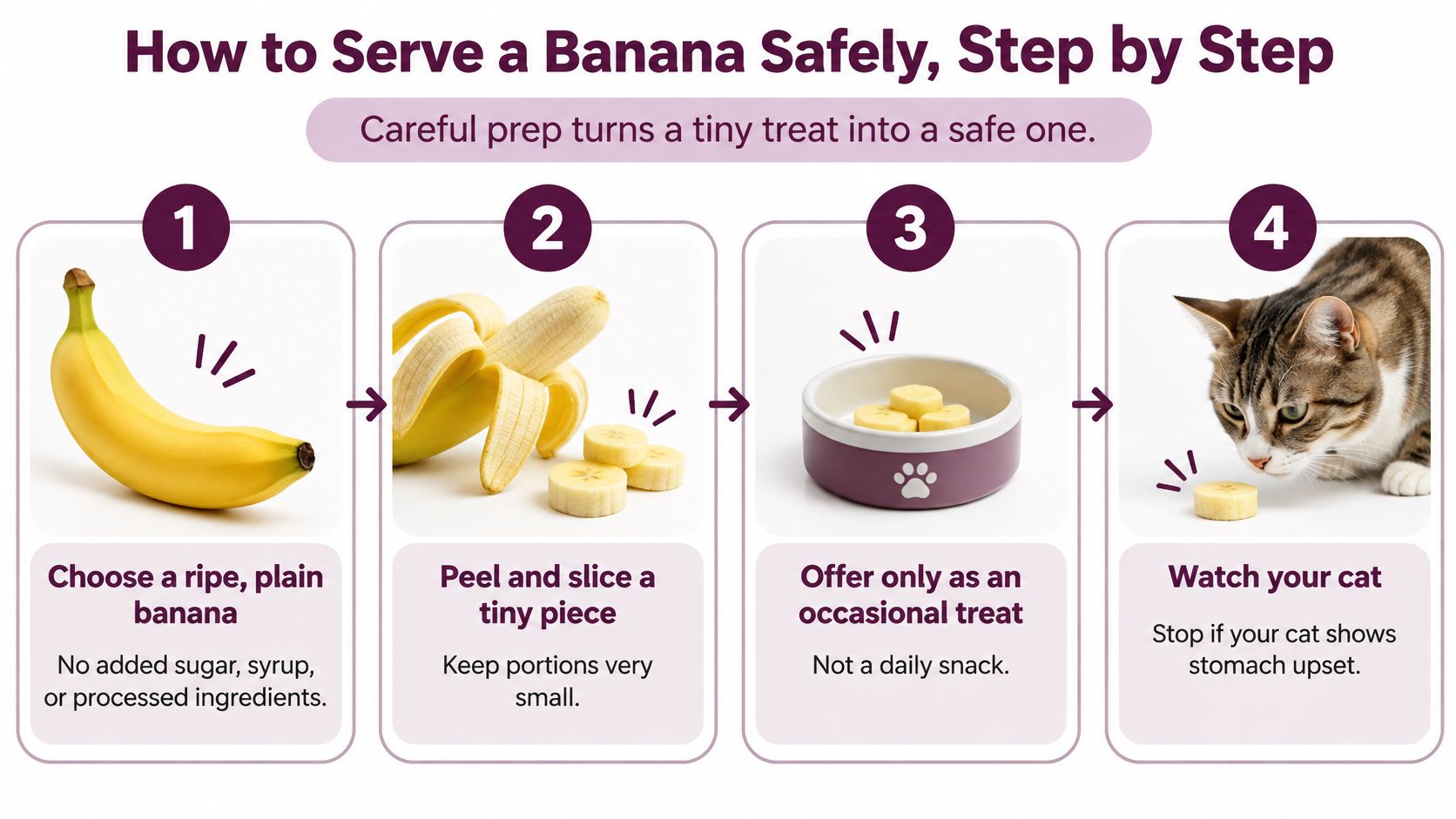
Prepare, offer, and observe
- Choose a ripe, plain banana. Use fresh fruit without added sugar, syrup, or a processed coating. Banana-flavored snacks aren't a substitute for plain flesh, even when the packaging looks wholesome.
- Peel it completely. Discard the peel somewhere your cat can't retrieve it, and remove the stringy pieces clinging to the fruit. Cats can't properly digest the peel, which also creates choking and obstruction concerns.
- Cut a tiny, manageable taste. Take it from the conservative serving allowance rather than treating a large chunk as acceptable because it's soft. Break the offered amount into smaller bites if needed; cutting it smaller doesn't increase the total allowance.
- Offer it separately from the regular meal. Put the taste on a clean, shallow plate so you can see whether your cat eats it. Don't smear it onto paws, push it into the mouth, or hide it throughout the food bowl.
- Watch Floofie after the taste. Look for vomiting, loose stool, reduced appetite, lethargy, or behavior that seems unusual for your cat. A cat who hides instead of joining their usual household routine deserves attention, even without an obvious mess.
- Record the result before considering another offering. Note the date, approximate amount, and any reaction, then leave banana off the menu until another occasional serving is due. Skip future trials if symptoms develop, and get veterinary approval before offering it to a cat with a chronic condition.
Let your cat decline
Sniffing, licking, and walking away don't mean the serving failed. Your cat doesn't need to learn to like banana, and you shouldn't keep presenting it until curiosity turns into eating.
A good outcome is pleasantly uneventful: a relaxed cat, normal stool, normal appetite, and no unusual behavior. Interest in the treat is optional; comfort isn't.
Floofie's serving standard: A tiny taste, a willing cat, and no pressure to finish. 🍌
Wash the plate and put the remaining fruit away afterward. Leaving your breakfast unattended defeats careful portioning if your curious kitchen inspector returns for a self-service helping.
Banana Chips, Bread and Baby Food
Processed banana products are different foods from plain banana. A banana picture on the label tells you little about the ingredients inside, so don't apply fresh-fruit advice to a packaged snack.
Dried banana and chips have had water removed, concentrating the fruit's sugars by weight, and some products also contain oil, salt, or sweeteners. Bread and muffins bring added sugar, butter, or oil, sometimes alongside chocolate chips or nuts. None is a sensible feline snack.
Check the whole label, not the flavor
Use this quick screening routine before sharing anything banana-based:
- Reject unsuitable additions. Skip products containing chocolate, raisins, xylitol, onion, garlic, or nuts. These ingredients present different concerns, but none belongs in this banana-tasting experiment.
- Prefer a single ingredient. Plain banana is the only candidate worth considering. Avoid added juice, sugar, syrup, and flavored coatings.
- Count the entire bite. Processed fruit isn't a way around portion control or your cat's overall treat allowance.
- Get approval for vulnerable cats. Kittens and cats with diabetes, excess weight, intestinal disease, or prescribed feeding plans shouldn't receive an improvised processed-food portion.
- Stop at an unfamiliar ingredient. If you can't confidently assess the label, don't offer the product.
Baby food and smoothies deserve the same scrutiny. Some mixed recipes contain savory ingredients, sweeteners, or juice that you wouldn't expect from the product name alone.
A plain-looking spoonful isn't proof of a plain ingredient list.
My recommendation is to skip banana chips, baked goods, and mixed banana products. Tiny portions of fresh, peeled banana are easier to assess, and your cat loses nothing by missing out on your muffin.
Cat-Friendly Treat Swaps When Banana Is Off the Menu
Banana can be non-toxic and still be nutritionally weak for a cat. A useful swap either gives your cat a little plain animal protein or skips edible rewards altogether. Choose based on what motivates your cat and how much treat room the day's feeding plan leaves.
Floofie rates snack time by purr, not portion size. A small reward paired with attention can still feel special. 😺
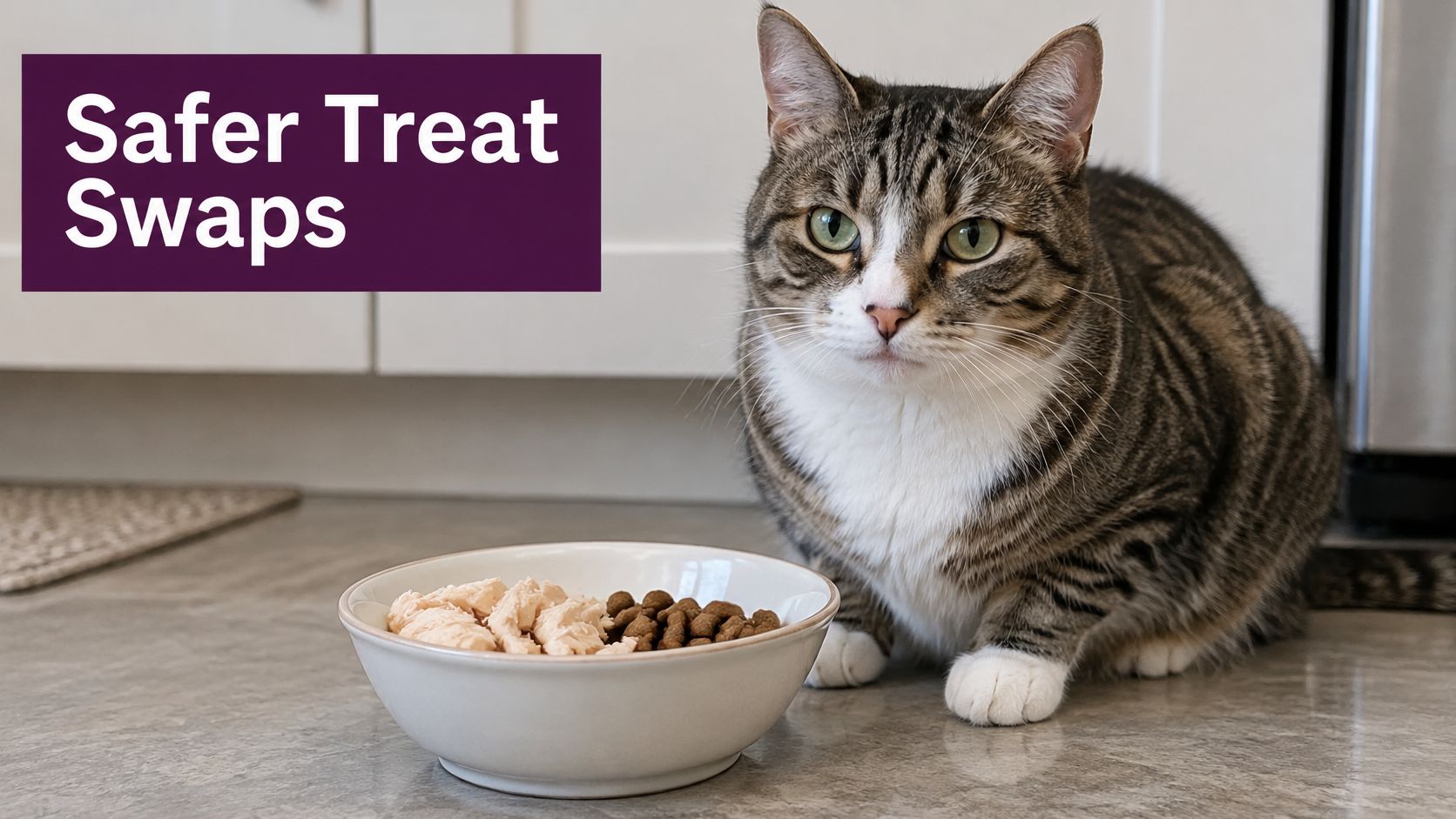
Choose a reward that suits your cat
Match the swap to your cat's preferences and feeding restrictions:
| Cat situation | Better swap | Portion guidance |
|---|---|---|
| Prefers a familiar meaty reward | Plain cooked chicken or turkey | One small boneless piece with no salt, seasoning, onion, or garlic. |
| Enjoys fish | Plain cooked fish | An occasional small unseasoned piece with every bone removed. Never offer raw fish. |
| Needs a shelf-stable treat | Single-ingredient freeze-dried meat | Follow the feeding directions and count each piece toward the treat allowance. |
| Wants novelty rather than food | Catnip or cat grass | Offer briefly and remove it if chewing plant material causes vomiting. |
| Has little room for extra food | Interactive toy play | Use a short stalk, chase, and catch session without adding calories. |
Even suitable meat swaps are treats, not meal replacements. Preparation matters as much as the ingredient, so keep portions plain, boneless, and small.
For kitchen projects, start with how to make homemade cat treats, then check the recipe against your cat's individual restrictions. When comparing commercial healthy cat treats, check whether the product is a snack or a probiotic supplement. Ask your vet whether a supplement serves a purpose rather than assuming it belongs in your cat's everyday routine.
Keep the unsuitable foods out of reach
Store grapes, raisins, onions, garlic, chocolate, and xylitol-sweetened foods where your cat cannot reach them. Their risks are not identical, but none belongs in a feline treat rotation.
You also do not have to buy an edible reward. A cardboard box, supervised crinkly paper ball, or short wand-toy session can turn an ordinary afternoon into a satisfying little hunt.
Post-Banana Symptoms and When to Call Your Vet
Vomiting or loose stool after banana can reflect digestive intolerance to an unfamiliar, sugary, or fiber-containing food. Don't interpret it as your cat needing time to get used to fruit. Stop offering banana.
PetMD's veterinary guide to cats and bananas identifies gastrointestinal upset and the choking or obstruction risks from peel as practical concerns, and recommends watching for symptoms over the next several hours. Persistent or severe signs warrant veterinary advice.
There are two different problems to distinguish: digestive intolerance and possible physical obstruction. A stomach upset may settle, but suspected choking or blockage requires urgent help rather than a home feeding experiment.
Match the sign to the next move
Post-banana symptoms, causes and next moves
| Symptom | Likely cause | What to do |
|---|---|---|
| Vomiting or loose stool soon after eating | Possible digestive intolerance to a new, sugary food | Stop banana, leave fresh water available, and call the vet if symptoms continue or worsen. |
| Retching, gagging, or no stool after eating peel | Peel or a large chunk may cause obstruction; gagging can also indicate choking | Seek urgent veterinary care. Don't wait for every sign to appear. |
| Reduced appetite or lethargy | Digestive upset or another illness, not necessarily the banana | Monitor closely and contact your vet promptly if signs persist, are marked, or occur together. |
| Extra thirst or urination in a diabetic cat | Possible blood-glucose disturbance; banana alone doesn't establish the cause | Contact your vet promptly and follow the existing diabetes plan. |
| Weight gain after regular fruit treats | Total calorie intake may exceed the cat's needs | Stop routine fruit treats and ask your vet to review the whole feeding plan. |
The table is a triage aid, not a diagnosis. A cat can become ill after eating banana for an unrelated reason, and timing alone doesn't prove the fruit caused it.
Don't assume lethargy is merely a “sugar crash,” and don't change insulin or other medication yourself. Cats with diabetes or intestinal disease should have a lower threshold for contacting their vet after a reaction.
When waiting isn't appropriate
Seek urgent care for difficulty breathing, repeated unsuccessful retching, severe weakness, a painful or swollen abdomen, or suspected peel obstruction. Don't induce vomiting, give human stomach remedies, or offer more food to try to push material through.
If the reaction is mild and your cat otherwise seems normal, remove the banana and keep fresh water available. Watch appetite, activity, vomiting, and litter-box output, and call your vet if anything persists or worsens.
Useful details to record include:
- What was eaten: Plain flesh, peel, or a processed product, including its ingredient label.
- How much and when: Your best estimate is more useful than pretending to know exactly.
- What changed: Vomiting, stool, appetite, drinking, urination, energy, and behavior.
- Relevant history: Diagnoses, medication, prescribed food, and other recent treats.
Before any banana trial, speak to your vet if your cat is a kitten, diabetic, overweight, has intestinal disease, or eats a prescription or weight-management diet. Bring a treat list to routine appointments so your vet can assess the complete diet rather than just the main food.
If you're arranging a new appointment, The Vet Price Comparison Site's guide to an initial veterinary appointment can help you prepare.
Mild and short-lived means stop and watch closely. Persistent, severe, or blockage-like signs mean call the vet now.
FloofChonk offers cat-themed apparel, accessories, home décor, and pet products for people who take feline happiness seriously, with a playful streak. Visit FloofChonk to explore Floofie-approved finds and give snack time a fun companion, while keeping every edible reward tiny and suited to your cat.