
How to Calm a Stressed Cat A Complete Guide

Before you can work your magic and soothe your frazzled feline, you have to learn to speak their language. 😸 Cats are masters of disguise, often hiding their anxiety behind behaviors that might seem odd or even naughty to us hoomans. Our mascot, Floofie, says learning their secret language is the first step to creating a calmer, happier home!
The key is to recognize subtle stress signals before they escalate. This allows you to pinpoint the trigger and provide comfort, turning you from a worried owner into a confident Cat Detective! 🕵️♀️
Decoding Your Cat's Stress Signals
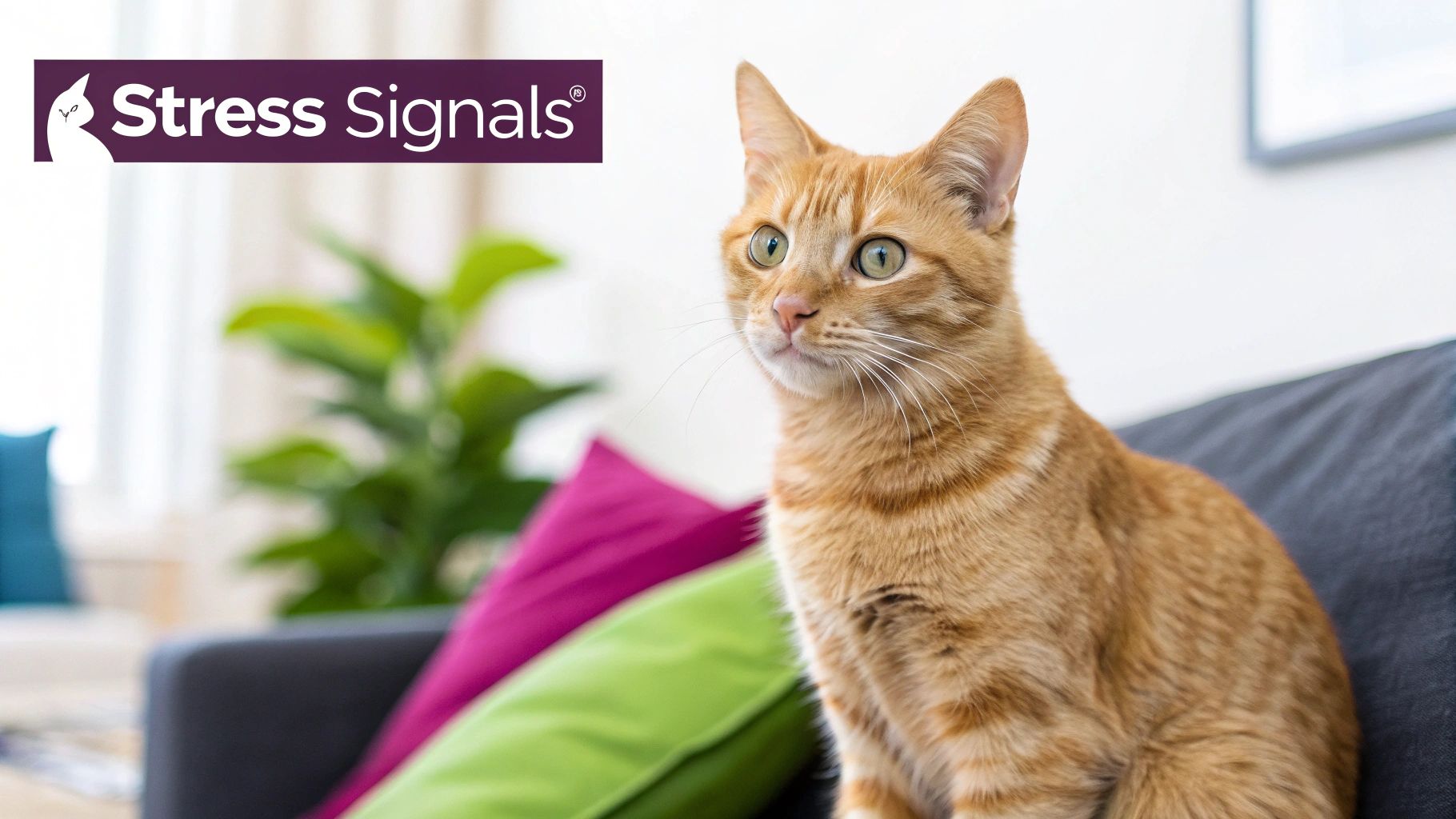 can help you manage the mess while you figure out the cause.
- Over-grooming or Under-grooming: Is your kitty licking themselves bald in one spot? Or is their usually pristine coat looking a little scruffy? Both can mean they're too anxious to keep up with their normal grooming routine.
- Hiding More Than Usual: All cats love a good nap in a secluded spot. But a stressed cat might disappear for long periods or refuse to come out for meals and playtime.
- Shifts in Appetite: A sudden disinterest in food or, conversely, a sudden spike in hunger can both be tied to anxiety.
Cat Stress-O-Meter: Your Quick Guide to Feline Feelings
Sometimes it's tough to tell if your cat is just chilling or secretly stressed. This little chart breaks down the body language so you can quickly gauge their mood.
| Behavior | Chill Cat Vibes 😎 | Stressed Cat Alert 🙀 |
|---|---|---|
| Eyes | Soft, relaxed, slow blinks | Wide, dilated pupils, staring intently |
| Ears | Forward, relaxed, maybe swiveling to listen | Flattened back ("airplane ears") or twitching rapidly |
| Body Posture | Loose, relaxed, loafing, or curled up | Tense, crouched low to the ground, tail tucked |
| Tail | Held high with a gentle curve, or still and relaxed | Lashing or twitching back and forth, puffed up ("bottlebrush") |
| Vocalizations | Purring, soft meows, chirps | Low growling, hissing, yowling |
| Grooming & Eating | Normal grooming, regular appetite | Licking one spot raw, not grooming, or changes in eating |
Think of this table as your go-to cheat sheet. The more you observe your cat's "normal," the easier it will be to spot when they're waving a little red flag.
Floofie's Top Tip: "Your kitty's body language tells a whole story! A twitching tail, flattened ears, or wide, unblinking eyes can mean they're on high alert. Knowing these signs helps you swoop in with calming vibes before things get too hairy!"
To become a true expert, it's helpful to understand all the nuances of their non-verbal cues. For a deeper dive into what their most expressive feature is trying to tell you, check out our guide on what different cat tail positions mean.
Observing your cat is the most important first step. The more you understand their baseline behavior, the faster you'll notice when something is amiss.
Creating Your Cat's Ultimate Safe Space
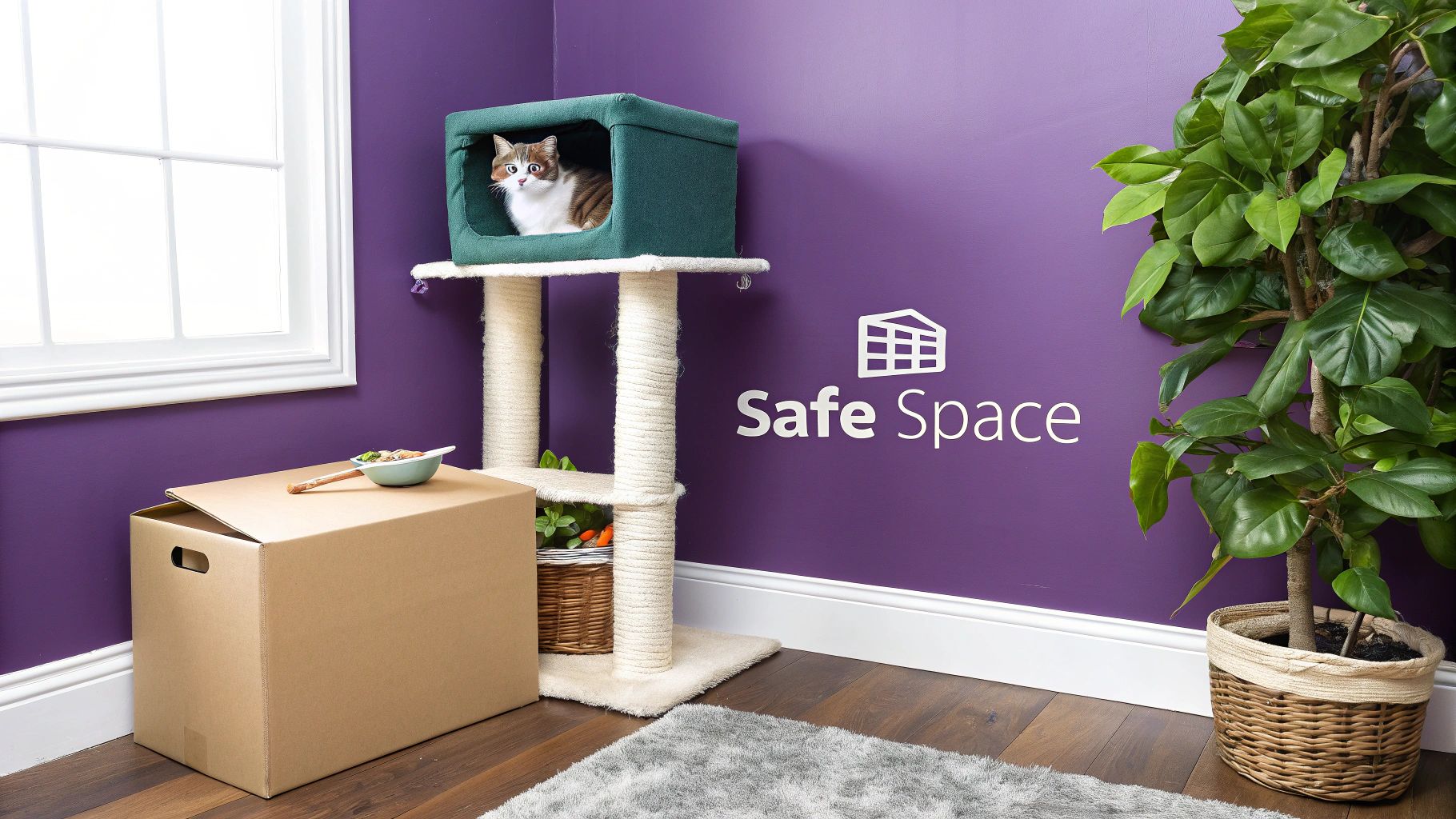
Just like we need a comfy couch to crash on after a long day, every cat deserves a personal sanctuary—a 'zen den' where they can escape life's scary monsters (like the vacuum cleaner 👹). Floofie agrees! Giving your cat a dedicated safe space is one of the most powerful ways to show them they're secure. It's their own little fortress of solitude where they call the shots.
This is about more than just tossing a blanket in a corner. A true feline safe space is a multi-layered haven that taps into their deepest instincts. It’s a spot where they can retreat, recharge, and feel completely in control, which is absolutely crucial for bringing their stress levels down.
Going Vertical: The Feline High-Rise
Cats are climbers. It’s in their DNA. In the wild, height means safety—it gives them a bird's-eye view to survey their kingdom and spot any funny business from a safe distance. You can easily bring this stress-busting instinct indoors.
Providing vertical space isn't just a nice-to-have; it's a must. Think of it as building a kitty skyscraper. A tall, sturdy cat tree is so much more than furniture—it's a throne, a lookout post, and a cozy studio apartment all in one.
Here are some purr-fect ways to build up:
- Sturdy Cat Trees: Go for multi-level towers with plenty of perches, cubbies, and scratching surfaces. The higher, the better! Our FloofChonk collection of cat trees is officially Floofie-approved for stability and prime napping potential.
- Wall-Mounted Shelves: Cat shelves and "catwalks" are amazing for creating a highway system along your walls. They let your cat navigate a room without ever touching the floor, a huge comfort in a busy home.
- Window Perches: A secure window perch is a front-row seat to the best show in town: "Cat TV." Watching the birds, squirrels, and neighborhood drama is fantastic enrichment that keeps their minds occupied without adding stress.
A 2017 Australian study confirmed that giving cats vertical spaces and cozy hiding spots is key to helping them de-stress. Boarded cats with access to 'cat igloos' and high perches showed far fewer stress behaviors. You can check out the findings on feline enrichment for yourself.
The Art of the Hidey-Hole
While climbing high is important, so is the ability to completely disappear. When a cat feels overwhelmed, their first instinct is to find a small, dark, enclosed space where they feel invisible and protected. Offering plenty of these hideouts is essential for their sense of security.
Never underestimate the power of a simple cardboard box—it’s often a cat’s favorite five-star resort! Of course, you can also upgrade their hiding game with more permanent, stylish spots that blend into your home.
Think about adding these cozy retreats:
- Cat Igloos or Caves: These covered beds provide a 360-degree sense of security.
- A Simple Cardboard Box: The ultimate budget-friendly hideout. Seriously.
- Under a Bed or Couch: Just make sure these areas are clean, safe, and easy for them to get in and out of.
Floofie gives his highest paw-stamp of approval to jazzing up their space with some fun decor. A piece of our quirky cat-themed wall art near their den can make it feel extra special! Setting up these spaces is a great first move, and you can get even more ideas from our guide on how to cat-proof your home to make sure every nook is a safe one.
Resource Management in Your Feline Kingdom
In a cat's world, where you put their food, water, and litter box is a very big deal. Getting it wrong can create territorial tension and major stress, especially if you have more than one cat. The golden rule is to separate these key resources.
Cats are hardwired not to eat or drink near where they go to the bathroom. Placing their food bowl right next to the litter box can cause them to avoid one or both, which can snowball into health and behavioral issues.
Follow this simple layout to create household harmony:
- Food Station: Place food bowls in a quiet, low-traffic spot where your cat won't be startled mid-bite.
- Water Station: Keep water bowls separate from the food. Many cats prefer moving water, so a fun cat water fountain can be a great way to encourage them to drink more.
- Litter Box Station: The litter box needs its own private, separate location, far away from their food and water.
For multi-cat homes, the rule of thumb is one litter box per cat, plus one extra. Spreading these resources around the house prevents competition and helps every cat feel like they have their own turf. By building this comforting environment, you’re not just calming a stressed cat—you're creating a home where they can truly thrive. 💖
Unleashing Happy Hormones Through Play
A bored cat is a stressed cat. 🙀 It's a simple truth. Just like we need hobbies and distractions, our feline friends need mental and physical stimulation to stay balanced and happy. Play isn't just for kittens; it's a powerful tool for feline wellness that taps directly into their natural instincts and releases a flood of mood-boosting endorphins.
Think about it: your sweet, purring companion is a tiny, ferocious predator at heart. Every pounce, stalk, and energetic chase is a nod to their wild ancestors. Giving them a healthy outlet for these instincts is one of the best ways to calm a stressed cat and stop boredom-related anxiety before it starts.
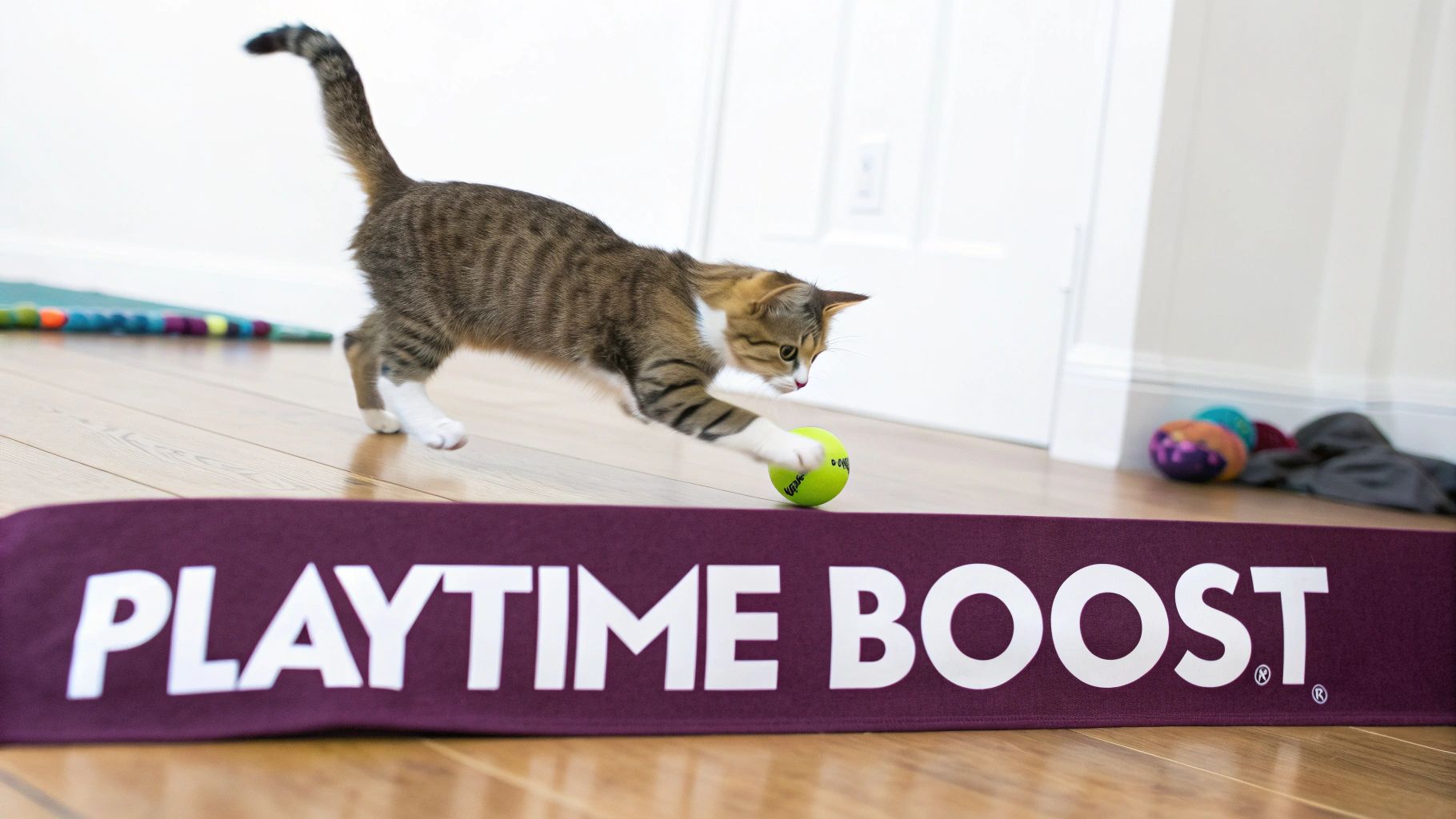
Just 15-20 minutes of dedicated, interactive playtime each day can make a world of difference. It helps burn off that frantic energy, builds their confidence, and strengthens the incredible bond you share. Seriously, it's a win-win.
Tapping Into the Prey Sequence
To make playtime truly satisfying, you have to think like a hunter. The most engaging games mimic the prey sequence—the natural order of a hunt. Understanding this helps you create a game that feels real and fulfilling for your little apex predator.
The sequence is pretty straightforward:
- Stalk: Your cat spots the "prey" (the toy) and freezes, eyes wide. Their body gets low to the ground, and their tail might do that classic excited twitch.
- Chase: The hunt is on! This is the high-speed part of the game where they zoom after their moving target.
- Pounce: With a sudden burst of power, they leap onto their target, using their paws to trap it.
- "Kill": They'll grab the toy with their teeth and might give it a few good "bunny kicks" with their back feet. This is the satisfying finale!
Letting your cat complete this entire sequence is so important. Always, always let them "catch" the toy at the end. Snatching it away without that final victory can lead to frustration and even more stress—the exact opposite of what you’re trying to achieve!
Are You Team Ground Hunter or Bird Catcher?
Did you know cats have different play personalities? Figuring out your cat’s preferred style is the secret to unlocking maximum fun.
Is your cat a...
- Ground Hunter? 🐾 These cats live for chasing things that skitter and slide across the floor. They're obsessed with toys that mimic mice, bugs, or lizards. Laser pointers (used safely!) and toys that move along the ground are their absolute jam.
- Bird Catcher? 🕊️ These kitties are all about the aerial assault. They love to leap, jump, and swat at toys that flutter and fly through the air. Feather wands and anything they can bat sky-high will get their motor running every time.
Knowing their hunter type helps you pick the purr-fect toys to get them engaged. Of course, many cats enjoy a bit of both, so mixing it up keeps things interesting! If you want to dive deeper, we've got a whole guide on the best ways to play with your cat that's packed with fun ideas.
Floofie’s Playtime Proclamation: "A moving toy is an interesting toy! My hoomans know I go bonkers for things that zip and zoom unpredictably. It makes me feel like the mighty hunter I am! Grrrrowl!"
Choosing the Right Tools for the Hunt
Once you've identified your cat's play style, it's time to stock the toy box. You don't need a million different toys, just a few high-quality ones that really speak to their instincts. Interactive toys are fantastic because they require you to play with your cat, which is amazing for your bond.
To help you pick the perfect toy for your little hunter's personality, we put together this handy chart.
Floofie's Fun-O-Meter: Pairing Toys with Play Styles
| Cat Play Personality | Loves To... | Floofie Recommends 🛸 |
|---|---|---|
| The Ground Hunter | Stalk, chase, and pounce on things that skitter and slide across the floor. | Our Smart UFO Cat Toy is a game-changer. It zips around randomly, mimicking erratic prey. |
| The Bird Catcher | Leap, jump, and bat at toys that flutter and fly through the air. | A classic Feather Wand is unbeatable. It brings out their inner aerial acrobat. |
| The Brainiac | Solve problems and use their paws and mind to get a reward. | Puzzle Feeders turn mealtime into a stimulating challenge and bust boredom. |
| The Ambush Artist | Hide and then suddenly attack from a secret spot. | A Crinkle Tunnel provides the perfect place to hide, stalk, and surprise "prey." |
Hopefully, this gives you a great starting point for finding a toy your cat will actually play with!
Make Mealtime a Mental Workout
Another fantastic way to beat boredom and reduce stress is to make your cat work for their food. In the wild, dinner isn't served in a convenient bowl. They have to hunt for it! Puzzle feeders are a simple and super effective way to bring that experience indoors.
These feeders require your cat to bat, nudge, or slide pieces around to get their kibble. This engages their brain, slows down those notorious speed-eaters, and provides a rewarding challenge. Start with an easy puzzle and gradually introduce more difficult ones as your cat gets the hang of it. It transforms a boring meal into a stimulating game, which is a massive stress reliever.
Managing Big Changes Like a Pro
Cats are the ultimate creatures of habit. Their entire world is built around predictable routines, so when a big life event shakes things up—like moving to a new home or welcoming a new family member—it can send their stress levels skyrocketing. 🙀 But don't worry. With a little planning, you can be the steady hand that guides them through the storm.
The real secret is to see the change from your cat's perspective. It’s all about making the unfamiliar feel familiar again and giving them a sense of control when everything else feels chaotic. Let's walk through how to handle some of the biggest feline stressors.
Navigating a Move to a New Pad
Moving is a nightmare for everyone, but for a cat, it's like being dropped on another planet. Every single sight, sound, and smell is alien, which is incredibly overwhelming. When you're dealing with big changes like this, it's crucial to prep your cat for the transition. This article on helping your pet settle in after a move has some great pointers on this.
Your absolute first priority is to create a "safe room" in the new place before your cat even arrives. This will be their home base for the first few days, or even a week, while they adjust.
Here’s how to set it up for success:
- Pick a quiet room: A spare bedroom or a quiet office works perfectly.
- Fill it with familiar things: Bring in their favorite bed, scratching post, litter box, food, water, and a few well-loved toys. The more items that carry the scent of their old home, the better.
- Add your scent: Toss in an unwashed t-shirt or one of our super-soft personalized blankets that smells like you. Your scent is one of the most powerful comfort cues for them.
Once you get to the new house, take your cat directly into this room and shut the door. This gives them a small, manageable territory to claim as their own before they have to face the entire scary, box-filled house.
Introducing a New Pet or Person
Bringing a new family member home—whether they have two legs or four—is a delicate operation that requires a lot of patience. A sudden introduction feels like a full-blown invasion of their territory, which can quickly lead to fear and aggression. The key is to go slowly.
For a New Pet (Cat or Dog)
The goal here is to let them get used to each other's existence through smell long before they ever lay eyes on each other. This is a classic technique called scent swapping, and it works wonders.
First, keep the new pet in a separate room, just like the "safe room" you'd set up for a move.
Next, take a blanket or toy your resident cat has used and give it to the new pet. At the same time, give your resident cat an item that smells like the newcomer. Do this for several days, letting them investigate the new scent in a totally non-threatening way. You can even place their food bowls on opposite sides of the closed door to build a positive association (new scent = yummy food!).
Only after they seem totally calm with the scent swapping should you let them see each other through a baby gate or a slightly cracked door. Keep these first visual meetings short and sweet, and reward any calm behavior with plenty of praise and treats.
Floofie’s Friendship Formula: "New friends are pawsome, but we kitties need to get to know them on our own terms! Slow and steady wins the race. Hasty 'hellos' just lead to hissy fits, and nobody wants that!"
For a New Baby
A new baby brings a whirlwind of new smells, sounds, and routines. You can prepare your cat ahead of time by setting up the nursery and letting them explore it. Let them sniff the baby lotion, powder, and other gear so those scents are familiar before the baby comes home.
Once the baby arrives, make sure you still carve out some dedicated one-on-one time for your cat. A quick play session with one of our distracting cat toys while the baby naps can go a long way in reinforcing that they're still a cherished part of the family.
Your secret weapon for a smooth transition is maintaining as much of their normal routine as possible—especially feeding times and playtime. ✨
Knowing When to Call Your Vet
Creating a zen den and engaging in daily play are fantastic for helping your kitty find their chill. But sometimes, even with all the cozy blankets in the world, certain behaviors are more than just stress—they're giant red flags waving for professional help. 🚩 Knowing how to calm a stressed cat also means knowing when it's time to tag in your veterinarian.
You are the expert on your cat's unique personality, which makes you the first line of defense in noticing when something is seriously off. Trust your gut! If your cat's behavior changes dramatically and doesn't improve with a few adjustments at home, it’s time to make that call.
Red Flags That Need a Vet's Attention
Some symptoms should never be ignored. They can signal underlying medical issues causing pain or discomfort, which often looks a lot like stress. Don't wait to see if these behaviors just go away on their own.
Reach out to your vet immediately if you notice:
- Sudden Changes in Litter Box Habits: If your cat is suddenly peeing outside the box, straining to go, or making frequent trips with no results, it could point to a urinary tract infection (UTI), bladder stones, or even a life-threatening blockage.
- Complete Loss of Appetite or Thirst: A cat who stops eating for more than 24 hours is at risk for serious health problems, like hepatic lipidosis (fatty liver disease).
- Hiding for More Than a Day: Sure, cats love a good hiding spot. But refusing to come out for food, water, or interaction for a full day is a sign that something is definitely wrong.
- Sudden, Unprovoked Aggression: Has your normally sweet kitty started hissing, swatting, or biting out of nowhere? They could be in pain. Things like dental disease, arthritis, or an injury can make a cat lash out.
- Persistent Vomiting or Diarrhea: An isolated incident is one thing, but ongoing tummy troubles need a professional diagnosis.
This decision tree shows common triggers for cat stress, like bringing a new pet home or moving to a new apartment, and offers ways to address them.
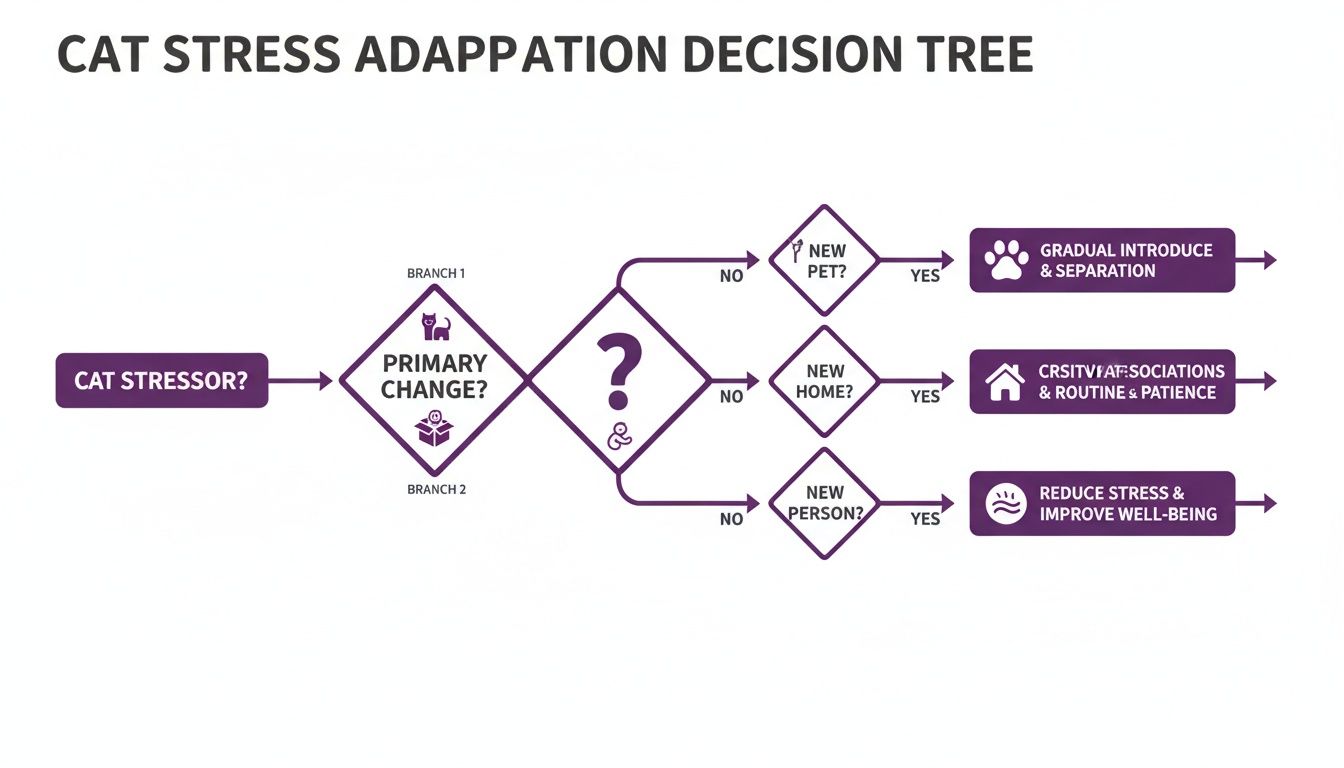
While this visual guide can help you trace the root cause of the stress, a vet visit is the essential next step when you see any sudden or severe behavioral changes.
What to Expect at the Vet Visit
When you bring your cat in for behavioral concerns, the first thing your vet will do is a thorough physical exam to rule out any medical causes. Get ready to be a super-sleuth for your vet! They’ll have a lot of questions about your cat's environment, any recent changes, and the specific behaviors you’ve been seeing.
Floofie's Friendly Reminder: "My vet is my BFF (Best Feline Friend)! They help my humans understand when I'm just being sassy versus when I'm not feeling so hot. Being a responsible pet paw-rent means knowing when to ask the experts for help!"
Depending on their findings, your vet might suggest a few different paths forward. If there's no obvious medical problem, the focus will shift to behavioral solutions.
These can include:
- Dietary Changes or Supplements: Sometimes, specific calming diets or supplements like L-theanine can really help take the edge off.
- Pheromone Therapy: Using products like Feliway diffusers can create a sense of security and calm. Our FloofChonk shop has tons of calming goodies Floofie loves!
- Prescription Anxiety Medication: In more serious cases, your vet might prescribe an anti-anxiety medication, like fluoxetine (the feline version of Prozac). This is not a sign of failure—it's a tool to help your cat's brain chemistry rebalance so they can feel safe and happy again.
Seeking professional help is a powerful act of love. It ensures your kitty gets the precise care they need to live their happiest, most relaxed nine lives. 💖
Common Questions About Calming a Stressed Cat
Even with the best game plan, you probably still have a few questions. And that’s completely normal! When it comes to our cats' well-being, we want to get it right. Let's tackle some of the most common things people ask when they're trying to help their stressed-out kitty.
How Long Does It Take for a Stressed Cat to Calm Down?
This is the one everyone asks, and the honest-to-goodness answer is: it really depends. For a small, sudden scare—like a pot clanging on the floor—your cat might be back to normal in a matter of minutes. But for the big stuff, like moving to a new house or introducing another pet, you could be looking at several weeks or even a couple of months before they truly feel secure again.
The most important thing you can offer is patience. Seriously. Following the steps we’ve talked about—providing safe spaces, keeping a solid routine, and using positive reinforcement—will definitely help. But you can't rush a cat's adjustment period. Let them go at their own speed.
Can Special Foods or Treats Help My Stressed Cat?
They absolutely can! 😻 Nutrition plays a surprisingly big part in managing a cat’s anxiety. While a different diet isn't a silver bullet, the right ingredients can certainly help soothe their nerves.
When you're shopping, keep an eye out for treats and foods with calming ingredients like:
- L-theanine: This is an amino acid (often found in green tea) that helps cats relax without making them drowsy.
- Tryptophan: An amino acid that’s a precursor to serotonin—the brain's "feel-good" chemical.
- Milk protein hydrolysates: These can have a calming effect, similar to what kittens feel when they're nursing.
There are tons of great vet-approved calming diets and treats on the market. We've even curated a few of our favorites in the FloofChonk shop, all tested and approved by our head of quality control, Floofie.
Floofie's Final Word: "Look, we cats are on our own clock. Give us some patience, give us our space, and yeah, maybe a few of those tasty calming snacks. We'll be back to our purr-fectly cool selves before you know it."
Are Calming Diffusers and Pheromone Sprays Actually Effective?
For a lot of cats, the answer is a big yes. Products like Feliway are designed to mimic a cat's natural facial pheromones. You know when your cat rubs their cheeks on you or the corner of the sofa? They're leaving behind a scent message that says, "This spot is safe. I own it. All is well."
Plugging in a diffuser in your cat’s favorite room can create a constant, low-level sense of security. The sprays are fantastic for targeted situations, like spritzing the inside of a carrier before a dreaded vet trip. They don't work for every single cat, but a huge number of owners report a noticeable drop in their cat's stress levels.
What Do I Do if My Two Cats Suddenly Start Fighting?
When two cats who are normally buddies suddenly get into a serious scrap, it's often a case of "redirected aggression." This happens when a cat gets riled up by something they can’t get to—like a neighborhood cat strutting through the yard—and they take out that frustration on the closest available target. Unfortunately, that's often their furry housemate.
Your first job is to separate them safely. Don't ever get in the middle of a catfight or try to grab them. Instead, make a loud noise, like a sharp clap or smacking a book on a table, to startle them apart.
Once they retreat, get them into separate, secure rooms with their own food, water, and litter box. They'll need a full "cooling off" period before you attempt a slow, careful reintroduction, almost as if they're meeting for the very first time. This gives them a chance to forget the conflict and rebuild their bond.
Feeling a bit more prepared to be your cat's zen master? We sure hope so. Creating a peaceful home for your cat is one of the best things you can do for them. For all the toys, beds, and quirky apparel to make your cat's life (and yours) more joyful, come visit us at FloofChonk!