
How to introduce cat to dog: A Purr-fectly Pawsitive Guide 🐾

So, you're wondering how to introduce a cat to a dog without the whole house turning into a cartoon chase scene? The secret isn't magic—it's patience. This is a slow, careful process that puts your cat's comfort and safety first. Think of it less like a weekend project and more like a strategic, peaceful negotiation.
Setting the Stage for a Peaceful First Impression
Let's get real for a meow-ment. 😻 Bringing a dog into a cat's established kingdom (or the other way around) is a massive deal for your resident fluffball. The real key to success is all in the prep work you do long before they ever see each other. Rushing this can create a foundation of fear and anxiety that's incredibly tough to reverse. As our mascot, Floofie, always says, patience is your new superpower! ✨
This whole process is a marathon, not a sprint. And there's research to back this up. A 2022 study found that 40.2% of owners who ended up with calm, happy puppies around their cats took more than a day for the introduction. That's a huge difference from the 20.1% who tried an immediate intro, which... well, it often ended in chaos and chasing. A slow and steady approach truly wins the race here.
Pre-Introduction Health Check
First things first: before any meet-and-greets, schedule a quick vet visit for both your cat and dog. This makes sure everyone is healthy, up-to-date on their vaccinations, and has proper flea and tick prevention. It's a simple step that rules out any underlying health problems that could make one of them grumpy or reactive. A healthy pet is a much more adaptable pet.
It’s also a good time to think about their personalities. If you’re still in the planning phase, looking into resources on choosing the right companion can give you a leg up by helping you consider temperament and compatibility from the start.
Creating a Feline Fortress of Solitude
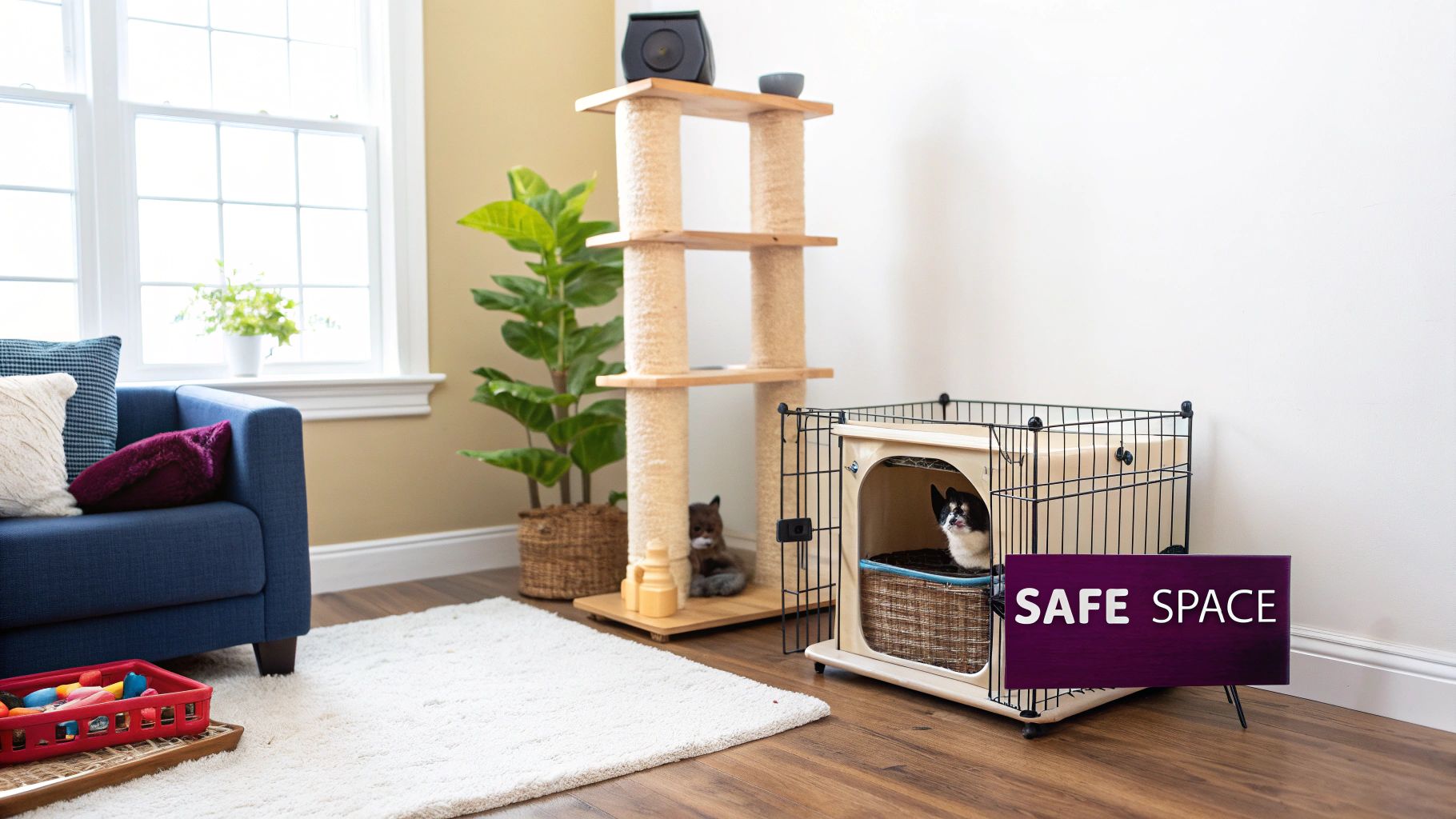
Your cat absolutely must have a secure, dog-free zone from day one. This isn't just a friendly tip; it's the golden rule for keeping stress levels low. Think of it as their own private, cozy panic room where they can feel totally safe.
This space needs to be fully equipped with all their essentials.
- Essential Supplies: Food, water, a litter box, and a comfy bed need to be in this room.
- Dog-Proof Barrier: Use a sturdy pet gate to block the doorway. You want one the dog can't easily jump over or sneak through.
- Vertical Escape Routes: Cats feel safest when they can look down on the world from up high. Add a cat tree or some simple wall shelves to give them a perch where they can observe things without feeling cornered.
Floofie’s Pro Tip: "Your cat’s safe zone is their private club—no woofers allowed! 🚫 Making sure they have a place to retreat and feel completely secure is the most important first step. It gives them control and dramatically reduces their stress."
This initial separation is a win-win. It lets your new dog settle into their new home without the extra pressure of a feline roommate, and it gives your cat time to get used to the new smells and sounds from a safe distance.
Nailing this setup lays the foundation for everything that comes next. 🐾
Mastering the Art of Scent Swapping
Alright, let's talk about the sneakiest—and smartest—part of the whole introduction process. 🐾 Before your cat and dog ever lay eyes on each other, they need to get comfortable with one another's signature scent. Think of it as them exchanging business cards, but way fluffier and a whole lot more effective. For our pets, smell is everything; it's their version of social media, telling them all the important details.
This whole phase is about creating positive, chill vibes through their noses. The goal is simple: make the other pet's smell a totally normal, non-threatening part of the background noise.
The Great Scent Exchange
The easiest way to kick off this "olfactory introduction" is by swapping items that carry their unique scents. You're basically playing messenger, delivering scented "hellos" back and forth. This isn't a one-and-done deal; you'll want to repeat this daily to build up that crucial sense of familiarity.
Here are a few perfect items to use for the swap:
- Bedding and Blankets: Grab a blanket from your dog's crate and pop it into your cat's safe room. Do the same with your cat's favorite nap spot, placing their blanket near where your dog usually hangs out.
- Towels or T-Shirts: Gently rub a clean towel or an old t-shirt on your dog, paying special attention to their cheeks and the base of their tail where scent glands are concentrated. Place this cloth in your cat's space, maybe near their food bowl but not right in it.
- Grooming Brushes: After a good brushing session, you can even leave the brush (fur and all) for the other pet to investigate. It's a super-concentrated dose of their scent!
Floofie’s Pro Tip: "Don't wash the items between swaps! The goal is to mingle their scents. Eventually, you want a blanket that smells like a beautiful, blended bouquet of cat and dog." 💐
Feeding at the Door: The Ultimate Positive Association
Once they seem relatively unbothered by the scented items (meaning no constant hissing, growling, or obsessive barking), it's time to level up. This is where you connect that new smell with something undeniably awesome: FOOD! 😋
Place their food bowls on opposite sides of a closed door—the one separating your cat's safe space from the rest of the house. They'll be able to smell and hear each other while chowing down on their favorite meals. This technique is a total game-changer because it teaches them that the presence of the other animal actually predicts delicious things are coming.
Start with the bowls far from the door. Then, over several days, gradually move them closer as long as everyone stays calm. If your cat refuses to eat, that's a sign to back off—move the bowl further away until they feel comfortable again. The goal is a peaceful mealtime, not a stressful standoff.
Reading the Room (and the Sniffs)
This process requires you to become a pet body language detective. A little bit of curiosity is great, but obsessive behavior is a red flag. If your dog starts whining, scratching, or fixating on the door, calmly redirect them with a fun toy or a quick training command.
On the feline side, a hiss or two at a scented blanket is pretty normal at first. It's just your cat saying, "Umm, who is this?" 🤨 But if they seem constantly on edge, it's a clear signal to slow things way down. Keep in mind that prior experience makes a huge difference here. Pets who've successfully lived with other species before often progress 2-3 times faster than total newbies, which is exactly why avoiding a bad first impression is so important. For more on this, you can explore expert advice on why slow and steady is the secret to success.
Remember, what you're aiming for is a neutral reaction. When your cat can stroll past the dog-scented blanket without a second thought, and your dog can chill out near the cat-scented one, you've officially aced the art of the scent swap! 🎉
The First Glimpse with Controlled Visual Meetings
Alright, it's showtime! After all that patient scent swapping, your pets are finally ready for their first peek at each other. The key here is to keep it super short, sweet, and overwhelmingly positive. This isn't one big reveal; it's a series of tiny, stress-free sessions designed to build confidence, not fear.
The best way to manage this first look is with a physical barrier. A sturdy baby gate, a screen door, or even a puppy pen can work wonders. This setup lets them see and smell each other without any chance of physical contact, giving both your cat and dog a crucial sense of security. Think of it as a "look, but don't touch" policy for pets.
Setting Up for a Successful Sighting
Before you pull back the curtain, you need to do a little stage management. Your dog should always be on a leash, even with a gate separating them. This is a non-negotiable safety rule. It gives you immediate control if your dog gets a little too excited.
At the same time, your cat absolutely must have a clear and easy escape route back to their safe zone. They should never, ever feel cornered or trapped. The goal is for the cat to feel like they're in charge, with the power to walk away the second they feel the slightest bit unsure.
Floofie’s Pro Tip: "Think of the baby gate as a VIP rope at a club. Your cat is the celebrity who can decide when to approach, and your dog is the eager fan who needs to learn to keep a respectful distance. Cool, calm, and collected is the vibe we're going for! 😎"
Honestly, the goal for these first few sightings is to make them feel... boring. A calm, neutral interaction is a massive win.
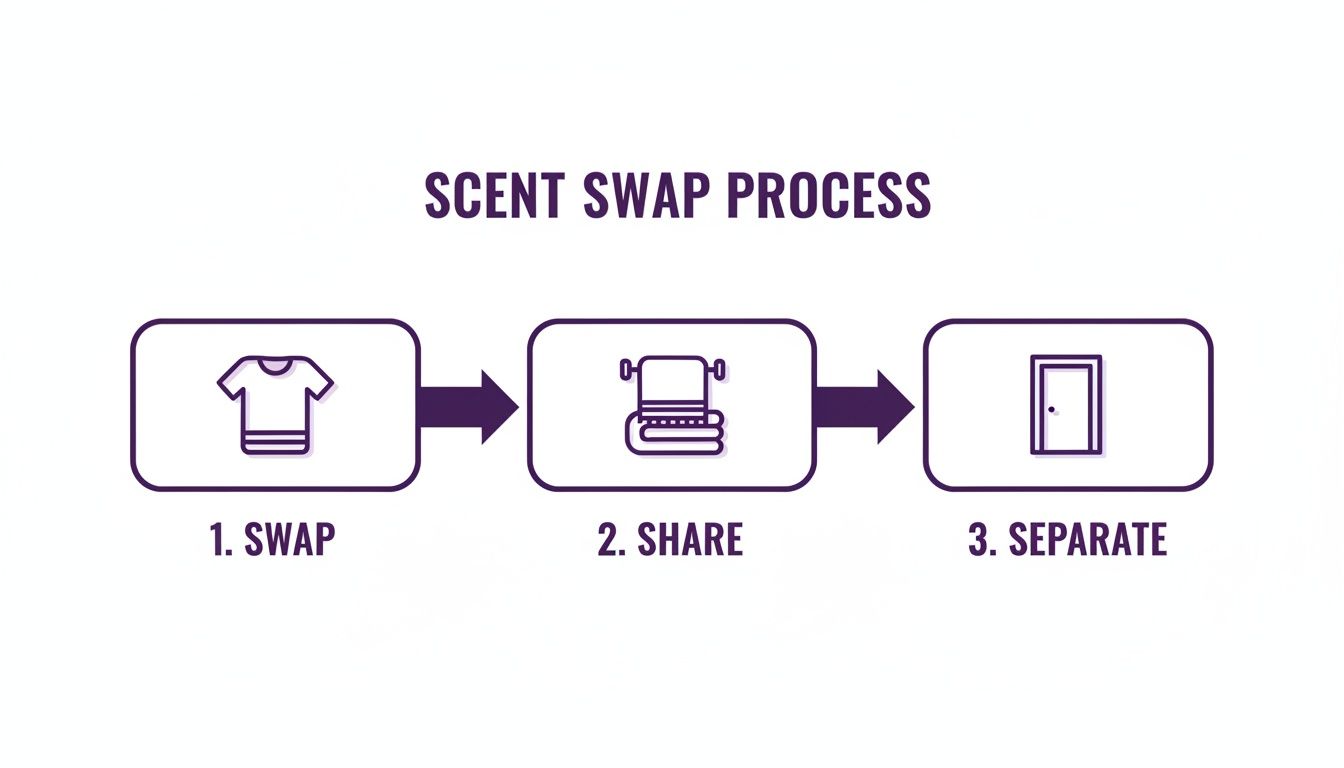
This process lays the groundwork for successful face-to-face meetings by building a foundation of familiarity before a potentially stressful visual encounter ever happens.
Rewarding Calm and Managing Reactions
This is where you become a professional treat dispenser. You want to create a powerful positive association with seeing each other. Every single time they're in each other's sight and stay calm, reward them with high-value treats. For your dog, this could be tiny pieces of chicken. For your cat, maybe some tuna flakes or their favorite lickable treat.
- For Your Dog: If your pup so much as glances at the cat and then looks back at you, that’s jackpot behavior! Reward them instantly for breaking their focus. This teaches them that checking in with you is far more rewarding than staring down the cat.
- For Your Cat: If your kitty bravely approaches the gate, sniffs, or even just sits and watches calmly from a distance, toss a treat their way. You're rewarding their courage and proving that good things happen when that dog-shaped creature is around.
But what if things aren't so calm? Don't panic. It's totally normal.
If your dog is staring too intensely, it's time to redirect. Use a cheerful voice and ask for a simple command like "sit" or "look at me." The moment they shift their focus to you, praise and reward them like they just won an Oscar. Keep these initial sessions incredibly short—we're talking 30 to 60 seconds max.
If your cat hisses, arches their back, or bolts, that's them clearly saying, "I'm not ready for this!" And that's okay. Don't push it. Simply end the session, give them a treat once they're back in their safe space to end on a positive note, and try again later for an even shorter duration. Understanding their body language is everything; you can learn more about what do cat tail positions mean to become an expert at reading their mood.
Remember, this is a marathon, not a sprint. A few seconds of calm observation is a huge victory. By keeping these visual meetings short, positive, and completely controlled, you’re teaching both pets that seeing each other is a safe, and maybe even rewarding, experience. 🎉
Supervised Introductions: The Main Event!
Alright, deep breaths! You've successfully navigated the scent-swapping and brief visual intros, and now it's time for the main event: supervised, same-room meetings. This is where you start building a library of positive memories for both your pets. Let’s walk through the next big step in learning how to introduce a cat to a dog.
First things first, let's establish one unbreakable rule for this stage: your dog must always be on a leash. This isn't just a suggestion; it's your primary safety tool. It gives you instant control and prevents any sudden lunges, even the playful ones that could terrify your cat.
Meanwhile, your cat needs to feel like royalty with total freedom to leave the room whenever they please. 👑 No closed doors, no blocked exits.

Structuring Positive First Encounters
The goal here is to make these interactions feel calm, structured, and honestly... a little boring. A successful meeting is one where nothing dramatic happens. Please don't just put them in a room together and hope for the best! Instead, plan the session around a positive, low-key activity.
Here are a few of our favorite ideas:
- Parallel Treat Time: You'll need two people for this one. Sit far apart, with one person managing each pet. Give both your cat and dog some high-value treats simultaneously. This teaches them that amazing things (like snacks!) happen when they're in the same room.
- A Calm Training Session: While your cat observes from a comfy, high perch (like one of our awesome cat trees), run through some simple commands with your leashed dog. Think "sit" or "down." Reward your dog for keeping their focus on you, not the cat.
- The Relaxation Protocol: This one's easy. Just have both pets in the same room while you relax on the couch. Keep the leash loose in your hand and periodically reward your dog for lying down calmly. Your cat will watch all this chill behavior from a safe spot.
The trick is to keep these initial sessions super short—we’re talking just a few minutes, tops. And always, always end the interaction on a high note, well before anyone shows signs of getting stressed out.
Decoding Their Body Language
Becoming fluent in both "cat" and "dog" is probably the most critical skill you can develop right now. Their bodies will tell you everything you need to know about how they're feeling long before a hiss or a bark ever happens.
A relaxed, loose tail wag from your dog? Great news! But a stiff body and a fixated stare are major red flags. That’s your cue to redirect your dog’s attention immediately.
It’s also fascinating how different their signals can be. A "wagging" or thumping tail on a cat, for instance, often signals irritation, not happiness. Understanding these nuances is absolutely crucial for keeping the peace.
Decoding Pet Body Language Cat vs Dog
Interpreting your pets' signals correctly is key to a smooth introduction. A gesture that means one thing for a dog can mean the complete opposite for a cat. Here's a quick cheat sheet to help you read the room.
| Signal | What It Means in a Cat 😼 | What It Means in a Dog 🐶 |
|---|---|---|
| Tail Wagging/Thumping | Often indicates agitation or annoyance. A slow, gentle swish can be curiosity. | Usually a sign of happiness, excitement, or friendliness. |
| Staring / Direct Eye Contact | A challenge or threat. Slow blinks, however, are a sign of trust ("cat kisses"). | Can be a sign of focus or affection, but a hard, fixed stare is often a threat. |
| Exposed Belly | A sign of extreme trust and relaxation. Not usually an invitation for a belly rub. | A sign of submission, trust, or a request for a belly rub. |
| Ears Pinned Back | Fear, anxiety, or aggression. A clear signal to back off. | Can signal fear or submission. |
| Purring | Usually contentment, but can also be a self-soothing mechanism when in pain or scared. | N/A (Dogs whine or grunt to show similar emotions). |
| Licking Lips / Yawning | Often a sign of stress or anxiety. | A common sign of stress, anxiety, or appeasement. |
Paying close attention to these signals will help you intervene before either pet becomes too overwhelmed.
A 2020 PLOS One study of over 2,500 pet owners found that while initial intros can be rocky—with 31.3% of cats fleeing and 21.4% hissing—the long-term outlook is incredibly positive. A whopping 68.5% of cats and dogs in the study ended up sleeping together at least occasionally. Learn more about the study's fascinating findings on pet cohabitation.
This just goes to show how important your role as a peaceful mediator is. A rough start doesn't mean they can't become best buds later on!
Common Mistakes to Avoid
Even with the best of intentions, it’s easy to make a wrong move. Keep an eye out for these common pitfalls during your supervised sessions to keep things on the right track.
- Letting the dog chase, even playfully. What seems like a fun game to a dog is a life-or-death scenario for a cat. Stop any and all chasing behavior immediately.
- Allowing the cat to feel cornered. Your cat must always have multiple escape routes, especially vertical ones like a cat tree or shelf. A cornered cat is a cat who feels they have no choice but to fight.
- Forcing any interaction. Never hold your cat and bring them to the dog, or vice versa. Let them set their own pace and choose their own distance.
- Scolding for normal reactions. Hissing and growling are just communication. Don't punish these sounds! See them as what they are: clear signals that your pet is uncomfortable and you need to create more space or end the session for the day.
Think of yourself as a calm, confident peacekeeper. Your job is to advocate for both pets, making sure each one feels safe and respected. By keeping things short, positive, and predictable, you're laying the groundwork for a lifetime of trust. 🎉
Building a Lasting Friendship and When to Get Help
You've navigated the trickiest parts of the introduction! 🥳 Now comes the final, long-term phase: fostering a peaceful and lasting coexistence. This is where all the careful groundwork you've laid really starts to pay off, moving from structured introductions to a new, blended family dynamic.
The goal now is to slowly and safely increase their time together. You'll transition from leashed supervision to, eventually, maybe even some off-leash freedom in a controlled space. It's all about building trust and making sure their shared home is a happy, low-stress environment for everyone. As our mascot Floofie would say, this is where the real friendship starts to blossom! 🌸
Cultivating a Shared Space
As you continue with supervised hangouts, it's time to bring in shared enrichment activities. This is a game-changer because it helps your cat and dog start seeing each other as just part of the background during fun times, not a threat. You're building a new normal where their presence is linked to good things.
Here are a few ways to encourage this peaceful coexistence:
- Parallel Play: Give your dog a tough chew toy or a fun puzzle feeder on one side of the room. On the other side, get your cat engaged with a favorite wand toy. They're both having a great time in the same room without any pressure to interact directly.
- Shared Relaxation Time: When you're winding down for the evening, encourage both pets to settle in the same room. Maybe your dog is on their bed while your cat is perched on a comfy cat tree. Your calm energy is contagious and will set a peaceful tone.
Your goal is to create a home where your pets can coexist peacefully, even if they never become cuddle buddies. Tolerance and mutual respect are huge wins, and for many pets, that's the ultimate sign of a successful introduction.
Knowing When to Take a Step Back
Sometimes, things might stall or even seem to go backward, even with the best intentions. That's completely normal and doesn't mean you've failed! The secret is spotting the signs of stress early and giving everyone the space they need to decompress.
If you start noticing any of these behaviors, it’s time to dial it back a notch:
- Your cat starts hiding more than usual, isn't eating, or begins avoiding the litter box.
- Your dog becomes overly fixated on the cat, whines constantly, or just can't seem to relax when the cat is around.
- Tense standoffs or minor scuffles are happening more often, not less.
If this happens, just go back to the last step where everyone was comfortable. That could mean returning to visuals through a baby gate or even just focusing on scent swapping for a few days to hit the reset button. Managing your cat's stress is especially key; our guide on how to reduce cat anxiety has some fantastic strategies that can help during this time.
When to Call in a Professional
There are moments when the situation calls for more expertise than you can provide on your own, and there's absolutely no shame in that. If you're seeing persistent, high-level fear or aggression from either animal that isn't getting better with time and patience, it’s time to call for backup.
Specifically, you should get help from a certified animal behaviorist or a veterinary behaviorist if you see:
- Any instance where one pet injures the other.
- Stalking or obsessive fixation from the dog that you can't redirect.
- A cat who is so terrified they spend their life in hiding.
A professional can build a behavior modification plan tailored to your specific pets and your home's layout. For more great strategies to help your dog stay calm through this journey, check out a practical guide to calming dog anxiety.
Remember, you've put in a ton of work to get to this point! Celebrate how far you've come by treating yourself to some cute cat-themed home décor from our shop—you've more than earned it! 💖
A Few More Questions You Might Have
Even with the best plan, introducing a cat and dog can feel like uncharted territory. You're not alone! Let's tackle some of the most common questions that pop up during this tricky—but totally rewarding—journey.
How Long Does This Actually Take?
Ah, the million-dollar question! Honestly, there's no magic number. A successful introduction can take anywhere from a few weeks to several months, and it all comes down to your pets' unique personalities, past experiences, and ages.
A confident, social kitten paired with a calm, well-trained adult dog might become best buds in a month. On the other hand, a timid senior cat and a bouncy, high-energy puppy could take much, much longer.
The golden rule: Let your cat set the pace. Rushing things is the number one reason introductions fail. Patience is everything.
What Are the Biggest Red Flags to Watch For?
Your absolute top priority is keeping everyone safe and feeling secure. There are a few serious red flags that mean you need to hit the brakes immediately.
For your dog, the biggest warning sign is predatory fixation. This isn't just excitement; it's a dangerous instinct. It looks like:
- Intense, unblinking staring at the cat
- A stiff, rigid body
- A high, stiffly held tail (not a friendly wag!)
- A tightly closed mouth
If you see this, you must calmly and immediately redirect your dog's attention and create distance.
For your cat, watch for signs of extreme, ongoing stress. A little hissing is normal communication, but these are bigger warning signs:
- Deep, guttural growling or spitting
- Ears pinned flat against their head
- Swatting with claws fully extended
- Constant hiding, refusing to eat, or not using the litter box
Persistent signs of deep fear or aggression mean it's time to take a big step back in the process or call in a professional for help.
Are Some Breeds Just a Bad Mix?
This is a common myth! While it's true that some dog breeds with a high prey drive (like certain terriers or sighthounds) can present more of a challenge, their individual personality is far more important than their breed. A well-socialized Jack Russell can absolutely learn to live happily with a cat.
It just means you'll need to be extra diligent with management and training, especially on commands like "leave it." Similarly, a cat who had a scary experience with a dog in the past may find it incredibly difficult to trust any canine. Success hinges on your commitment to a slow, positive process, not on breed stereotypes.
My Dog Wants to Play, but My Cat is Terrified!
This is probably the most common hurdle we see. 🙀 It's crucial to understand that a dog's version of "play"—chasing, barking, and pawing—is a cat's version of a life-threatening attack. Your most important job here is to become your cat's bodyguard.
Never, ever allow your dog to chase the cat, not even for a second. Work relentlessly on training your dog a rock-solid "leave it" and "stay." Reward them like crazy for any calm behavior near the cat.
Most importantly, make sure your feline friend always has high-up escape routes where the dog absolutely cannot reach them. Think cat trees, shelves, or sturdy perches—like our awesome Floofie-approved cat trees. This gives your cat the control and confidence they need to feel safe.
At FloofChonk, we know that creating a peaceful multi-pet household is the ultimate dream. With a whole lot of patience, a positive attitude, and plenty of tasty treats, you can build a foundation of trust between your new family members. For more fun pet gear to celebrate your happy home, check out our full collection at https://www.floofchonk.com.