
How to Travel with Cats Without the Stress 😹

Traveling with your cat is totally doable, but a little prep work goes a long way. The secret? Start early. Getting a vet check-up, confirming the microchip is good to go, and sorting out all the necessary health documents well ahead of your trip makes all the difference. This bit of groundwork can turn a potentially stressful situation into a smooth adventure for both you and your feline friend. Floofie, our mascot, gives this two paws up! 🐾
Starting Your Adventure with a Happy Cat
So, you’re planning on bringing your furry co-pilot along for the ride? Floofie, our resident cat explorer, is doing a happy dance for you! 😻 Taking cats on trips is becoming more and more common. In fact, a huge 78% of pet-owning households in the United States travel with their pets, which just goes to show how much we love sharing our lives with our four-legged family members.
But before you start packing your bags, a little planning is crucial for a smooth, hiss-free journey. Think of it as your pre-flight checklist for a purr-fectly calm departure.
The All-Important Vet Visit
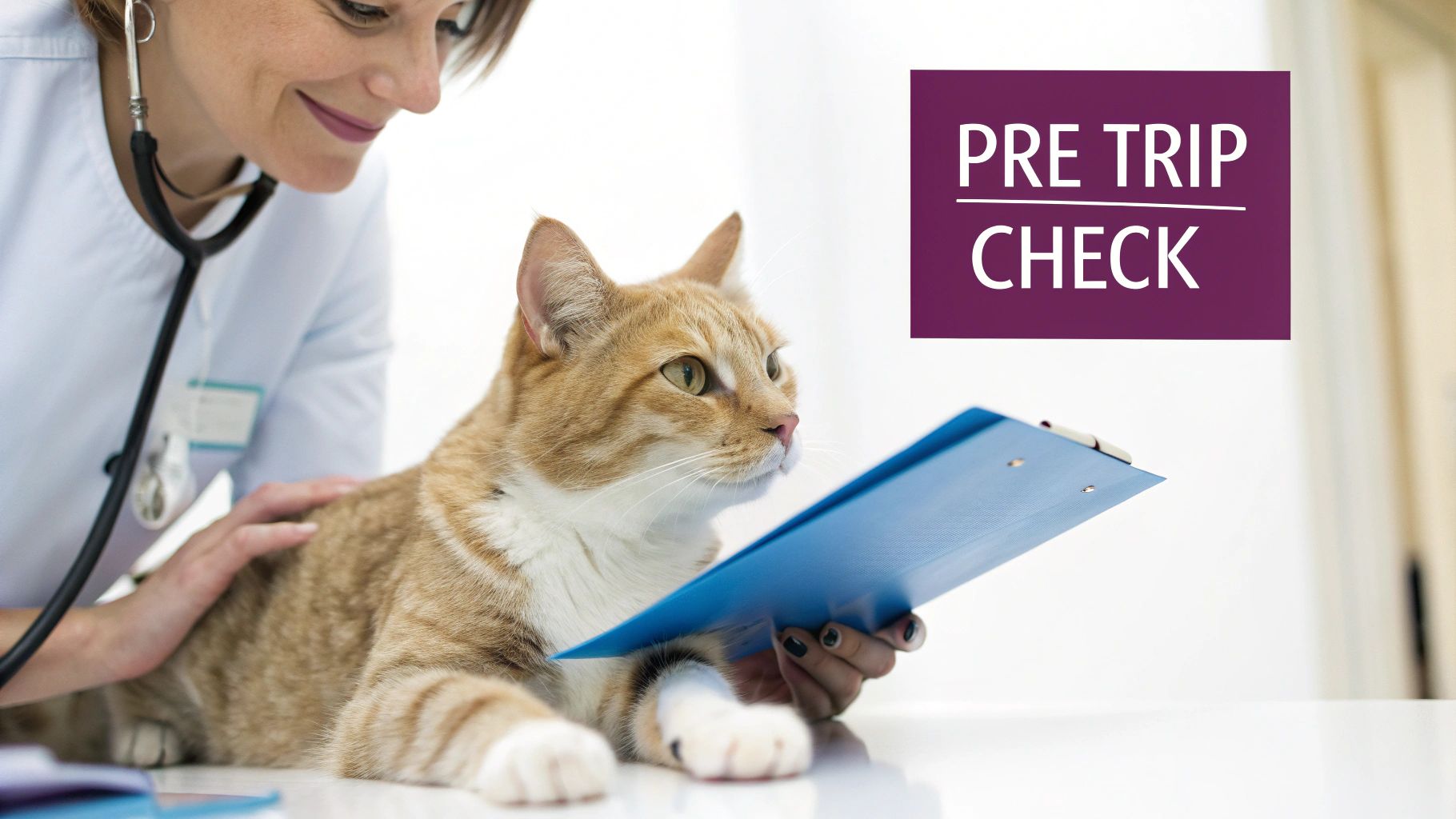
Your first stop should always be your veterinarian's office. This isn't just a routine check-up; it’s basically a strategic planning session for your trip. Try to schedule this visit at least a month before you leave, especially if you're traveling internationally.
During the visit, lay out your travel plans in detail. The vet will do a full health check to make sure your cat is fit to travel and that all their vaccinations are current. This is also the perfect time to bring up travel anxiety. Some cats are cool cucumbers, but others get really stressed out. Your vet might suggest calming supplements or, in more serious cases, prescription medication. If your kitty gets anxious, you can also check out our guide on how to reduce cat anxiety for some extra tips.
This timeline lays out the key steps to get your cat ready for the road.
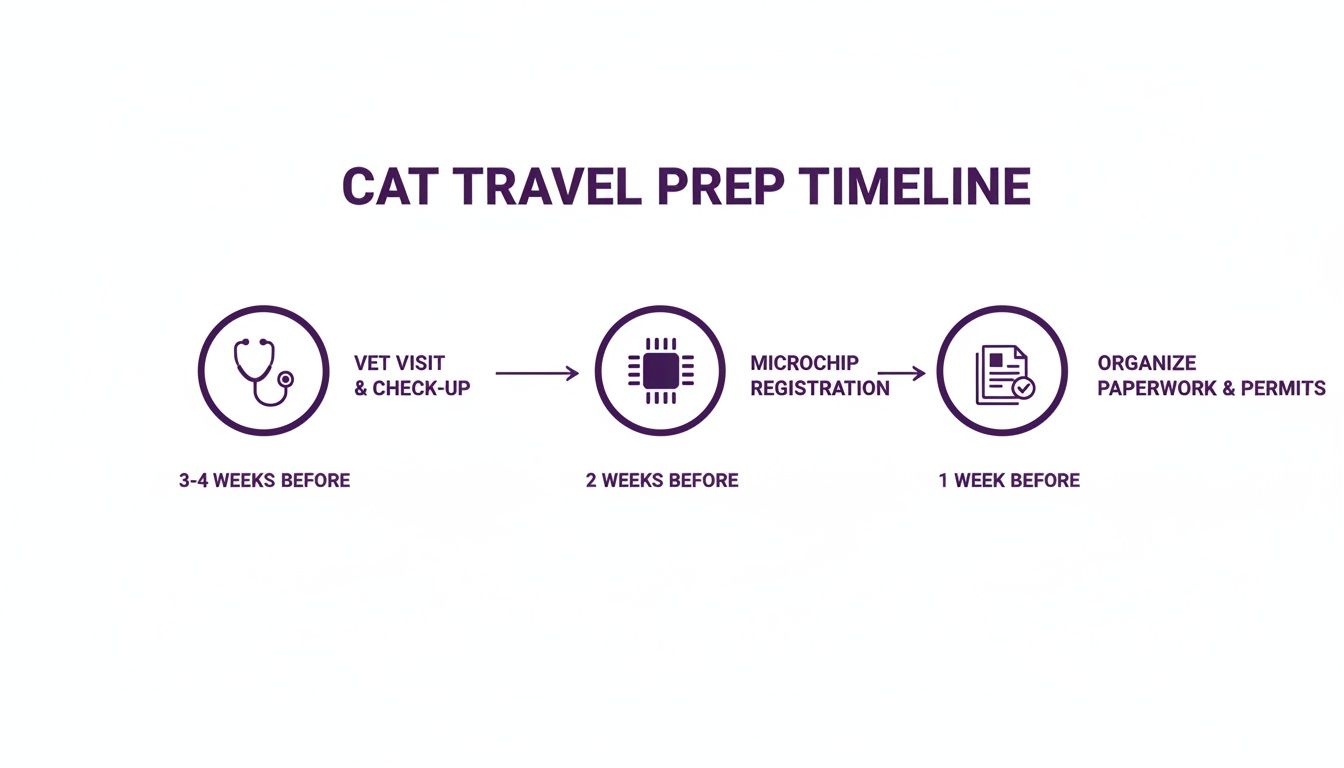
As you can see, tackling these tasks in order—vet visit, microchip check, and paperwork—is the best way to avoid any last-minute chaos.
Microchip Your Mighty Traveler
Think of a microchip as your cat’s most important travel accessory. It's a silent guardian angel. If the unthinkable happens and your cat gets lost in a new place, a microchip is the most reliable way to be reunited. Before you go, take a minute to double-check that the chip is registered with your current phone number and address.
Floofie's Top Tip: Have the vet scan the microchip during your visit to make sure it’s working correctly. It’s a quick, painless check that brings so much peace of mind. A lost pet is a total nightmare, but a working, registered chip is a beacon of hope! ✨
Demystifying Travel Paperwork
Paperwork can feel like a tangled ball of yarn, but it’s completely manageable if you start early. For domestic travel within the US, you'll typically need a recent health certificate (sometimes called a Certificate of Veterinary Inspection or CVI) and proof of rabies vaccination.
International travel, however, is a whole different beast. Every country has its own specific, and often very strict, requirements. These can include things like:
- An ISO-compliant microchip.
- Specific vaccination timelines.
- Blood tests to check for rabies antibodies.
- Government endorsement of your health certificate.
Start researching your destination's rules months in advance. Some countries have quarantine periods or require complicated import permits. Getting this right is absolutely non-negotiable, so please don't leave it to the last minute! A little bit of planning now prevents a world of panic later. 🐾
Choosing the Right Cat Carrier
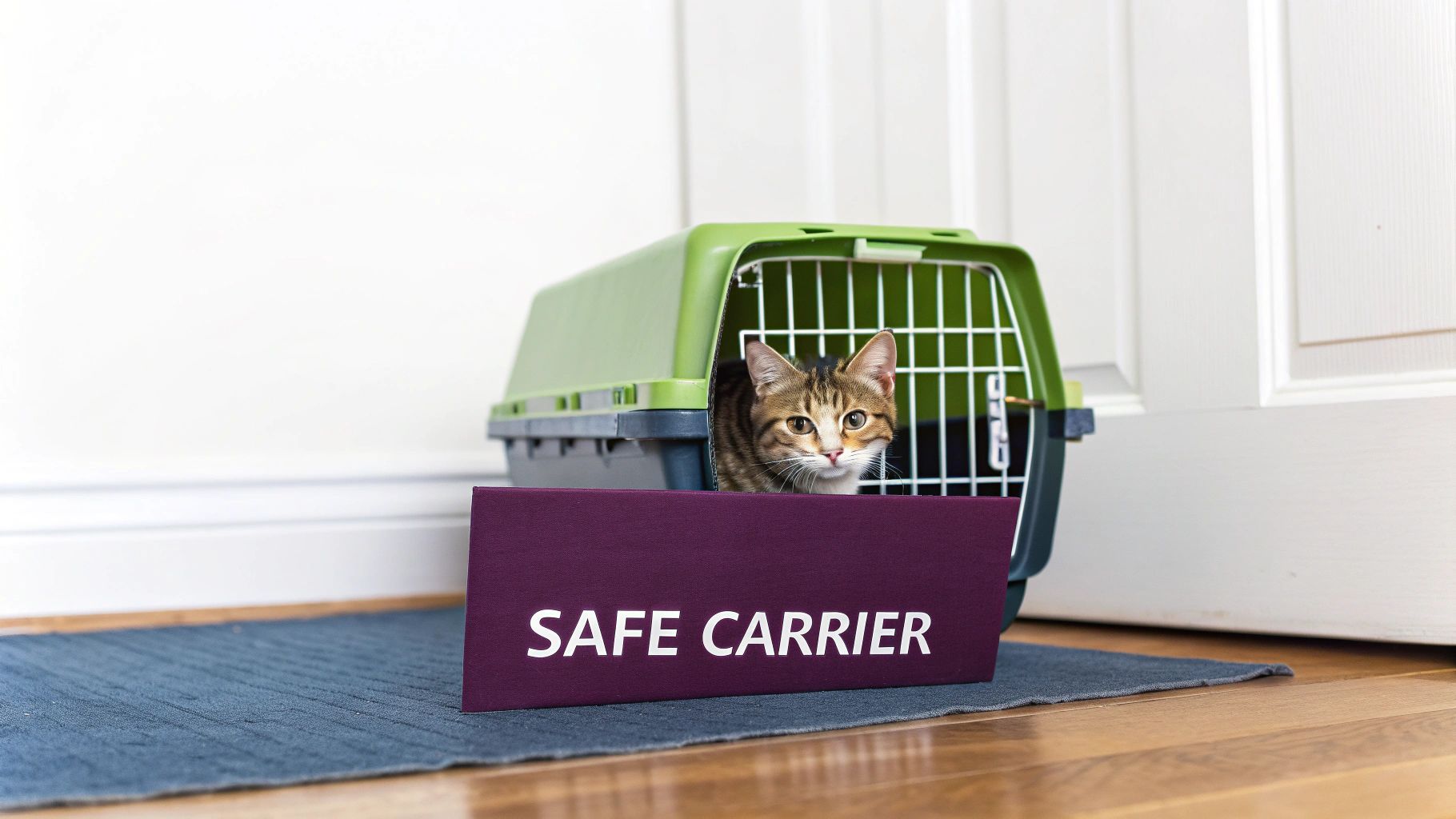
Your cat's carrier is so much more than just a box. Think of it as their personal travel pod, a mobile safe space where they can feel secure on the go. Floofie insists that picking the right one is probably the single most important decision you'll make before any trip. A great carrier can honestly be the difference between a calm, cool kitty and a completely stressed-out furball. 😻
Let's get into the great debate of the cat travel world: hard-sided versus soft-sided carriers. Each type has its own strengths, and the best one for you really boils down to your specific travel plans.
Hard Vs Soft Cat Carriers
A hard-sided carrier is basically a tiny fortress for your cat. Made from tough plastic, these things are incredibly durable, a breeze to clean after any "oopsie" moments, and offer fantastic protection. Floofie thinks they're the cat's meow for car travel because their solid structure won’t get squished.
On the other hand, a soft-sided carrier is the cozy, flexible choice. They're usually lighter, much easier to store when you’re not using them, and generally more comfortable for your cat to snuggle into. For air travel, a soft carrier is almost always your best bet since it can squish down to fit under the seat in front of you.
Hard vs Soft Cat Carrier Comparison
Here's a quick comparison to help you choose the best carrier for your cat's travel needs.
| Feature | Hard-Sided Carrier | Soft-Sided Carrier |
|---|---|---|
| Best For | Car trips, vet visits | Air travel, train journeys |
| Durability | Very high, protective | Good, but less rigid |
| Cleaning | Super easy to wipe down | Often machine washable inserts |
| Storage | Bulky, takes up space | Folds down easily |
| Comfort | Less cozy, needs bedding | Padded and plush |
Ultimately, the goal is to find something that's safe, secure, and meets your travel requirements. When it comes to the specific rules for flying, it's a good idea to check out a detailed guide to choosing the best airline travel pet carrier to make sure you're compliant.
Making the Carrier a Happy Place
Now, for the real magic: turning that carrier from a scary box into a five-star cat condo. This is all about positive association. The goal is to make your cat love their carrier so much they see it as their own personal den.
Start by leaving the carrier out in your living room with the door wide open, days or even weeks before you go anywhere. Let it become part of the furniture. Here’s how you can make it totally irresistible:
- Cozy It Up: Put your cat’s favorite blanket inside, or even a t-shirt that smells like you. Familiar scents are incredibly comforting for them.
- Treat Time: Randomly toss some high-value treats or a pinch of catnip inside. Let your cat discover these little treasures on their own time.
- Pheromone Power: A few spritzes of a calming pheromone spray can do wonders. These sprays mimic the natural facial pheromones that tell a cat an environment is safe and secure.
Floofie’s Pro Tip: Never, ever force your cat into the carrier. Let them explore it on their own terms. The goal is for them to walk in willingly, transforming it from a cage into a cozy cave they choose to enter. Patience is your best friend here! 💖
Special Carriers for Epic Adventures
For the truly adventurous cat parent, you might need a carrier that goes beyond the basics. If you and your kitty are the types who love hiking or navigating busy city streets, you'll want something a little more specialized.
This is where a product like our Breathable Backpack for Pets really shines. It's a total game-changer for cats who want to see the world from a safe and comfy perch on your back.
Travel industry data shows that dogs are the most common pet travelers, making up about 58% of journeys, while cats account for only around 22%. This means most travel services are designed with dogs in mind, which is why preparing your cat and getting them comfortable with their carrier is so important. By making their carrier a beloved space, you're giving your cat a little slice of home, no matter where you roam.
Navigating Car Rides and Air Travel
Alright, let's get this show on the road... or in the air! 🚗✈️ Whether you're hitting the highway or planning to soar through the clouds, understanding the rules of engagement for each mode of travel is key. This is where the rubber meets the road (literally), so let’s make sure you and your furry co-pilot arrive at your destination cool, calm, and collected.
Conquering the Road Trip
Car travel can be a fantastic way to journey with your cat, but safety has to be your top priority. The absolute number one rule is that your cat’s carrier must be secured. An unsecured carrier can become a dangerous projectile in a sudden stop or accident.
The safest spot is on the floor behind the driver or passenger seat, wedged in so it can't slide around. If you have to put it on a seat, thread the seatbelt through the carrier's safety straps and buckle it in tightly.
Never, ever let your cat roam free in the car. It’s a huge distraction and incredibly dangerous for everyone. Holding the carrier on your lap is also a big no-no; it offers zero protection if the worst happens.
For longer drives, plan for a quick break every 2-3 hours. This gives your cat a chance to stretch their legs, have a sip of water, and maybe use the potty. A trusty portable litter box is a total game-changer for these moments. Just make sure your cat is always secured in a harness and leash before you open any car doors.
Mastering Air Travel Like a Pro
Yes, you can fly with your cat in the cabin! But it requires some serious advance planning. The moment you book your own ticket, you need to call the airline to reserve your cat's spot. Most airlines only allow a handful of pets per flight, so these spots fill up fast.
Be prepared for the pet fee, which usually falls somewhere between $125 and $200 each way, depending on the airline. They'll also give you the exact dimensions for your carrier, which must be a soft-sided model that can fit under the seat in front of you. And remember: your cat carrier counts as your one carry-on bag, so pack that personal item wisely!
Floofie’s Flight Tip: Always book a direct flight if you can. Fewer takeoffs and landings mean way less stress for your cat. I've also found that daytime flights tend to be better than red-eyes, as cats are often more active at night and might get restless. ✈️
Soothing Travel Jitters and Queasiness
Motion sickness is a real thing for some kitties. To help head it off, avoid feeding your cat a big meal for a few hours before you set off. A small snack is fine, but a full belly is just asking for trouble. Always make sure they have access to water, though, especially on longer trips.
For anxiety, familiarity is your best friend. Tucking a blanket that smells like home or a favorite toy into the carrier can work wonders. Calming pheromone sprays, like Feliway, can also help create a sense of security. In more serious cases, your vet might recommend an anti-anxiety medication like Gabapentin.
- Trial Run: Always test any new medication before travel day to see how your cat reacts. You don't want any surprises mid-journey.
- Keep Calm: Your cat is an expert at reading your energy. If you're calm and relaxed, it helps them feel more secure.
- Quiet Environment: In the car, keep the radio low and use a soft, soothing voice.
Cruising Through Airport Security
The TSA checkpoint can feel like the final boss battle, but it's much simpler than you'd think. Here’s the deal: your cat must come out of the carrier. The carrier goes through the X-ray scanner with your other bags, and you will carry your cat through the metal detector.
This is exactly why a snug, secure harness and leash are non-negotiable. Get it on them before you even get in the security line. When it’s your turn, hold your cat firmly and walk through. Once you’re on the other side, you can gently place them back in their carrier in the designated area. The agents have seen it all, so just listen to their instructions. Knowing what to expect makes it a much smoother experience for both of you. ✨
Packing for Your Feline Co-Pilot: A Checklist
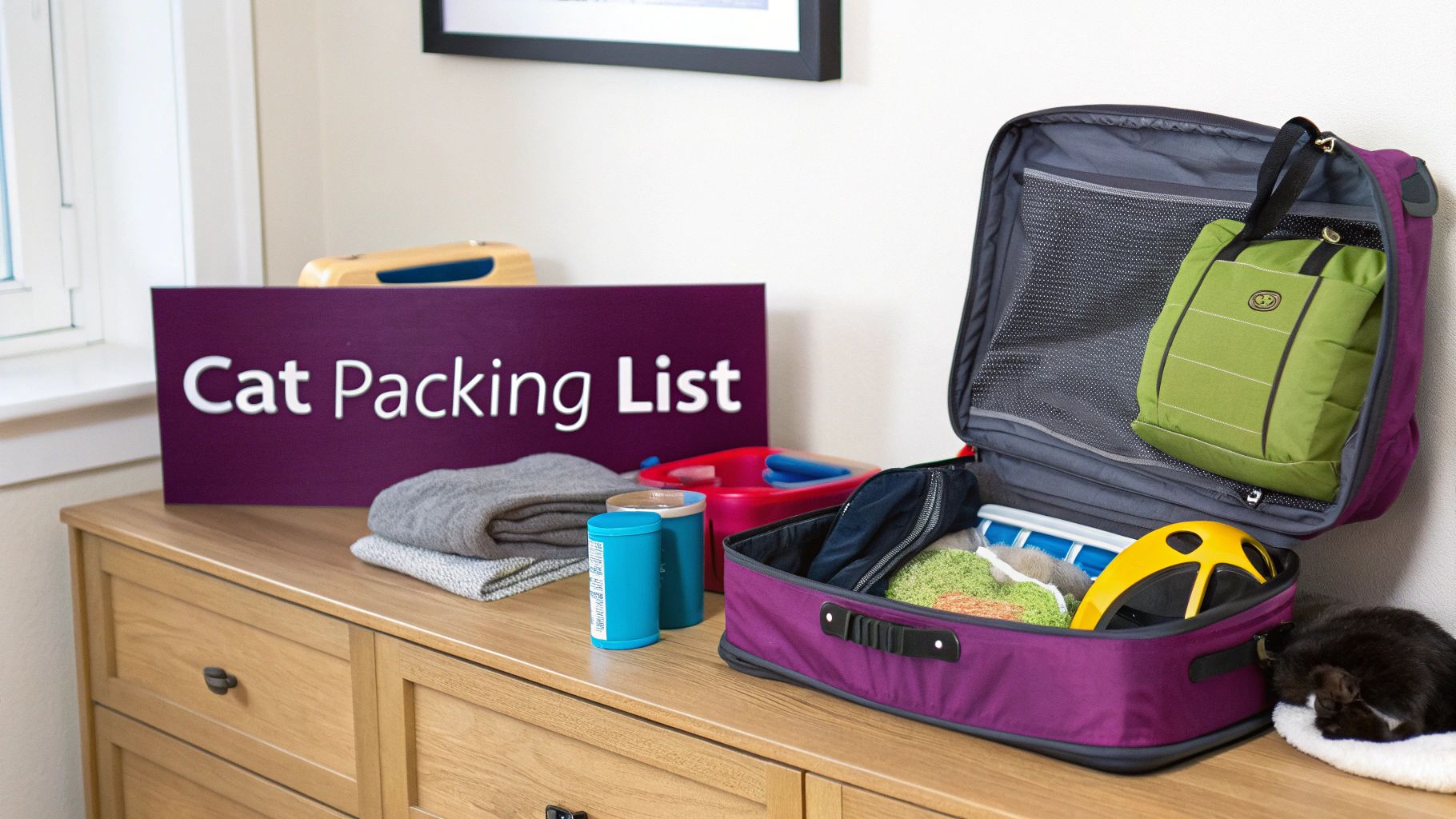
There's nothing worse than that sinking feeling when you arrive at your destination and realize your cat’s favorite wand toy is sitting on the living room floor. Been there! To avoid that, Floofie and I have put together the ultimate packing list so you can travel like a seasoned pro.
This isn't just about throwing stuff in a bag. It's about strategically creating a little bubble of home for your kitty, no matter where you end up. The right gear can turn a sterile hotel room into a familiar, safe space.
The Non-Negotiables
These are the items you simply cannot leave home without. Think of this as the foundation for a smooth, stress-free trip. Forgetting one of these can complicate things in a hurry!
First up, food and water. Always pack more than you think you'll need—travel delays happen. To save space and keep their kibble from getting stale, check out clever solutions like collapsible storage bowls with lids. They’re a real lifesaver on the road.
A portable litter box is also a total game-changer. A small, collapsible version makes pit stops and overnight stays so much easier. Pro tip: bring a scoop and a small bag of their litter from home. The familiar scent encourages them to use the new box and provides a sense of comfort.
The Comfort Crew
Now for the items that bring a little piece of home along for the ride. These are your secret weapons for turning a potentially stressful situation into a cozy adventure, because a happy cat is a calm cat. 😸
- A Familiar Blanket or Bed: Pack something that already smells like them and your home. That scent is incredibly soothing in an unfamiliar environment.
- Favorite Toys: Don't forget a few of their go-to toys! A crinkle ball or a feather wand can help them burn off nervous energy and provides much-needed mental stimulation.
- Calming Pheromone Spray: Products like Feliway can be fantastic. A few spritzes in their carrier and around the new room can signal that the space is safe and secure.
- Grooming Gear: If your cat enjoys being brushed, bring their favorite brush. It’s a great way to maintain your daily routine and offer a relaxing ritual.
Floofie's Pro Tip: Don't put all their toys out at once! Keep one or two hidden and rotate them throughout the trip. This little trick keeps things new and exciting and prevents boredom from setting in. A bored cat is a mischievous cat! 😼
The 'Just-in-Case' Safety Kit
No one likes to think about emergencies, but being prepared offers incredible peace of mind. A well-stocked safety kit means you're ready for anything, from a minor scrape to needing important documents in a pinch.
Keep this kit somewhere easily accessible, not buried at the bottom of your suitcase. Here’s what should be inside:
- First-Aid Basics: Pack antiseptic wipes, gauze, pet-safe self-adhesive bandages, and an antibiotic ointment approved for cats.
- Medications: Bring any prescription meds your cat needs, plus any calming aids your vet recommended.
- Copies of Records: Have both digital and physical copies of their vaccination history, health certificate, and microchip details.
- Emergency Contacts: Make a list with your regular vet's number and the phone number for an emergency vet clinic near your destination.
Now, let's put it all together. A good checklist is a traveler's best friend, ensuring nothing important gets left behind.
The Essential Cat Travel Packing List
| Category | Essential Items | Floofie's Pro Tip |
|---|---|---|
| Food & Water | Extra supply of regular food, treats, bottled water, collapsible storage bowls with lids | Stick to their usual food to avoid tummy troubles. The water from a new place can sometimes cause an upset stomach. |
| Litter | Travel litter box, litter from home, poop scoop, disposal bags | Line the travel litter box with a puppy pad for super easy cleanup during pit stops or in hotel rooms. |
| Comfort | Favorite blanket or bed, a t-shirt that smells like you, a few favorite toys (crinkle balls, wand) | Bring one "active" toy for playtime and one "comfort" toy, like a stuffed mouse they like to cuddle with. |
| Safety & Health | Medications, first-aid kit, copies of vet records, calming spray/treats, harness & leash | Take a clear photo of your cat before you leave. If they somehow get lost, you'll have a recent picture ready. |
| Grooming | Brush or comb, pet-safe wipes for spot cleaning, nail clippers (for longer trips) | A quick grooming session can be a calming routine that reminds them of home and helps you both relax. |
This list covers the big stuff, but for a truly exhaustive look at everything from paperwork to playthings, you'll want to check out our complete guide. You can find it in our ultimate cat travel checklist.
Being over-prepared is the key to a trip that’s memorable for all the right reasons. You'll be so ready for anything, your cat will think you're a mind reader! ✨
Making Your Destination a Home Away from Home
You’ve made it! 🎉 After all that meticulous planning, you and your furry co-pilot have finally arrived at your destination. But as any seasoned cat traveler knows, the journey isn’t quite over yet. The real secret to a happy trip is making a new, strange space feel familiar and safe—and doing it quickly.
Before you even think about unpacking your own suitcase, your first mission is to turn that hotel room or rental into a cozy cat haven. A few simple moves right at the start can help your kitty settle in and feel right at home.
The Initial Safety Sweep
First things first: before letting your cat out of their carrier, do a thorough "safety sweep" of the room. I mean it—get down on your hands and knees and look at the world from their perspective. Cats are absolute masters at finding tiny, dangerous nooks you'd never notice.
- Check for hazards: Hunt for things like dangling electrical cords, potentially toxic decorative plants, or any leftover cleaning chemicals.
- Secure hiding spots: Go ahead and block off any tight spaces where a scared or curious cat could get stuck. Think behind the mini-fridge, under a low-clearance bed, or between the headboard and the wall.
- Inspect windows and doors: Double-check that all windows are securely latched and that any balcony doors are shut tight.
This initial check is non-negotiable. It prevents a panicked game of hide-and-seek and ensures your cat’s first impression of the new space is a safe one.
Setting Up a Cozy Base Camp
Once the room is secure, it’s time to set up their "base camp." The best place to start is a small, self-contained space, like the bathroom. Place their carrier (with the door propped open), litter box, food, and water in there.
A smaller area is far less overwhelming than an entire hotel room. It gives your cat a quiet spot to decompress and use the litter box in peace before they feel brave enough to start exploring. Tossing in a familiar blanket from home can make all the difference.
Floofie's Pro Tip: Always place the food and water bowls as far away from the litter box as the space allows. Cats are naturally clean animals and have a strong instinct to avoid eating where they eliminate. This small detail makes a huge difference in their comfort level! 🧼
Working with Hotel Staff
Good communication is your best friend when staying in a pet-friendly hotel. Let the front desk know you have a cat with you and politely request that housekeeping avoids entering your room unless you specifically ask for service.
And that "Do Not Disturb" sign? It should live on your door for the entire stay. It’s the single best way to prevent an accidental escape when a staff member unexpectedly opens the door.
This isn’t just a niche concern anymore; traveling with pets is a huge deal. The global pet travel services market was valued at around $2.4–$2.8 billion in the mid-2020s and is projected to boom as more people bring their companions on adventures. You can learn more about the growth of the pet travel industry to see why pet-friendly services are becoming so essential.
Making the Space Their Own
After an hour or two in their safe-zone base camp, you can open the door and let them explore the main room on their own terms. Scatter a few of their favorite toys around—maybe a crinkle ball or a fun catnip-filled plushie—to make the new territory feel more engaging.
Spending some quality playtime with them also helps build positive associations with the environment. By creating this safe, familiar, and fun atmosphere, you’re sending a clear message to your cat: this new place isn’t scary—it’s just our temporary home. 💖
Common Questions About Traveling with Cats
Alright, you've made it this far, which means you're basically a certified Cat Travel Agent! 🎓 But even with the most meticulous plans, it's totally normal to have a few last-minute questions buzzing around. Let's be honest, our feline overlords can be unpredictable.
We've gathered the most common queries from fellow cat parents to help you feel completely confident before you hit the road (or the skies).
Should I Sedate My Cat for Travel?
This is probably the number one question we get, and it’s a big one. The short answer is: maybe, but only with your vet's direct guidance. You should never, ever give your cat human sedatives or any medication without a veterinarian's prescription. It's just not safe.
Many vets are actually hesitant to prescribe heavy sedatives. These can affect a cat's breathing and their ability to regulate body temperature, which is risky during travel. Instead, they might suggest milder anti-anxiety medications like Gabapentin. This takes the edge off their stress without completely knocking them out.
Floofie's Advice: Always do a trial run with any prescribed medication before your actual travel day. This lets you see how your cat reacts in a familiar, low-stress environment. The last thing you want are scary surprises at 30,000 feet.
What if My Cat Meows Non-Stop in the Carrier?
A crying cat can be heartbreaking and stressful, but it's their way of saying, "Hey, human, I am not a fan of this situation!" The first rule is to stay calm—your kitty can absolutely sense your anxiety, and it will only make them more frantic. Speak to them in a soft, soothing voice.
If you're in a car, you have a few tricks up your sleeve:
- Drape a light blanket over the carrier to reduce overwhelming visual stimulation.
- Play some quiet, calming music specifically designed for cats.
- Make sure the car's temperature isn't too hot or too cold.
For air travel, your options are more limited. You can try slipping your finger through a mesh opening for a reassuring touch. A pre-trip spritz of a calming pheromone spray on their bedding can also do wonders to create a sense of security in a strange place.
How Do Cats Go to the Bathroom During Long Trips?
Ah, the potty question! For car trips, a portable travel litter box is a total game-changer. Plan to stop every 2-3 hours in a safe, enclosed area—like your parked car with all doors securely shut!—to offer them a bathroom break.
Flights are a bit trickier. Most cats will instinctively "hold it" in a stressful situation. To help things along, avoid feeding them a large meal right before you head to the airport. If you have a long layover, you can try setting up their portable box in a family restroom for some privacy. While some airports have designated pet relief areas, they can be loud and full of dog smells, which might be way too overwhelming for your kitty.
Can I Let My Cat Out of the Carrier in a Hotel Room?
Absolutely! In fact, you should. Once you've done a thorough safety sweep of the room—checking for open windows, toxic plants, and tiny spots they could get stuck in—it's crucial to let them out. Keeping them cooped up will only add to their stress.
Set up their "base camp" first with their food, water, and litter box. Then, open the carrier door and let them emerge on their own terms. Some cats will bolt out and explore immediately; others might hide under the bed for a few hours. Just let them decompress at their own pace. Tossing around a fun toy, like our Smart UFO Cat Toy, can help build a positive association with the new space.
What’s the Best Time of Day to Travel with a Cat?
This is a fantastic question that many people overlook! Based on countless experiences, daytime travel is almost always better. Cats are naturally crepuscular, meaning they're most active at dawn and dusk—and often in the middle of the night (hello, 3 AM zoomies!).
Cooping them up in a carrier during their prime hunting and exploring hours can lead to frustration, loud meows, and determined escape attempts. Traveling during the day, when they're more likely to be napping anyway, often results in a much quieter and calmer journey for everyone involved. ☀️
Feeling ready for your next adventure? At FloofChonk, we've got all the gear to make your trip a roaring success, from cozy apparel to the coolest toys that keep boredom at bay. Check out our collections and travel in style! https://www.floofchonk.com