
Kitten Vaccination Schedule: Your Guide to a Pawsitively Protected Pawsome Pal

Hooray, you’ve joined the kitten club! Welcome! 😻 Getting your tiny tiger on a proper kitten vaccination schedule is the single most important thing you can do to protect them. These shots kick off around 6-8 weeks of age, with boosters every 3-4 weeks, building a powerful defense against some really nasty feline illnesses. Our mascot, Floofie, got all his shots right on time, and now he's a super healthy, happy boy!
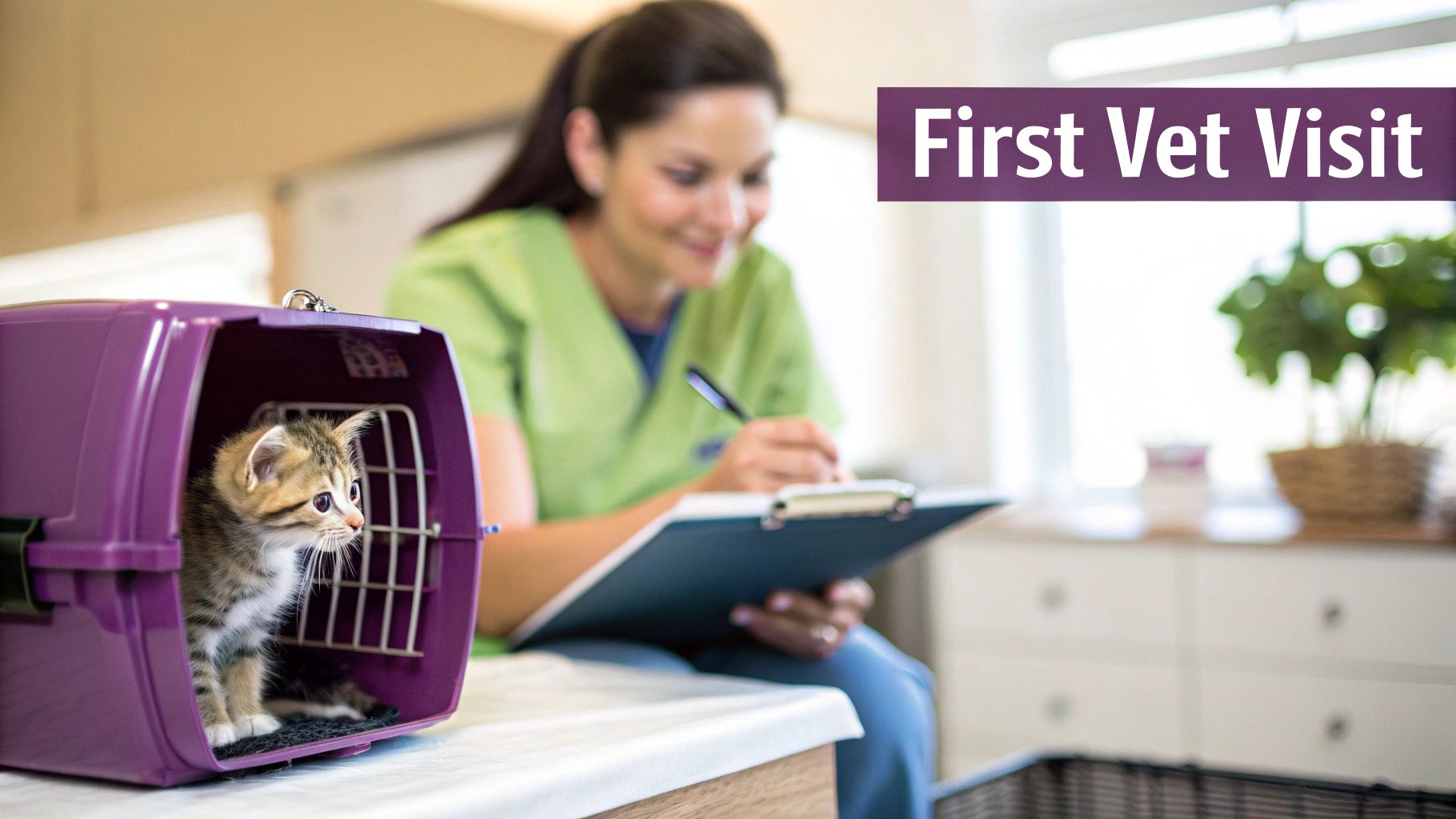
Your Kitten's First Vet Visit Adventure
Get ready for a whirlwind of purrs, pounces, and... the first vet visit. Don't sweat it—this is the most important playdate on your calendar! 🐾 Just like our own Floofie, your new fur-baby needs the right protection to grow up healthy and strong. This first appointment is where it all begins, setting the stage for a lifetime of wellness.
Think of this visit as your kitten's superhero origin story. It’s where they get their first shields (vaccines!) against all the invisible villains out there. Your vet will do a full head-to-tail check-up, answer all your burning questions, and map out a health plan just for your little one.
To make the trip feel more like an exciting field trip than a scary ordeal, a comfy carrier is your best friend. For some purr-fect tips on making travel a breeze, check out our guide on how to travel with cats.
Preparing for the Big Day
Making this first visit a positive, low-stress experience is a total game-changer for your kitten's future vet trips. A little prep work goes a long way in keeping your tiny companion calm. After all, a happy kitten makes for a happy vet visit! Our Floofie says a little prep makes everything better. 😉
Here are a few things to grab before you head out the door:
- Any Health Records: If you got papers from the shelter or breeder, bring them! This includes any deworming or previous shots they might have had.
- A List of Questions: Don't be shy. This is your chance to ask about food, litter box habits, weird sleeping positions—anything. Your vet is your #1 resource.
- A Cozy Blanket: Tucking a small blanket with a familiar scent from home inside the carrier can provide a huge sense of comfort.
- High-Value Treats: Reward your brave little explorer with their absolute favorite snack after the exam is over. It helps them associate the vet with good things!
Kicking Off the Vaccination Journey
This first appointment is the official kickoff for the most important part of your kitten’s early healthcare. Your vet will likely give the first in a series of core vaccines.
The FVRCP shot, which vets sometimes call the "distemper" or "triple threat" vaccine, is one of the big ones. It’s usually given starting at 6-8 weeks old, with boosters following every few weeks until they’re about 16 weeks old.
This series is so critical because kittens get temporary immunity from their mother's milk, but that protection starts to fade. This creates a dangerous gap—a "window of susceptibility"—where they are vulnerable to disease. The vaccine series closes that gap, helping them build their own strong immune system to fight off nasty bugs for life. Floofie sends his bravest meows to your little one! 💪
Understanding the Core Kitten Vaccines
Alright, let's get into the essentials—the absolute must-have protection for your new little fluffball. Think of core vaccines as the non-negotiable safety features on a new car. Every single kitten, whether they're destined to be a cozy indoor lap cat or a brave backyard adventurer, needs these shots to stay healthy. Floofie gives this two paws up! 🐾🐾
These aren't just suggestions from your vet; they are the fundamental building blocks of the entire kitten vaccination schedule. They shield your kitten from the most severe, contagious, and widespread diseases they could ever encounter. It's their superhero starter pack for a long and happy life!
The FVRCP Vaccine: The Triple-Threat Protector
The undisputed star of the core vaccine lineup is the FVRCP vaccine. You'll often hear vets call it the "feline distemper shot," but it's actually a powerful combo vaccine that protects your tiny tiger from three nasty viruses all at once. It's like a superhero team-up, but for immunity! 💥
Let's break down what those letters stand for in simple cat-language:
- FVR (Feline Viral Rhinotracheitis): This is a gnarly herpesvirus that causes a severe upper respiratory infection. Imagine the worst head cold you've ever had, but for a kitten—lots of sneezing, goopy eyes, and feeling miserable. Total bummer!
- C (Calicivirus): Another virus that attacks the respiratory system, but this one is also infamous for causing painful ulcers on a kitten's tongue and in their mouth. It makes eating incredibly painful. No kitty wants that!
- P (Panleukopenia): This is the most dangerous villain of the bunch, also known as feline distemper. It's extremely contagious, often fatal, and aggressively attacks a kitten's immune system and digestive tract. A real baddie!
The FVRCP shot is like a training simulation for your kitten's immune system. It teaches their body how to spot and fight off these three specific invaders before they can do any real damage. To get a better sense of the science behind this, you can learn more about how vaccines work against viruses to prepare your kitten's amazing immune system.
The Mighty Rabies Vaccine: The Non-Negotiable Shield
Next up is the Rabies vaccine. This one is in a category all its own because protecting your kitten is just part of its job—it also protects you, your family, and your whole community. 🛡️ Floofie says this is a big deal!
Rabies is a devastating and fatal virus that attacks the nervous system of all mammals, including people. Because it poses such a serious public health threat, the rabies vaccine is legally required in most states and countries. This isn't one you can skip! Your kitten will usually get their first rabies shot somewhere between 12-16 weeks of age.
Once vaccinated, you’ll receive a certificate and a rabies tag for their collar. This is your kitten's official badge that says, "I'm a safe and responsible member of society." This proof is often required by groomers, boarding facilities, and even some apartment complexes.
And after all that bravery, they've definitely earned a victory lap with a fun smart UFO cat toy as a reward. Floofie has one and he gives it a solid 10/10 for zoomies! 🛸
The Complete Kitten Vaccination Schedule Timeline
Let's map out this whole journey, one vet visit at a time! Following the kitten vaccination schedule is like giving your tiny tiger a health superpower with each appointment. You'll literally be watching their defenses get stronger and stronger. Floofie is basically a superhero now, just sayin'. 🦸♂️
Your kitten's series of shots starts when they're around 6-8 weeks old. From there, they'll need a booster every 3-4 weeks until they hit about 16 weeks of age. This consistent rhythm is the secret sauce to building a rock-solid immune system.
Why So Many Shots?
Ever wonder why they need more than one poke? It all comes down to replacing their mom's temporary protection with their own permanent, custom-built armor. When kittens are first born, they get a helpful dose of immunity from their mother's milk. But these "hand-me-down" defenses start to fade after just a few weeks. It's like their trial subscription to immunity is ending! 😂
This fading protection creates a tricky gap where they're suddenly vulnerable. The series of booster shots is designed to close that window of susceptibility, making sure their own immune system learns how to fight off nasty germs for good. That final shot around 16 weeks is the ultimate power-up, locking in their long-term immunity!
"Think of each booster as adding another layer to your kitten's protective shield. The first shot lays the foundation, and each subsequent one reinforces it until it's an impenetrable fortress against common diseases." - Floofie's Vet (Probably)
This visual timeline gives you a quick, at-a-glance look at the core kitten vaccine schedule and the key shots your little one will get.
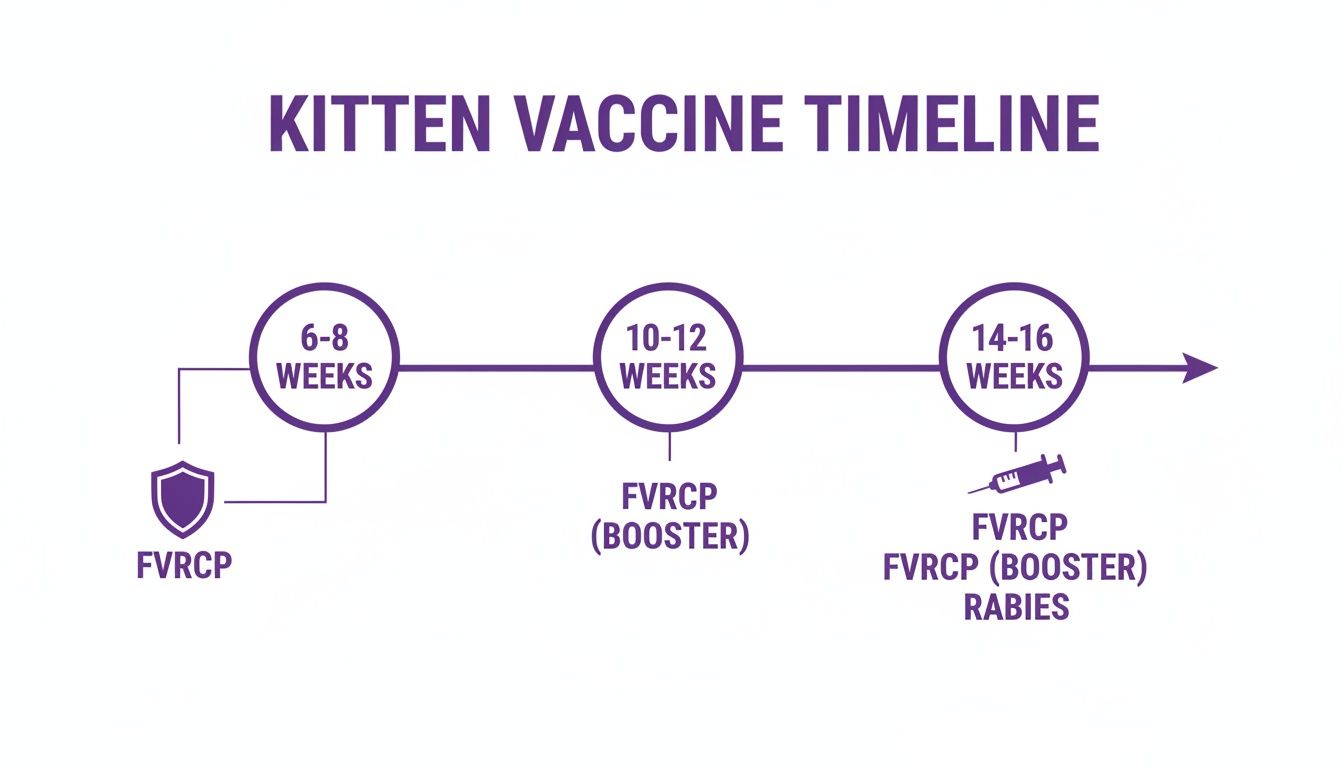
As you can see, the FVRCP vaccine series runs from the 6-week mark all the way to 16 weeks, with the Rabies vaccine joining the party later on to ensure complete protection.
The Visit-By-Visit Breakdown
To help you feel totally prepared, here’s a more detailed guide to what you can expect at each key appointment. Think of this as a typical roadmap—your vet will tailor the perfect plan for your unique little furball.
Here's a step-by-step breakdown of each visit, what's happening, and why it's so important.
Detailed Kitten Vaccination and Vet Visit Schedule
| Age Range | Core Vaccine Administered | Purpose of This Visit | Non-Core Vaccines to Discuss |
|---|---|---|---|
| 6 to 8 Weeks | First FVRCP | This is the kickoff! It introduces your kitten's immune system to three major viruses—Panleukopenia, Rhinotracheitis, and Calicivirus. | Feline Leukemia (FeLV) |
| 10 to 12 Weeks | Second FVRCP (Booster #1) | This booster reinforces the initial lesson, strengthening their body's defenses as maternal antibodies continue to fade. | FeLV (if started at the previous visit) |
| 14 to 16 Weeks | Final FVRCP & First Rabies | The grand finale! This last FVRCP shot solidifies long-term immunity. The Rabies vaccine is also given—a legal must-have! | Bordetella (for highly social kittens) |
Each of these visits is a huge milestone, and your brave little kitten absolutely deserves a celebration afterward. A super-fun playtime session with their favorite smart UFO cat toy is the perfect way to reward their courage.
Remember, consistency is everything here. Sticking to this timeline as closely as possible is the best way to guarantee your kitten’s immune system gets all the training it needs to keep them happy, healthy, and ready for a lifetime of adventures with you.
Why the Rabies Vaccine Is Not Optional
When we talk about your kitten's vaccine schedule, some shots are about protecting your little fluffball from common feline illnesses. The rabies vaccine, though? That’s in a league of its own. 👑 Floofie wants you to pay extra attention here!
It might sound like something out of an old, spooky movie, but rabies is a very real, very serious virus. Once symptoms appear, it is 100% fatal. This isn't just a friendly health tip from your vet—it's often the law.
In most states and many countries, the rabies vaccine is legally required for cats. That's because rabies is a zoonotic disease, which is a fancy way of saying it can spread from animals to people. Vaccinating our pets is a critical step in protecting the whole community.
The Perfect Timing for This Power-Up
So, when does this super-important shot happen? The rabies vaccine usually makes its grand entrance a little later than the FVRCP series.
Your kitten will typically get their first rabies shot between 12 and 16 weeks of age. This timing is intentional; it gives their immune system enough time to mature so it can build a strong, lasting defense against the virus.
Boosters, Tags, and Your Peace of Mind
That first shot is a great start, but your kitten isn't quite done. They'll need a booster one year later to really solidify their protection.
After the one-year booster, the schedule typically moves to a booster every one to three years. This depends on the specific type of vaccine your vet uses and, of course, your local laws.
Once your kitten is vaccinated, you'll get two very important things:
- A Rabies Certificate: This is the official legal document proving your cat is up-to-date. Keep this paper somewhere safe!
- A Rabies Tag: This small metal tag should go right on your kitten’s collar. Think of it as their "I'm safe to smooch" ID, providing instant proof of vaccination if they ever get lost.
The rabies vaccine is the ultimate peace-of-mind provider. It’s a simple shot that protects your precious furball, your family, and your entire neighborhood. To get a broader sense of its importance, you can check out this dog rabies vaccination schedule, which shows just how vital this single vaccine is for all our furry friends. And after that vet visit? Your brave little one has definitely earned some extra cuddles and a victory treat! 💖
Beyond the Basics: Choosing Non-Core Vaccines for Your Kitten
Now that we’ve covered the absolute must-haves, let's talk about the "à la carte" options on the kitten vaccine menu. These are the non-core vaccines, and whether your little one needs them hinges entirely on their unique lifestyle. Is your tiny tiger a future outdoor explorer, or are they destined for a life of luxurious indoor lounging? 👑
Think of it this way: our mascot Floofie is a certified indoor cuddle-bug, so his risk of running into certain diseases is pretty low. But if your kitten plans on making friends at the local cat café, boarding at a kitty hotel, or venturing into the great outdoors, these extra shields are definitely worth discussing with your vet.
What’s Your Kitten’s Lifestyle Risk?
Figuring out the perfect vaccine plan is a team effort between you and your veterinarian. The goal is to give your kitten exactly the protection they need—nothing more, nothing less. It's all about matching their armor to the specific adventures they'll face in life.
So, what kind of activities put a kitten in a higher-risk category?
- Outdoor Access: Even supervised time in a "catio" or on a leash can expose them to other cats and the diseases they might carry.
- Multi-Cat Households: The more furry friends under one roof, the easier it is for germs to spread, especially if some cats are indoor/outdoor.
- Boarding or Grooming: Any place where your kitten will be in close quarters with other felines automatically increases their exposure risk.
- Visiting Feline Friends: Does your kitten have playdates with other cats? This social butterfly lifestyle calls for a bit more protection! 🦋
The Feline Leukemia (FeLV) Vaccine
One of the most important non-core vaccines protects against Feline Leukemia Virus, or FeLV. This is a serious and contagious virus that attacks a cat's immune system, leaving them wide open to other infections and even some types of cancer.
Sadly, there's no cure for FeLV. The virus spreads through close, friendly contact—think sharing food and water bowls, mutual grooming sessions, or little nose boops. It's often called the "friendly cat disease" for this very reason.
Because it's so easily transmitted through casual contact, the American Association of Feline Practitioners (AAFP) actually recommends that all kittens get the initial FeLV vaccine series. You and your vet can then decide if they need boosters as adults based on how their lifestyle evolves.
The Bordetella Vaccine for Social Kitties
Does your kitten have a packed social calendar? If so, the Bordetella vaccine might pop up in conversation with your vet. Bordetella bronchiseptica is a bacterium that causes a nasty upper respiratory infection, often called "kennel cough." It's a harsh, hacking cough that sounds just as miserable as it is.
While it's more famous in the dog world, cats can absolutely catch it, especially in crowded spots like shelters, boarding facilities, or busy grooming salons. If you know your kitten will be spending time in these social hotspots, this vaccine provides an extra layer of defense.
After all, your kitten's purr is a precious sound that needs protecting! To celebrate their good health, treat them to a super fun smart UFO cat toy for some well-deserved playtime.
Caring for Your Kitten After Vaccinations
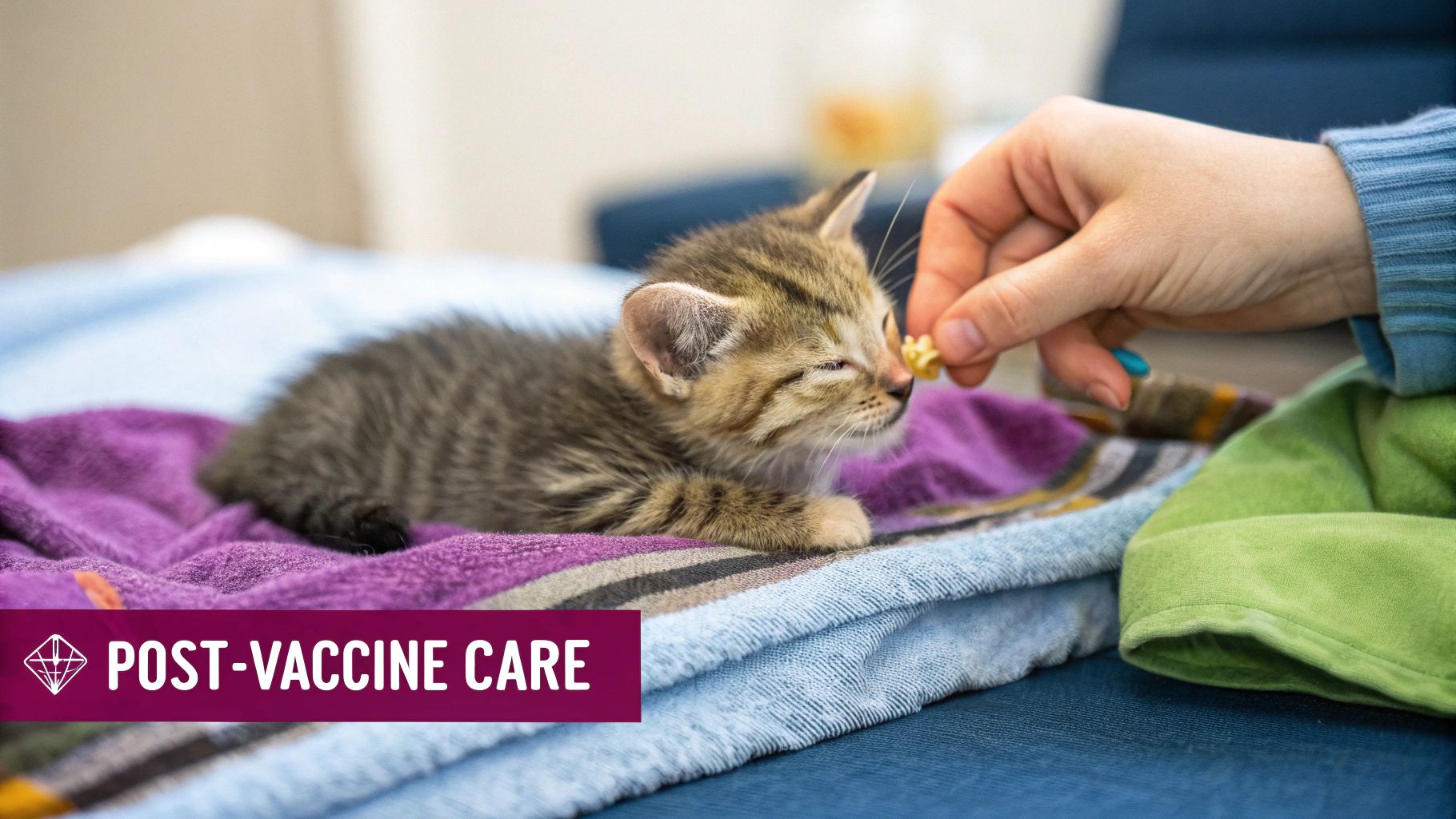
Phew! The vet visit is over, and your tiny trooper made it through their appointment. Just like our brave little mascot Floofie, your kitten might feel a bit drained after their big day. It's totally normal for them to need some extra TLC and a five-star nap service. 😴
Most kittens bounce back to their zoomie-loving selves in no time, but a little post-vaccine pampering can make a world of difference. Think of it this way: their immune system just did a major workout, so a quiet and cozy environment is the perfect cool-down.
Normal Post-Poke Behavior
It’s common to see a few mild, temporary changes in your kitten's behavior for about 24-48 hours after their shots. Don't sweat it—this is just a sign that their immune system is firing up and learning how to build those important defenses! Floofie says it's just their body leveling up. ✨
Here are some completely normal things you might notice:
- Extra Sleepiness: Your kitten might be less playful and more interested in becoming a professional napper for the day.
- Mild Soreness: The injection site could be a little tender, so they might flinch or seem hesitant about being picked up.
- Slight Fever: A low-grade fever is a common response as their body gets to work building immunity.
- Decreased Appetite: They might turn their nose up at dinner. Their appetite should be back to normal by the next day.
Keep things low-key for the rest of the day. A soft blanket, a warm nap spot, and a quiet room are the perfect recipe for a speedy recovery. Hold off on any rowdy playtime or introducing them to new people or pets.
When to Call the Vet
While mild side effects are the norm, serious reactions are very rare. Still, it's always smart to know what to look for, just in case. Your peace of mind is what matters most!
If you notice any of the following signs, it's best to give your vet a call right away:
- Vomiting or persistent diarrhea
- Swelling of the face, muzzle, or around the eyes
- Hives or itchy bumps on their skin
- Difficulty breathing or wheezing
These reactions are uncommon, but they require prompt medical attention. Creating a calm atmosphere is key, and if you notice any persistent discomfort, our guide on how to reduce cat anxiety offers some great tips for creating a soothing space. A little pampering and watchful care will have your furball back to chasing laser dots in no time! ✨
Answering Your Top Kitten Vaccination Questions
Still have a few questions swirling around? You're definitely not alone! 🙋♀️ Bringing a new kitten home is a huge learning curve, and our friend Floofie knows that even the most experienced cat parents have questions about the kitten vaccination schedule.
We've rounded up the most common curiosities and broken down the answers for you. Think of this as your final cheat sheet to feeling totally prepared for your kitten's healthcare journey!
How Much Do Kitten Vaccinations Usually Cost?
This is a big one, and it's smart to plan ahead! While the final bill can vary based on where you live and your specific clinic, you can generally expect the initial series of kitten shots to cost between $100 and $250. This price often wraps in the veterinarian's examination fee for each visit.
Floofie's Pro-Tip: Don't forget to check with local animal shelters or humane societies! Many of them host low-cost vaccination clinics that can save you a bundle. A small investment right now can prevent much, much bigger vet bills down the road. It's what us smart kitties would do! 😼
What Happens If I Miss a Kitten Booster Shot?
First off, don't panic! Life gets busy, and it's easy for things to slip through the cracks. If you're only a few days or a week late for a booster, just give your vet a call. They can usually get you right back on track without any problems.
But what if a lot of time has passed? In that case, your vet might suggest restarting the vaccine series. This isn't a punishment—it's just to make sure there are no gaps in your kitten's immune defenses. The whole point is to build consistent protection, so just get that next appointment on the calendar as soon as you can! 🗓️
Do Indoor Kittens Really Need All These Vaccines?
Yes, they absolutely do! It’s a common misconception, but even if your kitten is going to be a full-time indoor professional napper (like Floofie!), core vaccines are completely non-negotiable. Pesky viruses are sneaky and can hitch a ride into your home on your shoes, your clothes, or even sneak through an open screen door.
On top of that, the rabies vaccine is required by law in most areas, regardless of your cat's lifestyle. It's the ultimate "better safe than sorry" situation, protecting not just your tiny tiger but your family and community, too. For more must-know advice, check out our guide with more purr-fect cat care tips for beginners.
At FloofChonk, we get that being a cat parent is a whole journey! From that very first vet visit to a long life full of happy purrs, we're here to celebrate it all with fun, feline-focused gear. Show off your cat pride and check out our paw-some collection at https://www.floofchonk.com.