
Why Do Cats Tails Get Puffy A Guide to Feline Feelings 😼

Have you ever been just chilling with your cat, and suddenly—POOF—their sleek, elegant tail explodes into a giant, fluffy bottlebrush? It's one of those classic cat moments that's equal parts startling and hilarious. So, why do cats tails get puffy?
The short answer is a super cool biological reflex called piloerection. Think of it as the feline version of us getting goosebumps. It’s a totally involuntary 'fight-or-flight' reaction that instantly makes your cat look way bigger and more intimidating than they actually are. Our mascot, Floofie, gets a serious case of puffy tail every time the vacuum monster awakens! 🦁
Your Cat’s Puffy Tail Explained
That sudden fluff-up is a fascinating process hardwired into your cat's DNA. It all starts when your cat feels a big emotion—like fear, aggression, or even pure, unadulterated excitement.
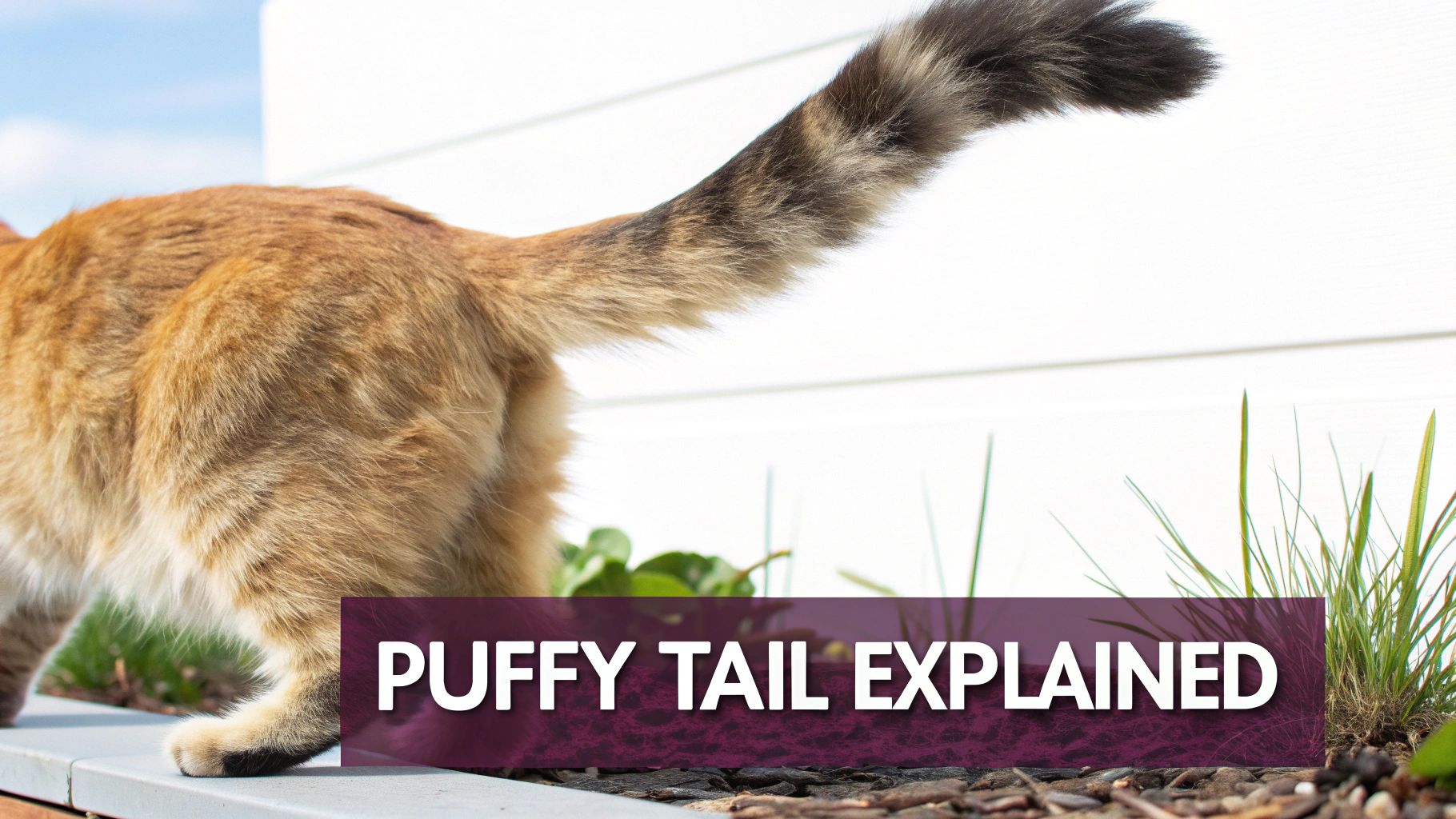
This reaction isn’t just for show; it’s a primal defense mechanism. When your cat senses danger, whether it's a strange dog in the yard or an ambush from a playful kitten, their body gets a jolt of stress hormones.
This surge causes tiny muscles at the base of each hair follicle, known as arrector pili muscles, to contract all at once. This forces the hair to stand straight up, creating that iconic puffed-out look. You can read more about this amazing feline reaction over at mentalfloss.com.
But here's the thing: it's not always about being scared. A puffy tail can also pop up during a wild play session when your cat is just having the time of their life. The real secret to figuring it out is to look at the whole picture—what’s going on around them and what the rest of their body is telling you.
A puffy tail is your cat's way of turning up the volume on their feelings. It’s a bold visual statement that screams whatever they're feeling, whether it's "Back off!" or "This is the best game ever!" 📣
Understanding the why behind the puff helps you tune into your cat's emotional state, making you a more intuitive pet parent. The tail is one of their most expressive tools, and its position tells a rich story. To really master their language, don't miss our guide on what do cat tail positions mean.
So, what are the biggest reasons for this fluffy phenomenon? Let's get into the most common triggers.
Quick Guide to Puffy Tail Triggers
To make it simple, here’s a quick rundown of the main reasons your cat might be sporting a bottlebrush tail. This table breaks down the trigger, the core emotion behind it, and what it generally looks like.
| Trigger | Primary Emotion | What It Looks Like |
|---|---|---|
| Perceived Threat | Fear, Defense | The classic "Halloween cat" pose, often with an arched back and hissing. 🎃 |
| Sudden Surprise | Startle, Alertness | An instantaneous "poof!" in response to a loud noise or unexpected movement. 💥 |
| Intense Play | Excitement, Joy | A happy, energized cat chasing a toy, often with their tail puffed and quivering. 🎉 |
| Confrontation | Aggression, Dominance | A cat trying to look bigger to intimidate another animal or person. 👑 |
Remember, context is everything. A puffy tail during a feather wand game is worlds away from a puffy tail during a standoff with the neighbor's dog.
Understanding Fear And Defensive Puffs
Ever seen your kitty go from a sleek, slinky shadow to a fluffy, spiky porcupine in about half a second? That’s the classic “Halloween cat” pose we all know, and it's a dead giveaway that your cat is feeling defensive. When your cat senses a threat, their tail is usually the first and loudest alarm bell.
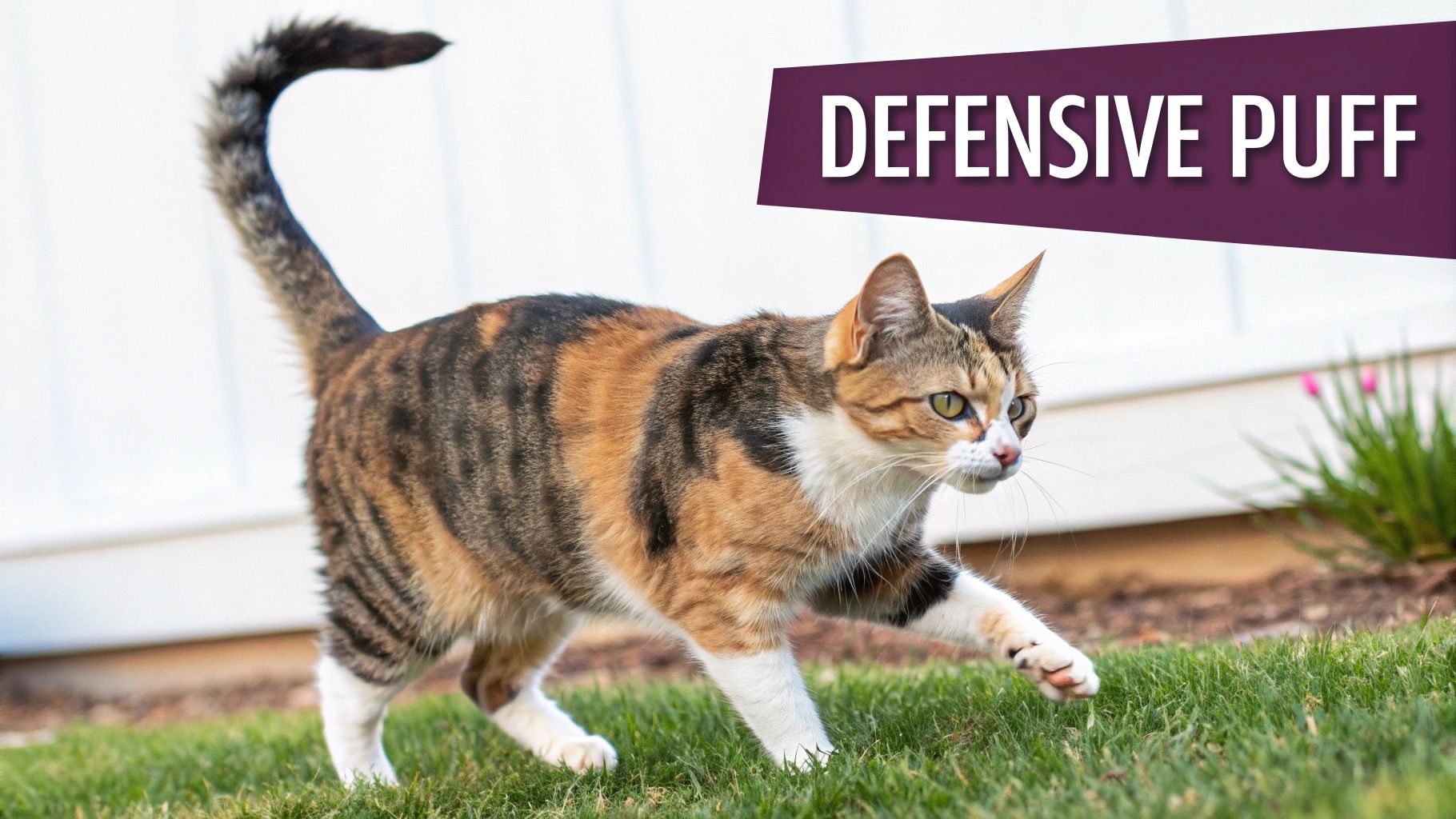
This impressive puff-up act is a powerful visual warning. Think about it from their purr-spective: a sudden loud crash, the unexpected appearance of the neighbor's boisterous dog, or a stranger walking into their house. In an instant, your cat’s body gets a jolt of adrenaline, kicking that piloerection reflex into high gear. It’s their non-verbal way of screaming, "Back off! I'm way bigger and scarier than I look!"
This isn’t just a funny little quirk; it’s a clear signal of genuine fear or serious distress. Our mascot Floofie once puffed up so dramatically at his own reflection he nearly levitated. Understanding this reaction is a huge part of being a responsive and responsible cat parent.
Decoding The Danger Signals
A defensively puffed tail rarely makes a solo appearance. It's typically the main event in a full-body performance designed to ward off whatever's spooking them. If you’re trying to figure out if your cat is puffing up from fear, look for these other tell-tale signs:
- Arched Back: This classic posture is all about making themselves look larger and more intimidating to a potential threat.
- Flattened Ears: You'll see their ears swivel back and press flat against their head. This protects them from potential swipes and shows they are not happy.
- Hissing or Growling: These are unmistakable audio warnings that translate to, "I'm serious, do not come any closer!" hissed Floofie.
- Dilated Pupils: Big, black, saucer-like eyes are another sign of high alert and fear as they take in as much visual information as possible.
It's so important to remember that a fearful cat is not a "bad" cat. They are simply reacting on pure instinct to something that has genuinely scared them. Never, ever punish a cat for showing fear—it will only deepen their anxiety and damage your bond.
Instead of getting frustrated, your role is to be their safe harbor. The main goal is to de-escalate the situation and help them feel secure again.
How To Help Your Frightened Furball
When you spot the fear-puff, it’s your cue to step in as the calm, collected leader of the household. First things first, try to identify the source of the stress. Is it a person? Another animal? A loud vacuum cleaner?
Once you know the trigger, calmly and slowly remove the scary thing or gently guide your cat to a safe space, like a quiet bedroom. Use a soft, soothing voice—and absolutely no sudden movements! Giving them the time and space to decompress is critical. If your kitty is prone to anxiety, having a dedicated safe spot can make all the difference. Our Floofie's Calming Cave Cat Bed is the purr-fect hideaway for a nervous cat to feel snug and protected.
For a deeper dive into creating a more peaceful home, check out our guide on how to reduce cat anxiety. It’s packed with more practical tips for you and your feline friend.
When A Puffy Tail Means Playtime
Not every fluffy tail explosion is a five-alarm fire! Sometimes, the answer to why do cats tails get puffy is just pure, unadulterated joy. 😻 It's a sign your cat is having the time of their life, and honestly, it’s one of the most endearing things you'll ever see.
You’ll probably spot this playful poof mid-zoomie, right as your cat pounces on their favorite toy or playfully ambushes your ankles from under the sofa. Our own mascot, Floofie, gets a major case of the happy-puffs when he’s chasing his favorite wand toy. This is all about high arousal and excitement, not fear.
Unlike the stiff, defensive posture we talked about, the playful puff comes with happy, confident body language. Look for ears pointed forward, whiskers angled curiously, and bouncy, energetic movements—maybe even a few hilarious sideways hops! It’s your cat’s way of shouting, "This is the best game EVER!"
The Science Of The Happy Poof
This behavior is super common in kittens while they're still figuring out the world and mastering their hunting instincts. That same burst of energy that makes their tail fluff up is what helps them perfect their pounce and chase. It's a physical sign of their enthusiasm and focus during a "hunt."
And this isn't just a cute quirk; it’s a well-documented behavior. While fear is a common trigger, cats also puff their tails when they're playfully excited, turning that fluffy explosion into a signal of joy. In fact, one 2016 study noted playful tail puffs in 32% of positive cat-human interactions, which suggests it’s a part of how they bond with us. You can find more great info on these playful feline behaviors over at plantcityanimalhospital.com.
A playful puffy tail is your cat's exclamation point at the end of a happy sentence. It signals that their energy levels are sky-high and they are fully engaged in the fun.
So, the next time you see that bottlebrush tail pop up during a game, don't worry. Just cheer them on and enjoy the show! It's a clear sign you're doing a fantastic job keeping your little hunter happy and entertained.
How To Encourage Playful Puffs
Want to inspire some of these epic, puffy-tailed pounces? The trick is to tap into their natural instincts in a way that’s fun and stimulating.
- Wand Toys: Toys that look and move like birds or bugs are absolutely irresistible and get them jumping and chasing. Floofie is obsessed with his!
- Laser Pointers: The classic red dot can trigger an intense (and hilarious) hunting frenzy. Just be sure to let them "catch" a physical toy at the end to avoid frustration!
- Interactive Toys: Automated toys are perfect for keeping the fun going, especially when you’re busy.
Our very own FloofChonk UFO Smart Cat Toy is guaranteed to bring out your cat's inner hunter and get that tail poofing with excitement! For more ideas, you should check out our guide on the best ways to play with your cat to keep the good times rolling.
Reading The Full Picture Of Cat Body Language
A puffy tail is like the headline of your cat's emotional newspaper—it grabs your attention but doesn't tell the whole story. To truly understand why a cat's tail fluffs up, you have to read the fine print written all over their body. It’s the critical difference between your cat puffing up during an epic battle with a crinkle ball versus puffing up at the terrifying sight of the vacuum cleaner. 😼
Think of yourself as a feline detective! You need to gather all the clues to solve the mystery of your cat's mood. That puffy tail is a major piece of the puzzle, but pairing it with other signals is how you truly become a cat whisperer.
The Head-To-Tail Emotional Clues
Let's break down the most common signals you'll see. Is your kitty's tail puffed up and held high while they skitter sideways toward a toy? That's pure, unadulterated playtime excitement! But if that same puffy tail is held low or tucked between their legs, paired with wide eyes and flattened ears, you’ve got a scaredy-cat on your hands. Looking at the broader context of unusual wildlife behaviors can sometimes help us appreciate the instinctual roots of these displays.
This diagram shows how a playful puffy tail is connected to a cat's state of high arousal and excitement.
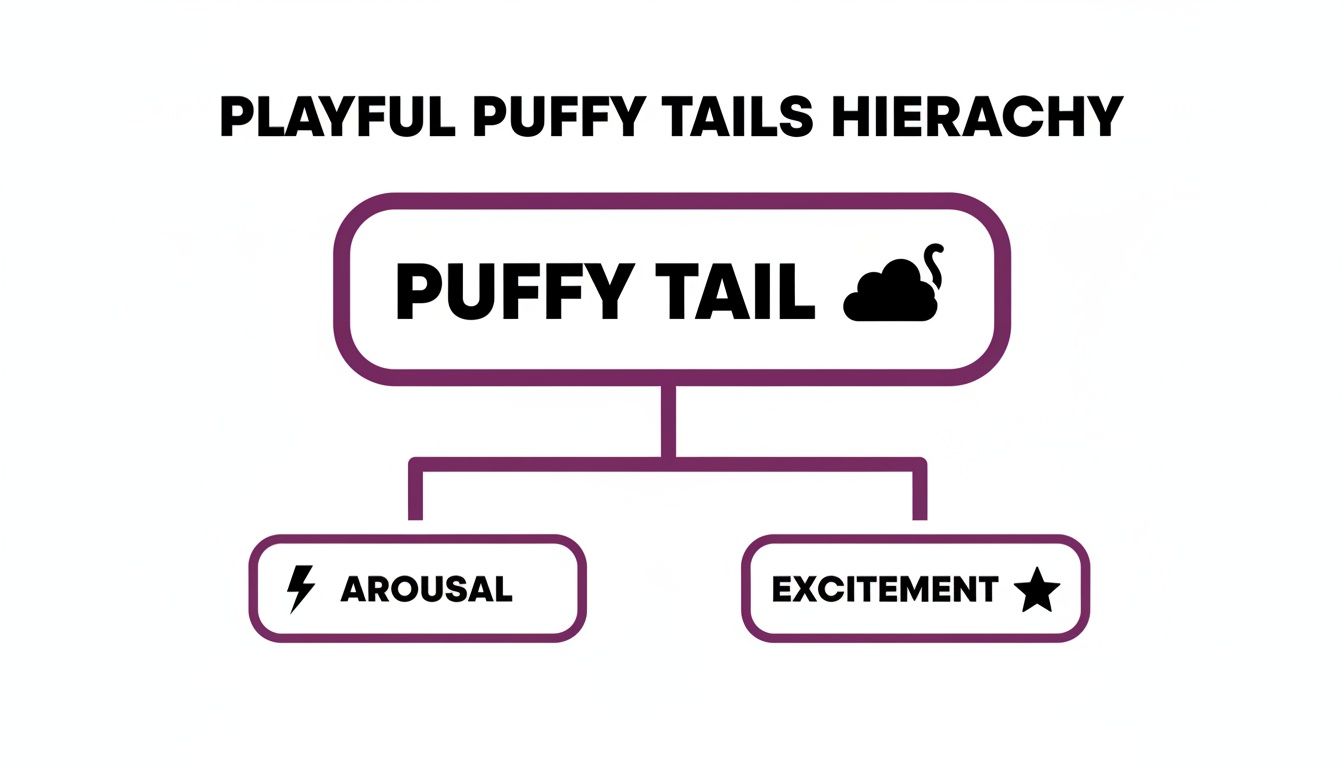
This visual helps us see that during play, the puff is an outward sign of a positive, high-energy emotional state.
Understanding these combinations deepens your bond and helps you respond to your cat's needs, ensuring they feel safe and secure. After all, a happy cat makes a happy home! 💖
To make things crystal clear, we've put together a handy decoder chart to help you distinguish between a playful poof and a fearful floof.
Cat Body Language Decoder The Puffy Tail Edition
Use this table to connect the puffy tail with other signals—from ear position to vocalizations—to translate your cat's mood in a snap.
| Body Part | Fear / Defense Signal | Playful Excitement Signal |
|---|---|---|
| Tail | Puffed and held low, tucked, or stiffly straight out. | Puffed and held high, often with a question-mark curve at the tip. |
| Ears | Flattened against the head, facing sideways or backward ("airplane ears"). | Pointed forward and alert, twitching to catch every sound of the game. |
| Eyes | Pupils are widely dilated, creating a "saucer-eyed" look of alarm. | Pupils may be dilated from excitement, but the gaze is focused and curious. |
| Vocalizations | Loud hissing, deep growling, or spitting. | Chirps, trills, or happy meows. Some cats are completely silent assassins! |
| Movement | Crouched low to the ground, stiff, or ready to bolt. | Bouncy, with sideways hops, pounces, and energetic zoomies. |
By learning to read these signals together, you'll know exactly how to react—whether it's time to break out the feather wand or give your kitty some quiet space to decompress.
How To Respond When Your Cat's Tail Puffs Up
You’ve spotted the poof—so, what’s your next move? The way you react when your cat’s tail gets puffy should always match the situation. Your main job is to be their trusted translator and protector, whether they're feeling feisty or fearful. 🙀
If your cat is terrified by a new visitor or a scary noise, your first priority is creating safety. Never punish a scared cat! This only makes their anxiety worse and can damage your bond. Instead, it's time to become their calm, cool, and collected hero.
Calmly remove the threat (or gently guide your cat to a quiet room), speak in a soft, soothing voice, and give them plenty of space to decompress. A cozy, safe hideaway, like our Floofie's Calming Cave Cat Bed, can make a world of difference for a stressed-out kitty who just needs a minute.
Calming A Spooked Kitty
When your cat is puffing up out of fear, your goal is to help them feel secure again. It's time to create a zen zone where they can let their fur down, literally. Here are a few simple strategies that work wonders:
- Create a Safe Haven: Designate a quiet room or a special corner as their go-to retreat. Our mascot Floofie adores his snuggly spot! A covered bed like Floofie's Calming Cave Cat Bed or even a simple cardboard box can feel like a fortress.
- Use Pheromone Diffusers: These plug-ins release calming signals that mimic a mother cat's scent, helping to soothe their nerves and reduce stress without you having to do a thing.
- Offer Vertical Space: A tall cat tree gives your cat a safe vantage point to observe their kingdom from above. Being up high can seriously boost their confidence and help them feel more in control.
Your calm energy is contagious! When you stay relaxed and speak in a gentle tone, you send a powerful message to your cat that says, "Everything is okay, you're safe with me." This helps them relax much faster than you might think.
Encouraging Playful Puffs
On the flip side, what if their tail is puffed during a wild game of 'catch the feather wand'? Your best response is to cheer them on and keep the fun going! This is a sign of pure, unadulterated joy and excitement. Channel that explosive energy with engaging toys that let them mimic hunting, like the FloofChonk UFO Smart Cat Toy.
To create the purr-fect environment for any mood, check out Floofie’s favorite calming beds and interactive toys at FloofChonk. We have everything you need to keep your kitty happy, whether they need a comforting cuddle spot or an exciting new challenge.
Common Questions About Puffy Cat Tails
Still have a few questions about your cat's fluffy tail shenanigans? You've come to the right place. We’ve put together answers to some of the most common questions we get from fellow cat people.
Is It Normal For My Kitten's Tail To Get Puffy All The Time?
Absolutely! 😻 Kittens are basically tiny, furry drama magnets, soaking up every new sight, sound, and smell. Their reactions are often way bigger and more theatrical than an adult cat's.
You'll probably see that little tail puff up constantly during playtime, when they get spooked by a falling leaf, or while they're practicing their "fierce hunter" pounce on a dust bunny. As long as the poofiness comes with playful behavior and they chill out quickly, it's a completely normal (and adorable) part of being a kitten. It’s just how they learn to handle their big feelings!
Floofie's Fun Fact: "When I was a little fluffball, my tail puffed up if someone sneezed too loud! It just means a kitten is figuring out what's spooky and what's all part of the fun."
Could A Constantly Puffy Tail Mean A Medical Problem?
While a puffy tail is almost always about behavior, in very rare cases, it could point to a medical issue. If you notice your cat's tail is always puffy without an obvious trigger, it's time to play detective.
If the constant puffiness is paired with other symptoms—like pain when you touch their tail, over-grooming that specific area, or changes in their litter box habits—a trip to the vet is a good idea. Any condition that causes pain in the tail or lower back might lead to some unusual posturing. But rest assured, 99% of the time, the puff is all about their mood, not medicine.
Should I Worry If My Cats' Tails Get Puffy When They Play?
It's super common for a good play-fight to look a little intense, and puffy tails are a totally normal part of the game! That burst of fur is just a sign of high energy and excitement. The key is to watch for signs of balanced, healthy play.
Here’s what to look for:
- Taking Turns: Are they switching back and forth between who's chasing and who's being chased?
- Gentle Tactics: Are claws mostly tucked away? Are the bites gentle little nips, not painful chomps?
- Taking Breaks: Do they pause the game for a moment before jumping right back in?
If you're seeing these signs, their puffy tails are just part of the fun. But if you hear genuine screaming, see fur flying, or notice one cat is constantly hiding, it’s time to safely step in and give them some space to cool down.
We hope this guide helped you decode your cat's most dramatic accessory! Understanding what your feline friend is trying to tell you is the key to a happy, harmonious home. For all your cat-tastic needs, from stimulating toys like the FloofChonk UFO Smart Cat Toy to the coziest Floofie's Calming Cave Cat Bed, check out our full collection at FloofChonk. Visit https://www.floofchonk.com to find something your kitty will love. ❤️