
Abstract Wall Paintings for Cat Lovers: A Purr-Fect Guide

You're standing in the living room with a mug of tea, a cat winding around your ankles, and one very blank wall. A parade of little kitty figurines might fill the space, but it could also make the room feel more crowded than cozy. Abstract wall paintings offer another route: a single expressive piece can give the room personality while leaving room for your cat's toys, favorite nap spots, and occasional zoomies.
Floofie, our imaginary art-loving cat curator, approves of art that makes a room feel lively without turning every surface into a cat shrine. The trick is to choose a painting that works with your home, then add feline details thoughtfully. No art-history degree required, and no need to hide the catnip.
Meet Floofie and the Art of Abstract Wall Paintings
Maya has just moved into a sunny apartment with her orange cat, Pesto. Her sofa is comfortable, the scratching post is strategically placed, and a tiny ceramic cat already guards the bookshelf. But the wall above the sofa is bare. Maya wants something with more personality than a generic scene, but she doesn't want to cover every available surface with cat décor.
An abstract wall painting can solve that design puzzle. Instead of showing a recognizable scene, it uses color, shape, line, texture, and movement to create a feeling or visual rhythm. A sweeping blue shape might feel peaceful; sharp blocks of contrasting color can bring energy. The painting gives the room a strong visual anchor, while smaller feline touches add humor and warmth.
Floofie's decorating rule: Let the big art do the talking, then let the cat details add the punchline.
That balance matters in a cat-loving home. A bold painting can make a space feel considered, while a mug, patterned cushion, or toy brings in your own playful style. You don't have to choose between a polished interior and a room that says, “Yes, I absolutely talk to my cat.”
Think of this guide as a friendly walk through choosing, placing, and caring for abstract art. We'll meet a few styles, make practical decisions about color and framing, and look at the details cat households should consider before hanging a new piece. Floofie's here to remind us that art can be serious, but the home it lives in should still feel like yours.
What Abstract Wall Paintings Actually Are
Start with a simple distinction. A literal painting might show a bowl of fruit or a mountain; an abstract painting doesn't need to depict an identifiable object. It asks you to notice how colors interact, shapes repeat, and marks move across a surface. You can respond to the mood without solving a visual puzzle.
Abstraction took shape through experiments that challenged traditional perspective and representation. Cubism, developed by Pablo Picasso and Georges Braque in Paris between 1907 and 1914, fractured subjects into geometric forms and brought foreground and background together. That approach translates naturally to a wall: overlapping planes and repeated angles can make a flat surface feel active, even when the painting contains no recognizable subject. The Amon Carter Museum's introduction to abstract art offers helpful context for these ideas.
Public exhibitions helped abstraction become recognizable to a wider audience. Kandinsky, Robert Delaunay, and František Kupka presented early abstract pieces publicly in December 1911 and throughout 1912 at Paris's Salon d'Automne, according to the Illinois State Museum's abstraction timeline. Floofie's comparison: just as a cat can change the entire mood of a room by knocking one harmless object off a table, abstract artists changed expectations by making color and form the main event.
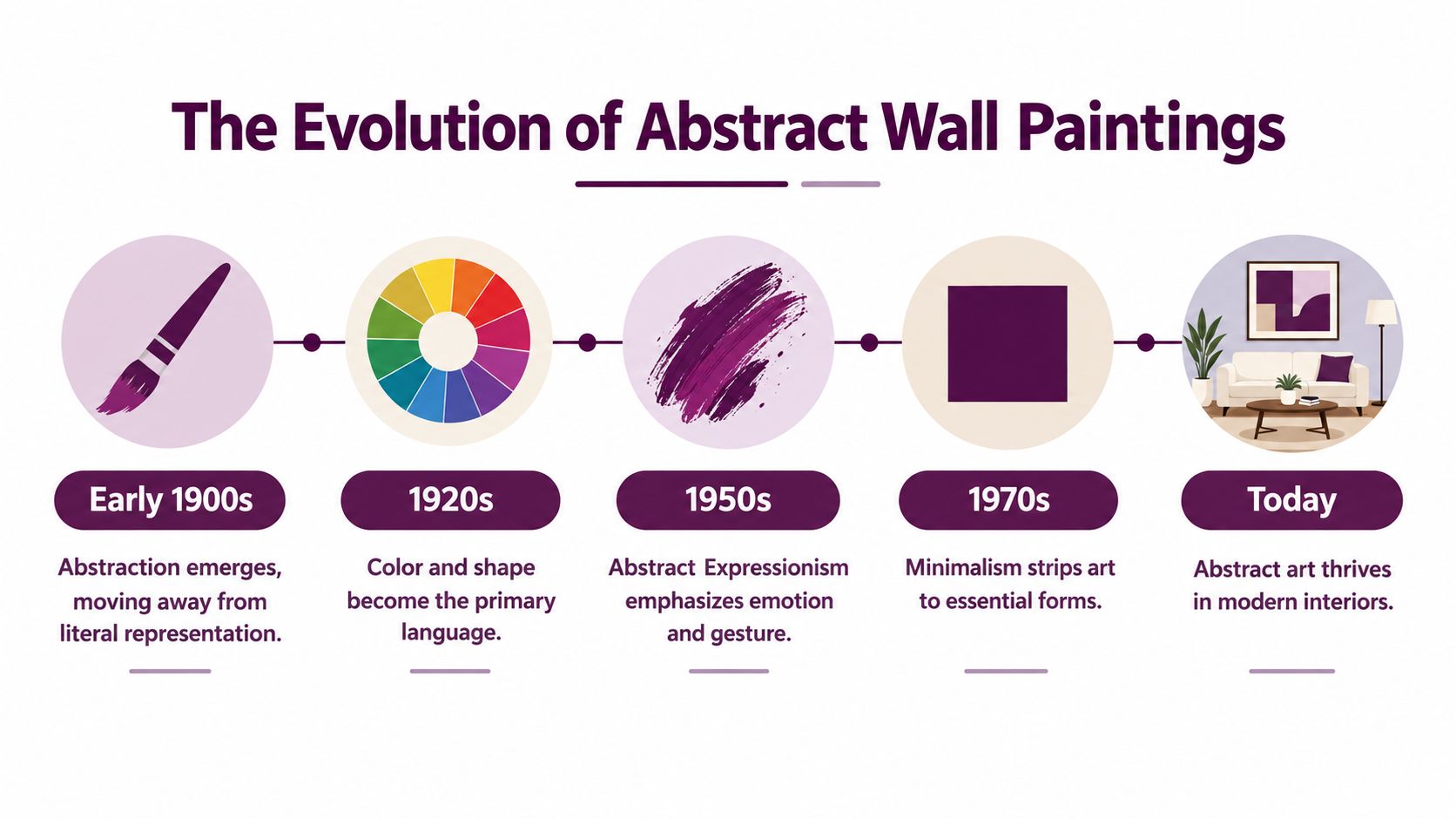
By the New Deal era and the decades around World War II, abstraction was moving beyond framed easel paintings and into architecture. A University of Pennsylvania study identifies approximately 1935–1960 as a formative period in New York, when artists made wall-scale works for settings including public housing, hospitals, offices, homes, and civic buildings. The New York Federal Art Project allocated approximately 200 murals to public institutions, and research counted 23 abstract murals completed and installed at New York institutions, or 28 when completed but uninstalled works are included. The University of Pennsylvania study of abstract mural painting shows how abstraction became part of everyday environments, not just galleries.
Major Abstract Styles Worth Knowing
Abstract art isn't one look. Some paintings feel orderly, others look like a burst of motion, and some use so little that every shape seems to matter. Knowing a few broad styles helps you name the mood you want, even if you'd rather spend your day admiring your cat than memorizing museum labels.
| Style | Visual Feel | Best Room Match |
|---|---|---|
| Geometric | Clear shapes, lines, and structured arrangements | Entryway, office, or a room with modern furniture |
| Color-field | Broad areas of color that create a calm, immersive effect | Bedroom or a quiet reading corner |
| Gestural | Energetic brushwork, drips, splatters, or expressive marks | Living room or creative workspace |
| Minimalist | Restrained forms and open space | Calm bedroom or uncluttered hallway |
Geometric work suits a room that already has strong lines, such as a boxy sofa or simple shelving. Repeated angles can create a pleasing connection between the art and the furniture without requiring matching colors. It's the design equivalent of a cat sitting perfectly inside a cardboard box: neat, satisfying, and somehow still a little surprising.
Color-field painting builds impact through areas of color rather than small, detailed imagery. A soothing field of soft tones can bring a restful feeling to a bedroom, while a saturated color can make a small reading nook feel enveloping. For historical context, color-field painting is one of the approaches explored in the wider story of American abstraction from 1960 to 1975, alongside other experiments with large-scale work and simplified forms. The Fort Wayne Museum of Art's exhibition overview describes that varied period.
Gestural work makes the act of painting visible. Think sweeping strokes, splashes, and layered marks rather than carefully enclosed shapes. Abstract Expressionism emerged primarily in New York in the early 1940s and flourished from 1943 to the mid-1950s. Jackson Pollock's drip method, developed in 1947, used dripping and pouring as well as conventional brushwork. The Metropolitan Museum of Art's overview of Abstract Expressionism explains the movement's interest in gesture and all-over compositions. Floofie says: that's the wall-art version of a cat skidding around the room, but with more planning and fewer overturned lamps.
Minimalist paintings use restraint to make each line, shape, or patch of color count. They're a natural fit when your furniture, textiles, or cat already bring plenty of visual activity. Mixed-media works can add texture and layered surfaces, so check how their materials and finish will suit the room before buying.
Choosing the Right Size, Color, and Frame
Maya's wall is still blank, but she now knows what she likes: a gestural painting with a calm blue palette. Before she chooses one, she takes a quick photo of the sofa wall and measures the furniture. That small bit of planning can prevent the classic mistake of hanging a lovely piece that looks like it's trying to escape into a sea of empty wall.
Start with scale
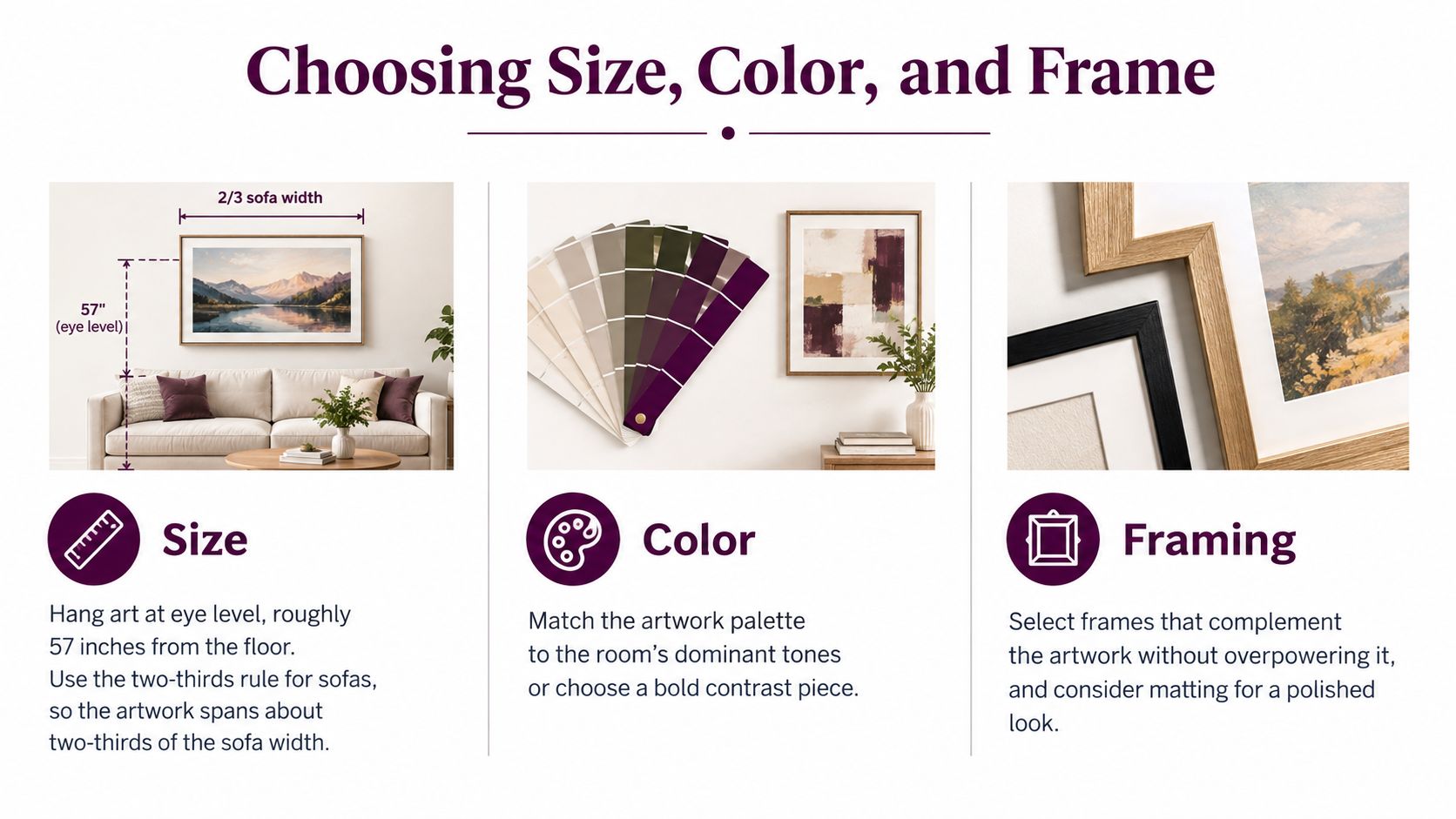
For art above a sofa, a common decorating guideline is to choose a piece around two-thirds of the sofa's width. That's a design rule of thumb, not a requirement; use it to judge proportions, then trust what looks balanced in your room. A small painting can work above a narrow console, while a broader canvas can hold its own over a bed or dining table.
Hang art near eye level when you're looking at it from a standing position, then adjust for where you'll usually see it. Above furniture, the relationship between the painting and the piece below matters more than following a measurement mechanically. Leave enough breathing room so the painting doesn't seem to sit on the sofa's back.
Choose a color relationship
You can pick up an existing tone from a rug, curtain, or cushion for a coordinated look. Or choose a contrasting color to give a quiet room a focal point. If your cat's favorite blanket is already an assertive shade, you don't need to match it exactly. A related color or a deliberate contrast often feels more natural than trying to make every object agree.
Decide how finished it should feel
A canvas-only presentation can keep the work relaxed and modern. A slim black frame can add definition, while a light wood frame may connect with warm furniture. A mat can give a print a more finished appearance, especially when the artwork is on paper.
Your budget can guide the format, but decorative appeal and investment value aren't the same thing. Recent market reporting notes increased activity in abstract works priced below $5,000, with 30–40% of new buyers at major auction houses coming from younger generations, as reported in the 2025 art-market summary. Compare originals, prints, and reproductions by looking at materials, edition details, documentation, framing, and shipping, not by assuming that a higher price guarantees future resale.
Styling Abstract Wall Paintings Room by Room
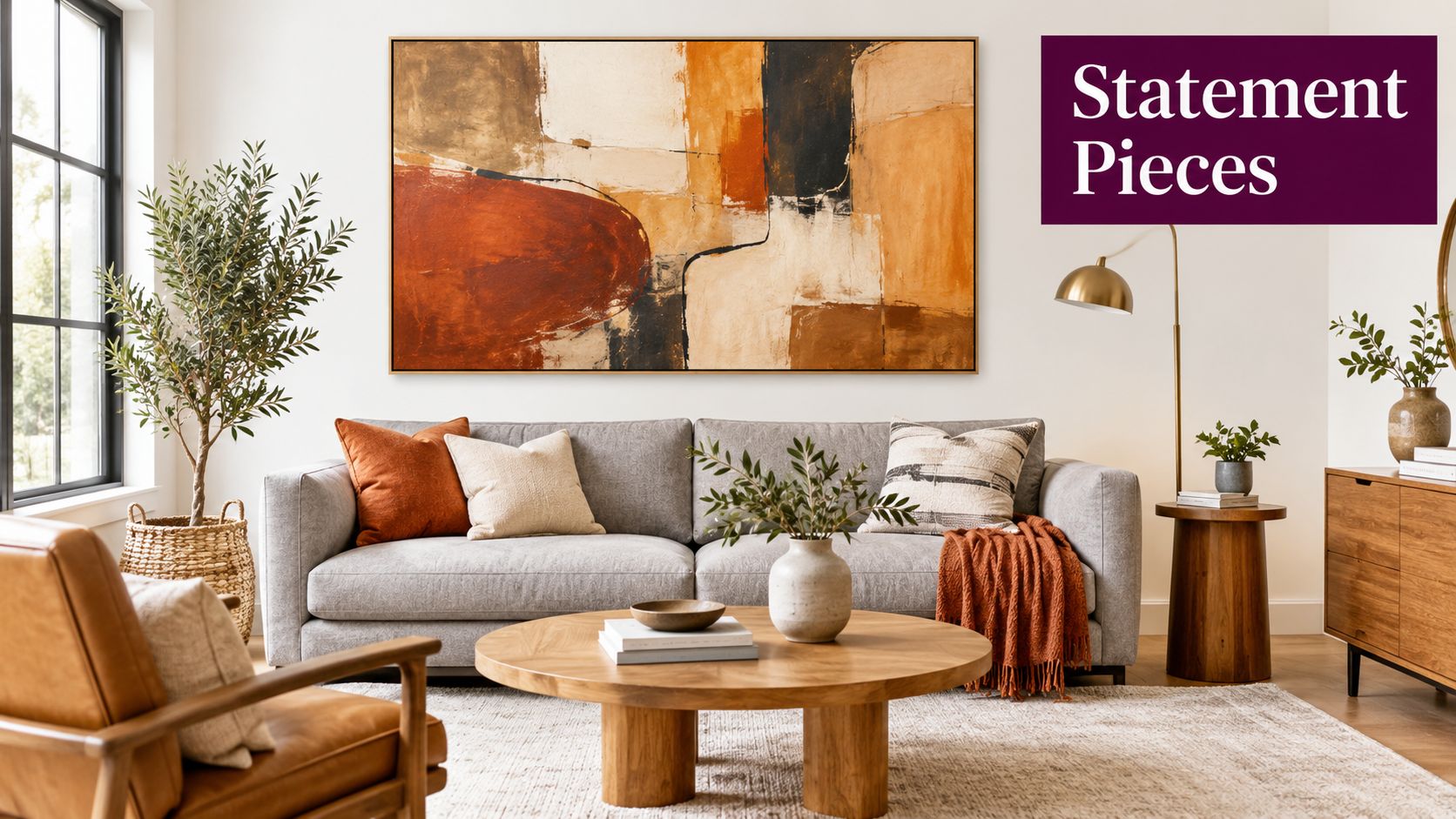
The living room is where a bold piece can earn its keep. Hang a broad abstract painting above the sofa, then echo one of its colors in a cushion or throw. Keep nearby wall decorations simple enough that the painting still reads as the focal point. If your cat likes to leap from the sofa to a nearby shelf, avoid arranging tempting launch pads directly below a fragile frame.
A bedroom usually benefits from a quieter visual tempo. Try soft color fields, gentle curves, or a restrained geometric composition above a dresser or on a wall you see from bed. Consider how bright daylight lands on the painting, and position it where you can enjoy it without glare or direct sun. The same calm palette can carry into bedding without making the room look like a showroom.
A little room-by-room contrast makes the choices easier:
- Home office: Use an expressive, gestural work if energetic marks help the room feel lively. Keep it away from a desk lamp that throws harsh glare, and secure the frame rather than relying on a loose hook.
- Entryway: A geometric piece can give a compact space a clear focal point. A narrow console, a small dish for keys, and a single cat-themed object are enough to complete the welcome.
- Dining area: A color-led painting can tie together the table, chairs, and lighting. Check sightlines from seated positions, too, so the work feels part of the room rather than a high-up afterthought.
For a closer look at how artwork, furniture, and color can work together in a living room, watch this visual guide to styling abstract art.
Whatever the room, use suitable wall anchors for the wall material and the artwork's weight. A secure hanging is especially important in a home where a curious cat can reach the furniture below.
Pairing Abstract Art with Cat-Themed Decor
The easiest way to bring cat-themed décor into an art-led room is to give every item a job. Let the painting set the palette or mood, then choose a few smaller accents that connect with it. A blue-toned abstract can sit comfortably with a navy cat-print cushion; a geometric painting might pair with a pillow that repeats one simple shape.
1. Repeat a color, not every detail. Pick one shade from the painting and echo it in a mug, throw, or accessory. Exact matching can make a room feel overly coordinated, while a nearby shade creates a looser, more lived-in relationship. A navy cat graphic, for example, can complement a painting with blue accents without copying its entire palette.
2. Keep the visual rhythm going. If the artwork has curved marks, look for rounded shapes in cushions or small objects. If it uses crisp blocks, a graphic print can echo that structure. This isn't about collecting matching sets; it's about letting the eye find a few friendly connections.
3. Create one small vignette. A reading nook might include a chair, a cat-themed mug on a side table, a book, and a small abstract print nearby. Keep the accessories grouped rather than scattering them across every shelf. Floofie's verdict: a carefully chosen sprinkle of cat charm beats a full-scale figurine invasion.
Before hanging or styling, check that toys and décor won't block a walkway or invite your cat to pull down a fragile object. Art and feline accessories can share a room happily when each has space to be noticed. Let the painting breathe, and let the cat details deliver the wink.
Safety, Materials, and Care for Cat Households
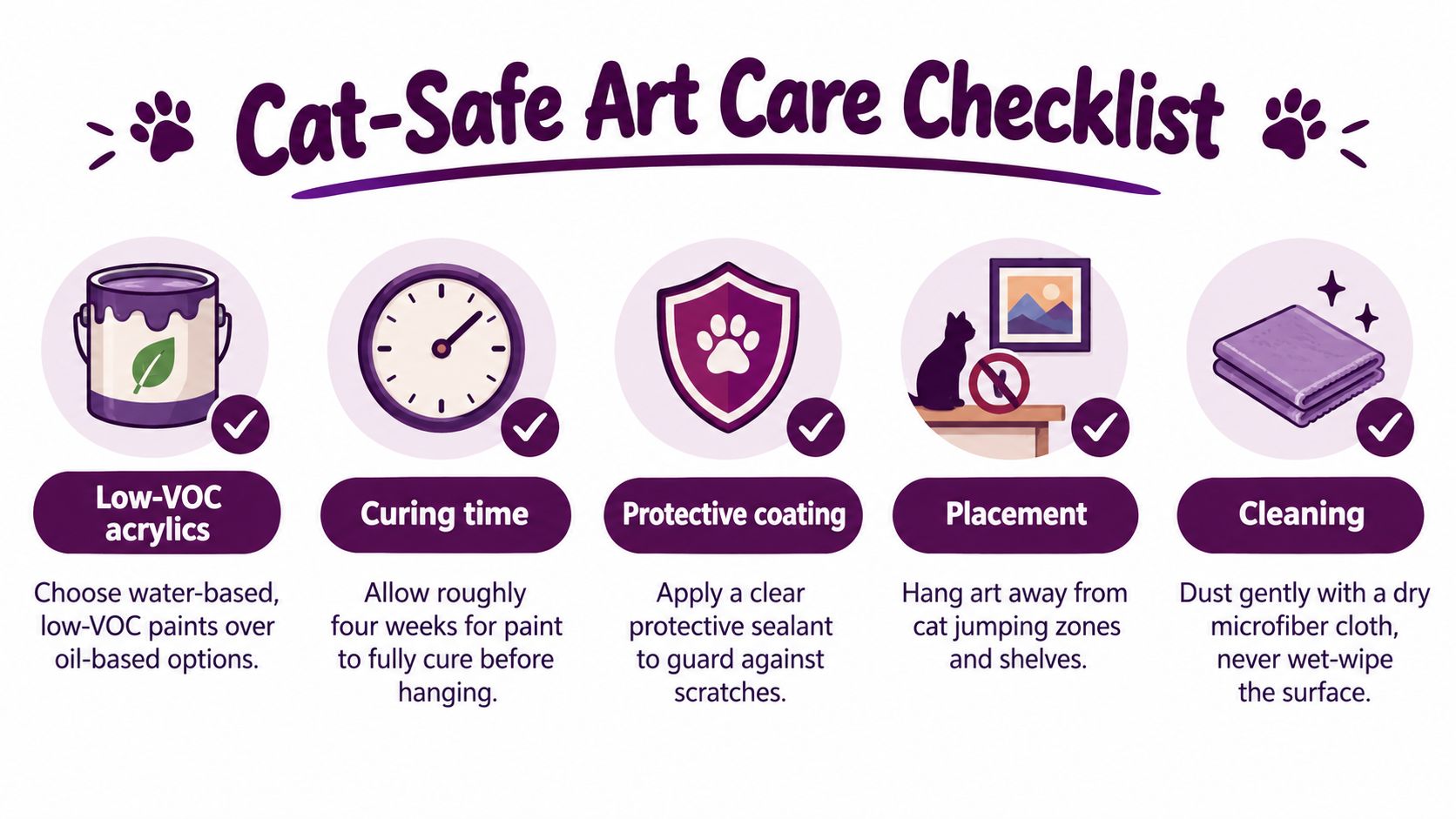
A paint labeled water-based isn't automatically harmless in every room. The product formulation, ventilation, drying and curing time, and room conditions all matter, especially if a cat, child, or person with asthma is sensitive to odors. The Canadian Conservation Institute notes that commercial oil-based paints can emit harmful volatile organic compounds, while emulsion or latex paints generally emit fewer. For enclosed display environments, it recommends allowing roughly four weeks for low emanations; a well-ventilated room may clear fumes sooner. See the Canadian Conservation Institute's guidance on commercial paints.
Choose materials and placement with care
Ask the artist or seller what paint, primer, binder, and topcoat were used. For a commissioned wall painting, agree on the materials before work begins and ask for care instructions. Keep the room ventilated while coatings dry, and follow the product maker's directions before bringing pets back into the space.
A cat's interest in wall art can be practical rather than aesthetic: frames can wobble, canvases can attract a claw, and shelves can become launch points. Use a secure hanging method appropriate to the wall, and avoid positioning fragile work where a jump or swat could knock it down. Floofie's safety reminder: enthusiasm is not a substitute for a wall anchor.
Protect the surface and monitor the color
Strong light can gradually change some paints, and conservation guidance for framed or wall-mounted work recommends limiting highly light-sensitive paints to approximately 50 lux and keeping ultraviolet exposure below 30 microwatts per lumen. Direct daylight should be avoided. If you can't measure the light, a practical starting point is to keep vulnerable work out of direct sun and watch for uneven fading.
Dust gently with a clean, soft cloth, and follow the maker's care guidance before applying any cleaner. Avoid aggressive solvents and abrasive pads, which can damage decorative finishes or burnish a matte surface. For high-touch areas, ask whether a compatible washable finish is suitable, then test it on a representative sample rather than assuming every coating will behave the same way.
Your Floofie-Approved Final Checklist
Choosing abstract wall paintings gets easier when you work from the room outward. First decide what the wall needs: a calm pause, a burst of energy, or a shape that ties furniture together. Then compare artworks for scale and color before deciding whether the piece belongs in a frame, on stretched canvas, or in another format.
Use this quick checklist before you buy or commission a piece:
- Pick a style: Decide whether geometric, color-field, gestural, or minimalist work feels right for the room.
- Measure the wall and furniture: Check the space above your sofa, bed, desk, or console so the artwork feels proportionate.
- Choose a color relationship: Repeat an existing room tone or choose one considered contrast.
- Plan the framing: Think about how the frame, mat, or unframed canvas will work with both the artwork and the room.
- Set a realistic budget: Compare original paintings, prints, and reproductions by material, finish, documentation, and delivery needs.
- Choose a safe position: Avoid direct sunlight where possible, secure the hanging, and consider your cat's favorite routes.
- Add one feline accent: Bring in a small cat-themed object or textile that connects with the art instead of competing with it.
Once the painting is in place, give yourself time to live with it. Abstract work can reveal different shapes and moods as the light shifts or the room changes around it. If the piece makes you pause, smile, or invent a story about what Floofie is plotting, it's already doing something useful.
Your home doesn't need to follow a gallery rulebook. Choose art that feels at home with your furniture, your habits, and the small furry critic who may inspect it from the sofa. Floofie's final advice: pounce on the piece you love, secure it properly, and let the rest of the wall enjoy a little breathing room.
FloofChonk offers cat-themed home décor, apparel, accessories, and pet products for adding a playful feline touch to your space. Find an accent that suits your abstract art and visit FloofChonk to explore the collection.