
Bow Collar for Cats: The Ultimate Safety and Style Guide

You're scrolling through photos of your cat, admiring those magnificent whiskers, when the thought arrives: “This face needs a bow.” Maybe your tiny monarch is heading to a family celebration, or perhaps an ordinary Tuesday deserves a little more sparkle. A bow collar for cats can turn a casual strut into a full fashion moment, but the bow is only half the story.
Underneath the satin, velvet, or floral print, there's a working collar that must fit correctly, release during a snag, and stay comfortable through naps, zoomies, and extremely serious investigations of cardboard boxes. Floofie, our mascot and self-appointed feline style inspector, believes every dramatic bow should come with sensible safety standards. 🐾🎀
Why Bow Collars for Cats Are the Ultimate Feline Fashion Statement
Marmalade has a blue floral bow collar, a sunny windowsill, and the unmistakable expression of a cat who expects compliments. His human chose the accessory because the bow matched his eyes and made ordinary portraits look delightfully polished. Floofie approves of the visual impact, but only after checking the collar beneath the decoration.
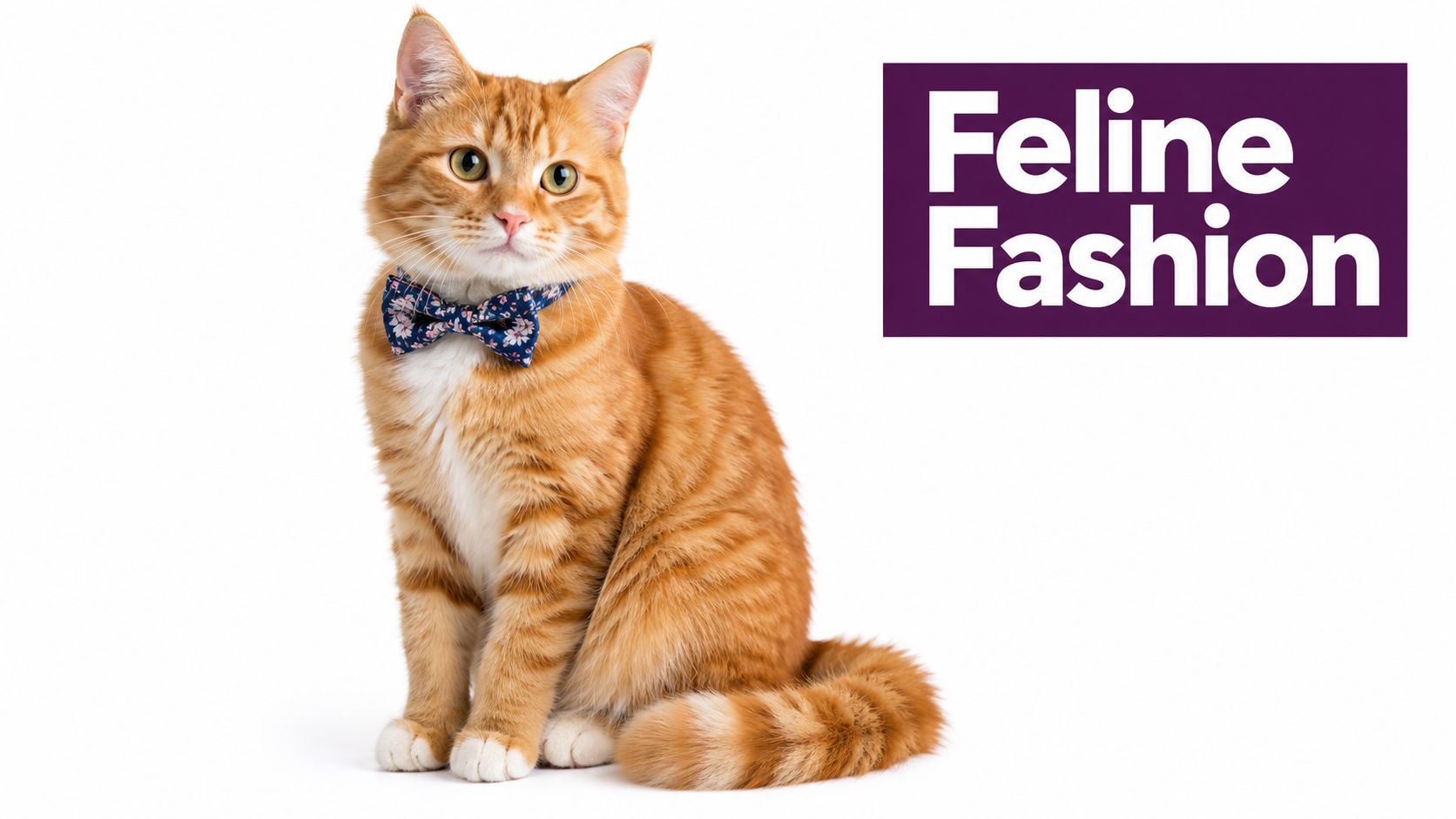
A bow can communicate personality without turning your cat into a reluctant costume model. A neat gingham style suits a curious explorer, a velvet bow gives a dignified indoor cat a little old-Hollywood drama, and a bright floral pattern brings cheerful garden-party energy to a pet who spends most of the day judging birds from the window.
The charming part is that you can style the accessory around your cat rather than forcing your cat into a look. The right bow should sit neatly on the collar, remain light enough for comfortable movement, and avoid covering the throat or interfering with grooming. A cat should still be able to stretch, scratch, nap, and perform a spontaneous hallway sprint without the accessory becoming the main event.
Style should serve the cat
A decorative collar is still a collar first. That means the base must meet the same practical standards as any other feline neck accessory. The bow shouldn't have loose threads, sharp edges, or detachable decorations that could become interesting chewing targets. Its attachment should keep the bow positioned without creating a bulky lump beneath the chin.
Floofie's rule is simple: photogenic is wonderful, wearable is essential. A cat who keeps pawing at an accessory, freezes, hides, or repeatedly tries to remove it is giving you useful information. Take the bow off, check the fit, and reintroduce it later with patience and a treat.
Floofie's fashion law: A fabulous bow earns its place by staying out of the way of feline comfort.
This balance matters because owners aren't choosing between style and safety. They're choosing a stylish version of a safety-conscious collar. A well-designed bow collar for cats should make the decorative element feel like a removable or carefully secured accent, not a collection of dangling hazards.
The best look is the one your cat can wear calmly while remaining recognizably themselves. If Marmalade can groom, stretch, and supervise the household while wearing his blue bow, the accessory has passed the first style test. The next test is much less glamorous, but far more important: what happens if the collar catches?
Safety First - Breakaway Features and Snag Risks
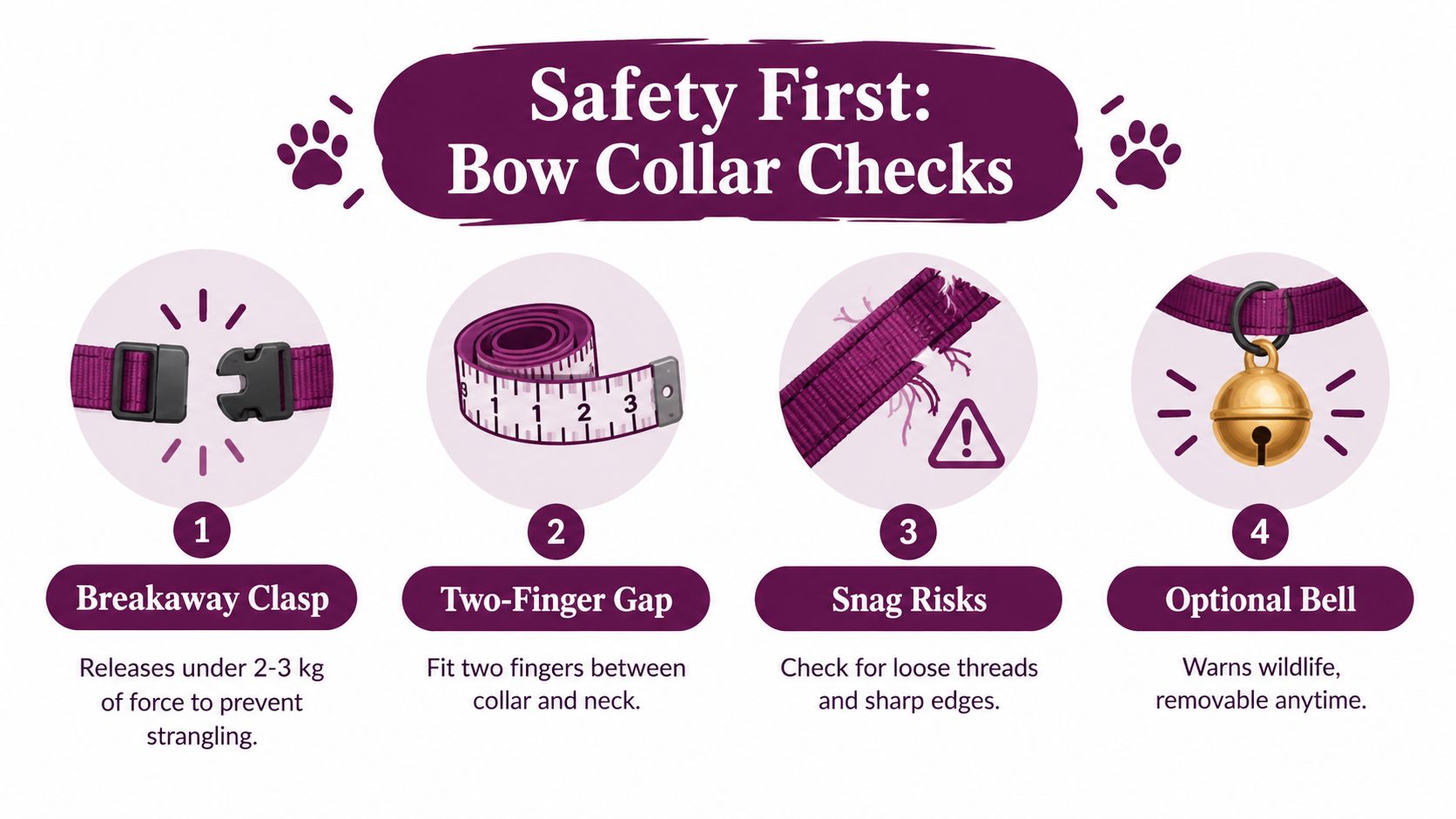
Cats squeeze under furniture, climb through shrubs, hook paws over household objects, and investigate spaces that look too narrow for a whisker, let alone a whole cat. A collar can snag on a branch, fence, piece of furniture, or the cat's own leg or jaw. That's why a breakaway or quick-release buckle should be the starting point for any bow collar for cats.
A breakaway collar is designed to open when it experiences enough pressure from a snag. Veterinary guidance commonly describes a modest release range of about 3 to 5 pounds of force, although the exact mechanism varies by collar design. You can review the mechanics and practical safety considerations in this veterinary cat collar safety guide.
A fixed buckle may stay closed when a cat needs to escape. Elastic designs can also increase entanglement risk, so welfare guidance recommends a quick-release collar and warns against elastic collars, loose stitching, studs, and gems that could detach and become choking hazards. The Cats Protection collar guidance offers the same practical direction.
What the evidence tells us
A 2010 veterinary study followed 538 cats for 6 months. Of those cats, 391, or 72.7%, successfully wore their collars for the full period, while 18 cats, or 3.3%, caught a forelimb in the collar or snagged it on an object or in their mouth. The figures come from the published veterinary study on long-term collar use.
That result doesn't mean decorative collars are automatically dangerous. It shows why the collar's construction deserves attention even when the bow looks harmless. A bow adds material, stitching, and sometimes embellishments, so every decorative detail should be checked for snagging and chewing risks.
A 2025 European survey of more than 2,000 cat owners recorded 9 collar-related incidents, or 0.47% of respondents, and none required veterinary care or caused death. The survey also found that 96% of respondents whose cats wear collars were satisfied with them, while 48.18% had previously hesitated to use a collar mainly because of fear of entanglement. Those findings are reported in the European survey on cat safety and collar use.
A quick pre-wear inspection
- Check the clasp: Test the quick-release mechanism before your cat wears the collar, and confirm that it opens under appropriate pressure.
- Examine the bow: Look for loose threads, rough edges, dangling stones, and small parts that could be chewed loose.
- Consider the environment: Outdoor cats face more opportunities for collars to catch on branches, fencing, and other objects, so breakaway construction is essential.
- Keep extras optional: Bells, tags, and additional decorations should never interfere with release or add uncomfortable weight.
For more playful decorative ideas, browse these kitten bow tie styling suggestions, then apply the safety checklist before choosing a look.
Here's a short visual guide to collar use and feline safety:
The bow may win the compliments, but the release mechanism does the serious work. If a collar cannot release when it should, it isn't ready for a cat runway.
Finding the Purr-fect Fit - Sizing and Adjustability
A collar that looks adorable in the product photo can become uncomfortable or unsafe if it doesn't match your cat's neck. Fit isn't a cosmetic detail. A loose collar may allow a front leg or jaw to slip through the loop, while a tight collar can cause choking, discomfort, or skin injury, as explained by International Cat Care's collar-fitting guidance.
Start with a soft measuring tape and a calm cat. Measure around the neck where the collar will sit, keeping the tape close to the fur without pulling it tight. If your cat is especially fluffy, press the fur gently rather than measuring over a cloud of floof.
Use the two-finger check
Once the collar is adjusted, slide two fingers between the collar and your cat's neck. The fingers should fit comfortably, without forcing the strap outward or leaving a large gap. This creates a practical middle ground, secure enough to reduce slipping and loose enough to support breathing, movement, and grooming.
Follow these steps:
- Measure calmly: Let your cat sniff the tape before you place it around the neck.
- Set the strap: Adjust the collar while keeping the two-finger space in place.
- Inspect the position: Make sure the bow rests to the side or beneath the chin without pressing into the throat.
- Test the release: After adjusting the strap, test the quick-release buckle. An adjustment should not prevent it from opening as designed.
- Recheck after movement: Watch your cat walk, turn, scratch, and groom. A collar that shifts dramatically may be too loose or poorly balanced.
Kittens and cats with changing body shapes need especially regular checks. A collar that fitted neatly last month may sit differently after growth, weight change, or a major seasonal coat change. If the strap leaves redness, mats the fur, or causes repeated scratching, remove it and reassess the size and material.
The fit test is finished only when your cat can move normally and the buckle still releases properly.
Before ordering, compare your measurement with the cat clothes size chart. Size labels differ between products, so a neck measurement is more useful than guessing from your cat's weight, breed, or overall fluff level.
A bow should sit securely without dragging the collar forward. If the decoration pulls the strap toward the throat, choose a lighter bow or a design with a more balanced attachment. Your cat's comfort is the final fitting tool, and Floofie takes that measurement very seriously. 📏🐈
Material Matters - Choosing the Best Fabric for Your Cat
The fabric touching your cat's neck affects comfort, cleaning, durability, and how well the collar supports its decorative bow. A bow collar for cats should feel soft enough for everyday wear while remaining sturdy enough to resist fraying, scratching, and repeated movement.
Recent market coverage reports that 72% of pet owners globally rank safety as the top factor in accessory choice, while 71% rate quality and durability nearly as highly. Those figures appear in market coverage of pet accessory preferences, and they explain why a pretty fabric alone isn't enough.
Compare the common options
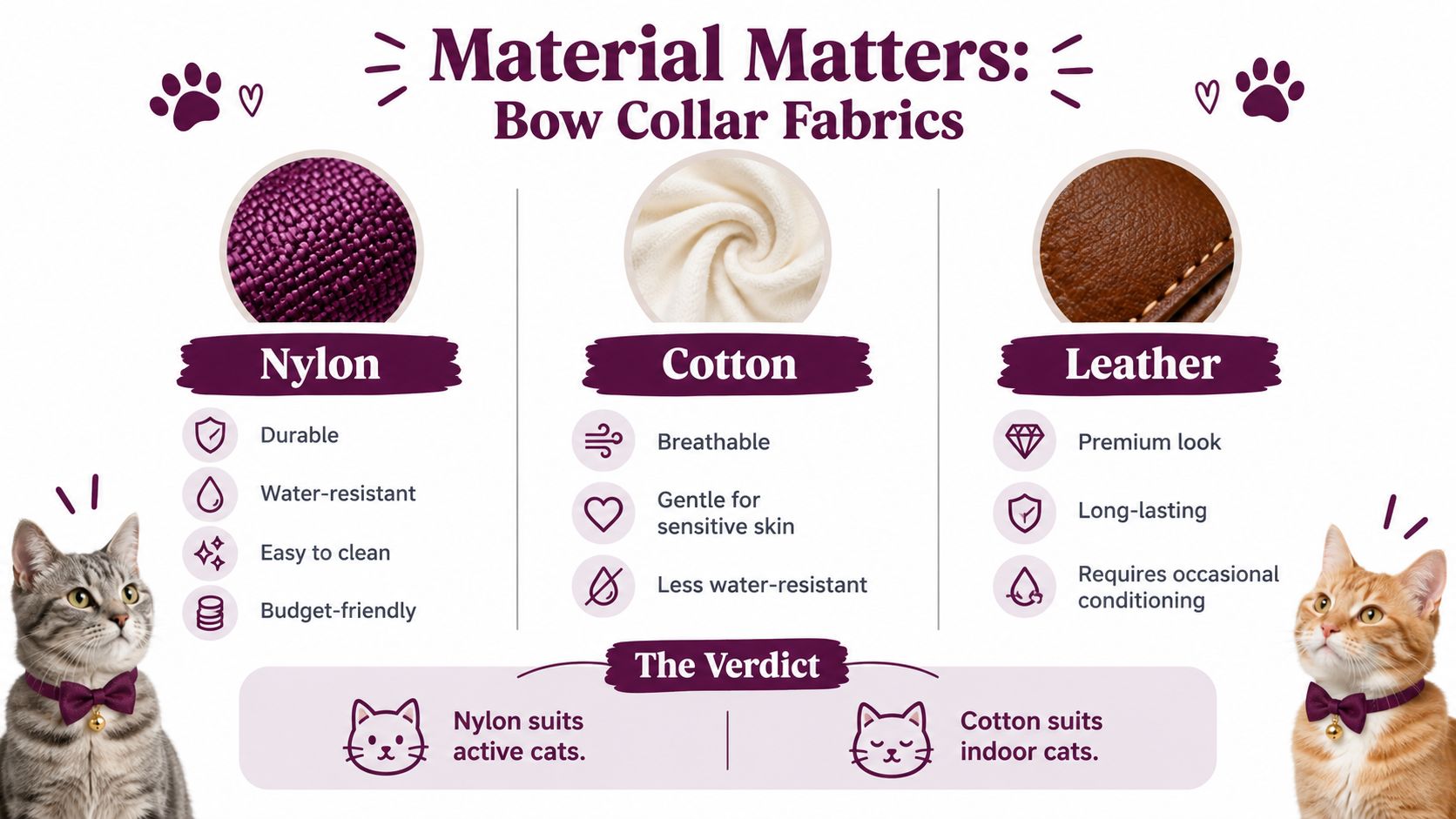
| Material | Strengths | Watch-outs |
|---|---|---|
| Nylon | Durable, easy to clean, and suitable for active cats | Rough webbing or unfinished edges can irritate skin |
| Cotton | Breathable and gentle for sensitive skin | Absorbs moisture and may need more careful drying |
| Leather | Structured, long-lasting, and polished in appearance | Needs maintenance, and poorly finished edges can rub |
| Velvet or soft-lined fabric | Plush texture and a dressy appearance | Can collect fur and requires close inspection around seams |
Nylon often suits a cat who spends time exploring, especially when the collar needs to cope with damp grass or frequent cleaning. Choose smooth webbing with finished edges, not a stiff strip that scratches when your cat turns their head.
Cotton can be a gentler choice for an indoor cat with a sensitive neck. It feels breathable and soft, but it may hold moisture or oils, so inspect it often and allow it to dry completely after cleaning. A velvet-lined design can feel luxurious, although the plush surface may hide dirt or loose stitching if you don't check it carefully.
Leather and faux leather create a dapper silhouette and can support a structured bow. They need attention to edge finishing, because a rough border can rub against the skin. Avoid assuming that a premium-looking material is automatically comfortable. Run a clean finger along the collar's inside edge before introducing it to your cat.
Match material to the lifestyle
An indoor cat may benefit from a soft, breathable fabric that stays comfortable during long naps. An indoor-outdoor cat may need smooth, durable material plus reflective details for visibility, while still relying on a breakaway mechanism for snag protection. Cats who chew accessories need especially simple construction, with no loose beads, gems, or easily detached trim.
Inspect the bow attachment as carefully as the strap. A sewn-on bow can stay stable, but its stitching must remain intact. A removable bow is convenient for cleaning and styling, but the attachment loop should be secure and free of loose elastic. Whatever the material, replace the collar when it frays, develops rough edges, or no longer holds its shape.
Styling Your Cat - Bow Sizes, Colors, and Occasions
A bow should complement your cat's proportions, not overpower them. A large, stiff decoration can look dramatic on a photograph yet feel cumbersome on a small cat, while a tiny bow may disappear into the ruff of a long-haired giant. The most flattering choice balances the bow's width, thickness, and position with the cat wearing it.
Start with the silhouette. A short-haired cat may look polished in a compact bow with clean lines, while a fluffy cat may need a slightly more visible shape to stand out against the coat. Keep the decoration light enough that it doesn't pull the collar forward or rotate it toward the throat.
Build the look around the occasion
A pastel floral bow brings springtime charm to a sunny window portrait. A rich red style suits a holiday gathering, and a simple black bow gives an indoor evening look a little formal flair. For everyday wear, soft cotton, satin, or lightweight chiffon can create movement without adding unnecessary bulk.
Color can also echo your cat's natural features. Blue can make warm orange fur glow, jewel tones can contrast beautifully with pale coats, and earthy shades can complement tabbies without competing with their stripes. Floofie's styling philosophy is delightfully practical: if the bow gets more attention than the cat, the bow may be auditioning for the wrong role. ✨
Removable designs make seasonal changes easier and allow you to take the decoration off during cleaning or quiet indoor time. Look for slide-on attachments or secure, cat-appropriate loops rather than relying on glue. Adhesive can degrade with wear, and a detached decoration may become a chewing or swallowing hazard.
Keep the cat in charge
Introduce a new bow when your cat is relaxed. Let them sniff it, place the collar on briefly, and reward calm behavior. Don't chase a cat around the house with a bow while they're already overstimulated. That turns a fashion accessory into a suspicious contraption, and cats have excellent long-term memories for suspicious contraptions.
Supervise the first wear and watch for repeated pawing, flattened posture, hiding, or frantic attempts to remove the collar. A cat who ignores the bow and carries on with normal behavior is giving you the green light. A cat who looks distressed is asking for a pause, not a more persuasive sales pitch.
Find more ideas for wearable feline flair in this guide to cat accessories to wear. Choose the look that suits your cat's body, routine, and temperament, then let the whiskered model decide whether it passes inspection.
Maintenance and Care - Keeping the Collar Fresh and Functional
A bow collar collects more than compliments. Fur, food dust, outdoor grime, and natural neck oils can work their way into the fabric and hardware. Regular care keeps the accessory comfortable and helps you notice damage before a small problem becomes a safety issue.
Several welfare organizations warn that dirt and grease can block a quick-release mechanism, making it harder for the collar to open when needed. They also advise replacing damaged collars immediately, as explained in PDSA's cat collar care guidance.
Use a simple cleaning routine
- Remove the collar: Take it off before cleaning, and never leave a damp collar on your cat.
- Read the care label: Follow the product's washing instructions, especially for velvet, leather, glued trim, or reflective material.
- Clean gently: For washable fabric, use a damp cloth and mild pet-safe soap. Avoid harsh chemicals that may irritate the skin.
- Protect the hardware: Wipe around the buckle and D-ring without forcing water deep into the mechanism.
- Dry completely: Allow the collar to air-dry fully before refitting it. Damp fabric can become uncomfortable and trap odors.
- Inspect every component: Check the strap, bow, seams, stitching, D-ring, and buckle for wear.
If the collar is machine washable, a mesh laundry bag can help protect the bow and hardware. Leather may need appropriate conditioning, but don't apply a product unless the manufacturer says it is suitable for the material and safe around pets.
Test, don't just look
The buckle should move cleanly and release as intended. Dirt can hide inside small mechanisms, so a quick visual glance isn't enough. After cleaning and drying, test the release before placing the collar back on your cat.
Look for threadbare patches, separated seams, stiff or cracked material, and decorations that wobble. A loose gem or dangling trim isn't a quirky detail. It's a potential hazard that calls for removal or replacement.
A collar is ready for another wear session only when it is clean, dry, intact, and releasing properly.
Cats can make a freshly cleaned accessory look lived-in almost immediately, especially if they enjoy garden patrols or dramatic floor rolls. That's fine. Maintenance isn't about preserving a showroom finish. It's about keeping the strap and safety hardware dependable while the bow continues to look fetching.
Floofie's Final Verdict - Wrapping Up Your Bow Collar Journey
A bow collar for cats succeeds when the fashion detail supports the cat instead of distracting from their needs. The bow can be floral, velvet, festive, minimalist, or gloriously extra, but the collar underneath should have a dependable breakaway mechanism, a secure two-finger fit, comfortable materials, and a condition you can trust.
The choice also depends on your cat's habits. A relaxed indoor cat may enjoy a soft decorative collar during supervised wear, while an adventurous outdoor cat needs particularly careful attention to release hardware, snag risks, visibility, and regular inspection. No accessory is suitable just because it looks cute in a product photo.
Floofie's safety checklist
- Start with release: Choose a quick-release or breakaway design and test the mechanism before use.
- Measure the neck: Set the collar with a comfortable two-finger gap, then watch how it behaves during normal movement.
- Inspect the decoration: Keep bows light and secure, with no loose stitching, sharp edges, dangling gems, or small detachable parts.
- Choose the fabric thoughtfully: Match smooth, durable material to active routines and soft, breathable material to sensitive skin.
- Watch the first wear: Introduce the accessory gradually and remove it if your cat shows genuine distress.
- Keep it clean: Dirt and grease can affect hardware, while fraying and damaged seams mean replacement time.
Some cats accept a new collar after a brief sniff. Others require a slower introduction, tiny treats, and a respectful pause between each attempt. Don't force the process. A confident cat in a simple bow is far more fabulous than a stressed cat in an elaborate one.
Floofie also reminds every cat parent to consider the full life of the product. The collar will be stretched, rubbed, groomed, slept in, and possibly attacked by a mysterious invisible enemy in the hallway. Choose construction that can handle real feline behavior, and keep checking it after the first adorable photo.
The final style verdict is therefore easy: make safety the foundation, comfort the fit, and personality the decoration. That formula leaves plenty of room for color, texture, seasonal styling, and a little runway drama without turning fashion into a gamble. 🐾💖
FloofChonk offers cat-focused accessories and a personalized pet collar and leash for shoppers who want feline flair with practical everyday options. Visit FloofChonk to explore playful designs, choose a look that suits your whiskered model, and let Floofie approve the final bow.