
Cat Cameo Jewelry: A Purr-fect Guide to Styles and Care

Why do you judge cat cameo jewelry by the portrait first, when the portrait is the easiest part to fake and the fastest part to damage? 🐱 That question flips how most shoppers buy. A sweet whiskered face means little if the shell chips, the plating rubs off, or the relief was molded flat. Judge the material, metal, and carving first, then fall for the cat. Floofie, our ever watchful mascot, approves of that order. It is how you buy a keepsake instead of a novelty that disappoints after three wears.
What Is a Cat Cameo and Where It Began
A cat cameo is a tiny raised relief portrait of a cat, carved so the image stands proud of a contrasting background. Think of a sculpture shrunk to fit on a chain, with the cat's face left standing while the surrounding layers are cut away.
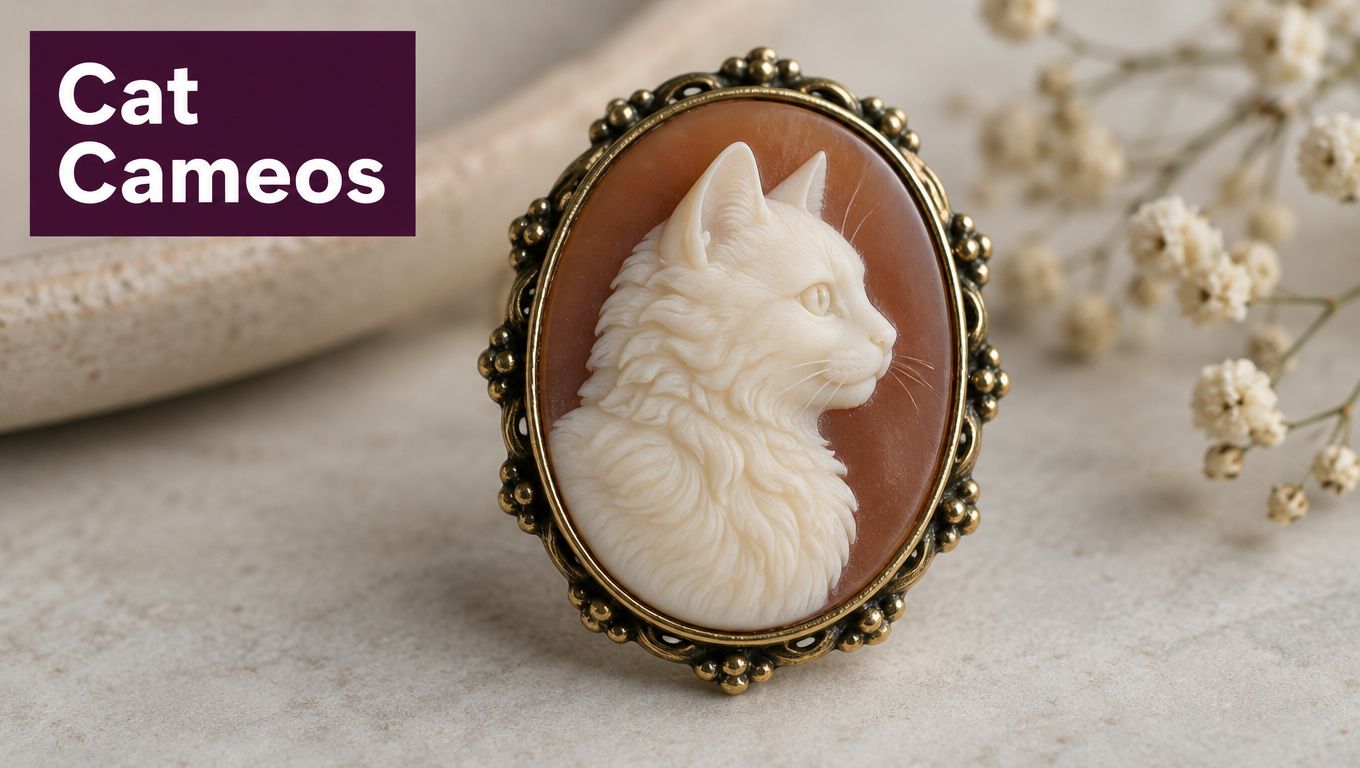
Floofie calls it wearable sculpture, and that's not just a cute phrase. 😺 The Journal of Antiques guide to cameos as wearable sculpture traces cameos back roughly 300 years before Christ, when ancient Greek engravers carved through differently colored layers of hardstone and left the raised image above contrasting strata.
Cameo Versus Intaglio
That raised relief separates a cameo from an intaglio. Intaglios have recessed designs and were commonly used as functional seals. Cameos were made to be seen, worn as ornaments where light catches the lifted profile and shadow collects around the background.
Later carvers moved beyond hardstone into shell, agate, onyx, coral, mother of pearl, lava, glass, gemstones, and porcelain. Shell became important during the Renaissance in the 15th and 16th centuries and was later popularized as fashion jewelry during the Victorian era under Queen Victoria. That second wave is why so many modern cat profiles wear that romantic, antique frame you probably picture first.
Cats Were Wearable Long Before Cameos Were Trendy
Cats have their own older claim to jewelry history. The Metropolitan Museum of Art cat amulet record catalogs an Egyptian cat amulet in green faience from the Late Period, dated 664 to 332 BCE, measuring approximately 2.5 × 2 × 0.9 centimeters.
Be precise here. A faience amulet isn't strictly a cameo, and honest sellers shouldn't pretend it is. What it proves is simpler and stronger. People were turning cats into personal, wearable symbols more than two thousand years ago, long before your tabby learned to sit on your keyboard.
A modern cat cameo joins two traditions, the ancient habit of wearing cats for meaning and the later art of carving a portrait in raised relief.
Your buying shortcut is this. Check what the relief is made from, what metal holds it, how cleanly it's carved, which design and personalization suit your cat, where you'll wear it, and how you'll care for it. Cuteness comes last, and yes, that's the purr fect order. 🐾
Materials That Shape Looks and Durability
Material decides what your cat can look like and how long she'll stay that way. Scan the comparison first, then match the material to your real life, not your wishful one.
Cat cameo materials compared
| Material | Hardness (Mohs) | Detail potential | Everyday durability | Best for |
|---|---|---|---|---|
| Queen conch or helmet shell | about 3.5 | Fine whiskers, ears and fur contours | Delicate; scratches and chips at edges | Gifts and occasional wear |
| Agate, onyx or sardonyx | Harder than shell | Sharp color layers and crisp relief | High; resists everyday knocks | Daily wear and heirloom pieces |
| Molded glass | Moderate, above shell | Clean outlines, limited depth | Moderate; can chip if dropped | Budget friendly fashion pieces |
| Resin | Low to moderate | Smooth, uniform surface | Lightweight; may yellow over time | Light, playful everyday styles |
Shell Gives Detail and Demands Gentleness
Shell, commonly queen conch or helmet shell, has a Mohs hardness of approximately 3.5, according to the Made Good Designs cameo jewelry guide. That softness makes it substantially easier to carve than agate, onyx, or sardonyx, so a skilled carver can cut whiskers, ear tips, and fur contours with real delicacy. The trade is clear. Shell scratches, and thin edges chip.
Don't buy shell for a job that involves keys, counters, toddlers, or a cat who bats at pendants. Buy it for dinners, portraits, gifts, and days when you'll notice if it knocks against something. Treat it as a delicate accessory, not hard wearing everyday armor.
The Metropolitan Museum of Art shell cameo record notes that seashell is relatively soft and that shell carving is less labor intensive than hardstone carving. It also notes shell reveals fewer colors and strata, which historically made it less prestigious, although highly skilled carvers could still produce exceptionally fine shell work. In plain terms, shell gives you softness and speed, not the bold color bands of stone.
Hardstone Wins for Contrast and Knocks
Agate, onyx, and sardonyx use natural layers to separate the raised cat from its background. That built in contrast is why a hardstone profile reads from across a room. The layers do the outlining for the carver, and the finished piece tolerates everyday bumps far better than shell.
Choose hardstone if you want a signature necklace you won't baby. It's the right call for a commuter, a teacher, or anyone who wears one pendant with everything. If you're comparing stone options more broadly, this guide to gemstone types for jewelry helps you sort names before you pay for them.
Glass and Resin Have Honest Jobs Too
Molded glass gives clean outlines and consistent color, but the relief usually lacks the undercut depth of hand carving. It can chip if dropped on tile, so keep expectations in the fashion category. Resin is lightweight, smooth, and comfortable for larger playful designs, but surfaces differ by formula and light colored pieces may yellow over time.
Neither material is a scam by itself. The scam is vague labeling. A disclosed molded piece at a fair price beats a mystery material sold with antique sounding words.
Practical rule: A shell cat is a gift or occasional wear piece, while layered hardstone suits daily wear. Pick for your calendar, not your fantasy.
When you're ready to compare silhouettes against materials, browse FloofChonk cat themed designs and ask one question for each favorite. Where will I wear this in the next month? 🐾🐾 If you can't name the day, choose the tougher material or the smaller, lighter design.
Metal Settings, Karat and Plating Decoded
Pure gold looks romantic on a spec sheet and performs poorly as a thin cameo frame. 24 karat gold is generally too soft for most jewelry applications, so makers alloy it for strength. Get the metal right and your setting protects the relief instead of bending away from it.
Gold karat and plating compared for cat cameo settings
| Metal | Gold content | Alloy share | Durability and tarnish | Best use |
|---|---|---|---|---|
| 24K | close to 100% | almost none | Too soft for most designs | Rarely used for cameo settings |
| 18K | 75.0% | 25.0% | Good balance with rich color | Heirloom or special occasion pieces |
| 14K | about 58.3% | about 41.7% | Practical durability for frequent wear | Gifts and everyday pendants |
| 10K | about 41.7% | about 58.3% | Strong wear; reactive alloys may discolor | Budget solid gold |
| Gold plated or vermeil | Thin surface layer only | Base metal core | Surface wears; base metal can show through | Fashion pieces with clear plating disclosure |
What the Numbers Mean on Your Neck
The Gold Toolkit guide to gold tarnish states that 18K gold contains 75.0% gold, 14K contains about 58.3%, and 10K contains about 41.7%. Gold is alloyed with metals such as silver, copper, nickel, or zinc to increase hardness and workability.
As karat drops, alloy share rises. Lower karat alloys can resist deformation better, but they contain more reactive metals and are more susceptible to discoloration from moisture, air, cosmetics, and skin chemistry. That's the engineering trade you'll see as color change at the bail, clasp, and chain contact points first.
For most buyers, 14K is the sweet spot for cat cameo jewelry. It offers a practical balance of precious metal content and mechanical durability for a gift or frequent wear pendant. Choose 18K when rich color and heirloom intent matter more than knock resistance. Choose 10K only when budget is tight and you accept more active upkeep.
Plating Needs Plain Disclosure
Gold plated and vermeil pieces can look beautiful, but surface wear can expose the base metal. Sellers should say so clearly, including plating thickness where applicable. If you're comparing construction across suppliers, choosing materials for jewelry collections gives useful context on how base metals and plating decisions affect the finished piece.
Before you order, scan this checklist.
- Karat stated: 18K, 14K, 10K, or plated, with no fuzzy substitute words.
- Plating disclosed: Thickness and base metal listed for plated or vermeil settings.
- Hardware named: Clasp and bail material matches the frame claim.
- Nickel flagged: Presence stated clearly if you have contact sensitivities.
The same discipline applies if you're pairing a pendant with a ring, and our notes on a cat jewelry ring show why bands need even harder scrutiny than pendants. Floofie wants a setting that holds its color while she holds court. ✨ Demand the specs, then enjoy the sparkle.
How to Spot a Well-Made Cat Cameo
Don't authenticate with your heart. Use your eyes, a phone light, and magnification if you have it. These five checks separate a carefully carved keepsake from a mass produced imitation in minutes.
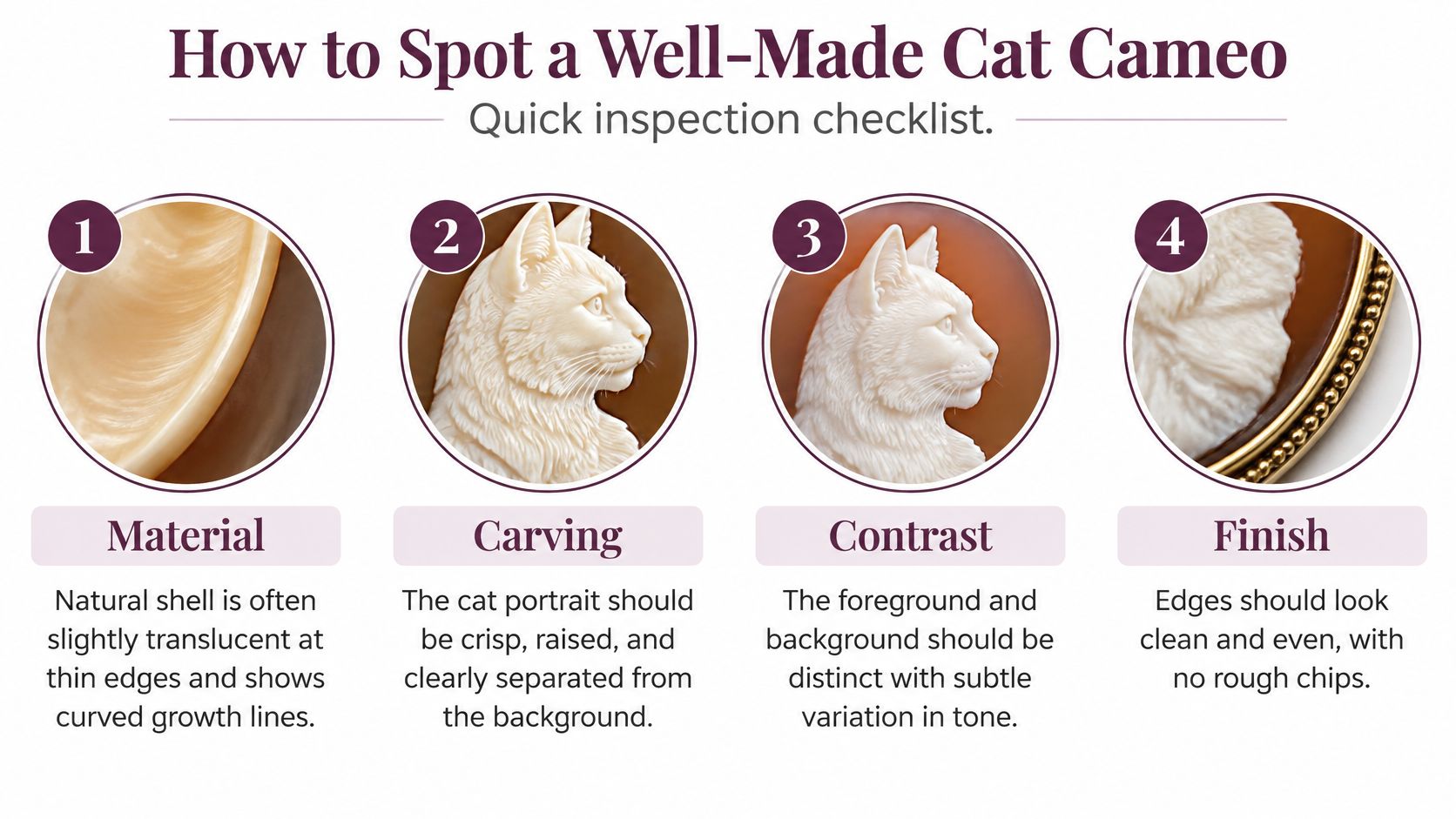
Run the Five Checks
- Check the material first. Natural shell is often slightly translucent at thin edges, shows curved growth lines, and has subtle variation in color and texture. Plastic reproductions tend to look unusually uniform and opaque, with no living irregularity from one side to the other.
- Inspect the relief under magnification. Whiskers should be intact, ears shouldn't look flattened, and background depth should stay even around the head. Look for tool chatter, broken fine points, and muddy transitions where the chin meets the background.
- Verify the metal stamp. Marks such as 14K or 18K should match the seller's claim for period and origin, and plating should be disclosed rather than hidden behind color names. A stamp that fights the listing is a stop sign.
- Make the parts agree. Style, carving quality, mounting, and material should tell one coherent story. That point is central to the Nobbier cameo jewelry guide for beginners and collectors, which stresses examining both material and setting rather than relying on the portrait alone.
- Separate modern from antique. A contemporary molded cat cameo is fine when it's clearly disclosed. It isn't fake because it's new, and it isn't antique because it looks vintage.
Greater relief or charming irregularity alone doesn't prove hand carving. Molds can copy height, and they can copy wobble too.
What Good Disclosure Sounds Like
A trustworthy listing names the cameo material, production method, metal or plating, and any animal derived material. It shows the back, not only the glamorous front. It gives dimensions and weight in words you can compare against a ruler at home.
Vague listings do the opposite. They lean on words like vintage style, antique look, and rare without tying any of them to a material or a stamp. Walk away from that fog. You're buying carved matter and metal, not adjectives.
Professional testing can assess gold content or examine shell structure under magnification when money or inheritance is involved. A qualified jeweler or appraiser should make any definitive valuation or authenticity judgment. For everyday shopping, buy from sellers who publish enough detail that you don't need a detective, and that's how Floofie gives her paw of approval. 🐾
Design Styles and Personalization Ideas
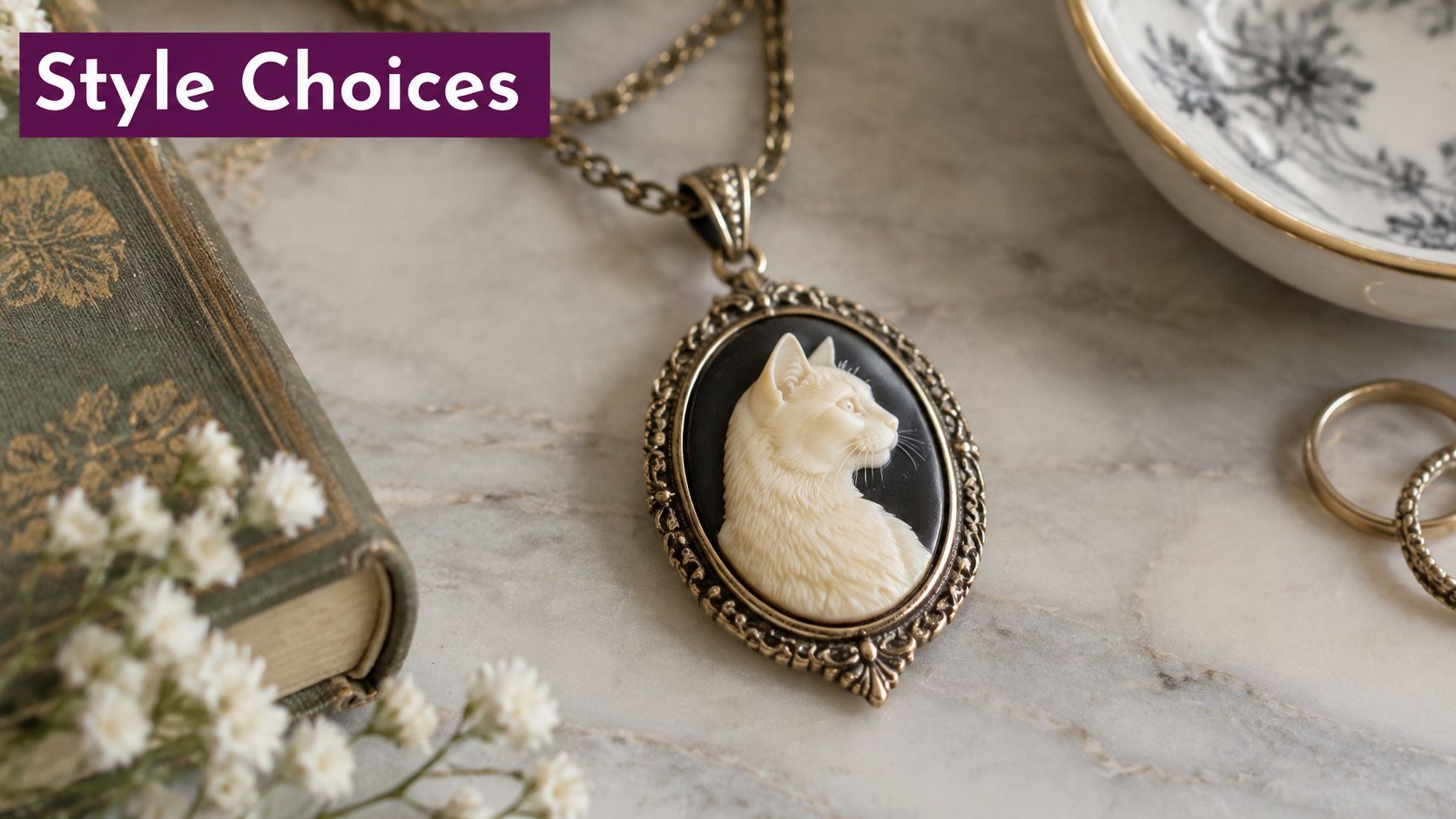
Start with the style most readers want, the classic Victorian profile. A cat's face in side view, chin lifted, ears alert, framed in an oval, reads instantly and pairs with blouses, sweaters, and plain tees. It's formal without being stuffy, which is exactly why it keeps coming back.
This necklace style shows how a dark background makes a pale profile pop.
Pick a Silhouette With a Job
A breed silhouette suits the owner who wants her actual cat, not a generic feline. Longhair volume, a folded ear, a short muzzle, or a famously round chonk outline can carry recognition before any name is added. Keep the shape bold, because tiny breed details disappear at pendant size.
An Egyptian inspired scene places a seated cat above flowering papyrus and gives the piece a story older than fashion. A playful illustrated design goes the other way, with a wink, a tongue blep, or a pun driven pose for parties and cat events. A memorial portrait stays quiet, usually a profile or sleeping curl, and lets the engraving carry the emotion.
If sparkle is part of your comparison, a piece like the 0.58 ct diamond cat pendant shows how stones can frame a feline shape when you want glint rather than carved shadow. Use it as a contrast point, then decide whether you prefer relief or brilliance.
Watch a cameo being worn and turned in light before you commit to a profile depth.
Personalize With Permanence in Mind
Engraving is permanent. Names, initials, and dates on the back turn a pretty pendant into a record, so spell everything twice and confirm the preview. Birthstones and charms are flexible, and modular pieces let you swap elements as your household changes. A photo inspired profile sits between the two, personal at purchase and fixed once made.
Before ordering custom work, confirm preview accuracy, production time, return limits, and whether the design is final once approved. Sellers should state those limits before payment, not after. Our guide to personalized pet remembrance jewelry covers the memorial choices with the sensitivity they deserve.
For a starting point, FloofChonk personalized cat jewelry and its custom cat necklace with a pet photo and optional name or back engraving give you a concrete format to judge against. 😸 The best design isn't the one that photographs best on a shelf. It's the one you'll reach for on an ordinary Tuesday, and Floofie votes for the piece that gets worn every day.
Matching a Cat Cameo to Each Occasion
The right cameo depends on the occasion, and the wrong one announces itself fast. A delicate shell brooch at a playground, a jumbo resin joke pendant in a board meeting, a memorial piece on a flimsy chain, each mismatch creates friction you could've avoided at checkout.
Cat cameo styles matched to occasions
| Occasion | Suggested style | Material to favor | Sizing note |
|---|---|---|---|
| Everyday wear | Small profile on a fine chain | 14K gold or hardstone | Short pendant on a 16 to 18 inch chain |
| Birthday or holiday gift | Personalized initial or breed silhouette | 14K gold or shell | Use an adjustable chain or 18 inch length |
| Memorial | Portrait silhouette with name and dates | Hardstone or 14K gold | Choose a pendant that sits flat against the chest |
| Office or professional wear | Subtle classic cameo brooch | Shell or 14K gold | Keep the brooch small enough to sit flat on a jacket |
| Cat Day or themed event | Bold, humorous or illustrated design | Resin or molded glass | Lightweight pendant that will not snag |
Size for Necks, Jackets, and Real Movement
A 16 to 18 inch chain suits most necks and keeps a small profile visible above common necklines. Longer chains work with fitted tops where the pendant can settle without swinging into desks or seatbelts. If you layer necklaces, give the cameo its own level so chains don't saw across the relief.
Brooches obey different physics. Keep the piece small enough to sit flat on a jacket, with the pin supporting the weight without tilting. Test it on the actual blazer fabric, because a cameo that droops reads as tired no matter how fine the carving is.
For gifts, you usually don't know the recipient's exact neck length or preferred drop. An adjustable chain or a common 18 inch length is the safer pick. For children, parents should choose lightweight pieces with secure clasps and skip fragile shell entirely. Small hands and playgrounds win every argument with delicate carving.
Match Mood as Carefully as Material
Everyday wear rewards restraint. A small hardstone profile on a fine chain survives errands and office light without demanding an outfit built around it. Birthdays and holidays can carry initials, breed silhouettes, and a little theater, because the recipient expects a personal gesture.
Memorials need weight in meaning, not necessarily in grams. A portrait silhouette with a name and dates in hardstone or 14K gold holds sentiment well and sits close to the chest. Office wear calls for a subtle classic brooch, while Cat Day and themed events are your license for bold, funny, illustrated cats in resin or molded glass.
Match the cameo's mood to the occasion's mood. A playful cat suits a party, and a quiet profile suits work.
That's the whole trick, and it's not a trick at all. Buy for the room you'll enter, the fabric you'll pin, and the hands that'll touch it. Get that right and you'll be feline fine. 😻
Care Routine and Your Next Purchase
Care for cat cameo jewelry in the order below and you'll prevent most damage before it starts. The routine takes less time than feeding the cat who inspired the pendant.
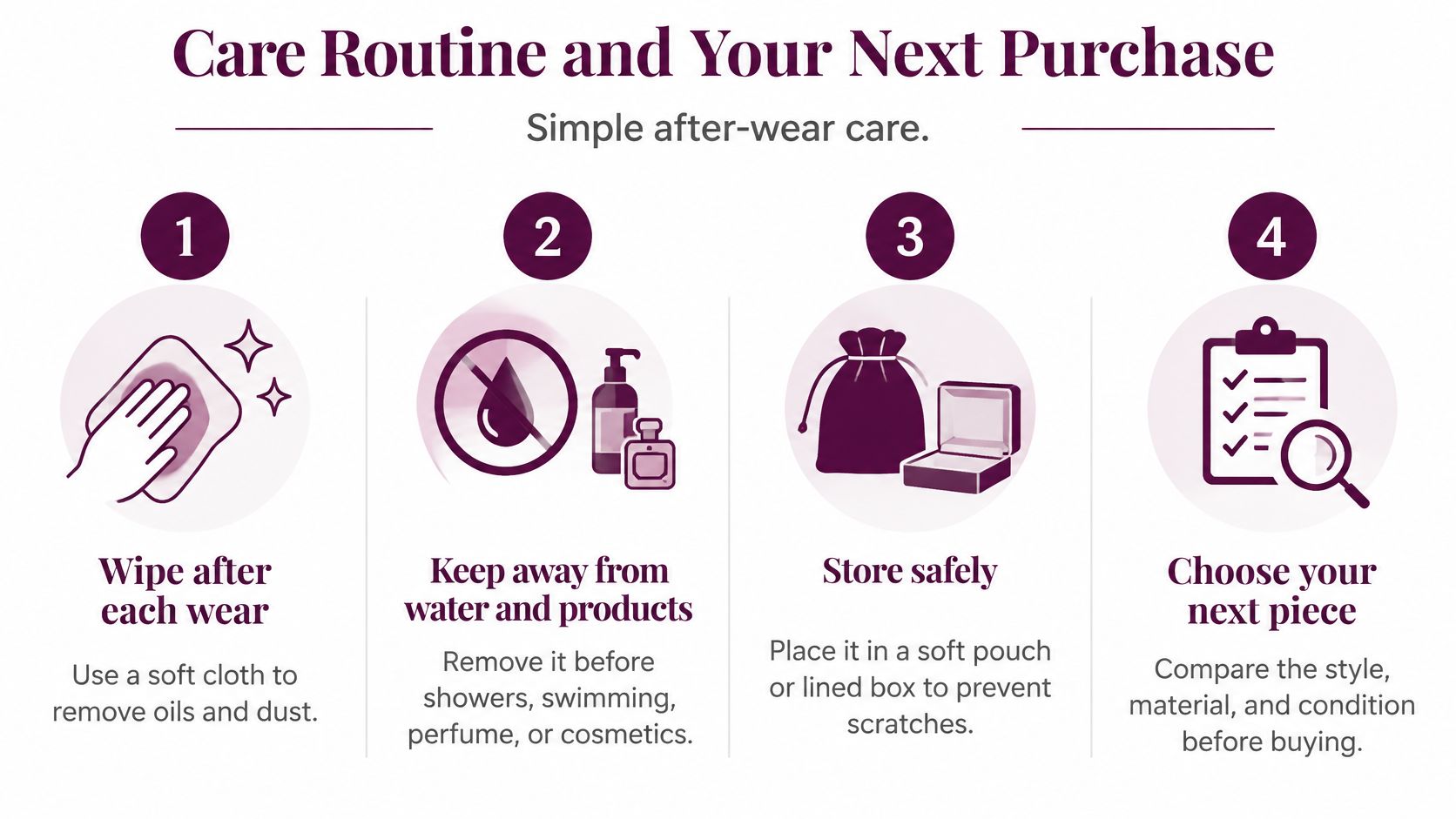
After Every Wear
- Wipe with a soft cloth. Remove skin oils and dust before they settle into the relief.
- Remove before water and products. Take it off for showers, swimming, perfume, and cosmetics.
- Store dry in a soft pouch. Keep it away from humid bathrooms and loose jewelry that can scratch the raised cat.
- Inspect monthly under magnification. Look for broken whiskers, cracks, chips, and loose settings while they're still small.
- Clean only when needed. Use mild soapy water and a soft cloth, and never use ultrasonic cleaners or abrasive polishing.
For broader habits that protect chains and clasps too, these jewelry care tips for everyday wear reinforce the same gentle approach. Gentle isn't vague here. It means no scrubbing pads, no toothpaste experiments, and no mystery dips on carved shell.
Why Shell Gets the Strictest Rules
Shell edges can chip, and small cracks can grow when a piece keeps knocking around in a bag or drawer. Hardstone and 14K gold hold up better to everyday wear, which is why they cost more and forgive more. Material honesty at purchase becomes care honesty at home.
If a shell edge chips, stop wearing the piece. Put it in its pouch and have a jeweler assess it before the damage spreads into the portrait. Continuing to wear a chipped relief is how a repairable edge becomes a missing ear.
Your next purchase should be boring in the best way. Choose one piece for your most frequent occasion, confirm the material and metal from the listing, and check clasp, bail, chain length, and personalization limits before you pay. Then browse FloofChonk cat themed jewelry with that single job in mind instead of collecting maybes.
Floofie approves of a well cared for cameo, a cat who keeps her whiskers, and an owner who reads the spec list before the reviews. 🐾 Buy once, wear often, and store it like you mean it.
Ready to turn your favorite whiskered profile into jewelry you'll love to wear? Explore FloofChonk's cat themed and personalized pieces, compare material, metal, and engraving options, and pick the cameo style that fits your most common occasion. Visit FloofChonk today and let Floofie help you choose a keepsake with claws, charm, and staying power.