
A Guide to Houses for Cats Outdoors

For any cat who spends time outside—whether it's your pampered pet enjoying some supervised sun or a shy community cat you look after—an outdoor cat house is their personal safe space. It’s a critical piece of gear, offering essential protection from rough weather and a secure spot to hide from predators. Think of it less like a box and more like a five-star resort for your favorite neighborhood kitty, just ask our mascot, Floofie! ✨
Why Every Outdoor Cat Needs a Safe Shelter
Welcome, fellow cat guardians! Our Chief Feline Officer, Floofie, is purring with excitement that you're here. 🐾 He's a firm believer that every single cat deserves a safe haven to call their own. An outdoor cat house isn't just a cute lawn accessory; for an outdoor cat, it's vital survival equipment.
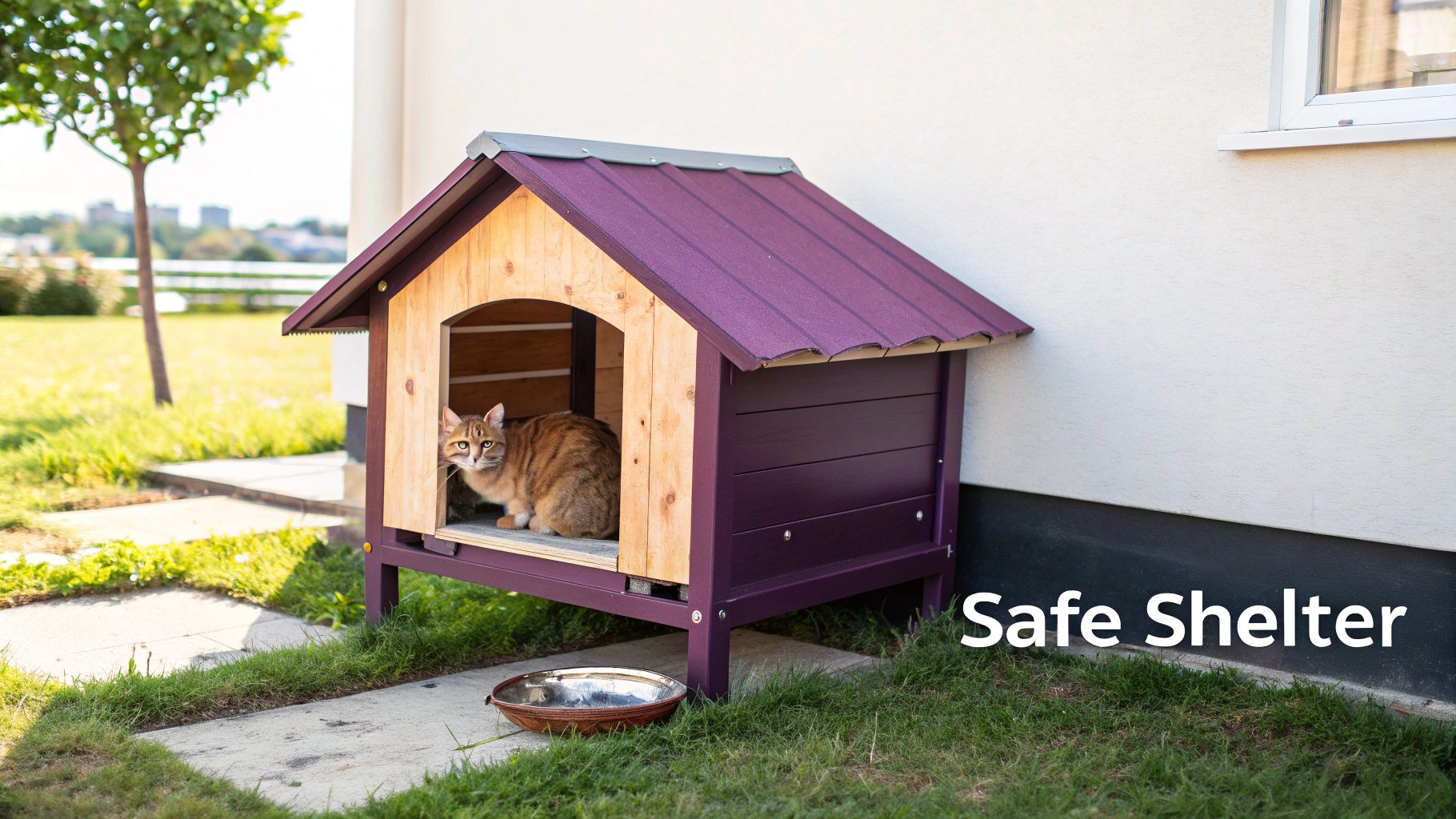
Imagine it as a tiny fortress built just for them. These shelters are specifically designed to be a refuge from unpredictable weather, keeping a cat dry during a downpour and, most importantly, warm when the temperature drops.
More Than Just a Box
Providing one of these special houses for cats outdoors does so much more than just offer basic shelter. It’s really about creating a sense of security and well-being for a cat facing the world's uncertainties every day.
- Weather Warriors: A proper shelter is a cat's best defense against wind, rain, and snow. Even a cat with a thick winter coat needs a dry, insulated place to escape the elements and conserve precious body heat.
- Predator Protection: An outdoor cat is vulnerable to other animals. A sturdy house with a small, cat-sized entrance gives them a secure spot to rest without having to worry about larger animals like raccoons or coyotes.
- A Place to Call Home: For community or feral cats, a permanent shelter provides stability. It becomes a reliable sanctuary they know they can always return to for safety and a good nap.
Floofie’s official stance is that every kitty deserves to be cozy and safe! A dedicated outdoor shelter is one of the most compassionate gifts you can provide for a neighborhood cat, giving them a much better chance at a healthy life.
In this guide, we'll walk you through everything you need to know to choose or build the perfect kitty condo. We’ll cover weatherproof materials, must-have safety features, and the best spots to place it. Let’s pounce right in and give every outdoor cat the comfort they deserve! 💖
Choosing Your Cat's Outdoor Castle: Store-Bought vs DIY
So, you're ready to give an outdoor kitty a safe little haven. That's fantastic! 🥳 The very first hurdle for every cat guardian is deciding whether to buy a ready-made palace or build a custom kingdom from scratch. Our mascot, Floofie, thinks both are totally paw-some, but they definitely serve different needs, budgets, and timelines.
Think of it like deciding between takeout and a home-cooked meal. One is quick, reliable, and gets the job done, while the other lets you add your own personal touch and customize everything. Let's break down the pros and cons of each route.
The Convenience of Store-Bought Cat Houses
If you need a solid shelter set up right meow, a store-bought option is your best friend. These are designed by professionals who’ve already figured out the best ways to ensure durability and weather resistance, which takes a lot of the guesswork out of it for you. You can find everything from charming wooden A-frames to modern insulated pods, all ready to assemble in just a few minutes.
The market for these cozy kitty condos is absolutely booming. The global outdoor cat house and furniture market is actually projected to jump from $1.75 billion to $3.16 billion by 2033, all thanks to a growing focus on pet wellness. You can read more about this growing trend on Business Research Insights. For you, this just means more choices and better features are hitting the market all the time!
- Pros: Super quick setup, professionally designed for safety, and usually made with durable, weatherproof materials.
- Cons: Can be more expensive up front and you don't have much room for custom tweaks.
Floofie's Top Tip: Always look for models with elevated floors and at least two exits. These features are a game-changer for keeping cats dry and giving them a quick escape route if a nosy raccoon decides to stop by!
The Personal Touch of a DIY Shelter
Feeling a bit crafty? Building your own cat house can be an incredibly rewarding weekend project. Going the DIY route gives you total control to customize every single detail, from the exact size to the specific type of insulation you need for your local climate. On top of that, it's often the more budget-friendly option.
There’s a special kind of satisfaction that comes from creating a life-saving space with your own two hands, and it doesn't have to be complicated at all. A simple but sturdy shelter made from a storage bin or some scrap lumber can be just as warm and effective as a fancy store-bought model. If you're looking for a creative spark, check out our guide on building a DIY cat condo for some fun ideas. A simple, well-built shelter can truly make a world of difference for a community cat.
Store-Bought vs DIY Outdoor Cat Houses
Here’s a quick comparison to help you figure out which path is the right one for you and your feline friend.
| Feature | Store-Bought | DIY (Do-It-Yourself) |
|---|---|---|
| Time | Fast! Usually requires minimal assembly. | Slower. Requires planning and construction. |
| Cost | Generally higher initial investment. | Often more affordable, using recycled items. |
| Customization | Limited to available designs and features. | Fully customizable to your needs. |
| Durability | Professionally built for weather resistance. | Varies based on materials and skill. |
At the end of the day, the best choice really boils down to your resources and what matters most to you right now. Whether you click "buy now" on one of our Floofie-approved houses or break out the toolbox, you're taking a wonderful and compassionate step to protect a vulnerable feline. ❤️
Essential Materials for a Cozy and Dry Cat House
When it comes to an outdoor cat house, the materials you choose are everything. Think of it like picking the perfect blanket for a chilly night—it makes all the difference between a shiver and a deep, contented sleep. Our mascot Floofie is pretty clear about his standards: a warm, dry spot is non-negotiable!
The goal here is simple: create a cozy little haven that shields a cat from winter's bite and summer's searing heat.
The structure itself is your starting point. Wood is a classic for a reason; it’s a fantastic natural insulator. On the other paw, modern options like recycled plastic or weather-resistant composites are incredibly easy to clean and won't rot or warp over time. In fact, many of the best store-bought cat houses are made from these durable, low-maintenance materials that can handle whatever the weather throws at them.
This little decision tree can help you figure out if building or buying is the right move for you.
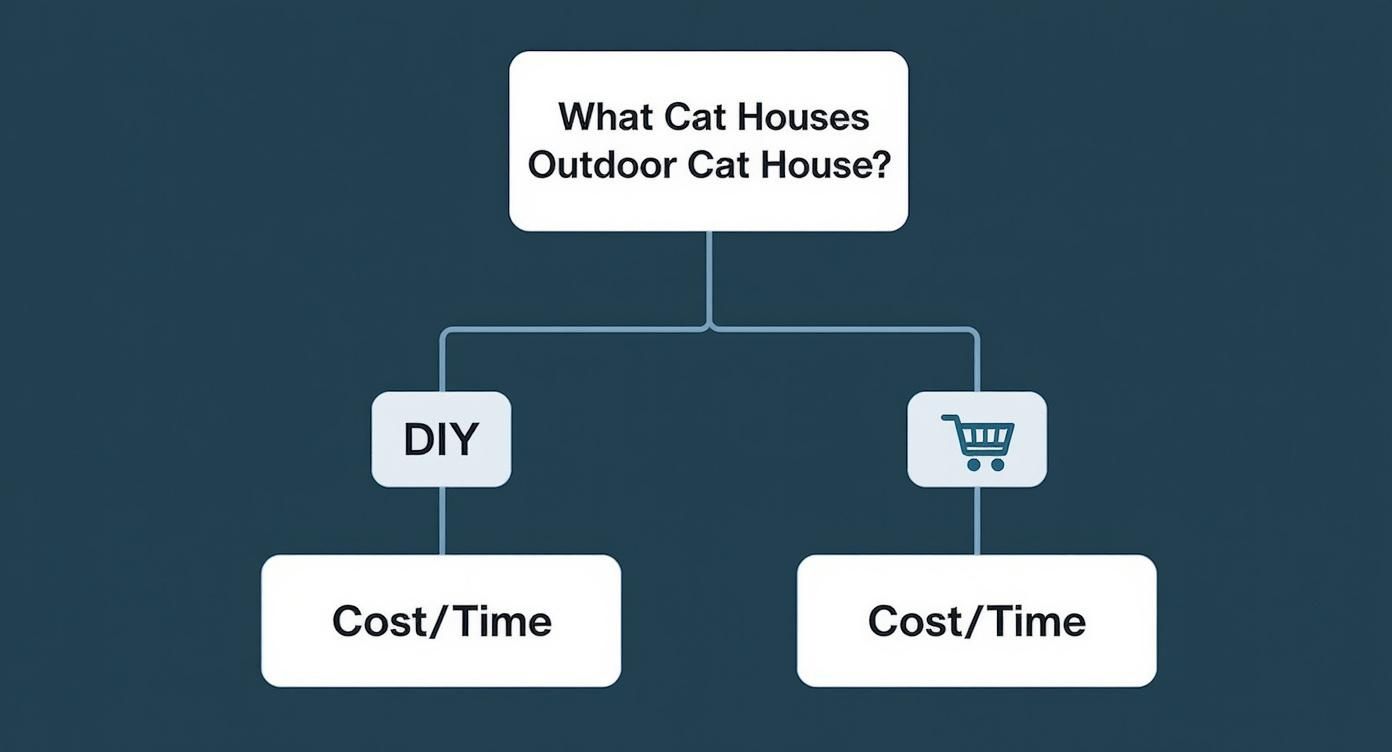
As you can see, buying a pre-made house is faster but usually costs a bit more. A DIY project can save you money, but you'll need to invest your time and effort to get it right.
The Secret to a Toasty Tummy: Insulation
Good insulation is the magic ingredient that turns a simple box into a warm, snug den. It works by trapping the cat’s own body heat, essentially giving them a built-in thermal jacket while they snooze. It’s a total game-changer for cold climates.
Here are a few of the best options out there:
- Foam Board: This stuff is lightweight, easy to cut, and simple to fit along the inner walls and floor. It creates a powerful barrier against the cold.
- Mylar Blankets: You know those shiny "space blankets"? They're amazing at reflecting body heat right back at the source. Tacking these up on the inside walls is like turning the shelter into a personal radiator.
If you’re on a tight budget or just feeling crafty, you can even use layers of thick cardboard for a decent insulation boost. For more fun and affordable projects, check out our guide to making DIY cardboard cat furniture.
Bedding: The Good, The Bad, and The Soggy
Picking the right bedding might be the single most important decision you make for an outdoor shelter. It’s the difference between a warm, dry bed and a dangerously cold, wet one.
The golden rule for outdoor cat shelters is always use straw, never hay. Hay, blankets, and towels act like a sponge, soaking up moisture. In cold weather, that moisture freezes, making a cat even colder. Straw, however, is hollow, which allows cats to burrow down into it and stay warm and dry.
One last thing—do a quick draft check! At night, pop a flashlight inside the shelter and look for any slivers of light peeking through cracks or seams. Seal up any gaps you find with a pet-safe sealant to make sure your kitty’s new home is completely draft-free. A dry, insulated, and draft-proof house is a happy house! 💖
Key Features Every Outdoor Cat House Needs
When you're picking out a palace for your furry overlord, size is a bigger deal than you might think! 📏 It's kind of like Goldilocks trying to find the perfect bed—if the house is too big, it won't trap their body heat, leaving them shivering. But if it’s too small, they'll feel cramped and claustrophobic. Floofie is very particular about his personal space, and it has to be just right.
For a single cat, an interior around 18-by-20 inches is pretty much purrfect. This gives them enough space to stand up and turn around, but it's still snug enough to keep them warm using their own body heat. If you're sheltering a whole clowder of kitties, you'll either need a much larger structure or, even better, a few smaller ones to give everyone their own happy little space.
From Simple Box to Luxury Suite
The real difference between a basic box and a true outdoor sanctuary comes down to the details. There are a few non-negotiable features that elevate a simple shelter into one of the best houses for cats outdoors. These are the small touches that make a massive difference in your cat's safety and comfort.
- Elevated Base: Propping the house up a few inches off the ground on some bricks or a wooden platform is a game-changer. It stops the cold and damp from seeping up from the ground and keeps rain from flooding the entrance during a downpour.
- Protective Overhangs: A small roof overhang above the door acts like a tiny porch. It's a simple feature, but it does a fantastic job of keeping rain and snow from blowing directly inside.
- Escape Doors: This one is a must-have for safety. A second exit gives a cat an immediate escape route if a predator tries to corner them at the main entrance. It can literally be a lifesaver.
"A well-designed cat house isn't just a shelter; it's a fortress of comfort and a safe haven. Features like multiple exits and an elevated floor are the feline equivalent of a state-of-the-art security system."
High-Tech Touches for the Modern Kitty
As more people look for better, safer ways to care for outdoor cats, we're seeing some amazing innovations in cat house design. Premium features that offer next-level security and comfort are becoming more common. Smart designs, better insulation materials, and advanced weatherproofing are really changing the game.
And for those who want to add a little extra luxury, like heating pads or small lights, figuring out how to power them is key. Guides on using systems like solar panels for outdoor equipment can give you great ideas for running power to an outdoor setup without needing an extension cord. From heated beds to tiny porch lights, these upgrades can turn a simple house into a five-star resort your furry friends will absolutely adore. ✨
How to Predator-Proof and Weatherproof Your Cat Shelter
Okay, so you've got a shelter. Now let's turn it into an impenetrable kitty fortress. 🛡️
For any cat braving the great outdoors, safety and comfort are everything. Our mascot, Floofie, is adamant that a secure, cozy hideout isn't just a nice-to-have—it's essential. This means building a little haven that can stand up to both curious predators and nasty weather.
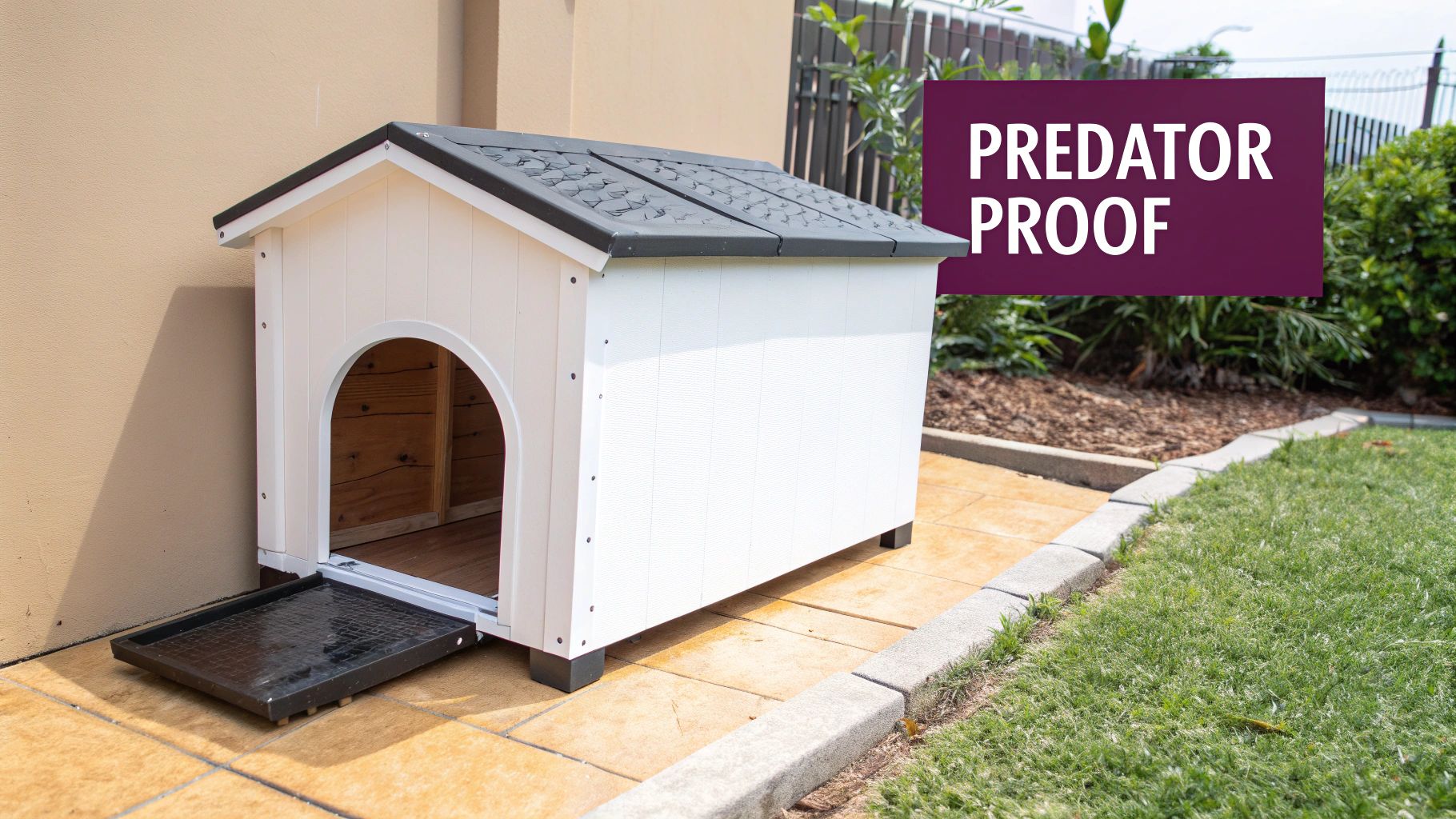
It’s about more than just a roof over their head; it's about giving you peace of mind. A few smart adjustments can make all the difference, turning a good house into a great one.
Fortifying Your Feline's Fortress
Predator-proofing is all about clever design. The goal is to make the shelter super inviting for cats but a frustrating puzzle for larger, unwelcome guests like raccoons or coyotes. It’s a delicate balance, but totally achievable.
Here are the non-negotiables for a predator-proof pad:
- Mind the Gap: The main entrance should be just big enough for a cat to squeeze through, roughly 6 inches wide. This is the perfect size for a kitty to slip in, but it's too snug for most other animals to follow.
- The Escape Hatch: Always, always include a second exit. This is a critical safety feature that gives a cat an instant escape route if a predator tries to block the main door.
- Elevate and Protect: Getting the house off the ground is a game-changer. Simply placing it on a few bricks or a small platform keeps it away from damp, cold ground and makes it a less interesting target for critters sniffing around.
These small details are what truly make houses for cats outdoors a safe retreat rather than just a box. It's a simple way to give them a real sanctuary.
Weatherproofing for All Seasons
As Floofie always says, a soggy bed is a major no-no! 🥶 Weatherproofing ensures the shelter stays dry and warm, no matter what the forecast throws at it. A well-prepared house can handle rain, wind, and snow with ease.
A dry cat is a happy cat! Sealing seams, elevating the base, and facing the entrance away from the wind are simple steps that create a five-star, all-weather resort for any outdoor kitty.
If you're setting up a permanent shelter in a cold climate, making it stable is key. Securing the base properly prevents it from shifting around during those freeze-thaw cycles that can wreak havoc on outdoor structures. For a deeper dive into how ground conditions can affect your setup, understanding frost depth is super helpful.
Finally, take a tube of pet-safe, non-toxic sealant and go over any cracks or seams. This one little step locks out drafts and moisture, making the inside much cozier.
For an even safer outdoor experience, you could also explore an attached, enclosed patio. Check out our guide on building a catio for a sliding glass door to give your cat the best of both worlds—fresh air and total security.
Finding the Perfect Spot for Your Cat House
You’ve picked out one of the most amazing houses for cats outdoors available, but your job isn't quite done. 🏡 Even the coziest, most insulated kitty condo won't do much good if it's plopped down in the wrong spot. Our own mascot, Floofie, insists you need to think like a cat to find the purrfect piece of feline real estate.
Location is everything, especially for a shy or feral cat. The right placement can mean the difference between a beloved sanctuary and an untouched box. They crave a spot that feels hidden and secure, far away from the comings and goings of people, noisy kids, or the neighbor's dog. A quiet corner of your yard, tucked away under a deck, or nestled behind some sturdy bushes will make them feel infinitely safer.
Choosing Prime Feline Real Estate
Cats are natural surveyors, always keeping a cautious eye on their territory. The ideal location gives them a great vantage point while keeping them safely concealed from view. Think of it as their own personal secret hideout.
- Quiet is Key: First things first, look for a low-traffic area. Cats are easily startled, so a calm, quiet spot is a must if you want them to actually relax and use the shelter.
- Protection from the Elements: Try to face the entrance away from the direction of prevailing winds. This simple step helps keep biting winds, rain, and snow from blowing directly inside. If you can, position it to catch the warm morning sun but stay shaded during the peak heat of the afternoon. ☀️
- A Room with a View: The ultimate goal is to place the house so the cat can see what's going on around them without being easily spotted themselves.
Floofie’s Pro Tip: A cat feels most secure when their back is against something solid, like a wall or a thick bush. By positioning the shelter with the entrance facing out from a protective structure, you give them a clear line of sight to spot any approaching visitors—whether they're friend or foe.
Finally, while it's a good idea to have the shelter near their usual feeding spot, don't place them right next to each other. Keeping food a short distance away helps keep their cozy den clean and stops food scents from attracting pests right to their front door. 🐾
Common Questions About Outdoor Cat Houses
Still have some questions buzzing around? We get it. Making sure your furry friends are safe and sound is a big deal. Our mascot, Floofie, and I have rounded up some of the most common queries we hear about outdoor cat shelters to help you get everything just right.
Let's dive in!
What Is the Best Bedding for an Outdoor Cat House?
When it comes to bedding, straw is the undisputed champion. Hands down. Unlike hay or blankets, which act like a sponge and soak up every bit of moisture, straw is hollow. This unique structure lets cats burrow down deep, trapping their own body heat and staying wonderfully warm and dry.
Quick Tip: Avoid using towels, hay, or blankets at all costs! They get damp, freeze solid in cold weather, and can dangerously lower a cat’s body temperature. Stick with straw—it's the safest, coziest option for any kitty braving the elements.
How Can I Get a Feral Cat to Use the Shelter?
Patience is your best friend here. Start by placing the shelter in a quiet, low-traffic spot where you’ve already seen the cat hanging out. A little familiarity goes a long way. For an extra dose of security, face the entrance toward a wall or a bush.
To make it more inviting, sprinkle a little catnip or leave a few tasty treats near the entrance. Then, the most important part: give them space. Let them discover their new five-star resort on their own terms. 😽
Should I Put Food and Water Inside the Cat House?
It’s actually best to keep food and water a short distance away from the shelter, not inside it. Spills are inevitable, and they can make the bedding wet and chilly, which completely defeats the purpose of their cozy den.
Plus, the scent of food can be an open invitation for unwanted visitors like raccoons, drawing them right to the cat's safe space. Setting up a separate, nearby feeding station keeps their sleeping quarters clean, dry, and secure.
Ready to create the ultimate safe haven for your neighborhood kitties? Check out the amazing, Floofie-approved cat gear at FloofChonk and find everything you need to keep your feline friends happy and protected! Explore the collection at FloofChonk.com.