Personalized Cat Bracelet Guide for True Cat Lovers

You're scrolling for a gift that says “I know exactly how much your cat means to you”, not “I panic-bought a paw-print trinket at midnight.” Floofie, FloofChonk's chunky orange mascot, would understand. He'd head-butt the laptop, sit on the search results, and somehow add three bracelets and a cat-shaped candle to the cart.
A personalized cat bracelet can be a tiny piece of wearable biography. It might carry a name, a gotcha day, a paw print, a portrait, or a birthstone. But before Floofie starts purring at checkout, you'll want clear answers about format, metal safety, sizing, engraving quality, and the slightly thorny world of custom-item returns.
Meet Floofie and the Hunt for the Purr-Fect Personalized Cat Bracelet
Floofie's midnight shopping mission begins with a familiar dilemma. You've found a bracelet with a cute cat charm, but it feels generic. Another has space for engraving, yet the listing barely explains the metal. A third promises photo personalization, though you're wondering whether your cat's face will still look recognizable after daily wear.
That tension matters. Sentiment gets you interested, but construction determines whether the gift stays wearable. A bracelet can be emotionally perfect and still disappoint if the clasp pinches, the charm feels heavy, or the engraving becomes difficult to read.
Floofie's imaginary checklist has four big questions:
- What kind of personalization fits the recipient? An understated name engraving feels different from a bracelet crowded with charms.
- Will the metal behave well against skin? Nickel release matters, especially for people who already react to inexpensive jewelry.
- Will the bracelet fit comfortably? A beautiful bangle that spins constantly, or a tight chain that catches fur, won't get much wear.
- What happens if something goes wrong? Custom pieces often have stricter return terms than standard jewelry.
Pet-linked jewelry also has a real commercial foundation. An independent market report estimated the global pet keepsake jewelry market at USD 1.42 billion in 2024, with a projected rise to USD 2.97 billion by 2033 at a CAGR of 8.5%. The same report identified cat owners as the second-largest end-user group. The market overview supports what cat people already know: a keepsake tied to a beloved animal can be meaningful, giftable, and commercially substantial.
Floofie's rule: If the product page tells you more about the cat graphic than the metal, clasp, dimensions, and return terms, keep investigating.
For an extra-silly gift pairing, a surprise ring candle product can add a playful reveal beside a more lasting bracelet. The candle brings the mischief. The personalized jewelry carries the memory.
The Four Main Types of Personalized Cat Bracelets
The right format depends on what you want the bracelet to communicate. Start with the emotional job, then choose the decoration.
Engraved bracelets for quiet meaning
Engraving suits the minimalist who wants a private reminder rather than a loud cat statement. A flat heart cuff might carry “Miso” on the outside and a tiny paw print on the inner band. A name plus adoption date can fit neatly on a smooth tag, while a short memorial phrase may work better across two sides.
Laser engraving is especially useful for small text and repeatable symbols. Keep the message short enough to preserve clean spacing. A crowded line of names may look touching in the order form but become visually muddy on a narrow plate.
Charm bracelets for a whole clowder
Charms work for collectors and expressive gift recipients. Choose a dangling cat silhouette for the main companion, then add a second charm for another pet, a heart for the human, or a star for a memorial detail.
Charm designs are also easier to expand later than fixed engravings. If the household adopts another cat, you can often add a new charm instead of replacing the bracelet. Retailers who study merchandising charm bracelets for shops pay close attention to that mix-and-match appeal because each added symbol can tell part of the owner's story.
Photo bracelets for memory keepers
Photo personalization is the most literal option. A cat portrait can be transferred to a metal or resin plate, giving the wearer a visual connection instead of relying on text alone.
Choose a clear, well-lit image with strong contrast and a simple background. Ask how the image is applied and protected, because a printed or sublimated surface can fade sooner than an engraving when exposed to abrasion, water, or sunlight. Photo formats are lovely for memorial gifts, but they need realistic expectations about maintenance.
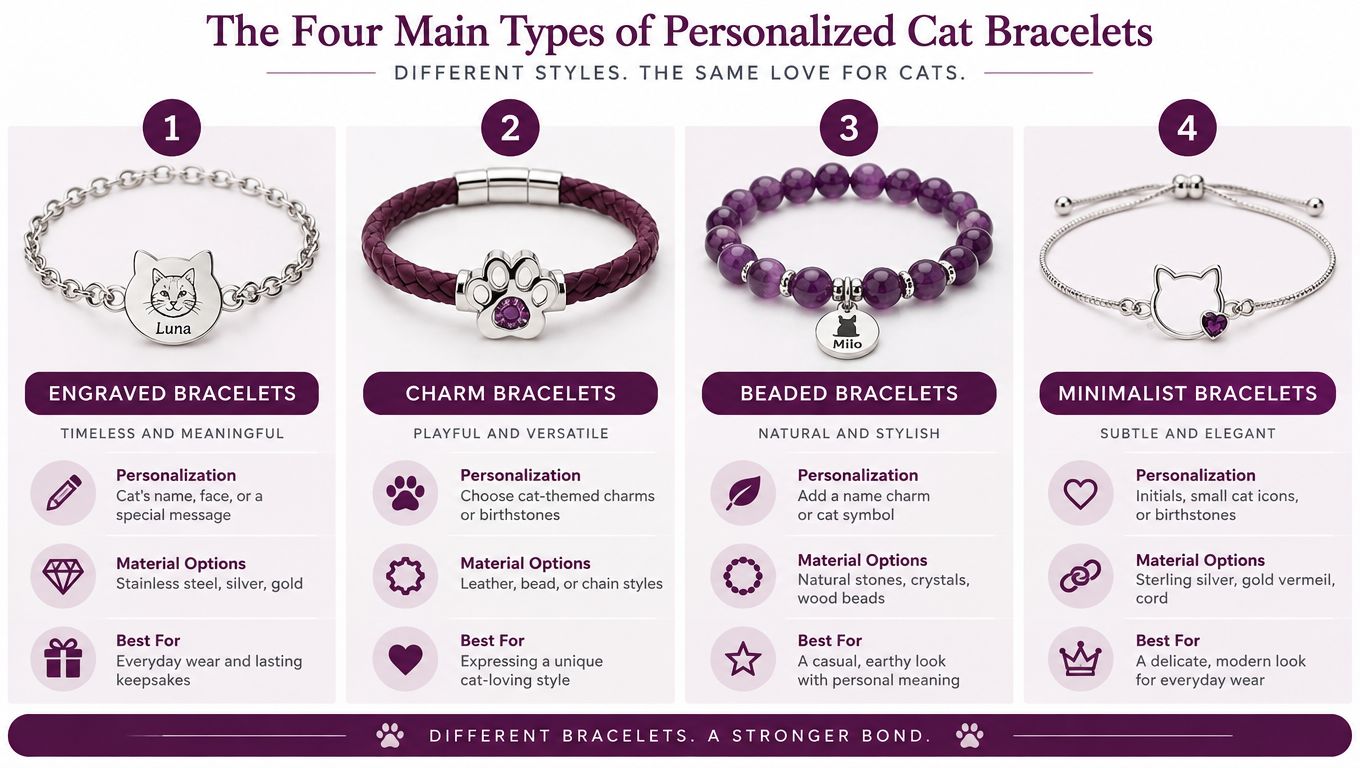
Birthstone bracelets for milestones
A birthstone connects the bracelet to a month, birthday, gotcha day, or another meaningful occasion. You might pair a stone associated with the owner's birth month with the cat's name, or choose the month the cat came home.
Birthstones suit milestone gifting because the color adds symbolism without requiring a long inscription. They also combine well with restrained engraving. Engraving plus one charm or one birthstone usually creates a balanced design. Adding every available option may turn Floofie's elegant wrist accessory into a tiny jewelry junk drawer.
Materials and Durability That Actually Hold Up
Material choice affects comfort, corrosion resistance, engraving behavior, and the bracelet's long-term appearance. For broad online retail, 316L stainless steel is a practical baseline because it resists corrosion and supports precise laser engraving when properly finished.
The important comparison isn't “stainless versus not stainless.” It's the grade and the surface treatment. A cited benchmark reports nickel release of about 0.52 to 0.87 µg/cm²/week for 304 stainless steel, compared with roughly 0.02 to 0.15 µg/cm²/week for 316L. Supplier guidance on pet memorial jewelry explains why that difference matters for prolonged skin contact and sensitive users.
EU and UK-style rules set a 0.5 µg per cm² per week nickel-release limit for jewelry in direct and prolonged skin contact, and a 0.05% by-weight lead limit for jewelry. Those requirements cover bracelets, so sellers should document material and compliance rather than tossing “hypoallergenic” into a product title without evidence. The jewelry safety guidance gives the relevant limits.
Metal and Material Comparison for Personalized Cat Bracelets
| Material | Nickel Release (µg/cm²/week) | Durability | Engraving Result | Typical Price Tier |
|---|---|---|---|---|
| 316L stainless steel | Roughly 0.02 to 0.15 | High corrosion resistance and suitable for everyday wear | Precise laser engraving on smooth surfaces | Mid-range |
| 304 stainless steel | About 0.52 to 0.87 in the cited benchmark | Durable, but less suitable for sensitive prolonged skin contact | Engravable, with grade and finish affecting the result | Entry to mid-range |
| Sterling silver | Not specified in the verified data | Attractive but prone to tarnishing and needs polishing | Excellent for detailed work | Mid-range |
| Titanium | Not specified in the verified data | Lightweight and corrosion resistant | Suitable, though hardness can affect detail | Mid to premium |
| Resin or composite | Not specified in the verified data | More vulnerable to scratches, heat, and fading | Flexible for imagery, but less robust than metal | Entry to mid-range |
Sterling silver gives a classic look and responds beautifully to detailed work, but it needs more care. Titanium is appealing when lightness matters. If gemstones enter the design, use the types of gemstones for jewelry as a starting point for thinking about hardness, color, and everyday-wear suitability.
Engraving geometry matters as much as the metal. Expert guidance places durable small-format laser engraving around 0.05 to 0.15 mm deep, a range discussed in stainless steel engraving guidance. Shallow marks can wear through abrasion, while overly deep cuts may leave rough edges or weaken narrow links.
Engineering detail: Put the inscription on a flat or gently curved tag, preserve readable stroke width, and avoid packing a paw print with too many tiny lines.
Getting the Right Size and Fit on Your Wrist
Measure before you order. Wrap a soft tape around the wrist where the bracelet will sit, or use a paper strip, mark the overlap, and measure that strip against a ruler. Keep the measurement level instead of angling it around the wrist bone.
Add room according to the desired feel:
- Tight fit: Add 0.5 cm for a close silhouette.
- Comfort fit: Add 1 cm for everyday movement.
- Loose fit: Add 1.5 to 2 cm for a relaxed drape or several charms.
Common bracelet listings often group women's sizes around 5.5 to 6.5 inches and men's sizes around 6.5 to 7.5 inches, but those ranges are only a starting point. Wrist shape, bracelet width, and charm weight matter more than the label. A heavier charm cluster needs more breathing room, while a slim cuff may feel comfortable with less.
Clasp style changes the wearing experience:
- Lobster clasp: A curious little paw that holds securely but may be fiddly for limited dexterity.
- Toggle clasp: Like a kitten stretching into a yawn, decorative and easy to handle once positioned.
- Box clasp: Neat and structured, useful for a more formal bracelet.
- Magnetic clasp: Convenient, but check the seller's security design before choosing it for active wear.
- Stretch bracelet: A flexible tail that slips over the hand, though elastic can eventually fatigue.
Wrist Size to Bracelet Length Reference
| Wrist Measurement | Tight Fit (+0.5 cm) | Comfort Fit (+1 cm) | Loose Fit (+1.5 to 2 cm) |
|---|---|---|---|
| 14 cm | 14.5 cm | 15 cm | 15.5 to 16 cm |
| 15 cm | 15.5 cm | 16 cm | 16.5 to 17 cm |
| 16 cm | 16.5 cm | 17 cm | 17.5 to 18 cm |
| 17 cm | 17.5 cm | 18 cm | 18.5 to 19 cm |
| 18 cm | 18.5 cm | 19 cm | 19.5 to 20 cm |
Engraved cuffs and fixed bangles rarely resize gracefully. Charm bracelets usually offer more flexibility because links or charms can sometimes be added or removed.
How the Ordering and Customization Process Works
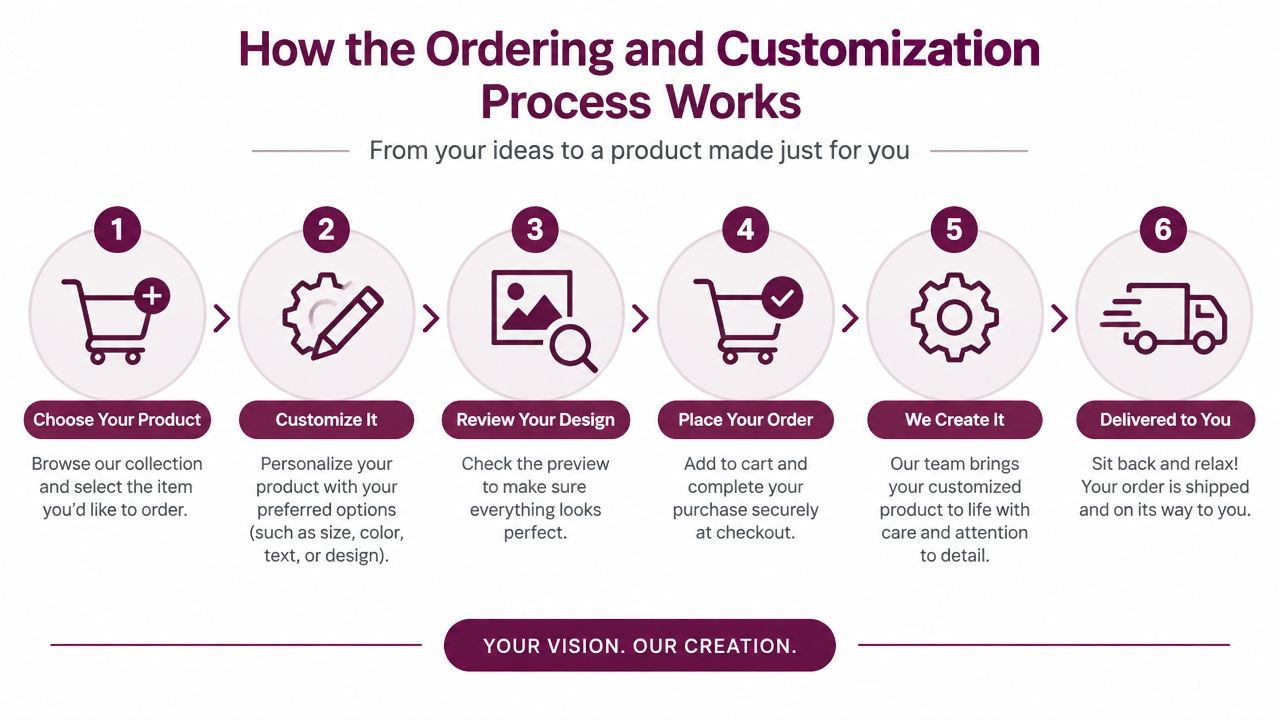
Custom jewelry is easier to manage when you treat the order like a small design project. The emotional part is Floofie-approved. The practical part needs careful paws.
Start with the listing, not the inscription
Browse the product page and identify the base bracelet first. Check the material, finish, bracelet dimensions, clasp, personalization area, and whether the seller shows a real proof. Then choose the format, such as engraved text, a photo upload, a charm, or a birthstone.
Enter details exactly as you want them produced. Pay attention to capitalization, punctuation, dates, font limits, and character restrictions. A short name may fit in a bold typeface, while a longer memorial message may need a smaller font or a second surface.
The 3-letter monogram guide can help when initials suit the recipient better than a full name. For broader pet-accessory planning, this guide to custom dog accessories offers useful inspiration beyond cat-specific pieces.
Proofread the proof
The digital proof is the moment to slow down. Spelling mistakes, paw-print placement, and charm orientation can all become permanent once production begins.
Use a simple review:
- Read every character aloud.
- Compare the cat's name with the original message.
- Check whether the front and back are reversed.
- Confirm the font remains legible at bracelet size.
- Ask whether the proof shows the actual layout or only a generic mockup.
Sellers may limit free revisions, and rushed approvals can create extra work or rush fees. Ask how many revisions are included before confirming. Production timing also varies by construction. Stock engraving may take 3 to 7 days, photo inlays 10 to 14 days, and hand-stamped or gold-filled pieces 14 to 21 days, according to the ordering assumptions for this guide.
Don't confuse production time with delivery time. Confirm both, especially for a birthday or memorial date. When the package arrives, photograph the unopened parcel, the bracelet, the engraving, and any defect before wearing it. Those images create a clear record if the item differs from the approved proof.
Price Ranges and Whether Personalization Is Worth the Premium
A custom charge only makes sense when it reflects real work or better materials. The word “personalized” alone doesn't tell you whether you're paying for precision, labor, a stronger metal, or a more profitable listing.
The market can be viewed in broad tiers, but exact pricing varies by seller, region, finish, and design complexity.
Price Tier Comparison for Personalized Cat Bracelets
| Price Range | Typical Material | Personalization Method | Worth the Premium? |
|---|---|---|---|
| $15 to $30 | Alloy or plated metal | Basic laser engraving | Only if the finish and construction are clearly disclosed |
| $30 to $60 | 316L stainless steel or sterling silver | Engraving, charm, or photo inlay | Often reasonable when the base material is verified |
| $60 to $120 | 14k gold-filled or solid silver | Deeper engraving or more involved customization | More defensible when labor and material quality are visible |
| $120 to $300+ | Gold or platinum | Fine jewelry work or custom cat portraiture | Appropriate for precious-metal construction and specialist craftsmanship |
The maker's workload differs by method. A basic laser engraving mainly consumes setup and machine time. A photo inlay or resin dome involves image preparation and finishing. Hand-stamping requires manual alignment and labor, with a higher risk of variation that many buyers value as part of the craft.
Personalization is important to many jewelry shoppers, but it isn't universal. One industry report says nearly 70% of respondents consider personalization important when buying jewelry, while another reports that 63% of millennials and Gen Z prefer brands offering customization. A separate study recorded only 50.4% completion on a jewelry personalization questionnaire, which points to a practical truth: people like the idea of customization, but complicated decisions can interrupt checkout. The industry research chart supports that distinction.
Buyer rule: Pay for metal weight, surface quality, and engraving depth, not the word “custom.”
A low-priced plated bracelet with a disproportionate “custom cat” surcharge deserves scrutiny. Ask what changes physically, what labor the seller performs, and whether the personalization can survive the way the recipient typically wears jewelry.
Care, Maintenance, and the Real Return Policy Story
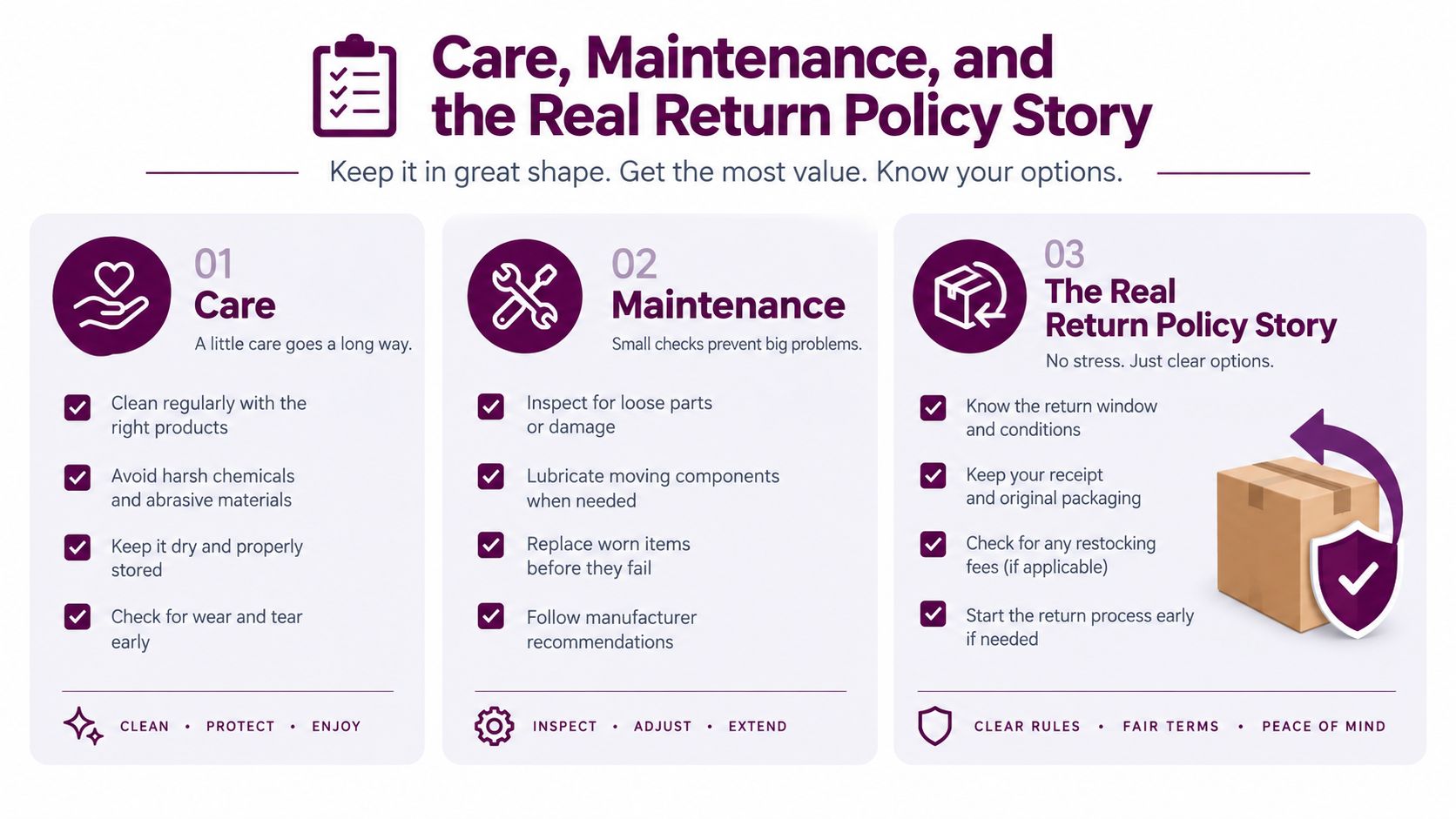
A personalized bracelet needs a routine, not a shrine. For daily wear, wipe it with a soft cloth weekly and clean it after beach or pool exposure. Mild soap and water work for many metal bracelets, but avoid chlorine, bleach, ammonia, abrasive pads, and harsh chemical dips.
Keep ultrasonic baths away from leather or pearl strands, and use extra caution around photo surfaces, resin, coatings, and delicate settings. Engraved recesses collect skin oils and residue, so use a soft brush only when the material and seller's care guidance allow it.
A simple care rhythm
- After wear: Wipe away sweat, lotion, and moisture.
- Weekly: Clean a daily-wear metal bracelet gently with mild soap and a soft cloth.
- After swimming: Rinse appropriately, dry completely, and inspect the clasp.
- During storage: Use a separate soft pouch so harder stones or metal edges don't scratch the bracelet.
- For sterling silver: Polish when tarnish appears, avoiding aggressive rubbing over the engraved area.
- For 316L stainless steel: Use light cleaning rather than frequent polishing, since the surface generally needs less intervention.
Plated finishes need special care because the coating can wear through at contact points. Resin and printed photo areas also benefit from protection from direct sunlight, heat, and rough surfaces.
Custom returns need careful reading
Personalized items are often excluded from standard return policies because the seller can't readily resell a bracelet engraved for one person. A custom jewelry retail guide describes that common approach, while policies vary for semi-custom products.
Blue Nile states that personalized jewelry and custom orders aren't eligible for return or exchange in its returns policy. Tiffany & Co. similarly excludes personalized, altered, or engraved items from return or exchange. Read the exact seller policy before submitting the inscription, not after the bracelet arrives.
Ask these questions before checkout:
- Proof window: How long can you request corrections?
- Misspelling remedy: Will the seller remake an item produced incorrectly?
- Clasp failure: Does the policy offer repair or replacement?
- Fees: Are restocking or customization fees deducted?
- Shipping: Who pays return shipping for a defect?
- Documentation: Should you photograph the parcel before opening it?
Gifting Tips, Smart Questions, and Floofie's Final Meow
Choose the format by personality. A photo bracelet suits the sentimental recipient who wants a visible portrait. A birthstone works for a birthday, gotcha day, or milestone. Engraving fits someone who prefers understated jewelry, while a charm bracelet suits the person whose wrist already has a small parade of meaningful objects.
Check the wearer's lifestyle before choosing the finish. Someone who washes hands frequently may prefer a corrosion-resistant metal and a secure clasp. Someone with sensitive skin should ask for the exact alloy and surface-finish details rather than relying only on a “hypoallergenic” label. The personalized cat lover gifts collection can help you compare cat-centered keepsake ideas before settling on a bracelet.
Ten questions to ask before ordering
- How long is production? Confirm the making time and shipping time separately.
- What fonts fit? Ask whether the chosen font remains readable at the engraving size.
- How many characters fit? Don't assume the text box accepts the full message.
- Can children wear it? Verify available dimensions and clasp security for a smaller wrist.
- Is water exposure acceptable? Ask specifically about pools, showers, salt water, and photo surfaces.
- How long will plating last? Request care guidance and information about the coating.
- Can an engraved bracelet be resized? Fixed cuffs and bangles may have limited options.
- Can you add charms later? This matters if the family may grow.
- What happens after a production error? Get the remake or repair policy in writing.
- Can you edit personalization later? Make changes before production, not after the engraving machine has made its tiny permanent mark.
For a memorial inscription, specificity beats vague sentiment. Consider a name with a date, a paw-print symbol with “Always Near,” or a short phrase tied to the cat's personality, such as “Window Watcher” or “Treat Inspector.” A whisker-count reference can be charming for a living cat, while a memorial bracelet may call for a name and meaningful date instead.
Floofie's final meow is simple: order early, check the proof with both eyes open, and choose the bracelet with the same care you'd use when choosing a cat. Quality should feel thoughtful before it ever reaches the paw-shaped gift box.
FloofChonk offers cat-focused accessories and personalized jewelry options, including an Engravable Heart Cuff Bracelet and custom cat jewelry for meaningful names, symbols, and pet-inspired designs. Visit FloofChonk to find a keepsake that lets your favorite cat stay close, even when Floofie insists on sitting in the shipping box.