
What Does Catnip Do to Cats? A Guide to Feline Fun 🥳

Ever wondered why a tiny pinch of green flakes can turn your sophisticated, aloof feline into a silly, rolling furball? The short answer is pure, unadulterated, plant-powered joy! It's all thanks to a magical compound that triggers a wave of euphoria in your cat's brain, basically a special invitation to their very own kitty disco. 🕺 Our mascot, Floofie, considers himself a leading expert on the stuff!
The Science Behind Your Cat's Catnip Craze
Watching a cat discover catnip for the first time is one of life’s simple pleasures. One moment they're a dignified fluffball judging you from across the room, and the next they’re rolling, rubbing, and purring like they just won the lottery. This hilarious transformation isn't sorcery; it's pure kitty chemistry!
The culprit behind this adorable chaos is a plant from the mint family, Nepeta cataria, better known by its stage name: catnip. Our mascot, Floofie, gives it two enthusiastic paws up. But what’s really going on in that furry little head of theirs?
The Nepetalactone Effect
The secret ingredient that drives cats absolutely bonkers is a powerful molecule called nepetalactone. When your cat takes a whiff of catnip, this compound zips up their nose, binds to special receptors, and sends a flood of happy signals straight to their brain.
Think of it like your cat smelling their favorite treat ever, but instead of just making them hungry, it makes them hilariously goofy and blissed-out. Biologically, nepetalactone works a lot like a pheromone, tapping directly into a cat's primal brain wiring. This is why around 60% of cats have such a strong, immediate reaction.
The "high" usually lasts for about 10 to 15 minutes before the magic wears off and they return to their regularly scheduled napping.
This euphoric response is a completely natural and safe experience. It’s just a short-lived burst of fun that provides excellent mental and physical stimulation for your furry friend.
A Symphony of Silly Behaviors
Once the nepetalactone kicks in, you can expect a whole variety of delightful reactions. Every cat has their own unique style, but here are some of the classic moves you might witness during a catnip party:
- Intense Sniffing and Licking: The initial investigation is always very serious business.
- Head Shaking and Chin Rubbing: They'll often rub their faces all over the catnip source, trying to get as much of that wonderful scent as possible.
- Rolling and Tumbling: Get ready for pure bliss! Many cats will flop over and roll around on their backs, wriggling with absolute delight. 😹
- The Zoomies: Sudden, wild bursts of energy are common. Prepare for your cat to dash around the room like their tail is on fire.
For a deeper dive into these quirky behaviors, be sure to check out our guide on why cats go crazy with catnip. It's the purr-fect way to become a true catnip connoisseur.
Why Some Cats Go Wild and Others Don't Care
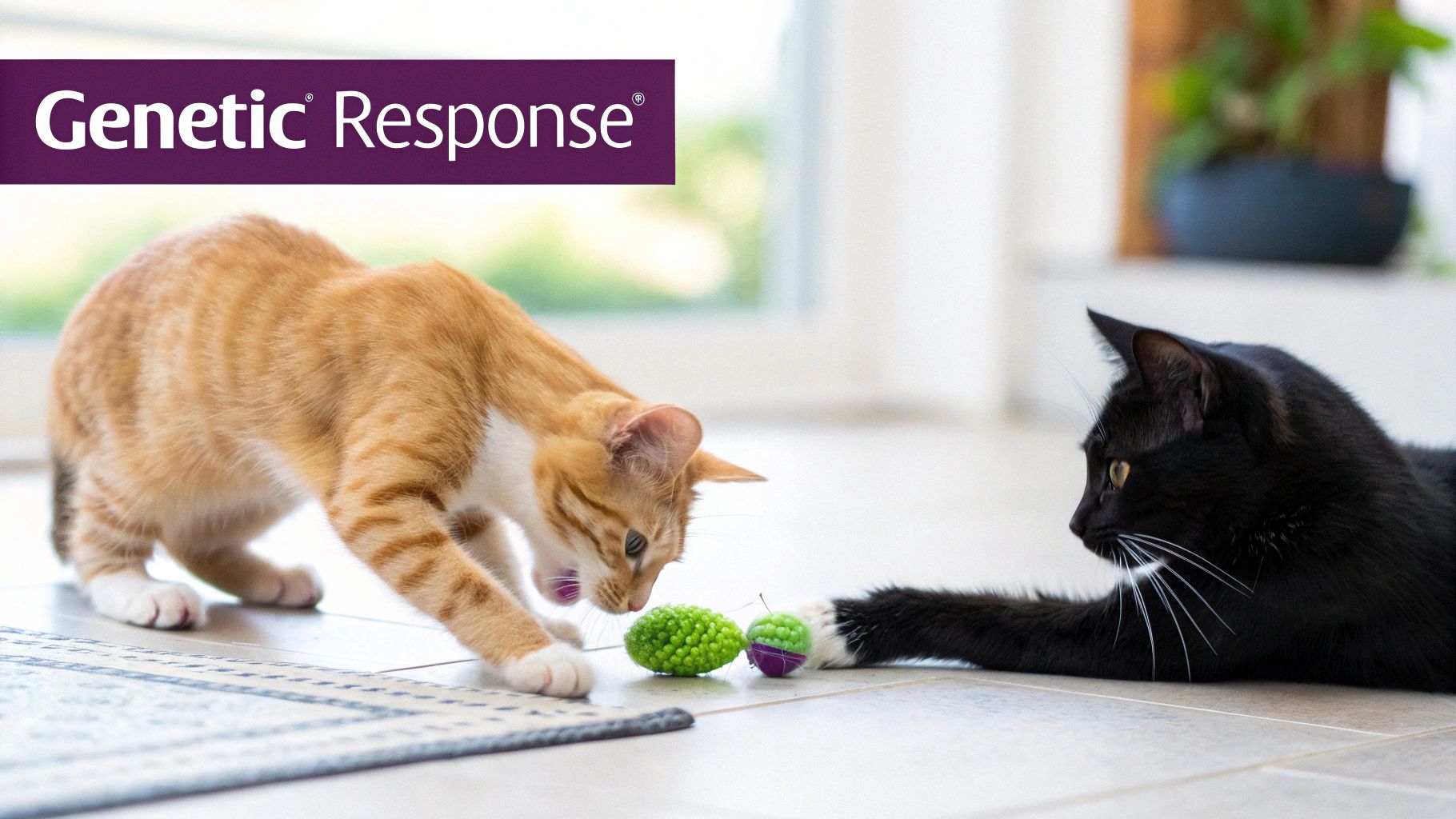
Ever excitedly presented your kitty with a brand-new, top-shelf catnip toy, only to be met with a bored blink and a dismissive tail flick? 🙄 Don't take it purr-sonally! If your cat seems completely immune to the charms of this magical herb, they aren't a party pooper—it all comes down to their genetics.
That wild, goofy reaction many of us love to see is actually hardwired right into their DNA. Think of it like having blue eyes or a fluffy tail; sensitivity to catnip is an inherited trait, passed down from their parents. Our mascot, Floofie, definitely won that genetic lottery and is a card-carrying member of the catnip fan club!
The Genetic Lottery of Catnip Sensitivity
So, what does catnip do to cats that don't seem to react? Absolutely nothing! It’s all thanks to a specific "catnip gene." If a cat doesn't inherit this gene from their parents, the nepetalactone molecule we talked about earlier simply doesn't register in their brain.
Modern surveys show that roughly 60–70% of domestic cats have a noticeable reaction to catnip. In a typical multi-cat household, that means three or four out of every five cats might go wild, while the rest remain totally indifferent. Since sensitivity seems to be a dominant genetic trait, if just one parent cat responds, their kittens have a pretty high chance of responding, too! You can discover more insights about these genetic links from the experts.
If your kitty is one of the stoic ones who doesn't care for the 'nip, it's the perfect chance to find other ways to play. Why not try our Floofie's Favorite Fish Kicker Toy, which is a blast with or without a sprinkle of catnip!
Age Plays a Paws-itively Huge Role
Genetics aren't the only piece of the puzzle; a cat's age is also a huge factor. If you've ever tried to give catnip to a tiny kitten, you probably got that same unimpressed stare. That’s because the catnip response doesn't develop right away.
Most kittens won't react to catnip until they are between six and twelve months old. Their little brains simply haven't matured enough yet to process those nepetalactone signals.
So, if your kitten ignores that new catnip mouse, just be patient! Tuck it away for a few months and try again once they're a bit older. You might be surprised to find you have a true catnip aficionado on your hands after all. 😻 Understanding this genetic and developmental lottery helps you tailor playtime perfectly to your cat's unique personality and age.
Using Catnip Safely for Feline Enrichment
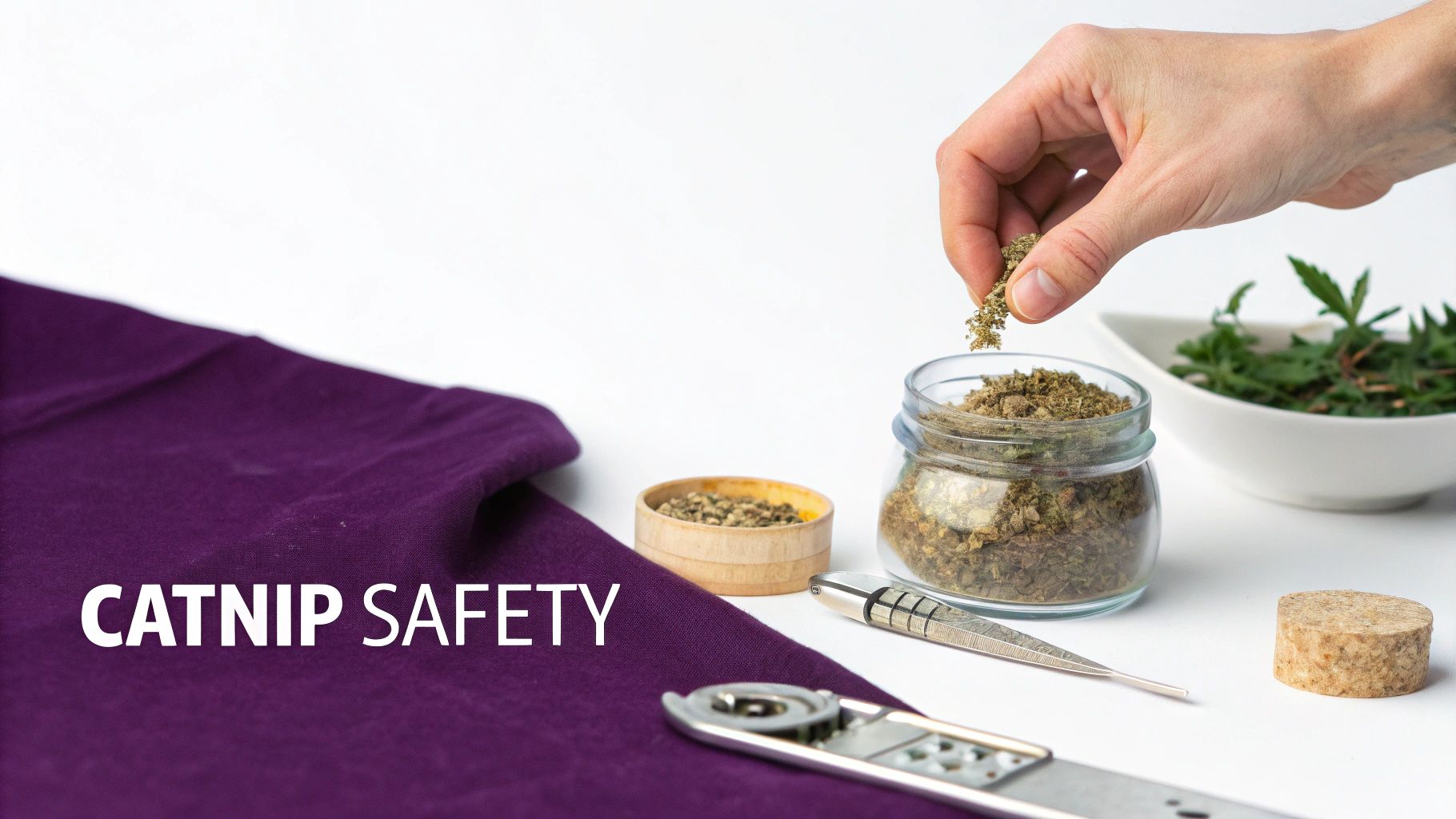
Ready to become the ultimate party planner for your furry overlord? Using catnip safely is all about turning those green flakes into a powerful tool for feline happiness. With just a few simple tips, you can transform playtime into a thrilling adventure, bust boredom, and keep your cat purring. 😻
The first rule of catnip club is that a little goes a long way! You only need a small pinch—about a teaspoon of dried leaves—to spark some serious joy. Overdoing it won’t cause any real harm, but it might lead to a mild tummy upset or make your kitty temporarily immune to the fun. Most cats, including our head tester Floofie, are great at self-regulating and will simply wander off when they've had enough.
How to Offer Catnip for Maximum Fun
So, what does catnip do to cats when offered in different ways? It's fascinating, really. Catnip acts as both a stimulant and a sedative, all depending on how your cat encounters it. When they smell the nepetalactone, it usually triggers bursts of play and zoomies. But when they eat it, it often has a mellowing, sedative effect.
Because of this stimulating power, vets often recommend using catnip 2–3 times per week as a structured enrichment tool, especially for indoor cats. Texas A&M even has some great insights on the benefits.
You can sprinkle dried catnip right onto a play mat or scratching post. This is a fantastic trick to redirect those sharp claws away from your sofa and onto something they're supposed to be scratching!
For a mess-free option, a high-quality catnip spray is your best friend. A quick spritz can instantly revive old toys or make a new bed the hottest spot in the house. Try it on our amazing Smart UFO Cat Toy to kickstart an epic chase! 🛸
Floofie's Pro Tip: Store your dried catnip and infused toys in an airtight container or even the freezer. This keeps the nepetalactone oils fresh and potent, so the party never has to stop!
Catnip Safety: Your Quick Guide
First, let's bust a common myth: is catnip addictive? Nope! Your cat can't get addicted to catnip, and there’s no risk of overdose. It's a completely non-toxic and safe herb.
That said, a very small number of cats can have mild sensitivities. If you notice anything unusual, it's always best to stop and have a chat with your vet. To learn more about this rare occurrence, check out our detailed guide on whether cats can be allergic to catnip.
Here are a few quick tips for a safe and happy catnip experience:
- Moderation is Key: Offer catnip just a few times a week to keep it feeling like a special, exciting treat.
- Supervise Playtime: Always keep an eye on your kitty during their catnip-fueled adventures, especially if new toys are involved.
- Know Your Cat: Pay attention to how your specific cat reacts. If they tend to get a little too wound up, just keep the sessions short and sweet.
By following these simple guidelines, you can safely use catnip to enrich your cat's life, encourage healthy exercise, and make your bond even stronger. Now go on and let the good times roll! ✨
How to Elevate Playtime with Catnip Toys
Ready to turn your cat's everyday playtime into an epic adventure? With just a little sprinkle of catnip, you can transform ordinary toys, beds, and scratchers into completely irresistible objects of affection. Our mascot, Floofie, knows that catnip is the ultimate secret weapon for busting boredom and encouraging a happy, active lifestyle! 😼
Understanding what catnip does is the first step, but using it to boost playtime is where the real fun begins. It’s the purr-fect way to add a little extra spice to your kitty’s routine and give them some much-needed mental and physical stimulation.
Supercharging Your Cat's Favorite Toys
That dusty mouse toy in the corner? That lonely ball they haven't batted in weeks? They’re not lost causes—they’re just waiting for a catnip glow-up! Giving old toys a new lease on life is super easy and saves you a few bucks.
For a powerful refresh, just spritz an old toy with a high-quality catnip spray. A quick spray on our Smart UFO Cat Toy can turn a regular chase into an electrifying hunt, making it your cat’s new obsession. It really doesn't take much to get their attention again! 🛸
Floofie's DIY Toy Recharge Station: Here's a trick Floofie swears by. Create your own catnip 'marinating' station! Just place those tired, forgotten toys in an airtight container with a generous pinch of fresh, dried catnip. Seal it up, let it sit for a day or two, and—voila! Your cat's old toys are now powerfully scented and as good as new.
Floofie's Pro Tips for Play and Scratching
Catnip isn't just for toys! It’s a fantastic little tool for encouraging positive behaviors around the house. When you use it strategically, you can make training fun and redirect some of those classic kitty shenanigans.
Here are a few of Floofie's favorite ways to use catnip for enrichment:
- Redirect Destructive Scratching: Is your sofa looking a little worse for wear? Rub some dried catnip directly onto a scratching post. Suddenly, that post is way more appealing than your furniture, guiding their natural scratching instincts right where you want them.
- Encourage Exercise: Get your kitty moving by sprinkling a small trail of catnip leading to a new play area or an interactive feeder. It’s a fun, rewarding way to get them exploring and burning off some energy.
- Calm Travel Nerves: Before a trip to the vet, place a catnip-infused toy like Floofie's Favorite Fish Kicker Toy or a pinch of dried 'nip inside their carrier. For many cats, this can help create a positive, calming association with what can otherwise be a stressful space.
If you need more inspiration, you can explore our full list of the best cat toys for indoor cats—all of which get even more exciting with a dash of catnip. By getting creative, you can provide endless entertainment and enrichment to keep your cat happy, healthy, and engaged. ✨
Exploring Catnip Alternatives For Your Feline
Is your kitty part of the exclusive club that gives catnip the cold shoulder? Don’t worry, the party’s not over! A surprising 30% of cats are genetically wired to be completely indifferent to catnip, meaning they don't have to miss out on all the botanical fun.
Luckily, there's a whole world of amazing catnip alternatives that can bring out the playful side in even the most sophisticated feline. Our mascot, Floofie, is a firm believer that every cat deserves a little herbal excitement. If your best furry friend is unimpressed by the usual 'nip, it might be time to explore some other options. 🌿
These plants often work in similar ways but have different chemical compounds, which is why they can trigger a response in cats who normally just walk away.
Meet The Catnip Stand-Ins
Just because your cat doesn't go wild for catnip doesn't mean they're immune to all plant-based fun. Many kitties who ignore the classic stuff will go absolutely bonkers for these fantastic alternatives.
- Silver Vine: This is the undisputed superstar of the catnip alternative world! Hailing from the mountains of Asia, silver vine is often even more potent than catnip. In fact, studies show it gets a happy, euphoric reaction from nearly 80% of all cats—including a huge number who have zero interest in regular catnip.
- Tatarian Honeysuckle: While you should avoid the toxic berries, the wood from this plant is perfectly safe and can send some cats into a state of playful bliss. It offers a totally different scent experience that many felines find completely irresistible.
- Valerian Root: You might know this one for its calming effects on humans, but valerian root often works as a stimulant for cats, much like catnip does. After that first burst of playful energy, it usually has a nice relaxing effect, making it a great choice for a post-playtime chill session.
Floofie’s Fun Fact: You can sprinkle any of these dried herbs on our awesome FloofChonk toys and scratchers! They are purr-fectly designed to hold onto these delightful scents, making playtime extra special.
This infographic shows just how much a little herbal boost can improve playtime and redirect some of that destructive energy.
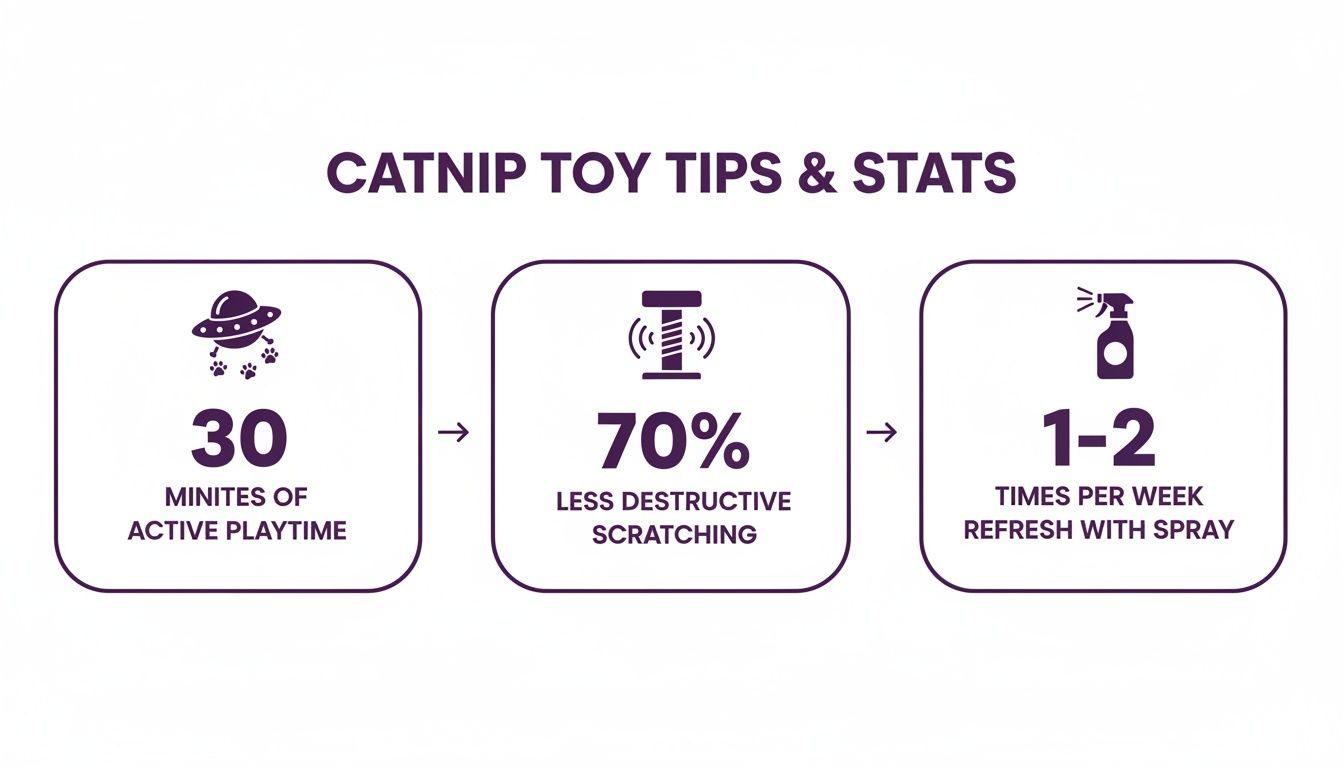
As you can see, using these herbs on toys and scratchers is a great way to encourage healthy habits and keep your cat happily engaged.
Finding Your Cat's Favorite
So, what's your cat's purr-sonal preference? Let's take a quick look at how these alternatives stack up against each other.
Catnip Alternatives Fun Finder
Here’s a quick comparison to see which one might make your kitty go wild.
| Plant Alternative | Typical Reaction | Potency vs. Catnip | Works On How Many Cats? |
|---|---|---|---|
| Silver Vine | Intense euphoria, rolling, drooling, hyperactivity. | Often more potent. | Nearly 80%. Great for 'nip-immune cats! |
| Tatarian Honeysuckle | Playfulness, chin rubbing, purring, excitement. | Milder, different scent profile. | About 50%. A good second choice. |
| Valerian Root | Initial stimulation and play, followed by relaxation. | Similar, but with a relaxing finish. | Roughly 50%. Also appeals to many cats. |
The only real way to know what your cat will love is to experiment! You can often find variety packs with several of these herbs at pet stores. Just introduce them one at a time and see what happens.
Pay close attention to your cat's reaction to each one—you might just discover their new favorite thing. Remember to introduce new herbs slowly and in moderation. Happy exploring! 😻
Got Catnip Questions? We've Got Answers
Still curious about this magical herb? Totally understandable. Diving into the world of catnip can bring up a lot of "wait, what?" moments. Don't worry, Floofie has personally sniff-tested this FAQ section to make sure every answer is straight to the point and easy to follow. 🐾
Let's clear the air so you can become the catnip connoisseur your kitty deserves.
Can My Cat Have Too Much Catnip?
While catnip is gloriously non-addictive and totally non-toxic, moderation is key to keeping the magic alive. Giving your cat a giant pile of 'nip won't cause any real harm, but it might lead to a bit of tummy upset or make them temporarily immune to its effects. Think of it like your favorite dessert—it just feels less special if you have it all the time!
The good news? Most cats are pros at self-regulating. They'll sniff, play, and roll around until they've had their fill, and then they'll just wander off. To keep things exciting, a small pinch or a single catnip-infused toy a few times a week is the purr-fect amount.
How Do I Store Catnip to Keep It Fresh?
To keep that catnip magic from fading, you have to protect its precious essential oils! The secret to long-lasting potency is all in how you store it. Just think of it like keeping your fancy kitchen spices fresh.
Pop your dried catnip and any 'nip-infused toys into an airtight container. Stash that container away from direct sunlight and heat—a cool, dark cupboard or even the freezer is the ideal spot. This simple trick stops the active compound, nepetalactone, from breaking down and losing its punch.
Stored correctly, a good batch of catnip can stay potent for about six months. If you notice your cat isn't reacting like they used to, it might just be time for a fresh supply!
Is Catnip Safe for Kittens and Senior Cats?
You bet! Catnip is generally safe for cats of all ages, from the tiniest fluffballs to your distinguished senior kittizen. There is one little catch with the youngsters, though. Most kittens won't show any reaction to catnip until they are between 6 and 12 months old. Their adorable little brains just haven't developed the right receptors yet, so giving it to them too early is basically a waste of good 'nip.
For older cats, catnip can be a fantastic way to gently encourage some light play, mental stimulation, and movement. It's a great way to keep them active and engaged without being too strenuous. As with any cat, just offer it in moderation and enjoy the show.
Why Does My Cat Drool or Get Sleepy After Catnip?
Seeing your cat drool might look a little strange, but it's a completely normal (and super common!) part of the catnip experience. 🤤 It’s just a sign that their senses are firing on all cylinders from that intense, wonderful aroma. Basically, it means they are really enjoying themselves!
As for the sleepiness, that's just the "after-party" chill session. The initial zany, energetic burst from catnip usually lasts for about 10 to 15 minutes. Once that initial high wears off, the herb's more sedative side can kick in, leaving many cats feeling mellow, relaxed, and ready for a well-deserved nap. It's the ultimate sign they had a great time and are now blissfully zoned out.
Ready to kickstart your own catnip-fueled fun? At FloofChonk, we have everything you need to spoil your kitty, from innovative toys like Floofie's Favorite Fish Kicker Toy to adorable accessories. Explore our collection today and let the good times roll!