
Cat Milk Formula: A Purr-fect Guide for New Kitten Parents

So, you're a new kitten parent—congratulations! 🐾 Whether you've taken in an orphaned newborn or you're helping out a mama cat with her paws full, your number one job is giving that tiny ball of fluff the absolute best start in life. Our pawsome mascot, Floofie, is here to guide you! This is where cat milk formula, often called kitten milk replacer (KMR), becomes your new best friend. Think of it as a super-powered smoothie designed specifically for their tiny, rapidly growing bodies. 😻
Why Kittens Need Special Cat Milk Formula
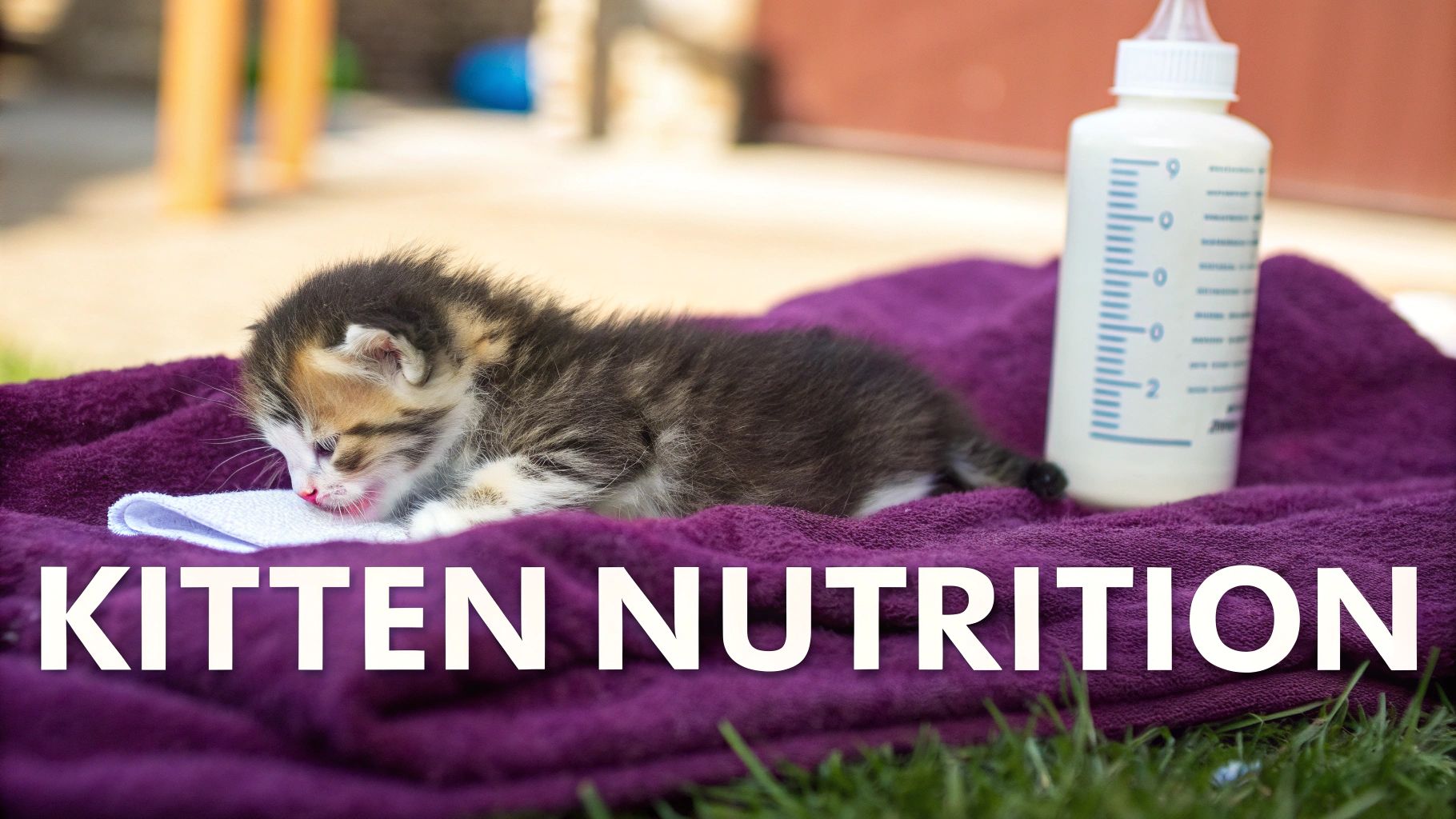
You've got a pint-sized fluffball who's hungry, and the first thought that might pop into your head is, "Can't I just give them some regular milk?" Our mascot Floofie is here to give you a big, firm "Nope!" on that one. 🙅♀️ A mother cat's milk is a nutritional masterpiece, purr-fectly balanced to fuel explosive growth, and that’s exactly what a good cat milk formula is designed to copy.
It helps to think of it like this: you wouldn't give a human baby a glass of cow's milk instead of their special formula. Kittens are no different! Their tiny digestive systems are incredibly delicate and just aren't built to handle the high levels of lactose in cow's milk. Giving a kitten cow's milk is a fast track to an upset tummy, diarrhea, and even life-threatening dehydration. No thank you!
The Magic Inside Kitten Formula
A proper kitten milk replacer is scientifically crafted to deliver everything a growing feline needs. It’s loaded with a precise balance of nutrients that you just won't find in any other kind of milk.
Here’s what makes it so special:
- High-Quality Protein: This is crucial for building strong muscles, organs, and all the other bits and pieces they need as they pounce and play their way through kittenhood.
- Essential Fats: Provides the concentrated energy needed for their non-stop growth spurts and mischievous adventures.
- Key Vitamins and Minerals: We're talking about goodies like calcium for strong bones and teeth, and taurine—an absolutely critical amino acid for healthy heart function and good vision.
- Easy Digestibility: The whole mix is formulated to be gentle on their developing digestive tract, so you can avoid the tummy troubles that other milks cause.
"Choosing a specially formulated cat milk formula isn't just a suggestion; it's a critical step in ensuring a kitten's survival and healthy development. It provides the foundational building blocks for a long, healthy, and playful life." - Floofie's Vet Friends 🐾
More and more people are recognizing just how important this specialized nutrition is. The global kitten milk replacer market was valued at USD 60.94 million in 2024 and is expected to keep growing, which shows how vital this product is for cat parents and rescuers all over the world. This trend reflects a much deeper understanding of what our tiniest felines truly need to thrive.
Setting Up for Success
Before you even think about mixing that first bottle, you’ll need to get your gear in order. Trust us, having everything ready to go makes those 2 AM feedings a whole lot less chaotic. To help you out, our pal Floofie has put together a fantastic checklist. Check out our guide on what to buy for a new kitten to make sure you have all the essentials ready!
From supporting a mother cat with a big litter to hand-raising an orphan from day one, using the right formula is your first step to becoming a kitten-raising superstar. It’s so much more than just food; it’s the fuel for their first purrs, their first wobbly steps, and those heart-melting tiny meows. Let's get you ready to be the ultimate kitten hero! 🍼💖
Choosing the Right Cat Milk Formula
Stepping into the kitten formula aisle can feel a bit overwhelming, but don't worry! Floofie's got your back. It really just boils down to two main options: the classic powdered formula and the super-convenient ready-to-feed liquid.
Each type has its own perks, and the best one for you really depends on your lifestyle, your budget, and just how many middle-of-the-night feedings you’re anticipating. (Spoiler alert: it's a lot! 😴) Let's break down what you need to know so you can choose with confidence.
Powdered Formula vs. Ready-to-Feed Liquid
Most kitten caregivers and rescuers start with powdered formula. It's the most common and budget-friendly choice, which is a huge plus when you have a tiny, milk-guzzling machine on your hands. The biggest advantage is its long shelf life; you can keep a can in the pantry and mix up just what you need for each feeding. This ensures every single meal is purr-fectly fresh.
The key to success with powdered formula, though, is precision. Think of yourself as a tiny kitten chef! 👩🍳 If you mix it too watery, your kitten won't get enough nutrients for steady growth. But if you make it too thick, it can lead to an upset tummy or even constipation. It’s a delicate balance, but you'll be a pro in no time.
On the other paw, ready-to-feed liquid formula is the undisputed champion of convenience. 🏆 It’s an absolute lifesaver for those bleary-eyed 3 AM feedings when you can barely remember your own name. Just open, warm, and serve! There's no mixing or measuring to fuss over. The downside is that it's a bit pricier and has to be used up quickly once opened, so it's best for when you need a speedy, foolproof solution.
To make the decision a little easier, let's look at them side-by-side.
Powdered Formula vs. Ready-to-Feed Liquid
A head-to-head comparison to help you choose the best formula type for you and your kitten.
| Feature | Powdered Formula | Ready-to-Feed Liquid |
|---|---|---|
| Cost | More budget-friendly, especially for multiple kittens. | More expensive per feeding. |
| Convenience | Requires precise mixing and measuring for each meal. | Ultimate convenience—just open and serve. |
| Shelf Life | Long shelf life when unopened. Must be used within a few weeks of opening. | Shorter shelf life. Must be refrigerated and used quickly after opening. |
| Freshness | A fresh batch can be made for every single feeding. | Always perfectly mixed and consistent. |
| Best For | Long-term care, budget-conscious rescuers, experienced feeders. | Emergencies, first-time caregivers, those sleepless 3 AM feedings. |
No matter which one you pick, remember the goal is the same: providing consistent, life-sustaining nutrition that mimics what a mother cat would provide. Your choice just comes down to what works best for your schedule and your kitten.
The demand for this kind of high-quality pet nutrition is skyrocketing. The pet milk replacers market is projected to jump from USD 235.3 million in 2024 to USD 480.5 million by 2034. This growth really shows how many loving pet parents are investing in specialized care for their tiniest companions. You can learn more about the expanding pet nutrition market if you're curious!
What to Look for on the Label
Now that you know the types, what should you look for in a brand? It's time to put on your detective hat and read that label! 🕵️♀️ Floofie says the best formulas will meet specific nutritional standards to give your kitten everything they need to thrive.
Here are a few non-negotiables:
- Taurine: This is an absolutely crucial amino acid for cats. It’s vital for healthy heart function, sharp vision, and a strong immune system. A quality kitten formula will always list taurine as an ingredient.
- AAFCO Statement: Look for a seal of approval that says the product is formulated to meet the nutritional levels established by the AAFCO (Association of American Feed Control Officials) Cat Food Nutrient Profiles. This is your guarantee that the formula is complete and balanced.
- Easy-to-Follow Instructions: Clear mixing and feeding directions are a must! You don't want to be guessing when a hungry kitten is yelling at you.
And don't forget the gear! Having the right tools makes mealtime so much easier. Head over to our FloofChonk store to find adorable and effective feeding bottles and syringes that are perfectly sized for tiny mouths. Making sure you have the right equipment is just as important as choosing the right formula. Happy feeding! 🍼💕
How to Prepare and Bottle-Feed a Kitten
Alright, you've got the cat milk formula, and now it's go-time for your tiny, squeaking new friend! 🍼 Bottle-feeding can feel a little intimidating at first, but Floofie promises it's one of the most incredible bonding experiences you'll have. Let's walk through it step-by-step and turn you into a kitten-feeding pro.
First up, let's mix that formula. Think of yourself as a five-star chef for a very exclusive, very tiny client. 🧑🍳 You absolutely have to follow the instructions on the formula package to the letter. Getting the right powder-to-water ratio is a huge deal for your kitten’s digestion and growth.
Once it’s all mixed, you need to warm it up. The purr-fect temperature is right around 100°F (38°C)—basically, just a bit warmer than your own skin. The easiest way to check is the old-school wrist test. Just dab a drop on the inside of your wrist. It should feel comfortably warm, never hot.
Quick safety tip: Never, ever microwave the formula. Microwaves create nasty "hot spots" that can seriously burn a kitten’s delicate mouth. The best way to warm the bottle is to place it in a bowl of warm (not boiling!) water for a few minutes.
The Art of Bottle-Feeding
With the milk ready to go, it’s time for the main event. How you hold the kitten is everything. A kitten must always be fed on its stomach, lying flat on a towel or a soft blanket. This is the same way they'd nurse from their mom. Never, ever feed a kitten on its back like a human baby—this can cause milk to go into their lungs, which is incredibly dangerous.
Gently part the kitten's lips and slide the nipple in. Let them start suckling on their own time. They know how fast they need to go, so don't squeeze the bottle. Forcing the milk out can cause them to choke or aspirate. Just let them do their thing! If the little one isn't latching on, you might need a different nipple, which you can find at the FloofChonk store.
This visual guide breaks down the key steps to ensure you're choosing the right products for your little one.
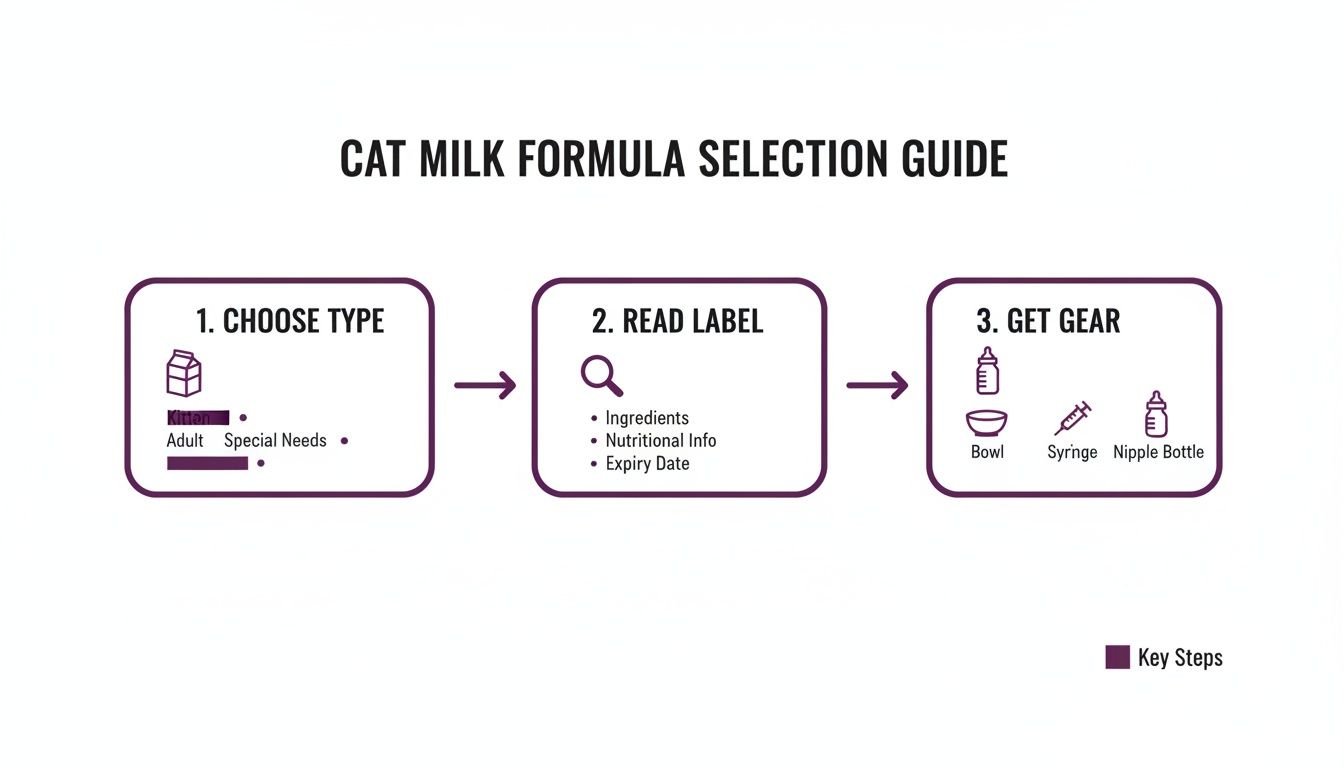
This process flow reminds us that selecting the right gear, like bottles and nipples, is just as crucial as picking the formula itself.
After the Meal Care Routine
You did it! The kitten's belly is full, but you're not quite done yet. Just like a human baby, kittens need to be burped after they eat.
Hold the little fluffball upright against your shoulder and gently pat their back until you hear a tiny, adorable burp. This helps get rid of any air they swallowed, which keeps them from getting gassy and uncomfortable.
Finally, there’s one last crucial step that new kitten parents often don't know about: potty time. 🚽 Newborn kittens (usually under 3-4 weeks old) can't pee or poop on their own. Their mom would normally lick them to stimulate them, and now, that job is yours.
Here’s what you need to do:
- Grab a warm, damp cotton ball or a soft washcloth.
- Gently rub the kitten’s genital and anal area. A soft, circular motion works best.
- Keep doing this until they’ve gone to the bathroom.
You’ll need to do this after every single feeding until they’re old enough to go by themselves. It might feel a little weird at first, but it's absolutely essential for raising a healthy, happy kitten. You've got this, you kitten-saving hero! 💖
Kitten Feeding Schedule by Age
So, how much and how often should you be feeding your tiny new tiger? 🐅 It really all comes down to their age and weight. Newborn kittens have itty-bitty tummies and need to eat very frequently to keep their energy up and grow big and strong, just like our mascot Floofie!
A fantastic rule of thumb is to offer about 2 tablespoons (30 ml) of cat milk formula for every 4 ounces (115 g) of body weight over a full 24-hour period. To stay on top of this, weighing your kitten daily with a kitchen scale is the absolute best way to make sure they're gaining weight steadily and consistently.
This level of attention isn't just for devoted cat parents; it's a huge deal. Within the pet milk replacers market, the feline segment is surprisingly dominant, expected to command 32.6% of the total market share by 2025. This just goes to show how specialized kitten nutrition is, especially with so many rescued babies needing a healthy start in life. You can discover more insights about the pet nutrition market to see just how vital this care really is.
Floofie's Guide to Feeding Frequencies
Ready to set some alarms? ⏰ Those first few weeks are pretty intense, but sticking to a routine is the key to getting through it. Here’s a sample schedule from Floofie to help guide you through the kitten whirlwind.
- 1-2 Weeks Old: Your tiny newborn needs to be fed every 2-3 hours, around the clock. Yes, that means overnight feedings, too! 😴 Their little bodies just can't store much energy yet, so frequent meals are a must.
- 2-3 Weeks Old: You can start to breathe a little easier! At this stage, you can stretch feedings out to every 3-4 hours. Your kitten will probably be a bit stronger and able to drink more at each meal.
- 3-4 Weeks Old: The gaps between meals get even longer, moving to every 4-5 hours. Your kitten is becoming more active, and their little personality is really starting to shine through! ✨
Remember, these are just guidelines! A hungry kitten will definitely let you know it’s mealtime with plenty of tiny, demanding meows. Always listen to your kitten's cues and adjust as needed.
The Transition to Lapping and Weaning
Around 4-5 weeks of age, you’ll notice your kitten becoming more curious about the world—and about food! This is the purr-fect time to start the transition away from the bottle.
You can begin by offering some of their regular cat milk formula in a very shallow saucer. This encourages them to start lapping, a skill they'll need for the rest of their lives. You can find some super cute, kitten-safe bowls right in the FloofChonk store to make this step fun and easy!
Once they’ve mastered lapping, you can officially start the weaning process. Start by mixing a tiny bit of high-quality, paté-style wet kitten food into the formula to create a yummy, soupy gruel. As they get used to it, you can gradually thicken the mixture over the next few weeks. Getting this timing right is a huge part of their development, and you can learn more about cat feeding schedules in our comprehensive guide. You're doing an amazing job, kitten hero! ❤️
Troubleshooting Common Feeding Problems
Even when you follow all the steps perfectly, a kitten's tiny tummy can sometimes be a bit fussy. Don't worry! Our mascot, Floofie, wants you to know there's no need to panic when little issues pop up. 💖 Most of the time, a small tweak is all it takes to get things running smoothly again.
Let's walk through the most common hiccups you might encounter when feeding a kitten cat milk formula and how to handle them like an experienced pro.
Dealing with Tummy Troubles
The two issues we see most often are constipation and diarrhea. Usually, they're just a sign that something in the feeding routine needs a little adjustment.
If your kitten seems to be straining to go potty without much success, they might be a bit constipated. This often happens if the formula is mixed too thick. Double-check the mixing ratios on the package to make sure it’s not too concentrated. You can also try gently stimulating them with a warm, damp cloth for a bit longer after their meal to encourage things along.
On the other paw, diarrhea can signal that you're overfeeding, or that the formula is just a tad too rich for their little system. Try offering smaller, more frequent meals. This gives their digestive system a better chance to keep up. For instance, instead of 10ml every four hours, you could try 5ml every two hours.
If diarrhea lasts for more than 24 hours, it's time to call the vet, no exceptions. 📞
The Danger of Dehydration
Dehydration is a serious risk for a tiny kitten, especially if they're dealing with diarrhea. Their small bodies lose fluids incredibly fast, so knowing the signs and acting quickly is crucial.
A simple way to check for dehydration is the "skin tent" test. Gently pinch the skin on the back of your kitten's neck. In a healthy, hydrated kitten, the skin will snap right back into place. If it goes back slowly or stays in a little "tent," your kitten needs immediate veterinary care.
Never, ever hesitate to get professional help. Keep your vet’s number saved and ready. A quick phone call can bring peace of mind and ensure your little one gets the expert care they need.
Sometimes, kittens have very specific cries when they're not feeling well. You can learn more about why your kitten is meowing to better decode their language.
Remember, every bit of effort you're putting in is helping this precious life thrive. You're doing an amazing job, and Floofie is sending you all the head bonks and purrs! 🥰
Frequently Asked Questions About Kitten Formula
Still have a few questions swirling around that kitten-sized brain of yours? No worries! Floofie has rounded up the most common head-scratchers from new kitten parents just like you. Let's get you the answers you need to be the ultimate kitten hero. 🦸♀️
How Long Does Mixed Cat Milk Formula Last
Once you've mixed up a batch of powdered cat milk formula, you can pop it in the refrigerator where it'll stay good for up to 24 hours.
Never, ever leave mixed formula out on the counter for more than an hour. Pesky bacteria can grow incredibly fast, and that’s a recipe for an upset tiny tummy. For maximum safety, it's best to make a fresh batch for each feeding. At the very least, whip up a new supply once a day and toss any leftovers in the bottle after your kitten is done—their saliva can introduce bacteria back into the milk.
Can I Make Homemade Cat Milk Formula
You might find some DIY recipes floating around online, but Floofie and his vet friends strongly advise you to stick with a commercial kitten milk replacer. These formulas are scientifically designed to be a near-perfect match for a mother cat’s milk, packed with crucial nutrients like taurine that are almost impossible to get right in a home kitchen.
Unfortunately, using a homemade recipe can lead to serious nutritional deficiencies and developmental issues. If you're in a real bind and can't get to a store, your best bet is to call a veterinarian. They can give you a safe, temporary recipe to tide you over until you can get your paws on the real deal.
When Can Kittens Stop Drinking Formula
The magical transition to solid food, known as weaning, typically starts when a kitten is about 4-5 weeks old. This is right around the time they start exploring and getting wobbly on their little feet!
You can kick things off by pouring their usual formula into a very shallow saucer to see if they'll lap it up. Once they've mastered that, you can start mixing a tiny bit of high-quality, paté-style kitten food with the formula to create a soupy gruel.
Over the next few weeks, you'll gradually add more food and less formula. Most kittens are fully weaned and happily crunching on solid kitten kibble by 7-8 weeks of age. Just be sure to have a bowl of fresh water available as soon as you start the weaning process! 💧
Is Cow's Milk Safe for Kittens
Oh, this is a big one! That classic image of a kitten happily lapping up a saucer of cow's milk? It's a total myth. 🐾👎
Here's the truth: most cats, especially tiny kittens, are lactose intolerant. Their little digestive systems just don't have the enzymes needed to break down the sugars in cow's milk. Giving a kitten cow's milk is a one-way ticket to painful gas, bloating, and diarrhea, which can quickly dehydrate them.
Always stick to a specially formulated cat milk formula. A happy, healthy kitten starts with a calm tummy, and that means giving them nutrition that's made just for them!
If you find your kitten is having digestive troubles with their formula or as they move to solid foods, it might be worth looking into a good cat food for a sensitive stomach to keep them comfortable.
At FloofChonk, we're here to celebrate your cat parent journey every step of the way! From our playful apparel to the purr-fectly curated pet gear, we have everything you need to spoil your feline friend. Visit our store today and find something special for the cat lover in your life!