
How to build trust with a cat: A practical guide to calm bonding

Earning a cat's trust isn't a race to the finish line. It’s a quiet conversation built on patience, positive vibes, and a deep respect for their personal space. Think of it as learning their language, creating a world where they feel safe, and letting them decide when they’re ready to be friends. 💖
Why Bother Earning a Cat’s Trust?
Ever look at your cat and wonder, "What do I have to do to make you love me?" You're in the right place! This guide is your complete roadmap to becoming your cat's favorite person. Forging that incredible bond goes way beyond just getting cuddles; it’s about making them feel truly secure and understood.
Our head floof, Floofie, is a firm believer that every cat has a unique purr-sonality. We'll show you how to patiently earn their trust, helping a shy kitty blossom into a confident, happy companion. 😻
Getting on a Cat's Level
Here’s something to remember: unlike dogs, cats are both predator and prey. This dual identity hardwires their instincts for caution. A sudden movement, a loud voice, or a new person can instantly trigger their "nope, I'm out of here" response. Trust isn't just handed over; you have to prove, time and time again, that you aren't a threat.
The secret is to start thinking like a cat. Once you show them you respect their need for safety and control, you stop being just a big human in their space and become a member of their inner circle.
The Makings of an Unbreakable Bond
So, how do we get there? It’s all about the small, consistent things you do every single day. Here's a peek at what we'll cover to help you build that friendship for the ages:
- Learning to Speak Cat: We’ll teach you how to read the subtle signs, from the meaning of a tail flick to the magic of a slow blink. 😉
- Creating a Kitty Sanctuary: Your home should be their happy place, a cat-friendly paradise where they feel totally confident and safe.
- Building Positive Routines: Turn playtime and mealtime into reliable sources of joy. Our Smart UFO Cat Toy is a fantastic way to make play an exciting daily ritual! 🛸
- Mastering the Gentle Approach: Learn the art of letting the cat call the shots and initiate contact on their own terms.
This guide has everything you need to know. Let's start building a bond that will last a lifetime.
Decoding Your Cat's Body Language
If you really want to know how to build trust with a cat, you have to learn to speak their language first. Cats are absolute masters of non-verbal cues, using a whole symphony of tail flicks, ear twitches, and whisker positions to broadcast exactly how they’re feeling. Floofie says this is the secret handshake to unlocking a real connection! 🐾
Think of it as learning a new dialect. A high, slightly curved tail is a friendly "hello," while a puffed-up, bristling tail is a very clear signal to give them some space. When you pay attention to these signals, you're showing your cat that you're a safe, respectful friend who gets them.
The Power Of The Slow Blink
Have you ever caught your cat staring at you, only to slowly close and open their eyes? That’s not them being sleepy—it's the highest compliment in the feline world! For cats, a direct, unbroken stare can be a sign of aggression.
A slow blink is their way of saying, "I trust you enough to let my guard down." It's a kitty kiss! You can—and should—return the gesture. Next time you lock eyes, try slowly blinking back. This simple act tells them you're not a threat and that you're comfortable and relaxed in their presence. 🥰
More Than Just a Meow
While we all love a chatty cat, their meows are just one piece of the communication puzzle. Their entire body is part of the conversation, and respecting what they're "saying" is fundamental to building that precious trust.
A few key things to watch for:
- Ears: Ears pointing forward and relaxed mean your cat is content and paying attention. But if they're flattened against their head or swiveling around, it's a sign of fear, anxiety, or irritation.
- Whiskers: When a cat is calm, their whiskers will be fanned out and relaxed. Pushed-forward whiskers signal curiosity and excitement, while whiskers pulled back flat against their cheeks mean they're scared or feeling defensive.
It all boils down to a few core pillars: providing safety, having endless patience, and making time for play.
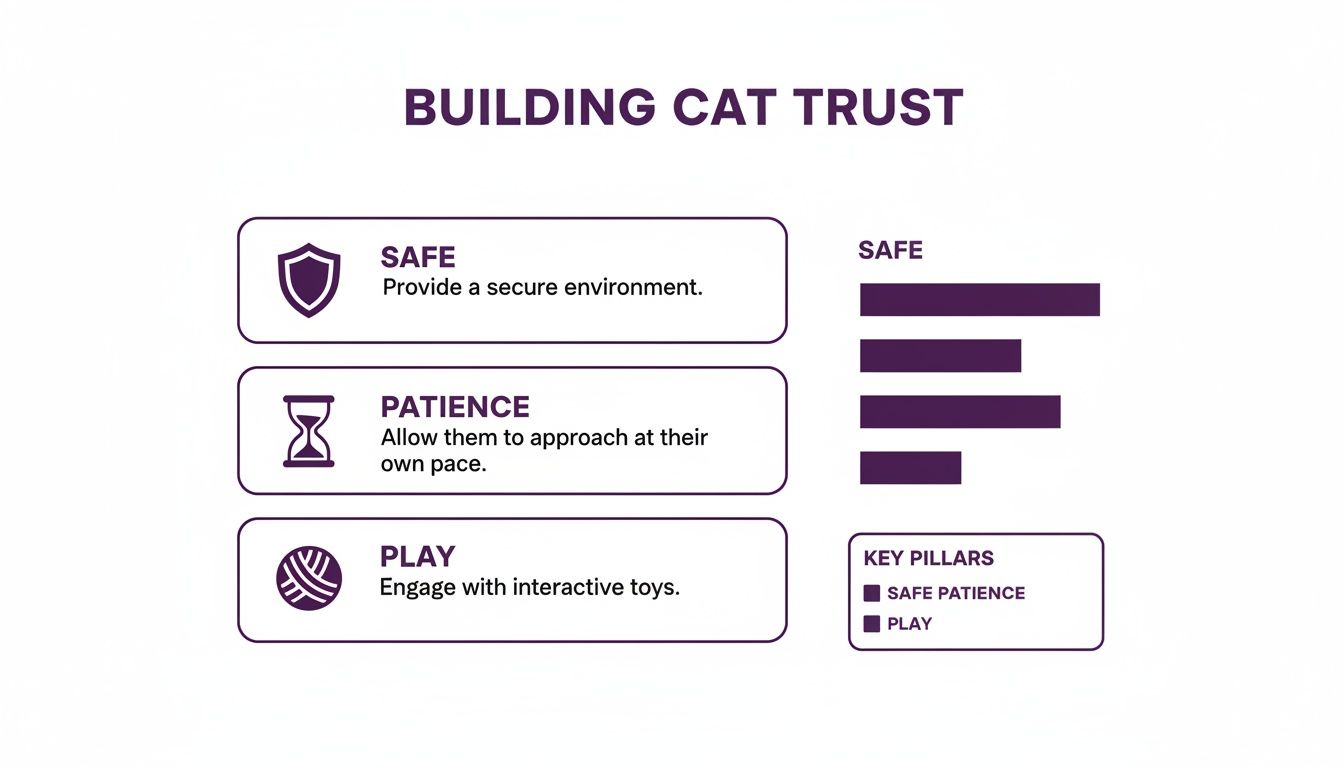
This simple breakdown shows how a secure environment, patient interaction, and a bit of fun create the foundation for a rock-solid bond.
Cat Communication Cheat Sheet
Feeling a little lost in translation? No worries, Floofie's got your back! This quick cheat sheet will help you understand what your cat is trying to tell you and how to respond in a way that strengthens your bond.
| Signal | What It Looks Like | What It Means | Your Trust-Building Action |
|---|---|---|---|
| Slow Blink | Eyes slowly closing and opening while making eye contact with you. | "I trust you. I feel safe and relaxed." | Slowly blink back at them to return the "kitty kiss." |
| Tail Held High | Tail is vertical, often with a slight curve at the tip. | "I'm happy, confident, and glad to see you!" | Offer a gentle head scratch or speak to them in a soft, happy tone. |
| Thrashing Tail | Tail is whipping back and forth or thumping on the ground. | "I'm getting annoyed or overstimulated. Back off." | Stop petting immediately and give them space. Don't force interaction. |
| Kneading | Pushing paws in and out on a soft surface (or you!). | "I'm content, comfortable, and I see you as a source of security." | Enjoy the moment! Place a super-soft FloofChonk blanket on your lap if their claws are sharp. |
| Head Bunting | Rubbing their cheeks and head against you. | "You're mine. I'm marking you with my scent as part of my family." | Lean into it gently and offer some chin scratches. This is a huge compliment. |
Remember, every cat is an individual, but these cues are a great starting point for building a common language.
The Tale Of The Tail
A cat's tail is one of its most expressive features, acting like a furry barometer for their mood. Learning to read it is a huge step toward earning their trust.
A tail held high with a little curve at the tip usually means your cat is happy and confident to see you. A low-slung or tucked tail, on the other hand, often signals fear or submission. One of the most important signals to recognize is the twitching or thrashing tail—this is a crystal-clear sign of overstimulation or annoyance. If you see this while petting your cat, it’s your cue to stop and give them some space before they feel the need to swat or bite. You can learn more about cat tail positions in our detailed guide.
Trust really starts with respecting their independence. Cats form incredibly strong bonds when we invest in them emotionally without being overwhelming. In fact, a 2021 study found that the strongest human-cat bonds happened when owners focused on mutual respect and low-pressure interactions, letting the cat call the shots.
Floofie's Tip: "Never, ever force an interaction. If your cat walks away, let them go. This shows them you respect their choice and that they have control, which is a massive trust-builder."
Creating a Safe and Stimulating Sanctuary
Alright, let's get down to the foundation of trust-building: your cat's environment. A cat who feels secure in their own home is a cat who’s ready to let their guard down. Think of yourself as their personal interior designer, because your first job is to "catify" your space and turn it into a sanctuary where they feel safe and in control. 🏰
The golden rule of catifying is to think vertically. Cats are climbers by nature, and being up high gives them a massive sense of security. It’s their lookout post, allowing them to survey their kingdom (your living room) from a safe distance, far from potential threats like the dreaded vacuum cleaner or an unpredictable toddler.
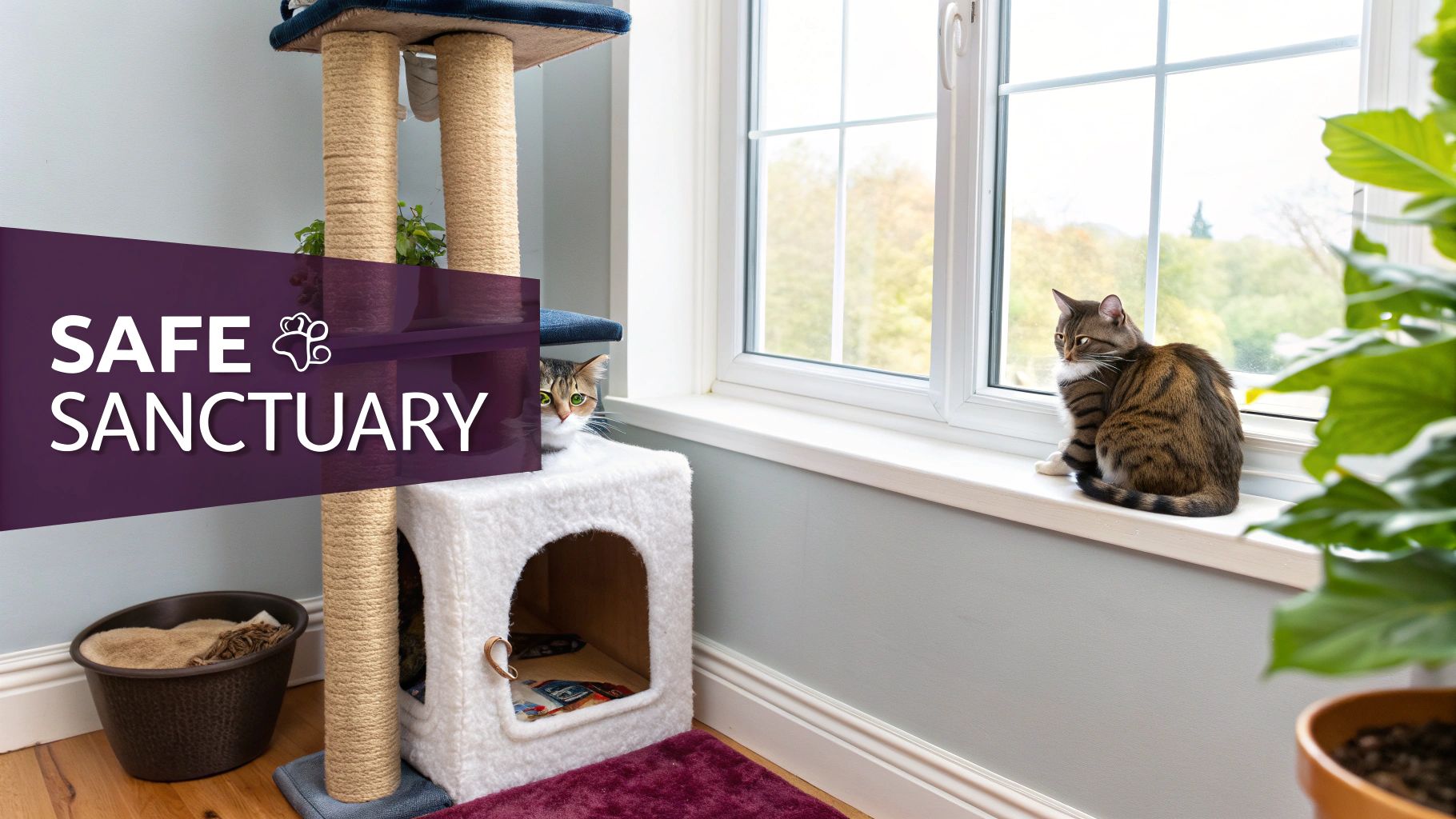
Go High for Confidence
Giving your cat vertical territory is one of the fastest ways to boost their confidence. It's essentially their private penthouse suite, and it's a game-changer.
- Cat Trees and Condos: A solid, sturdy cat tree is an amazing investment. Look for one with different levels, built-in scratching surfaces, and cozy spots to nap. Place it in a high-traffic area, like the living room, so your cat can be part of the action while still having their own perch.
- Wall Shelves and Perches: If you're tight on floor space, wall-mounted shelves are brilliant. You can create an entire kitty highway along the walls, giving them a secure path to navigate the room without ever touching the floor.
When you provide these high-up spots, you're respecting their innate need for safety. Knowing they can retreat to a secure vantage point makes them much more comfortable exploring and interacting with you down on the ground.
Create Cozy Hideaways
Even the boldest, most outgoing cat needs a place to unplug and decompress. Safe, accessible hideaways are non-negotiable for a happy cat. These are their "do not disturb" zones where they can retreat when feeling overwhelmed.
Honestly, a simple cardboard box is often a five-star resort in a cat's eyes, but you can also provide more permanent solutions. A soft cat cave or a covered bed tucked into a quiet corner of a room works wonders. The key is that the space feels small and enclosed, letting them hide while still peeking out at their surroundings.
Remember, hiding is a normal coping mechanism for cats—it's not a rejection of you. By providing great hiding spots, you’re showing your cat that you understand and respect their needs, which is a massive trust-builder.
The Importance of Resource Management
In a cat's world, having easy access to resources equals security. This means food, water, and—critically—litter boxes. A huge source of stress, especially in multi-cat homes, comes from feeling like they have to compete for these essentials.
The classic rule of thumb is to have one more litter box than you have cats. This simple strategy helps prevent territorial disputes and ensures every cat has a clean, safe place to do their business. The same logic applies to food and water stations; spreading them out around the house reduces competition and anxiety.
In fact, a 2023 survey of 6,529 two-cat households found that owners who provided multiple resources (like two or more litter boxes) significantly reduced the chances of a negative relationship between the cats. It just goes to show that giving each cat their own "stuff" is vital for a low-stress environment.
Of course, making your home safe also means getting rid of potential dangers. Our guide on https://floofchonk.com/blogs/floofies-blog-posts/how-to-cat-proof-your-home has some great, practical tips for creating a hazard-free zone.
Add Some Feline Fun and Stimulation
A safe space is essential, but a stimulating one is where the magic really happens. A bored cat is a stressed cat, and that can lead to all sorts of unwanted behaviors. Keep your kitty's mind sharp with engaging activities.
One of our absolute favorite tricks? Set up a comfy perch near a window for some prime bird-watching. This "cat TV" provides hours of mental stimulation. Puzzle feeders are another fantastic tool—they engage a cat's natural hunting instincts and make mealtime a fun challenge instead of just a boring bowl of kibble.
For those interested in a holistic approach to ensuring a cat's health and comfort, which are vital for establishing trust, an in-depth Certificate in Pet Wellness Business can offer deeper knowledge. Ultimately, a stimulating and secure environment is the foundation upon which all trust is built. 💖
Building Bonds Through Play and Positive Routines
Ready to upgrade your relationship from "human food dispenser" to "trusted best friend"? The secret lies in becoming the source of all good things. Building trust isn't just about quiet moments; it's about creating joyful, predictable routines and, most importantly, having fun together. 🥳
Predictability is a huge comfort for cats. When your cat knows what to expect from their day—and from you—their anxiety starts to melt away. This is where you can shine by setting up scheduled feeding times and doling out delicious treats, making you a reliable and wonderful part of their world. Our own mascot, Floofie, will tell you the sound of a FloofChonk Nibblers bag opening is a love language all its own!
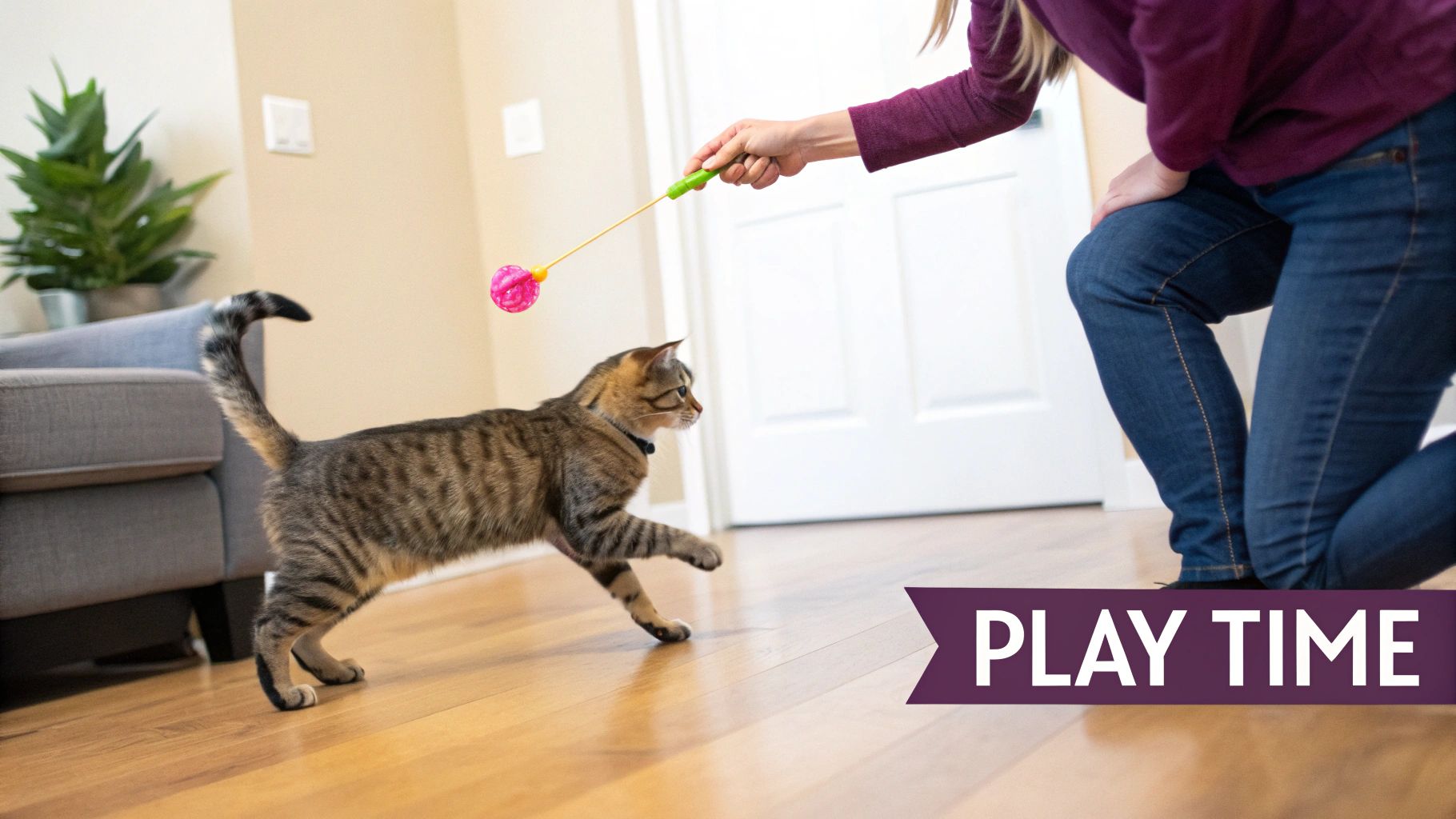
Speak to Their Inner Hunter
But the real magic? It happens during interactive playtime. Cats are tiny, adorable predators, and their brains are completely hardwired to hunt. This is your chance to connect.
Using an interactive wand toy that mimics the erratic movements of prey—think a fluttering bird or a skittering mouse—is one of the most powerful ways to satisfy this deep-seated natural instinct. It's not just a game; it's a shared adventure that taps directly into their core identity. When you’re the one controlling the "prey," you instantly become the most fascinating thing in the room.
The Hunt, Catch, Kill, Eat Cycle
To make playtime truly fulfilling and trust-building, you need to let them complete the full predatory sequence. It sounds a bit intense, I know, but this is exactly what leaves a cat feeling satisfied and accomplished.
Here’s the breakdown:
- Hunt: Get that toy moving like real prey. Drag it away from your cat, hide it behind the sofa, and let it twitch and flutter. This will trigger their stalking instincts.
- Catch: After a good chase, let them pounce and catch it! This is their victory moment, and it's absolutely crucial for their satisfaction.
- Kill: Now, let them "kill" the toy. They might bite it, hold it down, or do that classic bunny-kick with their back feet. Give them a moment to enjoy their triumph.
- Eat: Immediately after the "kill," reward them with a high-value treat like our FloofChonk Nibblers or their meal. This completes the entire cycle and creates a powerful, positive reinforcement.
Following this sequence shows them you understand their needs on a primal level. You're not just providing fun; you're providing fulfillment.
Floofie's Top Tip: "Never, ever use your hands or feet as toys! It might seem cute when they're a kitten, but it teaches them that biting people is okay. Always use an appropriate toy, like our Smart UFO Cat Toy, to keep a safe and positive distance."
Consistency Is Your Superpower
So, how often should you engage in this trust-building ritual? Aim for at least one or two structured play sessions every single day, lasting around 10-15 minutes each.
Consistency is everything. A short, predictable playtime every evening is way more effective than a long, random session once a week.
This routine does more than just tire them out. It provides:
- Confidence: For timid cats especially, successfully "hunting" and "catching" prey is a massive confidence booster.
- Stress Relief: Play is a fantastic outlet for any pent-up energy or anxiety.
- Bonding: It creates a shared experience that strengthens your connection. You aren't just a roommate; you're a playmate and a partner in crime.
Need more creative ideas? Check out our guide on the best ways to play with your cat to keep things fresh and exciting.
Making Mealtime a Bonding Moment
Mealtime is another golden opportunity to build positive associations. Instead of just putting a bowl down and walking away, make it an interactive and reliable routine.
Try feeding your cat at the same times each day. You can even use your voice to signal that it's mealtime, calling them in a happy, gentle tone. For a shy cat, just sitting quietly in the same room while they eat can slowly build their comfort with your presence.
Over time, you can gradually move a little closer, showing them that you are a safe and non-threatening part of this happy experience. Every positive interaction, no matter how small, adds another brick to the foundation of trust you're building. 💖
Mastering Gentle Handling and Socialization
Welcome to the heart of the trust-building journey! This is where your patience truly blossoms into purrs. Earning a cat’s trust with physical contact is a delicate dance, and the most important rule is to always let them lead. Floofie knows that the best friendships happen on their terms, not ours. 🏆
The golden rule here is what I call the "let them choose" approach. Instead of reaching out to pet your cat whenever you feel like it, you wait for them to initiate contact. Sit quietly on the floor and let them come to you. This simple shift in dynamics gives them all the control, showing them you’re a safe, predictable presence—not a grabby giant.
The Art of the Purr-fect Pet
When your kitty finally decides you're worthy of their attention, knowing where and how to pet them makes all the difference. Cats have scent glands all over their faces that they use to mark their territory, including their favorite people! Getting to pet them in these spots is basically the highest compliment.
Try focusing your attention on these "safe zones":
- Cheeks and Chin: Gentle scritches under the chin or along the cheeks are almost always a huge hit. This is where many of their happy scent glands are.
- Base of the Ears: The area between and just behind their ears is another sweet spot. A soft massage here can be pure bliss for most cats.
Now, let's talk about the no-go zones. Every cat is an individual, of course, but most have areas they'd rather you avoid, especially early on. The belly is the ultimate trap! A cat showing you their belly is a sign of immense trust, but it's an invitation to look, not touch. Touching that sensitive area often triggers a defensive reflex. Similarly, the tail and paws are usually off-limits for newbies.
A Gentle Plan for Shy Cats
Bringing home a shy or newly adopted cat requires an extra dose of patience. The goal isn't to force them into being brave; it's to create an environment where they feel safe enough to explore their confidence at their own pace.
Start by just sharing the same quiet space. Bring a book or your laptop into the room where they're hiding and just exist peacefully. Don't try to interact. Let them get used to your calm, non-threatening presence. This low-pressure co-existence is the first step in showing them you mean no harm.
Over time, you can move on to short, positive interactions.
- Offer High-Value Treats: Toss a super tasty treat a safe distance away from you. This helps them build a positive association with your presence. Our FloofChonk Nibblers are a fantastic choice for tempting a timid kitty!
- Introduce Gentle Play: Use a long wand toy to engage them from a distance. Wiggle the feather just outside their hiding spot to spark their predator instincts without overwhelming them.
- The Slow Blink: As we mentioned earlier, the slow blink is your secret weapon. Make soft eye contact from across the room and slowly blink. It’s a powerful, non-threatening way to say, "I'm a friend."
Floofie’s Friendly Reminder: "Every interaction, no matter how small, should end on a positive note. It's better to have a successful 30-second interaction than a stressful five-minute one. Always leave them wanting more!"
Grooming and Vet Prep as Trust Builders
Believe it or not, things that seem scary—like grooming or getting ready for the vet—can be turned into fantastic trust-building opportunities. The key is to introduce these concepts slowly and positively, long before they're actually needed.
For grooming, start by simply getting your cat used to being handled in new ways. During a calm petting session, gently touch one of their paws for a second, then immediately give them a treat. The next day, do it for two seconds. This gradual process, known as desensitization, helps turn a scary action into a normal, rewarding one. You can do the same with a soft brush—let them sniff it, then gently brush their cheek for a moment before offering a reward.
This same principle applies to vet visits. Get your cat comfortable with their carrier by leaving it out in the open with a comfy super-soft FloofChonk blanket inside. Toss treats in it occasionally. This transforms the scary "vet box" into just another cozy nap spot.
This kind of early exposure is incredibly powerful. In fact, research from Helsinki University revealed that kittens exposed to strangers weekly before 12 weeks of age were significantly less fearful as adults. This positive socialization is so effective that it can prevent future aggression and build lifelong confidence. You can learn more about these fascinating feline findings and how early experiences shape a cat’s personality. Slow and steady truly wins the purrs! 💖
Your Lifelong Feline Friendship
You've done it. You now have all the tools you need to build an incredible, unbreakable bond with your cat. Just remember that this friendship is an ongoing journey, not a final destination. Every gentle head-butt, quiet purr, and sleepy slow blink is a reward for your patience. ❤️
Keep respecting their personal space, making time for daily play, and providing that loving, predictable environment they crave. A solid routine makes a cat feel secure—they know they can count on you for food, fun, and affection. That consistency is really the glue that holds your friendship together for the long haul.
Nurturing the Bond for Years to Come
Maintaining this special connection means being their advocate, especially when it comes to their health. Part of ensuring a long and happy relationship with your cat is making sure they have great healthcare. Discover tips for finding a trusted veterinarian who can support your cat's well-being throughout their entire life.
A healthy cat is a happy cat! Regular check-ups and a supportive vet are key to spotting any issues early. It ensures your little friend feels their absolute best so they can focus on the important stuff—like naps and chasing our Smart UFO Cat Toy. 🛸
You and your cat are creating a unique story together, one purr at a time. The whole FloofChonk team, led by our mascot Floofie, is cheering you on every step of the way. Enjoy the amazing friendship you’ve built—it's one of the most rewarding experiences you can have.
Your Top Cat Trust Questions, Answered
Building a bond with a new cat can bring up a lot of questions. Don't worry, that's totally normal! Floofie asked our team to gather some of the most common concerns from cat parents and get you the answers you need to navigate this journey.
How Long Will It Take To Build Trust With A Shy Cat?
Honestly, there's no magic number here. For some cats, it could be a few weeks. For others, especially those with a rough start in life, it might take several months or even longer. Your real superpower in this situation is patience.
Instead of watching the calendar, focus on the small wins. Did your kitty stay in the same room when you walked in? That’s a huge victory! Every cat has their own internal clock for trust. Your job is to provide consistent, positive, and gentle interactions without pressure. Let them set the pace, and you'll be building a foundation of safety they can count on.
My Cat Is Hiding From Me—What Should I Do?
First off, take a deep breath. Hiding is a completely natural coping mechanism for a cat who feels scared or overwhelmed. The absolute most important rule is to never, ever force them out of their hiding spot. Dragging them out would shatter any trust you've started to build.
Your goal is to make the world outside their safe space more interesting and less scary. Try sitting quietly in the room, maybe reading a book or scrolling on your phone. Speak to them in a soft, calm voice. You can toss a high-value treat, like our delicious FloofChonk Nibblers, a safe distance from their hiding spot. Wiggling a long wand toy nearby can also pique their curiosity. You’re showing them that you aren’t a threat and that good things happen when you're around.
Floofie’s Friendly Advice: “Think of their hiding spot as their private clubhouse. You wouldn't just barge in, right? Respecting their space now shows them they can trust you enough to come out and play later.”
Can I Still Build A Bond With A Cat That Isn’t Cuddly?
Of course! A strong, trusting bond isn't measured in lap-time or cuddles. For many independent cats, trust looks like something else entirely. It's built on respect, a predictable routine, and knowing you're a reliable source of food and fun. You can absolutely be their favorite person without being a constant cuddle buddy.
Cats show affection in many different ways. You just have to learn their love language! Keep an eye out for these more subtle signs of a deep bond:
- Slow Blinking: That classic "kitty kiss" from across the room is a huge sign of trust.
- Proximity: If your cat chooses to just hang out near you, they're showing you they feel safe and comfortable in your presence.
- Greetings: A tail held high like a question mark when they greet you at the door is a sure sign of a happy, secure cat.
Appreciate these gestures for what they are: powerful signs of love and trust. Sticking to a consistent feeding schedule and having daily play sessions with an engaging toy, like our Smart UFO Cat Toy, are amazing ways to strengthen your connection on their terms.
At FloofChonk, we believe every cat deserves to feel safe, loved, and understood. Explore our collection of paw-approved toys and cozy accessories to help build an unbreakable bond with your feline friend. Visit our shop today!