
How to Get Cats to Stop Eating Plants A Complete Guide 😼🌱

If your leafy housemates are suddenly looking a little… nibbled on, you’re in good company, fellow hooman! When your cat decides your houseplants are an all-you-can-eat salad bar, it can be fur-rustrating. The good news? Getting them to stop is totally paw-sible.
The quickest path to peace involves a three-pronged approach: make the plants unappealing, offer better, cat-safe alternatives, and seriously up their environmental enrichment. This strategy gets to the root of the behavior—whether it's pure instinct, boredom, or curiosity—and nudges them toward safer, more exciting things to do.
So, Why Has My Cat Become a Botanist? 🧐
Welcome to the club of perplexed plant and cat parents! Our fluffy office mascot, Floofie, has taught us a thing or two about this. When a cat turns your favorite fern into a snack, they're not just being quirky. They're trying to tell you something. Cracking the code on why your cat is channeling their inner gardener is the first step toward a home where everyone, furry or leafy, can thrive.
This behavior isn't as weird as you might think. Many cat owners report that plant-eating is a common grievance. In fact, veterinary reports and owner surveys suggest that somewhere between 13% and 25% of domestic cats will sample or chow down on non-food items like plants. This is especially true for indoor-only kitties who are often just looking for a little more action in their day. Recent studies in nature have shed even more light on this very feline habit.
Instinct and Natural Drives
Deep down, that sophisticated cat lounging on your sofa is still a wild animal. Out in nature, cats often chew on grass and other plants to aid digestion. It can act as a natural laxative or even help them bring up indigestible bits of prey, like feathers and fur. Your cat munching on that spider plant could just be them answering the call of the wild. It's the cat-equivalent of a green smoothie! 🥤
Chewing is also a primary way cats explore their world. Think about it: a gentle love bite is a sign of affection, and chewing on a new leaf might just be their way of figuring out an interesting new texture. You can dive deeper into this in our guide on what it means when cats nibble you.
Boredom and Curiosity
Sometimes, the simplest answer is the right one: your cat is bored! 😼 A dangling, rustling leaf is basically an irresistible toy, especially if there aren't enough engaging distractions around. A cat without enough playtime, puzzle toys, or high places to climb will invent their own fun—and your poor monstera is an easy victim.
Floofie’s Fun Fact: A houseplant often becomes a cat's favorite toy because it moves, makes noise, and has a satisfying texture to chew. It’s the ultimate low-tech cat toy, but we can definitely do better for them!
Nutritional Needs
While this is less common for cats on a high-quality, balanced diet, plant-eating can sometimes signal a nutritional deficiency. Cats are obligate carnivores, which means their diet has to be meat-based. But sometimes they might crave the fiber or trace minerals found in greens.
If the plant-eating is a new, obsessive behavior, it could be their way of telling you something is missing from their meals. This is always a good time to check in with your vet to rule out any underlying health issues.
Here’s a quick look at why your cat might be munching on your plants and some simple, actionable solutions you can implement today.
Common Reasons for Plant Chewing and Quick Fixes
| The Motivation | What You Might See | A Quick Fix to Try Now |
|---|---|---|
| Instinct | Chewing grass-like plants, occasionally vomiting afterward. | Provide a pot of cat grass for them to safely chew on instead. |
| Boredom | Batting at leaves, chewing on plants near windows or play areas. | Schedule two 15-minute interactive play sessions with a wand toy each day. |
| Nutritional Craving | Persistent, focused chewing on multiple types of plants. | Check the fiber content of their food and consult your vet about their diet. |
| Curiosity | Gently nibbling or tasting new plants you've brought home. | Spray the plant with a bitter apple spray to make it taste awful to them. |
Ultimately, understanding the "why" is your secret weapon. Once you have a good idea of what’s driving your cat’s plant obsession, you can tailor your approach and find a solution that works for both of you.
Creating a Cat-Safe Indoor Jungle
So, we've cracked the code on why your cat might be moonlighting as a botanist. Now for the fun part: becoming the curator of a gorgeous, cat-friendly indoor jungle!
Not all plants are created equal, especially in the eyes of a curious kitty. Knowing the difference is the secret to creating a home where both your plants and your floof can thrive together, safely. 🌿
While your cat’s plant-munching is often just a quirky habit, it can turn dangerous in a heartbeat. Some of the most popular houseplants are, unfortunately, major no-nos for our feline friends. The goal here is simple: remove the danger and replace it with something even better.
Identifying the Dangerous Houseplants to Avoid
Before you can build your cat-approved oasis, it's time for a quick safety audit of your current plant collection. Some plants are merely mild irritants, but others are downright deadly. It’s so important to know which is which.
You'll find some of the most common culprits lurking in homes everywhere:
- Lilies (All varieties): This is a MAJOR red flag. Every single part of the lily plant—pollen, petals, leaves, even the water in the vase—is extremely toxic to cats and can cause fatal kidney failure.
- Philodendrons & Monsteras: These trendy plants contain sharp calcium oxalate crystals. If chewed, they cause intense oral irritation, pain, swelling of the mouth, drooling, and vomiting.
- Sago Palms: These are incredibly dangerous. Ingesting any part of this popular plant can lead to severe vomiting, diarrhea, and even liver failure.
- Tulips & Daffodils: While the flowers are a problem, the bulbs are the most toxic part. They can cause serious stomach upset, convulsions, and heart problems.
It sounds scary, but knowledge is your best defense! Toxicology databases show that 5%–15% of plant-related exposures in cats lead to illnesses that require a trip to the vet. Lilies are especially dangerous, as even a tiny amount can cause acute kidney injury. You can learn more about how plant-based diets and cat health intersect in this interesting study.
This visual helps break down why your feline friend is so tempted to nibble on your greenery in the first place.
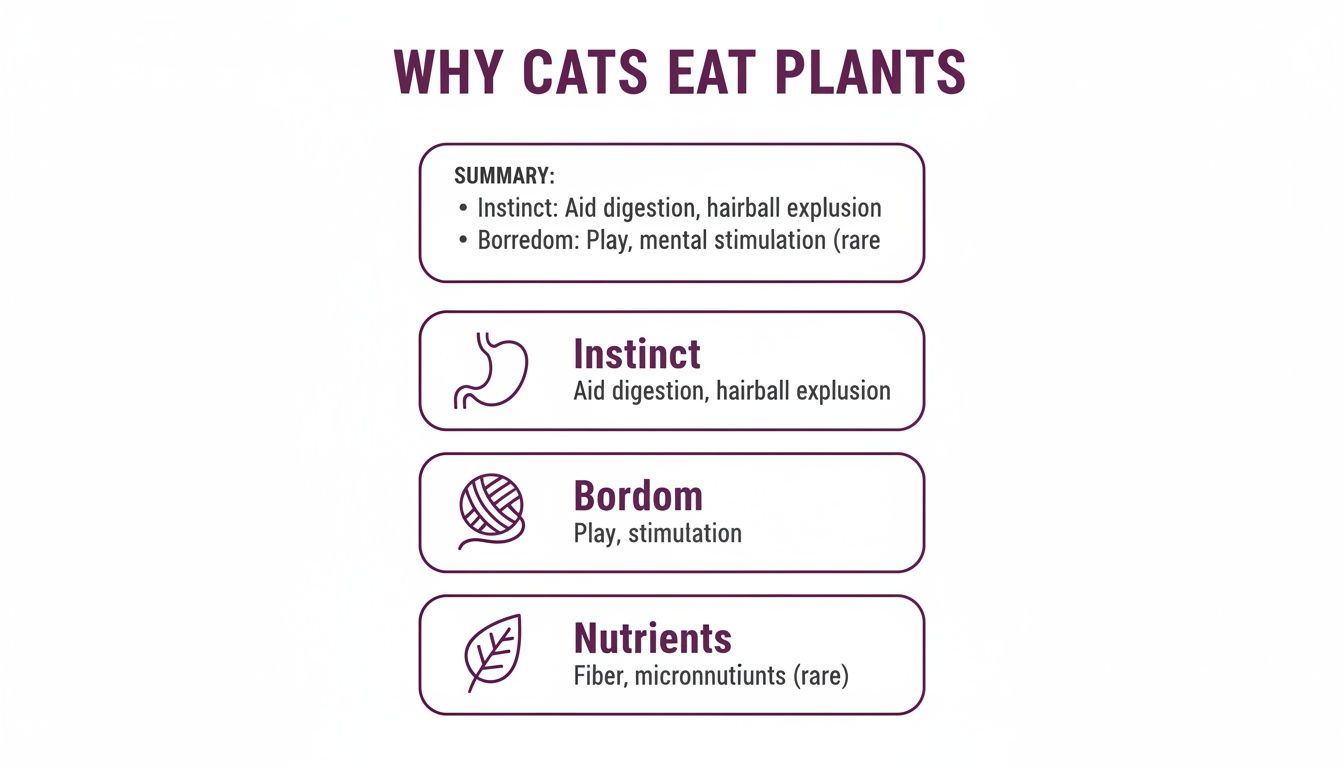
Understanding these core drivers—instinct, boredom, and nutritional curiosity—is the first step toward redirecting that energy to much safer (and more fun) alternatives.
A Quick Guide to Toxic vs Cat-Safe Plants
Use this comparison table to quickly check if a plant is a friend or foe to your furry companion. When in doubt, always opt for safety!
| 🚨 Toxic Plants to Avoid 🚨 | Potential Signs of Poisoning | ✅ Safe Plants to Love ✅ |
|---|---|---|
| Lilies (all types) | Vomiting, lethargy, lack of appetite, kidney failure | Spider Plant (Chlorophytum comosum) |
| Sago Palm (Cycas revoluta) | Vomiting, diarrhea (often bloody), liver failure | Calathea / Prayer Plant (Calathea spp.) |
| Tulips & Daffodils (Tulipa & Narcissus) | Vomiting, drooling, diarrhea, convulsions, heart issues | Boston Fern (Nephrolepis exaltata) |
| Aloe Vera | Vomiting, lethargy, diarrhea | Parlor Palm (Chamaedorea elegans) |
| Philodendron & Monstera (Philodendron & Monstera) | Oral irritation, drooling, pawing at mouth, vomiting | Haworthia / Zebra Plant (Haworthiopsis attenuata) |
| Pothos / Devil's Ivy (Epipremnum aureum) | Oral irritation, burning mouth, drooling, vomiting | Cat Grass (Dactylis glomerata) |
| Dieffenbachia / Dumb Cane (Dieffenbachia) | Intense oral irritation, swelling of mouth/tongue, drooling | Areca Palm (Dypsis lutescens) |
| Jade Plant (Crassula ovata) | Vomiting, depression, incoordination | Money Tree (Pachira aquatica) |
Remember, this isn't an exhaustive list! Always double-check a plant's safety with the ASPCA's extensive plant database before bringing it home.
Curating a Beautiful and Cat-Friendly Garden
Okay, now that the scary part is over, let's talk about all the amazing plants you can have! Creating a cat-safe jungle doesn't mean you have to settle for boring greenery.
In fact, some of the most stunning and easy-to-care-for plants are perfectly safe for your furry supervisor.
Here are some of Floofie’s absolute favorite, non-toxic plants that will bring life to your space without the worry:
- Spider Plant (Chlorophytum comosum): These are fantastic for beginners! They're super resilient and have fun, dangling "spiderettes" that your cat might find entertaining to bat at—which is way better than eating them!
- Calathea (Prayer Plant): Known for their stunning, decorative leaves that often fold up at night like hands in prayer, these plants add a pop of color and drama to any room. And they're completely safe for cats.
- Boston Fern (Nephrolepis exaltata): Looking for that lush, jungle vibe? The Boston Fern is your answer. Its feathery fronds are gorgeous and totally non-toxic if your kitty decides to have a taste.
- Parlor Palm (Chamaedorea elegans): This pet-safe palm brings a touch of the tropics indoors and is surprisingly low-maintenance. It's the perfect statement plant for a living room corner.
- Haworthia (Zebra Plant): If you love the look of succulents, this is a great choice. Unlike the toxic Aloe Vera, the striped Haworthia is perfectly safe and adds a cool, modern touch to your collection.
Floofie’s Tip: When you bring a new plant home, even a "safe" one, it's a good idea to keep an eye on your cat. While non-toxic plants won't poison them, eating too much of any plant matter can still cause some mild stomach upset.
For even more tips on keeping your entire home safe for your curious companion, be sure to check out our complete guide on how to cat-proof your home.
Where to Find Your Purr-fect Plants
Ready to start shopping? Many online plant shops now have dedicated "pet-friendly" sections, making it super easy to find beautiful and safe options. Some of our favorites are The Sill and Bloomscape, which both offer a fantastic selection delivered right to your door.
When in doubt, always double-check a plant's name against the ASPCA's comprehensive toxic and non-toxic plant list before buying. Happy planting! 🐾🌱
Making Your Plants Less Appealing to Cats
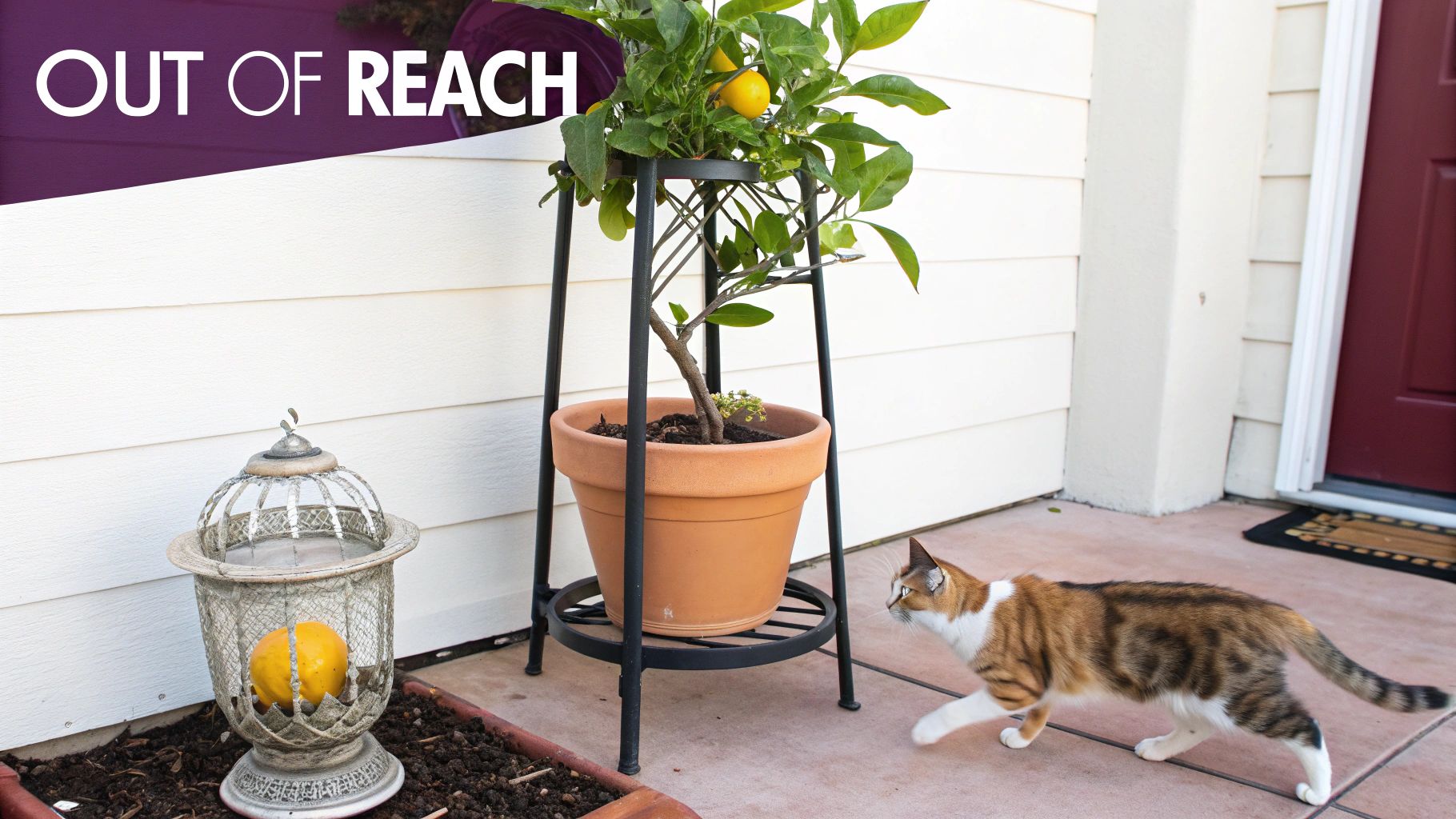
Alright, time for a little friendly sabotage. To get your cat to leave your plants alone, we need to make those leafy greens the most boring, unappealing things in the house. Think of it as a stealth mission to reclaim your indoor jungle.
The goal is to turn a tempting snack into a total snooze-fest. We can do this with gentle deterrents that offend your cat's delicate senses or by physically placing plants just beyond their acrobatic reach. Let's make that fern less fun than an empty cardboard box (which is saying a lot).
Turning Taste and Smell Against Them
Cats have incredibly sensitive noses and pretty particular palates. What smells fine to us can be a major turn-off for them. This is our secret weapon.
Many cats absolutely despise the smell of citrus. Try placing some orange or lemon peels on top of the soil. The strong scent can create an invisible "force field" that makes a curious kitty think twice before taking a nibble.
Another powerful tool is a simple DIY spray. Mix up some diluted white vinegar and water (about a 3:1 ratio of water to vinegar) and spritz it lightly on the leaves. The bitter taste is a real mood-killer for most feline foodies.
Floofie’s Pro Tip: Always test your DIY spray on a single leaf first and wait 24 hours to make sure it doesn't harm your plant. We want to deter the cat, not wilt the greenery!
If you'd rather go with a ready-made solution, there are some great products out there. A good bitter apple spray is designed to be pet-safe but taste absolutely horrid to them. A quick spritz can make your plants instantly less delicious. Floofie has personally sniff-tested and disapproved of this one, which is how we know it works!
You could also consider using natural plant deterrents like neem oil, which has the added bonus of being great for general plant health. Just be sure to follow the instructions carefully.
The Art of Strategic Plant Placement
Sometimes, the easiest fix is to just move your plants out of the line of fire. Cats are amazing jumpers, but they haven't quite mastered levitation. Let's use that to our advantage.
Think vertically! This is where your home decor skills can really shine.
- Hanging Planters: Macrame is back for a reason! Hanging your plants from the ceiling is a chic and effective way to keep them well out of reach. Plus, it looks fantastic.
- Tall Plant Stands: A sturdy, tall stand can elevate your favorite pots, making them more of a climbing challenge than an easy snack. Just make sure the stand is stable enough not to be knocked over by a determined cat.
- High Shelves: Got some empty wall space? Install a few floating shelves just for your plant babies. This not only protects them but also creates a beautiful living wall effect.
For your most precious plants, a decorative cloche or terrarium can be a lifesaver. These glass enclosures act like tiny, stylish greenhouses that keep your plant safe while still showing it off. It’s like putting your plant in its own little VIP lounge where fuzzy paws aren't allowed. 🌿✨
Enrich Your Cat’s World to Keep Boredom at Bay
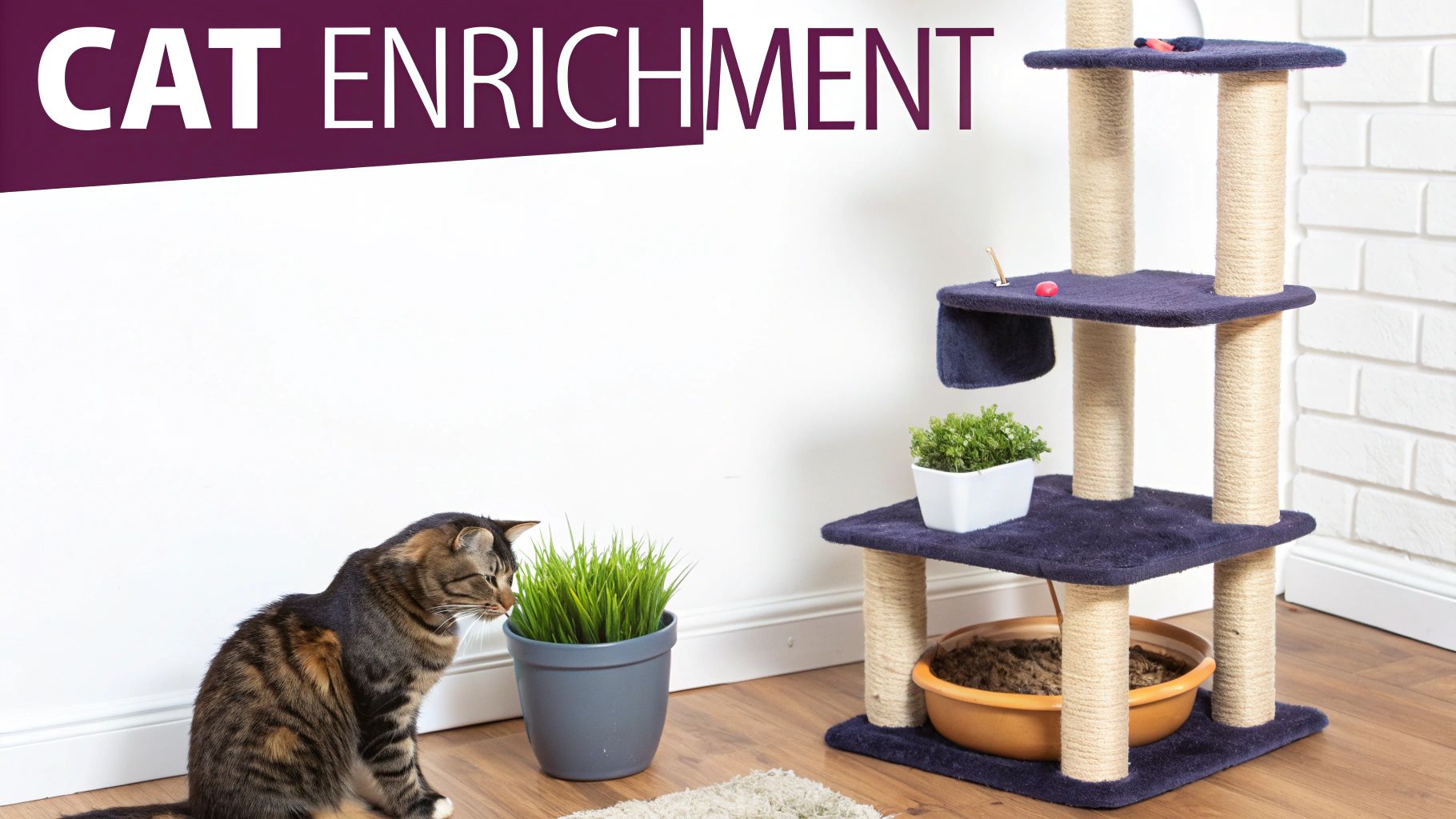
A bored cat is a tiny, fluffy agent of chaos. 😼 When your kitty starts treating your houseplants like a personal salad bar, it’s often a huge red flag that their world has become a little too predictable. It’s not really about the plant; your prized pothos is just collateral damage in their ongoing war against boredom.
The secret to winning this war is to outsmart them. The goal is to turn your home into a feline wonderland so engaging that your plants seem downright dull in comparison. Think of it as upgrading their entertainment package so they forget the "chew on the fern" channel even exists.
Go Vertical, Darling
Cats are climbers, pure and simple. Out in the wild, being up high means safety and a perfect vantage point for spotting prey (or in your living room, the best sunbeam). If you don't give them a way to get up high, you're denying a core part of what makes them a cat.
Providing plenty of climbing opportunities is a total game-changer. It satisfies a deep-seated instinct and gives them a fantastic outlet for all that pent-up energy.
- Majestic Cat Trees: A solid, multi-level cat tree is the gold standard for a reason. Look for one with different textures, scratching surfaces, and cozy spots to hide. Our own mascot, Floofie, insists that a tall cat tower is essential for any feline wanting to be the true king or queen of their castle. 👑
- Stylish Wall Shelves: If you're tight on floor space, cat shelves or wall-mounted perches are a brilliant fix. You can create a custom "cat highway" along your walls, giving them a whole new dimension to explore and lord over.
When they have their own approved climbing zones, that dangerous trek up your bookshelf to get to a spider plant suddenly seems a lot less appealing.
Make Mealtime a Brain Game
Just dumping kibble into a bowl is a huge missed opportunity. Wild cats have to hunt for their food, which engages their bodies and their brains. We can bring a little of that challenge indoors with puzzle feeders.
These feeders make your cat bat, nudge, or slide pieces around to get their food. This simple switch can turn a five-second scarf-down into a 15-minute challenge, burning mental energy and preventing all sorts of boredom-related mischief. You can start with something simple like a food-dispensing ball toy and move on to trickier puzzles as your cat gets the hang of it.
This isn't just a cute idea—it works. When owners combine environmental enrichment like puzzle feeders and vertical space with daily interactive play, incidents of plant-eating can plummet by 50%–80% over a few months. As some behavioral studies show, a multi-pronged approach gets real results.
The Power of Play
That simple wand toy might not look like much to you, but to your cat, it’s a bird, a mouse, or a sneaky snake that must be conquered. Interactive playtime is absolutely non-negotiable for a happy, well-behaved cat. It lets them act out the hunt-catch-kill-eat cycle that's hardwired into their DNA.
Try to schedule two 15-minute play sessions every day. A consistent routine helps your cat learn when to expect fun, which means they're less likely to go looking for trouble (aka your plants) at other times. Use toys that really get them moving, like feather wands or laser pointers—just make sure to end the laser session by letting them "catch" a physical toy!
For more creative ways to keep them entertained, check out our favorite DIY cat enrichment ideas.
The Sacrificial Garden
Sometimes, the best strategy is a good old-fashioned compromise. If your cat just has an undeniable craving for something green to chew on, give them a safe and delicious option that they're allowed to destroy. This is the beauty of creating a "sacrificial garden."
Growing a small pot of cat-safe grass is the perfect solution.
- Wheatgrass
- Oat grass
- Barley grass
These grasses are great for their digestion, provide fiber, and satisfy that chewing instinct in a healthy way. You can find easy-to-grow cat grass kits at most pet stores. Just put the pot in an easy-to-reach spot and shower them with praise when you see them nibbling on it instead of your houseplants. It's a win-win: they get their greens, and your ficus gets to live another day. 🌱🐾
Using Positive Training to Protect Your Plants
Ready to teach your little furball some house rules without becoming the villain of the story? Good news—you totally can. When it comes to training your cat, the only method that truly works is positive reinforcement. The goal isn't to scold them for being curious, but to make leaving your plants alone the most rewarding, fun choice they can possibly make.
Forget the old-school advice about spray bottles and shouting. That stuff just creates a nervous, anxious cat who learns to chew on your ferns when you're not looking. Instead, we're going to use a simple and wildly effective technique called "interrupt and redirect." It's all about catching them in the act, gently stopping the behavior, and immediately showing them something way more interesting to do.
The Interrupt and Redirect Technique
The name pretty much says it all! This little two-step is your new best friend for keeping your plants and your cat safe. It's a calm, consistent way to communicate boundaries in a language your cat actually understands: the language of play and tasty rewards.
First, you need a unique, consistent sound to use as your gentle interrupter. It shouldn't be loud or scary, just something that makes them pause and look up at you. A sharp "ah-ah!" or a quick click of your tongue is perfect. The moment you see those tiny teeth heading for a leaf, make your sound.
The instant they stop and look at you—and this is the most critical part—you immediately redirect their attention. The key is to swap the "bad" activity (munching on the plant) with a fantastic one. Don't just call their name; you have to offer a better deal.
Making the Right Choice Irresistible
So, what does a "better deal" look like to a cat? It all comes down to knowing what makes your kitty tick. The redirect has to be more exciting than that tempting, dangly leaf.
Here are some tried-and-true distractions that work wonders:
- Toss their favorite toy: Whip out that crinkle ball or fuzzy mouse they can never resist. A fast-moving toy is a fantastic way to engage their natural prey drive.
- Wiggle a wand toy: Nothing beats interactive playtime. A feather wand, like our favorite Da Bird toy, can make them forget all about their leafy snack in a split second.
- Offer a high-value treat: A tasty little morsel can be seriously motivating. When they turn away from the plant, toss a treat away from it to lure them to a new, approved spot.
The goal is to build a positive association. You want your cat to learn: "When I leave the plant alone, something awesome happens!" It's not about punishment; it's about making the right choice the most rewarding one.
For this to stick, you have to be consistent. Every single time you see them sniffing around a plant, be ready to interrupt and redirect. It might take a little patience, but soon your cat will start to think twice before taking a bite, anticipating a fun game instead. ✨ You've got this!
Knowing When Plant-Eating Is a Health Concern
While your cat’s leafy obsession is usually just a quirky habit, every once in a while, it can be their way of waving a tiny red flag. 🚩 Our mascot Floofie wants you to know that sometimes, an obsessive urge to eat plants can point to an underlying health issue that needs a little more attention. So, how do you know when it’s just a funny quirk versus a call to the vet?
The biggest sign to watch for is a sudden, intense, or compulsive shift in their plant-eating. If your cat who previously ignored your ferns is now mowing them down like an all-you-can-eat salad bar, it’s time to pay closer attention. This behavior, known as pica, can sometimes signal gastrointestinal upset or even a nutritional deficiency your cat is instinctively trying to fix.
Signs It Might Be More Than a Habit
If the plant munching is paired with other symptoms, it's a definite sign to get a professional opinion. Keep an eye out for these warning signs:
- Frequent Vomiting or Diarrhea: We're talking more than the occasional hairball.
- Lethargy or Weakness: Your normally zippy kitty seems tired and out of sorts all the time.
- Sudden Weight Loss: A noticeable drop in weight without a change in diet.
- Changes in Appetite or Thirst: Either a complete loss of interest in their actual food or excessive drinking.
Floofie’s Friendly Reminder: You know your cat best! Any significant change from their normal behavior is always worth a conversation with your veterinarian. It’s better to be safe than sorry when it comes to your furry bestie's health.
Beyond common household plants, pet owners must be vigilant about highly dangerous substances like marijuana. Understanding marijuana toxicity in dogs and cats is critical for their safety, especially in homes where it might be present.
Don't panic! In most cases, plant-eating is purely behavioral. But if you see these signs, a vet visit can rule out issues like dental pain, digestive problems, or nutritional imbalances. Giving your vet the full picture helps them pinpoint the cause, ensuring your cat stays happy, healthy, and ready for their next adventure—preferably one that doesn't involve eating your houseplants! 🐾
Your Questions About Cats and Plants, Answered
We get tons of questions from fellow cat parents trying to broker a peace treaty between their leafy friends and their furry ones. Our head of quality control, Floofie, has heard them all! Here are the answers to the questions that pop up most often. 🌱
Will My Cat Ever Stop Eating My Plants on Their Own?
Probably not! While kittens are notorious for getting into everything, many adult cats keep munching on greens for all the reasons we’ve already covered—instinct, boredom, or just because they think your fern is a tasty snack.
Simply waiting for them to "grow out of it" isn't a reliable strategy. It's much smarter to get ahead of the behavior with engaging toys, interesting enrichment, and a few clever tricks to make your plants less appealing.
Is There Such a Thing as Too Much Cat Grass?
For the most part, no! 🎉 Cat grass is a fantastic, totally safe way for your cat to satisfy their craving for greens. It provides a little extra fiber, helps with digestion, and lets them act on that wild instinct to chew on something leafy. It’s like a healthy, crunchy salad bar made just for them.
The key is to keep the grass fresh and free from any pesticides. If your cat eats a bunch and then throws it up, that’s often a normal part of the process. But if you're tired of cleanup duty, you can always try offering it in smaller portions.
Floofie’s Final Word on Grass: "It's the only salad bar I'll ever approve of, hooman. Keep it comin'!"
My Cat Ignores Bitter Sprays. What Do I Do Now?
Ah, you've got a feline with a refined palate! Some cats are completely unfazed by bitter apple sprays—Floofie insists it's a sign of sophistication. If deterrent sprays aren't cutting it, it's time to change your game plan.
Here are a few other tactics to try:
- A motion-activated air sprayer: These little gadgets let out a harmless puff of air when your cat gets too close to a plant. It’s enough to startle them away without actually scaring them.
- Create physical barriers: Think up, not out. Move your plants to hanging baskets, put them on tall plant stands, or place them on high shelves. Sometimes, making them hard to get to is the simplest fix.
- Use textures they dislike: Try wrapping the base of the pot with double-sided sticky tape or laying down some aluminum foil. Most cats can't stand the feeling of these textures on their paws and will steer clear.
Can I Keep Toxic Plants if I Put Them Out of Reach?
This is a huge risk, and honestly, we strongly advise against it. Cats are basically tiny, fluffy ninjas. A shelf that seems unreachable to you is just their next parkour challenge. Even if they can't chew the plant directly, they can still be harmed by falling leaves, pollen, or even by drinking water from the saucer.
When it comes to highly toxic plants like lilies, even a tiny bit of pollen that gets on their fur and is licked off later can be fatal. For the safety of your cat and your own peace of mind, it’s always the best call to keep all toxic plants completely out of your home.
We hope this guide helps you create a happy, harmonious home where both your plants and your cats can thrive! For more fun, feline-approved goodies, from awesome toys to stylish apparel, check out what’s new at FloofChonk! You can explore all of our collections at https://www.floofchonk.com.