
Signs Your Cat Is Depressed: How to Help Them Recover

Could the signs you're calling sadness mean your cat is hurting? A kitty who skips dinner, abandons their favorite windowsill, or stops greeting you might be stressed, but those same changes can signal illness. Your cat's change from their usual self matters more than any sad-cat checklist.
Is your kitty feeling blue? Floofie, our whisker-wise mascot, is here to help you respond with more than crossed paws. Cats can't tell us what's wrong, and there isn't a universally validated clinical test for feline depression comparable to a human psychiatric diagnosis. The AAFP Feline Senior Care Guidelines identify changes in appetite, play, interactions, routines, and hiding as observations caregivers should report.
Floofie's first rule: Treat a noticeable behavior change as a health clue, not a confirmed mood diagnosis. 🐱
When you're looking for signs your cat is depressed, start with what you can document: food eaten, favorite activities abandoned, unusual hiding, and changes in grooming or toileting. Your veterinarian can investigate physical causes while you make home feel calmer and more predictable.
The action plans below pair each warning sign with practical observations, veterinary guidance, and optional comfort or enrichment ideas. Toys and cozy beds can support wellbeing, but they can't treat a painful tooth or urinary problem. Grab your notes, keep the treat pouch handy, and let's decode those whiskers. 😺
1. 🙀 Appetite Changes, Skipping Meals or Eating Less 🐟
Your cat trots toward breakfast, sniffs the bowl, then walks away. When that's different from their usual enthusiastic service review, pay attention, especially if favorite treats also lose their appeal.
Stress can reduce appetite, but so can pain and physical illness. PetMD's guide to cat depression emphasizes ruling out medical causes through veterinary assessment rather than assuming withdrawal and appetite loss are emotional.
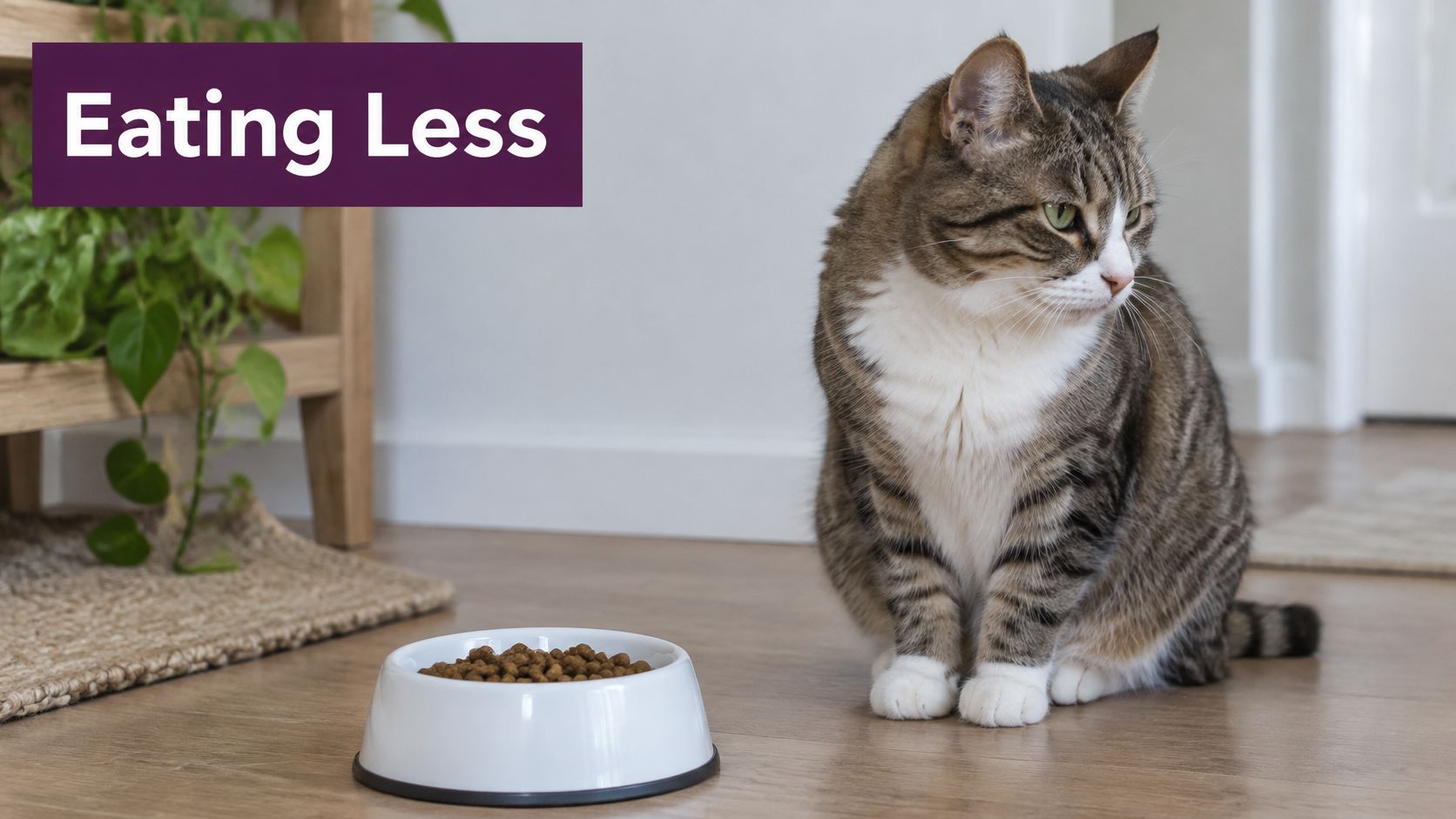
Make the Next Meal Informative
Offer a familiar food in a quiet place, away from the litter box and noisy appliances. Slightly warming wet food can make its aroma more inviting, but stir it thoroughly and check that it isn't hot.
- Record actual intake: Note what you served and what remained, rather than writing that your cat ate poorly.
- Separate diners: In a shared household, feed cats apart so you know who's eating.
- Keep changes modest: Don't cycle through endless foods or force-feed without veterinary guidance.
Say your cat stops finishing breakfast after renovations begin. A peaceful feeding spot may help, but improvement with quieter surroundings doesn't rule out a medical problem.
Call your veterinarian promptly if your cat stops eating or eats markedly less, particularly with vomiting, lethargy, pain, or altered drinking. Don't wait for a diary to fill up.
Floofie's practical pairing is a washable feeding mat or stable bowl from FloofChonk's pet-product selection, chosen for easy cleaning rather than decoration alone. For routine planning once appetite concerns are addressed, explore how often to feed your cat.
2. 🫣 Hiding and Withdrawing from Family 🏠
A cat who's always loved a secluded nap isn't automatically unhappy. A sociable cat who suddenly stays under the sofa and stops coming out for meals is telling you something different.
Watch how your cat hides, too. Crouching, muscular tension, flattened ears, freezing, and defensive vocalizations appear among the stress-related behaviors described in the AAHA/AAFP guidance on behavior and environmental needs. Those clues can overlap with pain or illness, so posture alone won't establish the cause.
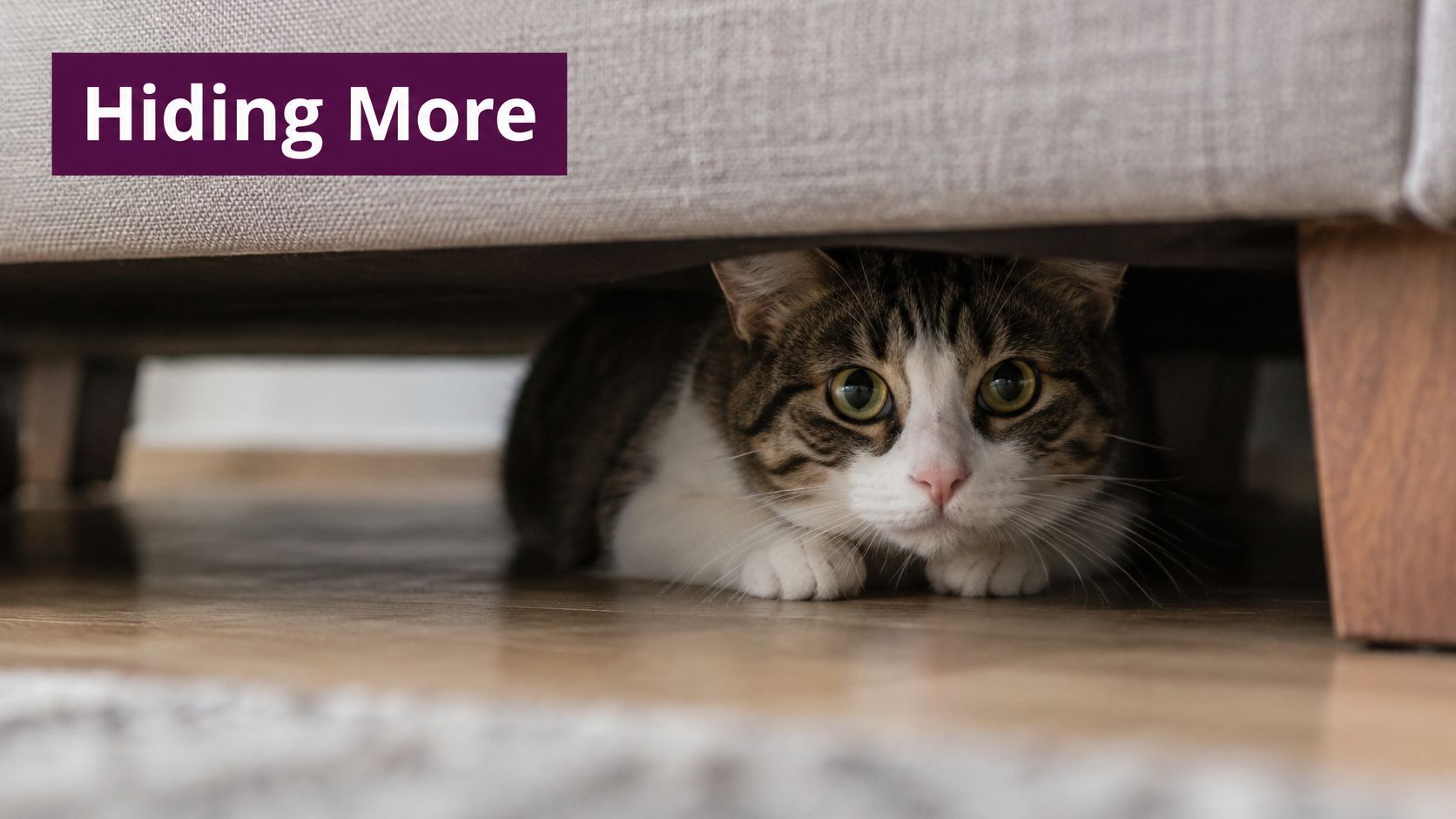
Offer Safety Without Extracting the Cat
Say a new dog arrives and your cat retreats upstairs. Give the cat a dog-free room with accessible food, water, litter, and resting places, plus a secure high perch if they can comfortably reach it.
Sit nearby, offer a slow blink, and let your cat decide whether to approach. Pulling them out for reassurance can remove the control they're trying to regain.
A hideaway should be a safe choice, not a place where a sick cat disappears unnoticed.
Call your vet when hiding is sudden, persistent, or accompanied by reduced eating, unusual posture, movement changes, or toileting problems. Seek urgent advice if your cat seems profoundly weak or has breathing difficulty.
A cozy bed from FloofChonk's comfort collection can help furnish a quiet retreat, but avoid crowding the entrance with accessories. Floofie's guide to calming a stressed cat offers more gentle starting points. If travel will disrupt your routine, prepare anxious pets for your trip before departure rather than introducing everything at once.
3. 🧶 Lost Interest in Play and Toys 🪄
The feather wand wiggles. Your usually enthusiastic hunter watches without lifting a paw. Before declaring your cat bored, check whether they've also stopped jumping, climbing, or stretching.
Pain can look like lost enthusiasm. The AAFP senior-care guidance describes behavioral changes in older cats and emphasizes the importance of recognizing discomfort rather than dismissing reduced activity as aging.
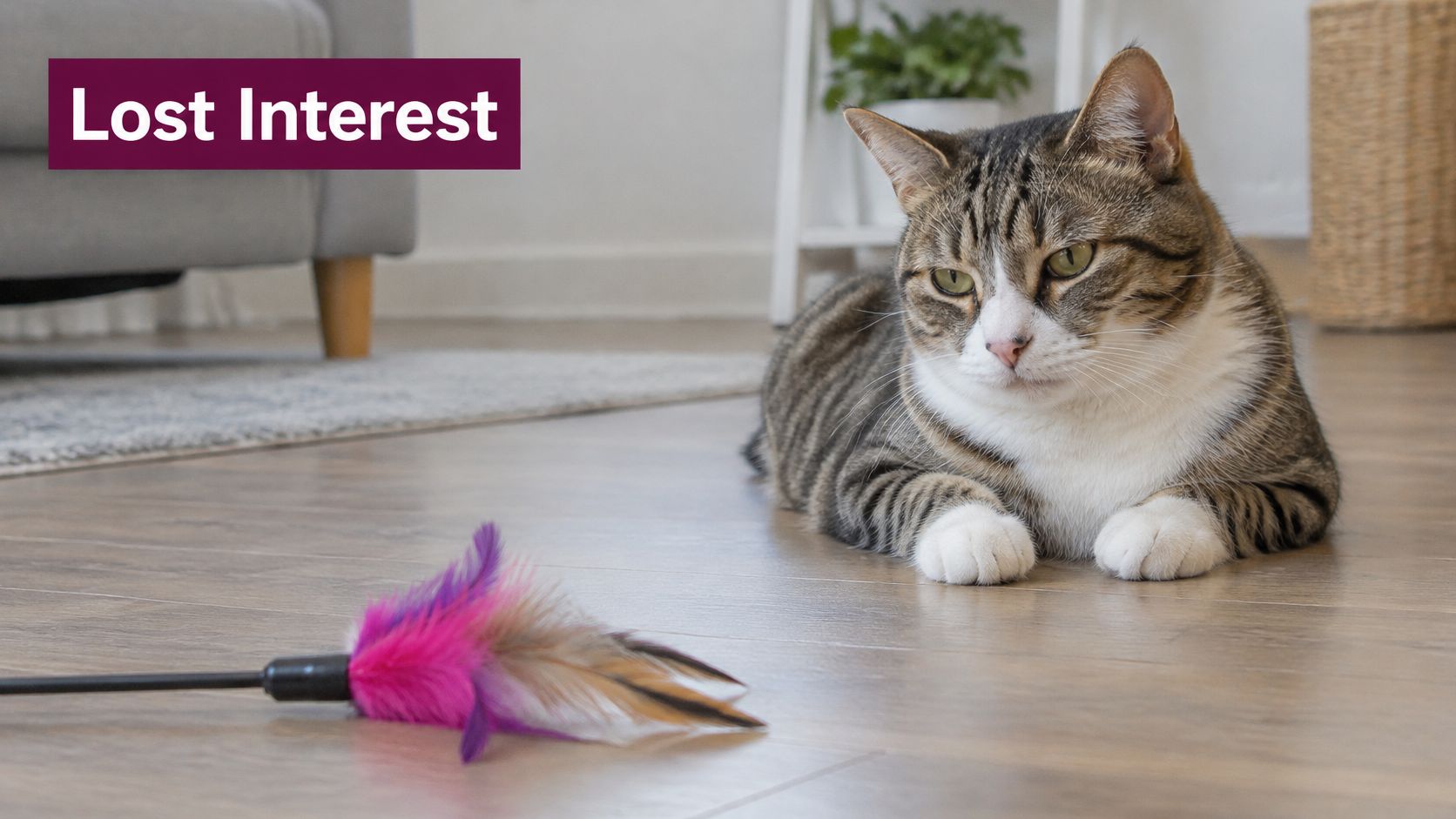
Change the Game, Not the Pressure
Try dragging a wand slowly along the floor instead of asking for aerial leaps. Let your cat stalk from cover and finish with a satisfying catch, then stop before they become frustrated or tired.
- Watch movement: Hesitation before jumping, stiffness, or limping deserves veterinary attention.
- Match preferences: Some cats prefer ground-level prey; others enjoy fluttering toys.
- Offer choice: Rotate available toys without surrounding your cat with unfamiliar gadgets.
For example, a cat who still bats a toy while lying down but won't chase it across the room may have a mobility limitation. That's useful information for your vet, not proof that the cat needs a more exciting toy.
Arrange an examination for a persistent or sudden loss of play, especially when mobility, appetite, or sociability changes too. Stop the game if your cat appears uncomfortable.
Floofie's playful pick is a smart UFO cat toy, available through FloofChonk, for cats comfortable with moving toys. Supervise introductions and switch it off if your cat retreats or freezes. The guide to finding your cat's favorite toy can help you choose engagement over gadget overload. 🛸
4. 😴 Sleeping Much More and Seeming Lethargic 💤
Sleeping and lethargy aren't the same observation. A cat who naps peacefully but wakes readily for dinner differs from a cat who stays dull, reluctant to move, and uninterested when awake.
Compare your cat with their own normal rhythm rather than another household's energetic kitten. AAHA's discussion of depression-like signs in pets explains why changes in sleep, activity, social behavior, and appetite need a medical as well as behavioral assessment.
Check the Awake Moments
Note whether your cat still stretches, walks comfortably, investigates familiar sounds, and comes for meals. Record a brief video of slow rising or unusual movement if you can do so without disturbing them.
Say your cat begins spending the afternoon in a downstairs bed instead of an upstairs window. They might prefer the quieter room, but avoiding stairs could also reflect discomfort. Put essentials within easy reach while you arrange advice, rather than repeatedly carrying the cat upstairs to test them.
- Reduce effort: Keep food, water, and litter accessible.
- Invite gentle activity: Offer a slow-moving toy, without chasing or waking your cat repeatedly.
- Describe the change: Tell the clinic whether your cat is sleeping longer, moving less while awake, or both.
Contact your vet promptly for new, marked, or persistent lethargy. Breathing difficulty, collapse, severe weakness, or lethargy alongside not eating warrants urgent assessment, not an enrichment experiment.
Floofie approves of comfortable rest, not sleeping through warning signs. A washable plush bed or blanket from FloofChonk's home and pet selection can make an accessible resting area inviting. Choose an easy-entry design if stepping over a high bolster looks difficult.
5. ✨ Unkempt Coat and Neglected Grooming 🪮
A greasy back, clumped fur, or newly tangled hindquarters can be easier to spot than a change in mood. Check beneath the fluff, because a long coat can conceal both mats and changes in body condition.
Reduced grooming can reflect discomfort, limited mobility, stress, or illness. Where the coat changes can provide a clue: a cat who cleans their face but no longer reaches their lower back may be struggling with the movement involved. It doesn't tell you the diagnosis.
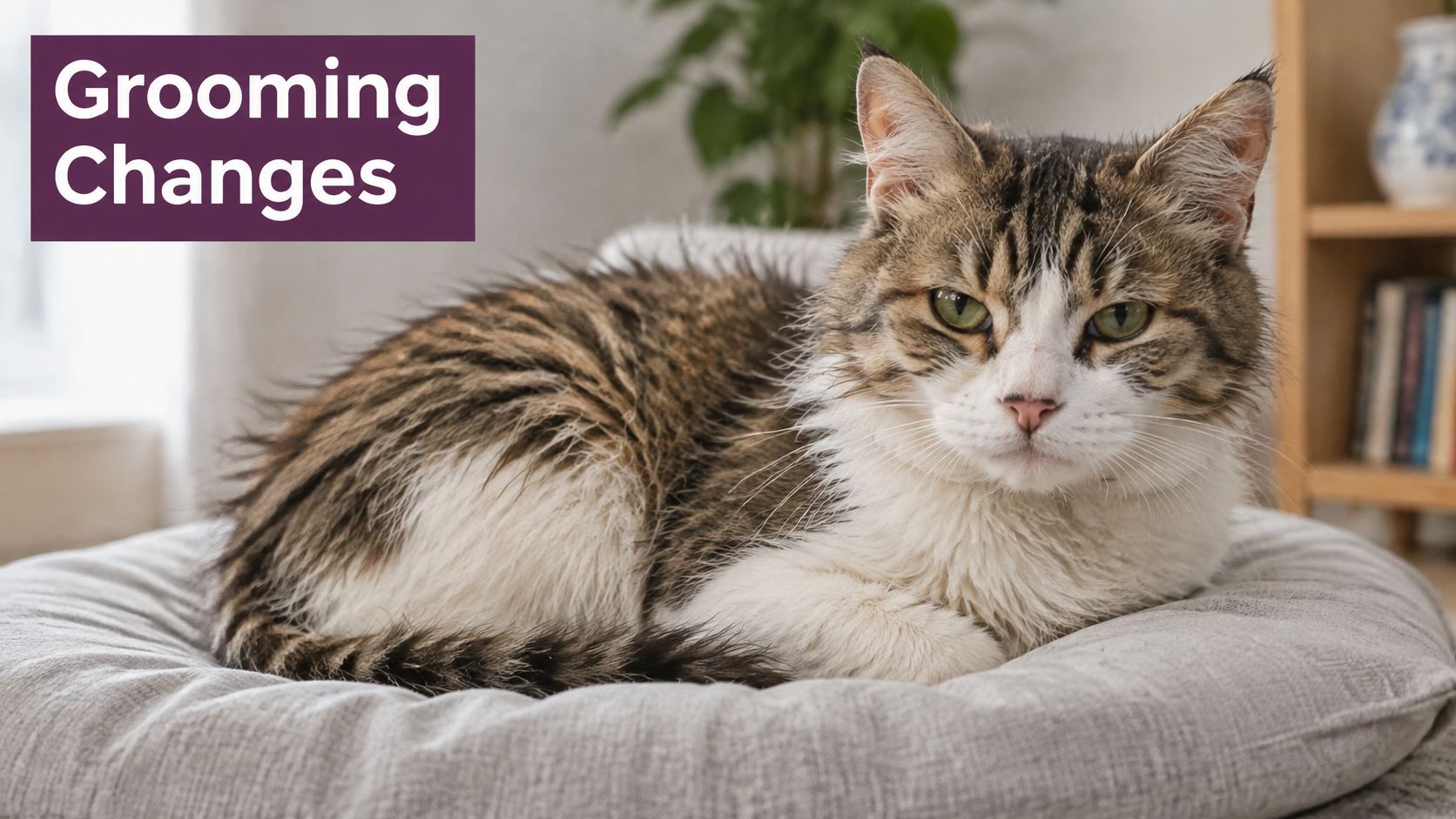
Help With the Coat Without Hurting the Skin
Use a soft brush on an area your cat accepts, then pause. Check the belly, underarms, and hindquarters gently, and stop if your cat flinches, growls, twists away, or appears sore.
For example, a senior cat with a newly scruffy back needs more than a brushing appointment. Your vet can assess mobility and pain while you provide comfortable bedding and gentle coat maintenance.
- Avoid pulling: Don't tug through tight mats.
- Skip scissors: Skin can be caught within a mat; ask a veterinary team or experienced groomer for safe removal.
- Report skin changes: Redness, sores, odor, or repeated licking deserve attention.
Book a veterinary appointment for a noticeable decline in grooming, especially if your cat is also less active or reluctant to be touched. Painful mats or damaged skin need prompt professional help.
Browse FloofChonk's grooming accessories and pet products for suitable tools, checking the brush design against your cat's coat and tolerance. Floofie's verdict is simple: a comfortable cat matters more than a salon-perfect finish. 💅
6. 🚽 Litter Box Changes and Accidents 🧻
An accident beside the box isn't spite, and it isn't proof of depression. Start by checking whether your cat can comfortably reach the box, enter it, and use it without another animal interrupting.
The AAFP intercat-tension guidelines explain that household conflict can inhibit normal eating, activity, sleep, and elimination. Subtle blocking or staring matters even when nobody's having a dramatic fur-flying argument.
Separate an Access Problem From an Emergency
Say your cat begins toileting upstairs after another cat starts guarding the hallway. Add an accessible box in a separate, quiet location, but still tell your vet about the new accidents. Social pressure and physical illness can occur together.
Seek immediate veterinary care if your cat repeatedly strains and produces little or no urine, particularly a male cat. Don't assume they're constipated, wait for a bigger accident, or try to solve it with a different litter.
Bathroom safety: A new mat can catch litter. It cannot fix painful urination or an obstruction.
For other new litter changes, contact your vet promptly and describe urine output, stool appearance, frequency, and any crying or blood. Increased drinking is also useful information.
- Keep access open: Avoid locations where another pet can trap the user.
- Maintain familiarity: Scoop regularly and avoid abrupt litter changes.
- Ease entry: Consider a low-entry box when mobility is limited.
A cat-themed litter mat from FloofChonk's pet accessories can help keep the surrounding floor tidy. Choose a surface your cat will willingly cross and position it so it doesn't become another obstacle. Floofie prefers a functional bathroom to a fancy but frightening one. 🐾
7. 🗣️ Changes in Vocalization and Affection 💕
Your chatty companion goes quiet, or your independent cat suddenly follows you from room to room. Either change deserves curiosity, not an immediate sadness label.
Listen for context. Does the yowling happen near the litter box, before jumping, when you touch a particular area, or when another cat approaches? Pain, illness, fear, and environmental stress can all change how a cat interacts.
Respond to the Pattern
The AAFP feline behavior guidelines emphasize predictable routines, appropriate resources, and opportunities for cats to control social contact. That makes offered affection more useful than compulsory cuddles.
For example, a cat who becomes clingy after your work schedule changes may benefit from predictable arrival, feeding, and play routines. But new nighttime crying or sensitivity to touch still warrants a medical conversation rather than just adding attention.
- Capture context: Record the sound and note what happened immediately before it.
- Offer contact: Try a slow blink or gentle head rub if your cat approaches.
- Respect the exit: Stop when your cat turns away, stiffens, or leaves.
Call your vet for a sudden or persistent vocal change, unusual nighttime crying, or a marked change in affection. Seek urgent help when vocalizing accompanies breathing trouble, severe pain, or unsuccessful attempts to urinate.
Floofie knows a plush friend can look adorable, but it isn't a replacement for you, a compatible companion, or veterinary care. Explore a FloofChonk interactive toy or cat-themed plush according to your cat's preferences, checking suitability before leaving anything unattended. Don't bring home another cat as an automatic cheer-up strategy; a new housemate may add stress instead. 💖
8. ⚖️ Weight Loss and Changes in Body Condition 🐾
A collar feels looser. Your cat's spine seems more prominent beneath your hand. Those changes deserve attention even if a thick coat makes your kitty look much the same.
Unexplained weight loss needs veterinary assessment, not a mood-based explanation. Reduced intake can accompany stress, but physical disease can also change appetite, digestion, and energy. The Merck Veterinary Manual's guide to feline gastrointestinal disorders describes appetite loss, lethargy, vomiting, and abdominal discomfort among signs of significant illness.
Measure Rather Than Guess
Use a pet or baby scale if your cat will stand comfortably on it. Alternatively, weigh yourself holding your cat and subtract your own weight, recognizing that a household scale may miss subtle changes.
Keep the method and conditions consistent. Pair the weight entry with notes about appetite, drinking, vomiting, stool, and activity, rather than recording weight alone.
Say your cat eats from a shared bowl and starts feeling bonier. Separate feeding helps reveal their actual intake, while a veterinary appointment addresses why their condition has changed. Don't wait for visibly dramatic weight loss.
- Feel gently: Notice changes around the ribs, spine, and hips without repeatedly pressing.
- Track muscle too: A cat can lose muscle without an obvious change in their overall outline.
- Avoid guesswork feeding: Ask your vet about appropriate food and portions rather than adding rich treats indiscriminately.
Arrange a prompt appointment for unexplained weight loss or muscle loss. Call sooner if it accompanies poor appetite, weakness, vomiting, or altered drinking and urination.
A cat-themed notebook or journal from FloofChonk's accessories selection can keep observations together. Floofie loves celebrating healthy progress, but the useful milestone is a veterinary explanation and care plan, not a higher scale reading. 📓
8 Signs Your Cat May Be Depressed at a Glance
| Sign | What You'll Notice | Possible Medical Cause | Vet Urgency | FloofChonk Pick |
|---|---|---|---|---|
| Appetite changes | Eating less, skipping meals, or eating more than usual | Dental pain, nausea, kidney disease, hyperthyroidism, or infection | Contact a vet if your cat eats very little for over 24 hours | Cat-themed feeding mat or bowl |
| Hiding and withdrawing | Spending more time hidden and avoiding people or pets | Pain, illness, or stress from environmental changes | Arrange a vet check for sudden or prolonged withdrawal | Cozy cat bed or plush accessory |
| Lost interest in play | Ignoring toys and doing less chasing or pouncing | Arthritis, dental pain, or other discomfort | Contact a vet if the change persists or your cat seems painful | Smart UFO cat toy |
| Sleeping more and lethargy | Sleeping beyond their usual routine, moving less, or responding slowly | Infection, anemia, heart disease, diabetes, or pain | Seek care if it lasts more than a day or two, or comes with other symptoms | Plush bed or blanket |
| Unkempt coat and neglected grooming | Greasy, dull, matted, or less-groomed fur | Arthritis, obesity, stress, or illness | Ask a vet if grooming declines or your cat struggles to reach areas | Grooming accessories or brushes |
| Litter box changes | Accidents, straining, frequent trips, or changes in stool | Urinary disease, kidney issues, or diabetes | Immediate care if a male cat strains without producing urine; otherwise, seek prompt evaluation | Litter mats and accessories |
| Changes in vocalization and affection | More or less meowing, night yowling, or changed cuddling habits | Hearing loss, cognitive decline, hyperthyroidism, high blood pressure, or pain | Contact a vet for a new voice change, discomfort, or aggression | Plush or interactive companion toy |
| Weight loss and body condition changes | Weight loss, prominent bones, or reduced muscle tone | Hyperthyroidism, diabetes, kidney disease, cancer, or reduced appetite | Schedule a prompt veterinary visit for unexplained weight loss | Cat-themed journal for tracking |
Floofie's Final Whisker Wisdom, Help Your Kitty Purr Again 🌈
Recognizing signs your cat is depressed is the beginning, not the diagnosis. Your most useful next move is to describe what changed, decide whether your cat needs urgent care, and help your veterinarian investigate the cause.
Start with a manageable record of eating, drinking, litter output, grooming, movement, and interaction. Add the timing of household changes, such as a move, missing family member, new pet, or altered work schedule. Short videos can show behaviors that disappear during a clinic visit.
Build a Recovery Plan Around Your Cat
Structured quality-of-life questionnaires can help you follow comfort, vitality, and emotional wellbeing over time. The review of feline quality-of-life assessment tools describes validated approaches that look beyond an isolated sign such as sleeping more. Ask your veterinarian whether a suitable questionnaire would help monitor your cat's response to care.
Don't delay an examination to collect a perfect record. A cat who isn't eating, struggles to urinate, has breathing difficulty, or becomes markedly weak needs action, not more observation.
Once your vet has assessed medical causes, make home support specific to the problem. A cat frightened by another pet needs protected resources and escape routes; a cat with reduced mobility needs comfortable access; a cat lacking stimulation may enjoy well-matched play.
- Keep routines predictable: Make meals, quiet company, and play reliably available.
- Change thoughtfully: Introduce enrichment gently so you can see what your cat enjoys.
- Review progress: Tell your vet when signs persist, worsen, or return, even if another behavior improves.
Comfort Is Support, Not a Cure
A familiar bed, suitable brush, or engaging toy can make daily care easier. None replaces pain relief, treatment for illness, or a behavior plan when those are needed. There's no prize for buying the most accessories; choose what solves a real problem for your particular cat.
Floofie's favorite approach combines patient observation with practical kindness. Let your cat decline a cuddle, finish a pretend hunt, and rest somewhere they feel secure. Celebrate comfortable movement, steady eating, and renewed curiosity without expecting every cat to become a zoomie champion.
When you're ready to add something useful, explore FloofChonk's cat-focused shop for toys, pet accessories, cozy finds, and feline-themed treats for humans, with worldwide shipping available. Choose your cat's next comfort upgrade around their needs, and keep your veterinary team involved as those needs change. Happy purrs start with listening to the whole cat. 🐾💖
FloofChonk offers smart UFO cat toys, pet accessories, and cat-themed home comforts to support thoughtful play and cozy routines. Visit FloofChonk to choose a Floofie-approved addition that suits your kitty's preferences, alongside the veterinary care they need.