
Why Do Cats Go Crazy on Catnip? A Floofie-Approved Guide 🐾

Ever wondered why a little pinch of green flakes turns your otherwise sophisticated kitty into a furry acrobat? 😼 The secret lies in a fascinating molecule called nepetalactone, tucked away inside the catnip plant. When your cat gets a whiff, this compound sets off a short-lived, euphoric party in their brain, causing all that goofy, lovable behavior we know and love. Our mascot, Floofie, is here to show you the ropes!
The Secret Behind Your Cat's Catnip Craziness 🌿
Welcome to the wonderfully wacky world of catnip! Our official mascot, Floofie, is here to demystify why our feline friends go absolutely bonkers for this special herb. It’s one of the best parts of being a cat parent—watching your dignified fluffball suddenly roll, flip, and zoom around like they’re at the best party ever. 🎉
This wild reaction is all thanks to a potent chemical called nepetalactone. Found in the leaves and stems of the Nepeta cataria plant, this little molecule cleverly mimics feline pheromones. When your cat sniffs it, the scent molecules latch onto special receptors in their nose, kicking off a playful frenzy that usually lasts about 15-30 minutes.
Interestingly, research from Texas A&M has shown that nepetalactone actually activates a cat's opioid systems. It gives their "happiness hormones" a little spike, creating a feeling of pure, unadulterated bliss. It's like a big, warm hug for their brain! 🥰
Floofie's Quick Guide to the Catnip Craze 🤪
So, what does this catnip-fueled craziness actually look like in action? Here’s a quick breakdown of the journey your cat takes from chill to thrill.
| The Trigger | The Reaction | The Feeling |
|---|---|---|
| Sniffing Nepetalactone | Rolling, rubbing, and purring | A state of pure kitty euphoria |
| Brain Receptors Activated | Hyperactivity and playful pouncing | Excitement and pure joy |
| Ingesting the Herb | Calmness and mellow behavior | A relaxed, zen-like bliss |
Understanding this process is the first step to becoming a true catnip connoisseur. It’s not just random silliness; it’s a fascinating biological response that offers amazing enrichment for your pet.
To get even deeper into the science behind this fun phenomenon, be sure to check out our complete guide on what catnip does to cats. Now, let’s explore this in more detail! 🐾
How Catnip Hijacks Your Cat's Brain Chemistry 🧠
Alright, cat parents, it's time to put on our imaginary lab coats and peek inside your kitty's brain to see what's really going on. Why do cats go so bonkers for catnip? It’s less like mad science and more like a secret party invitation delivered straight to their nose.
Think of your cat's nose as a super-advanced, high-tech scanner. The secret ingredient in catnip, a chemical called nepetalactone, is like a special, magical key. When your curious kitty takes a big whiff, this key flies right up their snoot and fits perfectly into a secret lock.
This special lock is called the vomeronasal organ, a scent detector located on the roof of their mouth. It's specifically designed to pick up on special social cues, like pheromones. When nepetalactone clicks into place, it's like flipping a giant "PAWTY TIME" switch in their brain. 🥳
The 'Fun Zone' Gets Activated
Flipping this switch sends an instant message to your cat's 'fun zone'—specifically, two areas called the amygdala and the hypothalamus. These parts of the brain are in charge of emotions and how your cat responds to things. Suddenly, your cat's brain is flooded with signals that pretty much scream "YAY!" and "PLAY!"
This is the moment your cool, calm, and collected kitty turns into a goofy, rolling, purring machine. It's a temporary and completely safe state of euphoria that makes them feel playful, happy, and just a little bit wild. They aren't just being silly; their brain chemistry is literally having the time of its life!
This simple flow chart breaks down how the catnip magic happens, from the plant to the purr.
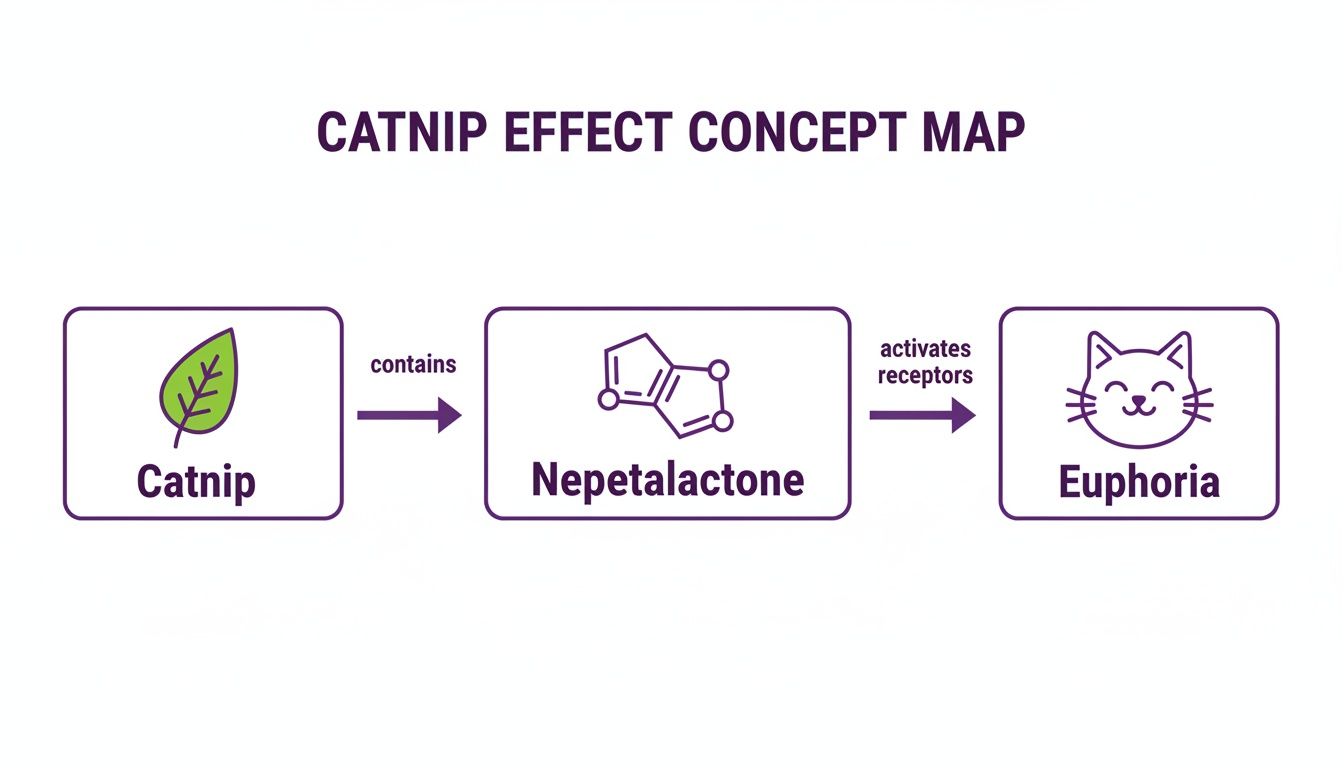
As you can see, that little nepetalactone molecule is the direct link between sniffing the leaf and feeling that blissful, goofy euphoria.
Is Your Cat on the Guest List?
Ever wonder why your friend's cat goes absolutely bonkers for catnip, while yours just gives it a polite sniff and walks away? The answer is all in their genes! The reaction to catnip is a hereditary trait, meaning it’s passed down from kitty parents to their kittens.
Floofie says: Think of it like a VIP pass to the catnip pawty. Roughly 70% of cats are born with this genetic "guest list" status, while the other 30% simply don't have the receptors to join the fun. It's nothing personal—they just aren't wired for it!
Age also plays a huge role here. If you've ever tried giving catnip to a tiny kitten, you probably got zero reaction. That’s because they’re too young for the club! Kittens typically need to be at least six months old before their brains develop the ability to respond to nepetalactone. So, if your little one isn't interested, just give them some time to grow into their party paws. 🐾
And for the kitties who aren't on the list, don't worry! We've got plenty of other ways to spoil them, like with our awesome Smart UFO Cat Toy that brings all the fun, no 'nip required.
How to Use Catnip for Maximum Fun and Bonding
Alright, science class is dismissed—it's officially playtime! 🎉 Now that you know the why behind your cat's wild catnip antics, it's time to dive into the fun part: using it to make their life even more awesome.
Our head floof, Floofie, is here to share his top tips for turning this magical herb into a tool for bonding, exercise, and pure, unadulterated joy.
Introducing catnip to your feline friend is super simple. Just start small by sprinkling a tiny pinch on the floor and letting them investigate on their own terms. You'll know pretty quickly if they're part of the lucky majority that goes gaga for it!
Turn Playtime into an Epic Adventure 🚀
One of the best ways to use catnip is to supercharge playtime. A boring old Tuesday afternoon can instantly transform into an exciting adventure with just the right catnip-infused toy. It’s a fantastic way to encourage a bit of exercise, bust stress, and keep your kitty mentally sharp.
Since a whopping 68-79% of cats respond with pure joy, it's a top pick for under-stimulated pets who might otherwise get into mischief (like deciding your sofa is a scratching post). A little catnip can be a game-changer for redirecting that energy. This fascinating study on cat responses has even more insights.
Floofie's Pro Tip: Less is definitely more! To keep the catnip magic alive and potent, it's best to offer it as a special treat just 2-3 times per week. This little trick prevents your cat from getting too used to it, ensuring every 'nip session feels just as exciting as the first.
Creative and Fun DIY Catnip Ideas
Ready to get a little creative? There are tons of fun ways to bring catnip into your cat's routine beyond just sprinkling it on a toy.
Here are a few of Floofie's favorite DIY ideas to get you started:
- Refresh Old Toys: Has your cat totally lost interest in their favorite fuzzy mouse? You can revive it by making a simple catnip spray. Just steep some fresh or dried catnip in hot water, let it cool completely, and pour it into a spray bottle. A quick spritz makes old toys smell brand new and irresistible again.
- Supercharge Scratching Posts: Encourage healthy scratching habits by rubbing dried catnip directly onto their scratching posts or cardboard scratchers. This makes the post a much more attractive target than your furniture. 😉
- Elevate Treat Time: Make puzzle feeders even more engaging by sprinkling a little catnip along with their favorite treats. It adds an extra layer of sensory fun and gets them to work for their reward, which is great for their brain.
While catnip is overwhelmingly safe, it’s always smart to know what to look for. In very rare cases, a cat might show signs of an allergy. Learn more about the signs of a catnip allergy in our detailed guide.
By using catnip thoughtfully, you can provide endless enrichment and create some truly unforgettable moments with your furry best friend.
Exploring Fun Alternatives to Catnip 😻
Is your kitty totally unimpressed by catnip? Don't worry, you're not alone! About 30% of cats don't have the "catnip gene," meaning they're simply immune to its zany effects. But the pawty isn't over—not by a long shot.
Floofie says to think of it like this: some people love cilantro, while others think it tastes like soap. Cats have their own unique preferences, too. If your furball gives catnip a polite sniff and walks away, one of these incredible plant-based alternatives might just be the key to unlocking their goofy, playful side.
Meet the Catnip Crew Alternatives
Let's dive into the top contenders in the world of feline enrichment. Each one offers a unique experience that can get even the most serious kitty ready to play.
-
Silver Vine (The Superstar): If catnip is a fun little buzz, Silver Vine is the full-blown rock concert. Hailing from East Asia, this potent plant contains multiple cat attractants, making it a smash hit with a much wider audience. In fact, studies show nearly 80% of cats who give catnip the cold shoulder go absolutely bonkers for Silver Vine. Expect more intense reactions like blissful drooling, full-body rolls, and happy cheek rubs.
-
Valerian Root (The Zen Master): Looking for something a little more chill? Valerian is your answer. While it can cause an initial burst of playful energy, its main event is promoting a deep sense of calm and relaxation. It has a pungent, earthy smell that humans might find a bit... much, but many cats find it completely irresistible. It's a fantastic choice for helping an anxious kitty unwind and find their zen.
-
Tatarian Honeysuckle (The Hidden Gem): This one is a bit of an insider secret! While most honeysuckle isn't safe for cats, the wood of the Tatarian variety is a wonderful and often overlooked option. It works its magic on about 50% of cats who don't respond to catnip. The reaction is pretty similar—playfulness and euphoria—but it provides a totally different scent profile for your cat to explore.
Catnip and Friends: A Comparison of Feline Favorites
Feeling a little dizzy with all the options? Floofie gets it. Here’s a quick-glance table to help you compare these fabulous plants and find the perfect match for your furry friend's personality.
| Plant | Active Compound | Typical Reaction | Response Rate |
|---|---|---|---|
| Catnip | Nepetalactone | Playful, euphoric, then calm | ~70% of cats |
| Silver Vine | Actinidine & others | Intense euphoria, rolling, drooling | ~80% of cats |
| Valerian Root | Actinidine & Valerenic Acid | Initial playfulness, then deep relaxation | ~50% of cats |
| Tatarian Honeysuckle | Unknown | Similar to catnip; playful excitement | ~50% of 'nip-resistant cats |
Ultimately, finding the right stimulant is a wonderful way to enrich your cat's environment and provide some much-needed mental and physical exercise. For more ideas on how to make playtime truly spectacular, check out our ultimate guide to the best pet toys for cats.
Now go on and find your kitty's next favorite obsession! 😻
The Hidden Benefit of Catnip: Bug Repellent
Get ready for a mind-blowing fact that will make you see your cat's goofy rolling in a whole new light! When your cat frantically rubs and rolls all over their catnip, they're not just having a good time—they're actually applying a natural bug repellent! 🦟
It’s like your cat is performing an ancient, instinctual ritual, giving themselves a protective shield while having the time of their life. This amazing dual-purpose action means every catnip session has a hidden, practical benefit. It’s a fantastic bonus for both indoor and outdoor cats, especially during those buggy summer months.
Nature's Smartest Bug Shield
So, how does this actually work? That magical molecule, nepetalactone, is the star of the show once again. When your cat enthusiastically rubs against the catnip plant or a toy, they're transferring its potent oils directly onto their fur. Research has revealed that this action is incredibly effective at warding off pesky insects.
A groundbreaking study confirmed this bonus perk: when cats rub against catnip, the nepetalactone coats their fur and can slash mosquito landings by as much as 50%. This explains why all that "crazy" rolling is so important—it’s how they apply their all-natural bug spray!
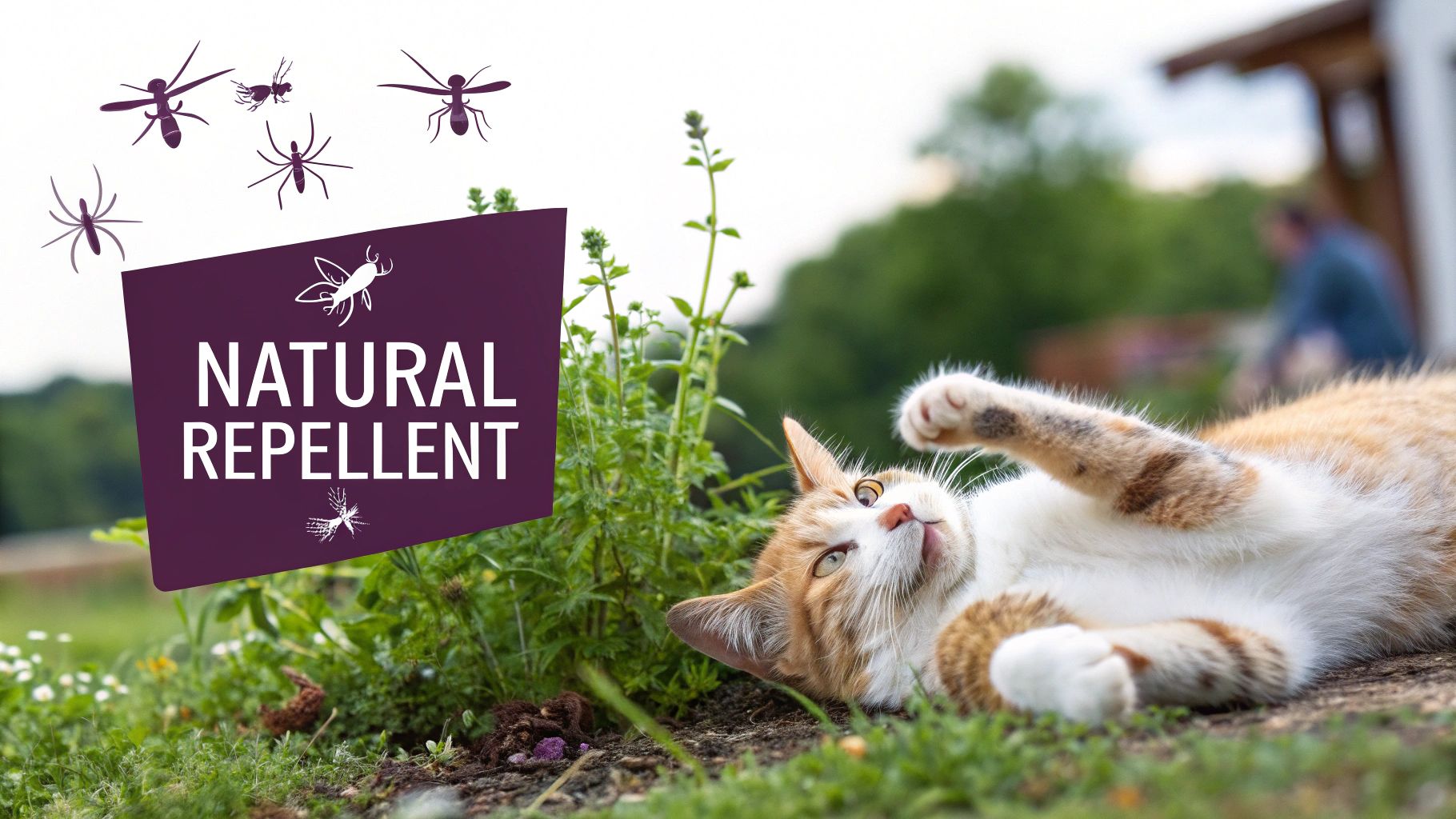
This means giving your cat a fun catnip toy is not only fantastic for enrichment but also a clever way to help keep annoying bugs at bay. Talk about a win-win for our furry friends!
Beyond its amazing effect on cats, catnip is also recognized for its power as a natural bug repellent for humans, too. If you're interested in exploring other natural methods for ant control, there are many approaches homeowners can take to keep their spaces pest-free.
Catnip Myths Debunked for Safe Playtime
Let's clear the air, cat paw-rents! When you see your kitty going wild for catnip, it’s only natural for your mind to race with questions. Is it safe? Is it some kind of kitty "drug"? Floofie is here with his official fact-checker hat on to bust some common myths! 🕵️♂️
First and foremost, catnip is 100% non-addictive and completely safe for your furry friend. A cat can't become dependent on it, so you can breathe a huge sigh of relief. The goofy "high" is just a temporary, playful reaction to a natural herb—not a harmful substance.
Can a Cat Overdose on Catnip?
So, can your kitty have too much of a good thing? While they can't overdose in a dangerous way, going a little too hard might lead to a mild, temporary tummy ache or some diarrhea. Think of it like a human eating way too much birthday cake—not exactly ideal, but definitely not harmful long-term. 🎂
Floofie says: Your cat is a pro at self-regulating. Once they've had their fill of fun, they’ll simply walk away and become temporarily immune to its effects for a little while. This built-in "off switch" is nature's way of ensuring playtime stays safe and fun.
So, go ahead and let your cat enjoy their catnip-fueled adventures with complete peace of mind.
To get the pawty started, try sprinkling some on one of our FloofChonk cat toys and watch the zoomies begin! You're providing safe, healthy enrichment that speaks their language.
Your Top Catnip Questions Answered
Still have a few lingering questions about this magical herb? Of course you do! Floofie has gathered some of the most common curiosities that pop up when it comes to catnip. Let's clear the air so you can get back to the fun.
How Long Should I Let My Cat Play With Catnip?
A good, wild catnip session usually lasts about 10-15 minutes. After that initial burst of fun, your cat will likely become immune to its effects for an hour or two while their brain resets.
The best approach is to offer catnip toys for a short, supervised playtime and then put them away. This little trick keeps the experience novel and exciting. Sticking to 2-3 catnip pawties a week is a great way to keep it feeling special and potent every single time!
What's the Difference Between Dried, Fresh, and Spray Catnip?
Think of them as different levels of intensity. Fresh catnip leaves and stems are the most powerful form because the nepetalactone oils are at their absolute peak. If you can grow it yourself, you're giving your cat the top-shelf stuff. 🌿
Dried catnip is what you'll find in most toys and shakers. It's still incredibly effective, but it can lose some of its punch over time as the oils evaporate. Catnip sprays, which contain catnip oil extract, are perfect for rejuvenating old toys or spritzing a scratching post to make it interesting again. Sprays are generally less intense, which can make them a great starting point for a cat who's new to the scene.
Floofie's Pro Tip: To keep your dried 'nip fresh and powerful, store it in an airtight container in the freezer. This locks in those magical oils and keeps it ready for the next play session!
Is It Normal for My Cat to Just Eat the Catnip?
Oh, absolutely! Every cat is different and has their own unique way of enjoying it. Sniffing the catnip is what typically triggers that goofy, hyperactive behavior we all know and love.
Eating or licking it, on the other hand, often has the opposite effect. It can act more like a sedative, making your cat feel mellow, relaxed, and maybe even a little drooly before they settle down for a nice nap. Both reactions are completely normal and totally safe. Just be sure to offer it in moderation, as gobbling up too much could lead to a minor tummy ache. 🐾
Ready to unleash the fun? Spoil your favorite feline with toys that are guaranteed to get the party started. FloofChonk has everything you need to create unforgettable moments with your furry best friend. Check out our amazing collection of cat toys now