
What Is the Best Room Temperature for Cats? A Purrfect Guide

So, you want to create the perfect cozy paradise for your cat? Let's get right to it! Our mascot Floofie gives two paws up to this mission. 👍👍 The sweet spot for most adult cats is a room temperature between 70-80°F (21-27°C). Keeping your home in this range means they won't have to work overtime to stay warm or cool down, which makes for one happy, relaxed kitty.
Decoding Your Cat's Internal Furnace
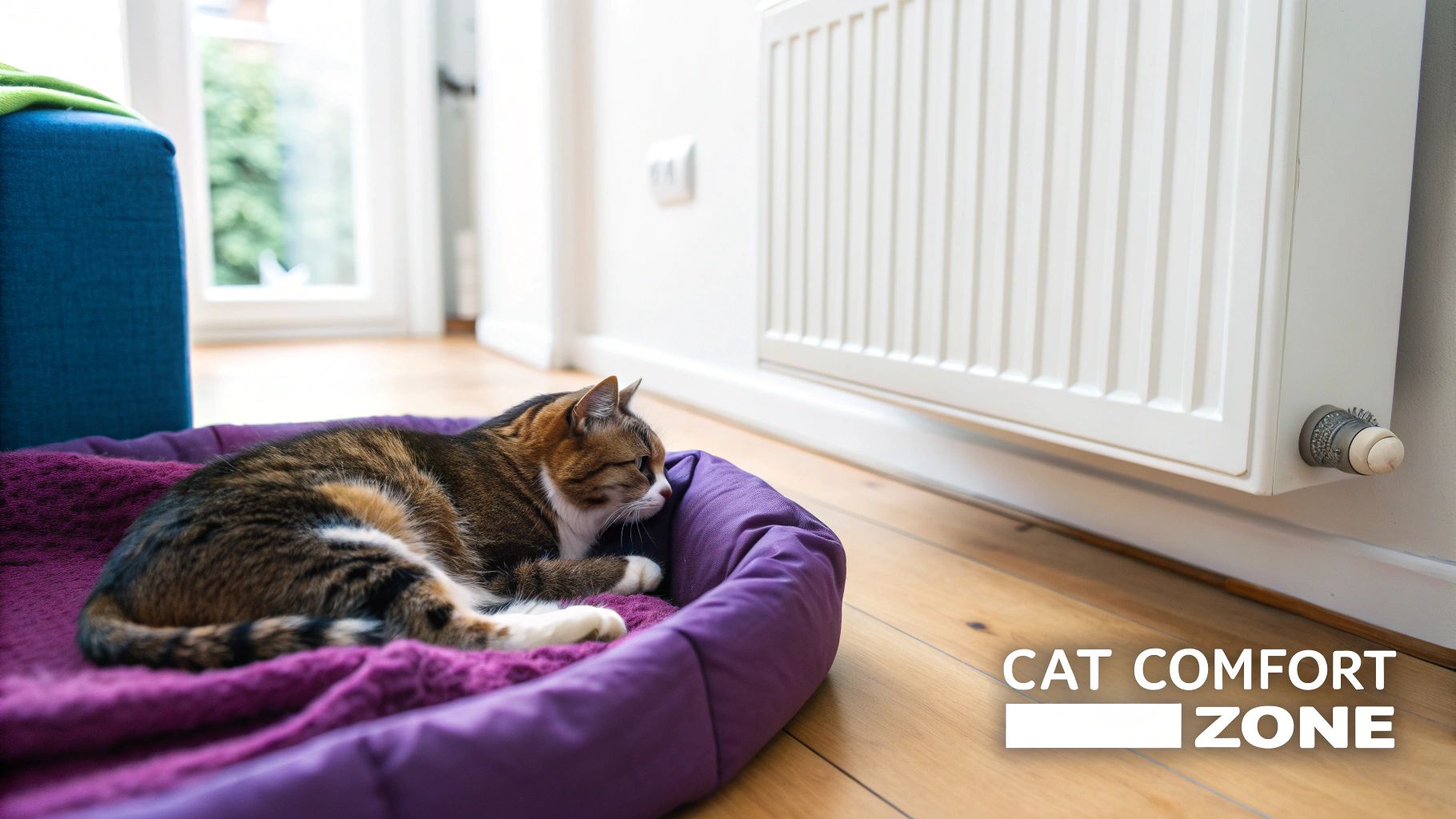
Ever find yourself grabbing a sweater while your cat is stretched out on the floor in pure bliss? It’s because cats are basically tiny, solar-powered heat magnets! 🧲 Their ancestors were desert dwellers, which means their bodies are naturally built to handle warmer climates.
This brings us to a fascinating concept called the thermoneutral zone (TNZ). You can think of the TNZ as your cat's personal "just right" temperature bubble—the range where their body doesn't need to burn any extra energy to stay comfortable. When they're in this zone, they aren't shivering or panting. They're just... vibing. ✨
Understanding Feline Thermoregulation
Here's where it gets interesting: a cat's thermoneutral zone is much higher than ours. Research shows that a cat's TNZ is a balmy 86-101°F (30-38°C), while we humans are happiest in a much cooler 68-77°F (20-25°C).
This huge difference explains why your cat thinks your air-conditioned living room is a bit chilly, even when you feel perfect. It's also why they're professional heat-seekers, always finding the sunniest spot or the warmest laptop to nap on.
Floofie’s Fun Fact: That sunbeam nap isn't just about comfort—it's pure efficiency! By soaking up warmth, your cat is maintaining their ideal body temperature without having to lift a whisker.
Cat Comfort Quick Guide Ideal Temperature Ranges
Of course, not every cat fits the same mold. Just like with people, their perfect temperature can depend on age, breed, and health.
To help you find the perfect setting for your feline friend, Floofie and I have put together a simple guide. This table breaks down the ideal indoor temperature ranges for different types of cats, ensuring every kitty in your home is as comfortable as can be.
| Cat Type | Ideal Temperature Range (°F) | Ideal Temperature Range (°C) | Key Considerations |
|---|---|---|---|
| Healthy Adult Cat | 70-80°F | 21-27°C | This is the general sweet spot for most indoor cats. |
| Kittens & Seniors | 75-80°F | 24-27°C | They have trouble regulating body heat and need extra warmth. |
| Hairless Breeds | 75-85°F | 24-29°C | Lacking a fur coat, they get cold much more easily. |
| Long-Haired Breeds | 65-75°F | 18-24°C | Their thick fur can cause them to overheat in warmer rooms. |
By keeping these ranges in mind, you're well on your way to becoming an expert in cat comfort. For even more ways to pamper your pal, you should check out our collection of cat care essentials.
Why Your Cat Is a Solar-Powered Cuddle Machine
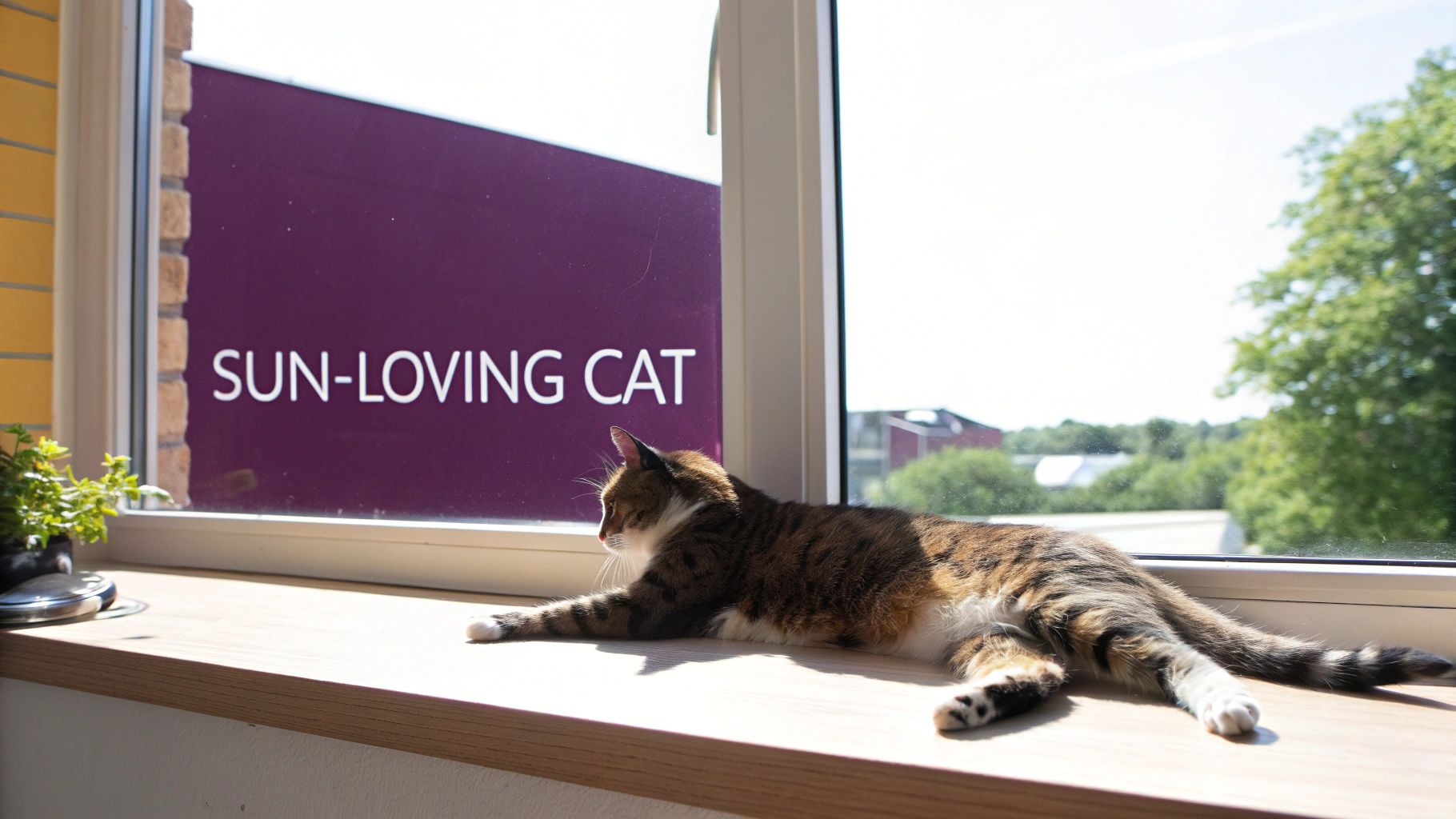
Ever watched your cat chase a sunbeam across the floor like it’s a sliver of pure gold? It’s not just one of their adorable quirks; it’s a brilliant, hardwired energy-saving strategy. Think of your little fur-friend as a highly sophisticated, solar-powered cuddle machine. ☀️
This heat-seeking missile behavior is a direct throwback to their wild ancestors, who were perfectly at home in the warm, dry climates of ancient deserts. Their entire biology is fine-tuned to conserve energy, and soaking up the sun is the easiest way to stay toasty without burning extra calories. This is a huge reason why finding the best room temperature for cats often means keeping your home a little warmer than you might personally prefer.
It all comes down to their high-octane internal engine. While you might be perfectly comfortable kicking back in a 72°F room, your cat is just getting warmed up. That's because their baseline body temperature runs much hotter than ours.
A Higher Internal Thermostat
For ages, vets agreed that a cat's normal body temperature was between 100.5-102.5°F (38-39.2°C). But a more recent, groundbreaking study of 200 healthy indoor cats found a slightly wider range of 98.1–102.1°F (36.7–38.9°C). Even at the low end, that's significantly toastier than a human's average of 98.6°F, which totally explains their obsession with all things warm.
This higher operating temperature means they feel a chill much more intensely than we do. It’s the secret motivation behind so many of their strange habits, from demanding to sit on your warm laptop to burrowing under every blanket they can find. If you want to dive deeper into their charmingly bizarre world, check out our article on why cats are so weird.
The Art of Feline Temperature Control
Cats are absolute masters of self-regulating their temperature, and they do it all through body language. If you pay close attention, you can become a true cat whisperer and figure out exactly what they need.
- The "Sploot": When a cat gets a bit too warm, you’ll often see them stretched out long on a cool surface like a tile or hardwood floor. This classic "sploot" maximizes their surface area, letting more body heat escape to cool them down.
- The "Doughnut": On the flip side, a chilly cat will curl up into a tight little ball, looking just like a furry doughnut. 🍩 This adorable pose minimizes their surface area, conserving precious body heat and keeping them snug.
- The Ear Check: A cat’s ears are fantastic little temperature gauges. If their ears feel unusually hot to the touch, they might be overheating. Cool ears can be a sign that they're feeling a bit cold and could use a warmer spot.
By observing these simple cues, you can adjust their environment to keep them perfectly comfortable. Maybe it’s time to crack a window for a breeze, or perhaps they’d appreciate a cozy spot to snuggle.
Adjusting Temperatures for Different Feline Friends
While a general temperature range works for most cats, our feline friends aren't one-size-fits-all. Some kitties just need a little extra TLC to stay comfy. The best room temperature for cats can change dramatically based on their age, breed, and health.
Think of it this way: a tiny kitten is like a baby who can't regulate their body temperature well, while a fluffy Persian is wearing a permanent winter coat. Each one needs a slightly different environment to thrive. Let's create the purrfect microclimate for your special companion! 😻
The Tiniest Kittens and Wisest Seniors
Little kittens under a few weeks old and our cherished senior cats share a common challenge: they struggle to maintain their body heat. Their internal thermostats just aren't as efficient, making them vulnerable to getting chilled easily, even in a room that feels perfectly fine to you.
For these delicate furballs, keeping the room a bit toastier is key. Aim for a consistent temperature between 75-80°F (24-27°C). This extra warmth provides a safety net, helping them conserve precious energy that would otherwise be spent just trying to stay warm.
A fantastic way to give them a constant source of comfort is with a gentle, pet-safe heated cat bed. It’s like giving them a warm, non-stop hug, especially on cooler nights.
The Nakey and the Fluffy Breeds
A cat's coat is its primary defense against the elements, so it's no surprise that fur (or the lack of it) plays a huge role in their comfort.
- Hairless Breeds (like Sphynx): Without a furry coat, these beautiful kitties are like us walking around without a sweater. They lose body heat rapidly and need a warmer environment, typically 75-85°F (24-29°C). A stylish FloofChonk sweater isn't just a fashion statement for them—it's functional and fabulous! 💅
- Long-Haired Breeds (like Persians): On the other end of the spectrum, cats with luscious, thick fur are built for colder climates. They can easily overheat in a warm house. For these fluffy friends, a cooler room around 65-75°F (18-24°C) is often more comfortable. And if you're curious about their magnificent coats, you can learn more about shedding in Persian cats in our detailed guide.
When Health Conditions Change the Rules
Illness can throw a cat's temperature regulation completely out of whack. Conditions like hyperthyroidism, kidney disease, or even common infections can make a cat much more sensitive to heat or cold.
Cats dealing with certain illnesses may have trouble conserving heat and might seek out warmer spots more often. On the flip side, a fever might cause them to look for cool tiles to lie on.
If your cat is sick, it’s crucial to provide a variety of temperature zones—a warm bed in one corner and a cool, breezy spot in another. This lets them choose what makes them feel best as their needs change. Of course, always consult your vet for advice tailored to your cat's specific condition.
How to Spot a Hot or Cold Cat
Your cat can't just walk over and ask you to adjust the thermostat, but trust me, their body language is doing all the talking! As our own Floofie knows, a comfy cat is a happy cat. Learning to read their secret signals is like a superpower for any pet parent, helping you catch discomfort before it becomes a bigger problem.
Playing kitty temperature detective is way easier than you might think. You just have to know what to look for. Whether they're feeling a little too toasty or a bit chilly, their behavior and posture will give you all the clues you need to dial in the best room temperature for cats in your home.
Signs Your Cat Is Too Hot 🔥
When those summer days hit or someone gets a little too enthusiastic with the heater, cats can get overwhelmed pretty quickly. Since they don't sweat like we do, they have their own ways of showing they're overheating.
Here’s what to keep an eye on:
- Panting or Rapid Breathing: Unlike dogs, panting is not a normal behavior for cats. If you see your kitty breathing with their mouth open, it’s a major red flag that they're in distress and need to cool down, stat.
- Lethargy and Weakness: Is your usually zippy furball suddenly acting sluggish or wobbly? Extreme heat can totally drain their energy, making them seem exhausted or unsteady on their paws.
- Drooling or Vomiting: These are serious signs that their body is struggling to cope with the heat. Don't ignore excessive salivation or vomiting!
- Restless Pacing: An overheated cat might pace around nervously, unable to find a comfortable spot to settle. You'll often see them seeking out cooler surfaces like tile or linoleum floors.
This handy decision tree shows how a cat's needs change based on their age and coat, helping you stay ahead of temperature troubles.
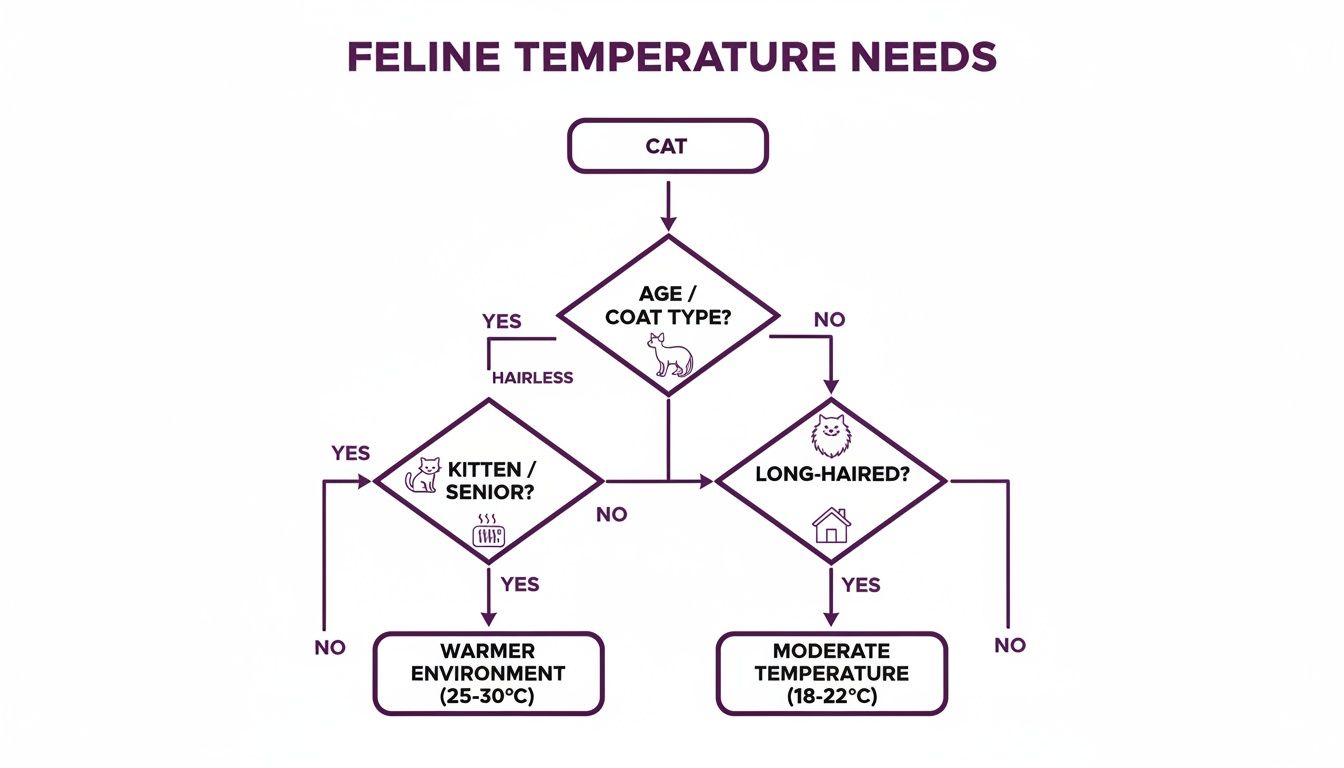
As you can see, kittens, seniors, and our hairless friends are much more sensitive and need a warmer environment to stay comfortable.
Signs Your Cat Is Too Cold ❄️
On the flip side, a chilly cat will do everything it can to conserve body heat. These behaviors are basically their way of bundling up!
Floofie’s Tip: Think of a cat’s ears as their own little thermometers! If their ears feel cold to the touch, your kitty is probably feeling the chill all over. Time to crank up the cozy!
Watch for these tell-tale signs that your cat needs a warmer spot:
- Curling into a Tight Ball: When cats tuck their paws and tail in to create that perfect little donut shape, they're minimizing their body's surface area to hold onto warmth.
- Shivering or Trembling: Just like us, cats shiver when they’re cold. It’s an involuntary muscle reaction designed to generate a bit of body heat.
- Seeking Warmth: This one's pretty obvious! You might find them burrowing under blankets, snuggling up extra close to you, or parking themselves directly in front of a heat vent.
- Cold Paws and Ears: Gently touch their ears or paw pads. If they feel colder than usual, your feline friend could definitely use some help warming up. A super-soft FloofChonk blanket is the purrfect solution for a quick cuddle session! 😉
Is Your Cat Too Hot or Too Cold? Spot the Signs
Sometimes the signs can be subtle, so having a quick reference is a lifesaver. Here’s a simple chart to help you figure out what your cat is trying to tell you.
| Symptom | Sign of Overheating (Hyperthermia) 🔥 | Sign of Being Too Cold (Hypothermia) ❄️ |
|---|---|---|
| Breathing | Panting, open-mouthed breathing, rapid breaths | Normal, slow, or shallow breathing |
| Posture | Stretched out on cool surfaces, restless pacing | Curled into a tight ball, tucked-in limbs |
| Activity Level | Lethargic, weak, unsteady on paws | Sluggish, seeking warmth, burrowing |
| Physical Touch | Ears and paws feel hot, body feels warm | Ears and paws feel cold to the touch |
| Vocalization | Anxious meowing, distress calls | May be quiet or withdrawn |
| Other Signs | Drooling, vomiting, red gums | Shivering or trembling |
Whether they're seeking a cool tile floor or a warm sunbeam, paying attention to these little clues helps you ensure your furry friend is always safe and comfortable.
Creating a Climate-Controlled Cat Paradise
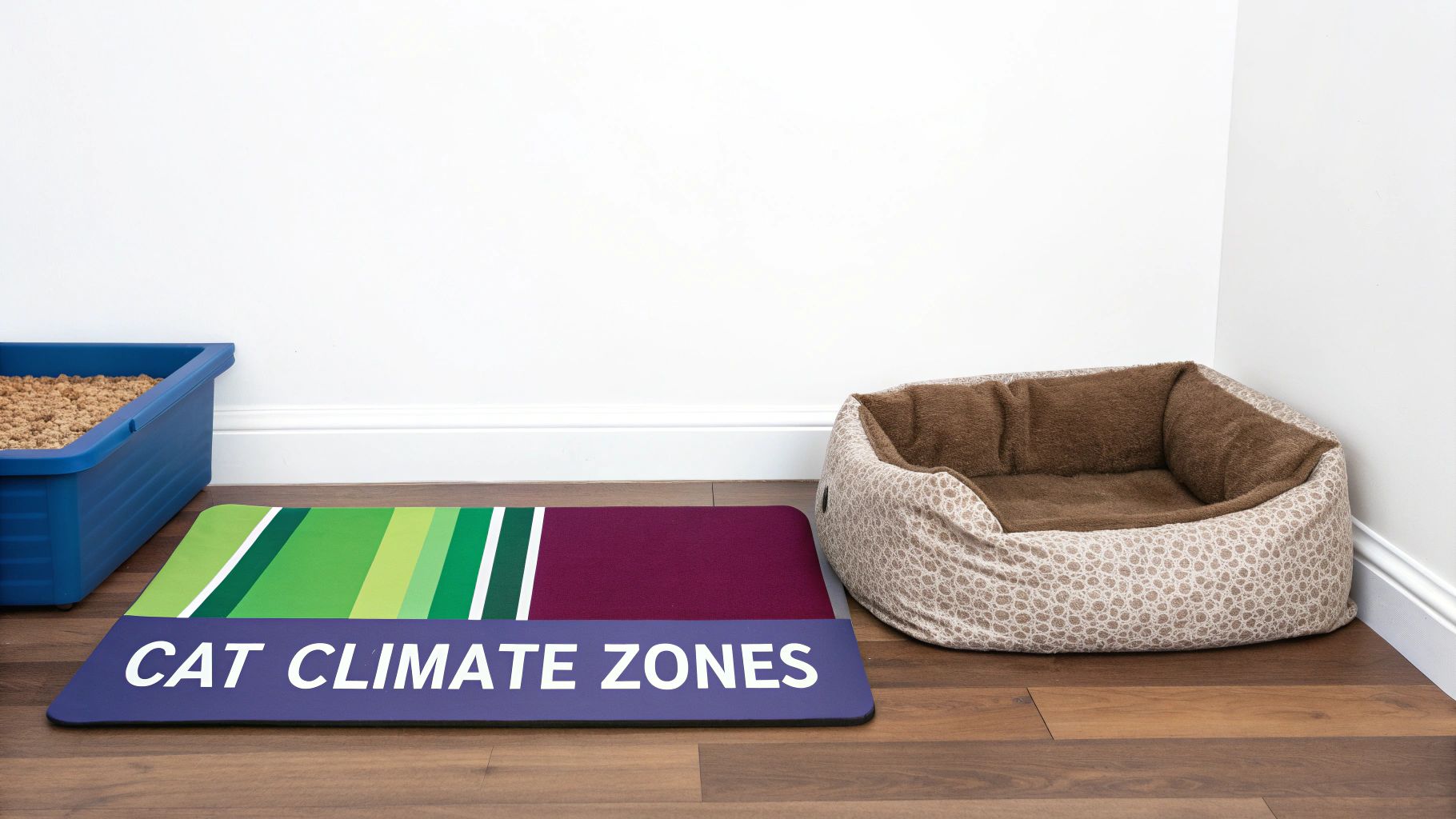
Ready to transform your home from just a cat-friendly space into a five-star feline resort? 😼 You don't need a massive renovation—just a few clever tweaks to create the ultimate climate-controlled paradise for your furry ruler. It’s all about looking beyond the thermostat and giving your cat plenty of choices. Because let's be honest, they're the ones in charge here.
Think of your home as a buffet of comfort options. Your goal is to create different "temperature zones" so your cat can pick the perfect spot for their mood, whether they're craving a toasty snooze or a cool place to lounge. This is the secret to maintaining the best room temperature for cats, as it lets them regulate their own comfort.
Building Your Cat's Comfort Zones
Creating these little microclimates is way easier and more fun than it sounds! Our mascot Floofie is a big fan of having options, and your cat will be too. It’s all about making small adjustments that lead to a huge boost in their daily happiness.
Here are a few purrfectly simple ideas to get you started:
- The Royal Heated Throne: Set up a cozy corner with a plush, self-warming, or electric heated cat bed. It’s the ultimate luxury for chilly days, senior cats, or any kitty who appreciates the finer, warmer things in life.
- The Cool Down Spot: In another area, place a cooling mat, especially on a tile or wood floor. This gives them a refreshing place to sploot when the zoomies (or the afternoon sun) have made them a bit too warm.
- The Sun Worshipper's Perch: Cats are pretty much solar-powered, so give them a dedicated spot to recharge! A sturdy window perch or a tall cat tree placed in a sunny window is an absolute must-have for a happy cat. ☀️
To truly create a climate-controlled cat paradise, a properly functioning heating and cooling system is vital. Discover tips for maintaining your HVAC system to ensure it's running efficiently and keeping the air fresh for your feline friend.
Creative and DIY Cat Comfort Hacks
You don't always have to buy something new to spoil your kitty. A little creativity can go a long way in making your home the most comfortable place on Earth for them.
Floofie’s DIY Tip: Feeling crafty? Freeze a water bottle, wrap it securely in a thick towel, and place it in one of your cat’s favorite napping spots. Voila! An instant, temporary cooling station for a hot afternoon.
Even simple adjustments can make a world of difference. Try elevating their favorite bed off a cold floor in the winter to shield them from drafts. In the summer, you can aim a small, gentle fan near (but not directly on) their cooling mat to create a blissful, breezy oasis.
If you have a safe, enclosed outdoor space, consider turning it into a "catio" with plenty of shaded areas and a fresh water bowl. This provides awesome mental stimulation and a natural way for them to find their perfect temperature. It's all about observing what your cat loves and giving them plenty of delightful options to choose from.
Your Top Questions About Cat Comfort, Answered
We get a ton of fantastic questions from our cat-loving community about keeping their furry friends comfy and content. So, we've rounded up the most common ones and had our official mascot, Floofie, give his paw of approval. 🐾 Let's dive into everything from thermostat settings to AC etiquette!
Think of this as your go-to guide for creating the perfect, purr-filled environment for your bestie. Each answer is packed with practical advice you can use right away.
What Temperature Is Too Cold for an Indoor Cat?
Cats are masters of finding the warmest spot in the house, but they definitely have their limits. Once the indoor temperature drops below 60°F (15°C), most cats will start to feel a distinct chill. You’ll probably find them curled into a tight little ball or making a beeline for your lap.
For some of our more sensitive friends, though, that "too cold" number is a bit higher.
- Kittens, Seniors, and Hairless Breeds: For these special kitties, anything below 70°F (21°C) can feel uncomfortably cool. It forces their little bodies to work overtime just to stay warm.
- The Danger Zone: Any prolonged time spent in temperatures below 45°F (7°C) is a serious health risk and can lead to hypothermia.
If your home tends to be on the cooler side, make sure you provide plenty of warm little sanctuaries. A super-soft blanket is great, but a luxurious heated cat bed from FloofChonk is the ultimate way to give them a constant source of cozy warmth they can retreat to anytime.
Can I Leave the Air Conditioning on for My Cat?
You absolutely can—and on hot days, you absolutely should! Leaving the AC on during a heatwave is one of the kindest things you can do to prevent your cat from overheating. You don't have to turn your place into a walk-in freezer, either. A moderate and consistent temperature, somewhere around 75-78°F (24-26°C), is usually perfect for keeping them comfortable without making your electricity bill terrifying.
The secret to happy cat AC usage? Give them options! Always make sure your cat can leave the air-conditioned area and find a warmer spot, like a room with a sunny window or a bed with a cozy blanket, if they start to feel a bit too cool.
How Can I Tell if My Long-Haired Cat Is Too Hot?
Those magnificent, fluffy coats on breeds like Persians and Maine Coons are a blessing in the winter but can be a real burden in the summer. They're much more susceptible to overheating, so knowing the warning signs is key.
Keep an eye out for panting—which is very unusual for cats and often a red flag—as well as rapid breathing or acting strangely tired and lethargic. You might also catch them grooming themselves excessively, which is their natural attempt to cool down by wetting their fur. Sprawling out on cool surfaces like a tile floor is another classic "I'm too hot" move. A cooling mat can be a stylish and seriously helpful investment for your fluffy companion.
Do Cats Need Sweaters or Clothes in the Winter?
Let's be real: for the vast majority of cats, their built-in fur coat is more than enough to keep them warm inside. Forcing a sweater on them would likely just make them uncomfortably hot and a little bit grumpy. 🥵
That said, there are a few exceptions who could genuinely use a little extra layer. Hairless breeds like the Sphynx, cats with very short coats like the Cornish Rex, or elderly and ill cats often struggle to retain body heat. For them, a cozy sweater can be a wonderful comfort. Just make sure any clothing is soft, allows them to move freely, and is made from a breathable fabric. And hey, if you're going to get one, you might as well make it a fun and fashionable one from the FloofChonk cat apparel collection, right? 😉
Ready to transform your home into the ultimate feline paradise? At FloofChonk, we have everything you need to keep your cat comfortable, happy, and stylish all year round. From cozy heated beds to fun cooling mats and adorable apparel, explore our collections today and give your cat the five-star treatment they deserve! https://www.floofchonk.com